The primary aim of a finance manager is to manage the cash flow (inflow and outflow). Generally, the finance manager acts as an intermediary between the investor (individual and corporations) and the firm’s operations. The finance manager is responsible for seeing that the operating needs are financed from operating sources to avoid any mismatch.
Depending upon the agreement between the firm’s finance manager and a third-party contract, the terms of services provided will either be paid in cash, credit, or a partial mix of both? This agreement of payment type is essential when the finance manager is accounting for account receivables, purchase of inventory, and account payables. The finance manager needs to consider the terms for payment or receipt, such as 30 days, 60 days, and 90 days. In essence, they are responsible for cash management, credit management, capital expenditure management, and capital budgeting.
Concerning goals on a macro level, they are also responsible for creating value-for-money for the firm’s shareholders. As earlier stated, the finance manager, acting as a bridge to shareholders, has to have complete knowledge and awareness regarding investment decisions, capital budgeting, valuation of securities, and risk associated with the financial contracts.
In simple terms, the cash flow of the firm comprises of many facets. Cash raised from the investors by sowing in more equity, loan subordination, or selling financial assets (such as bonds, shares, stocks, and warrants). It could also be regarding investment in tangible and intangible assets (brand name). Cash generated from operations. In essence, the sales are deduced through working capital budgeting, such as how many products were sold, the cost of goods sold, and the operating expenses and operating income. We must add in the non-expense amount back into the net profit to see how much cash was generated while calculating cash flows.
It is vital to remember that an increase in accounts receivable and inventory is a decrease in cash and needs to be deducted regarding operating needs. Put. It is cash-outflow. Simultaneously, an increase in accounts payable is an increase in cash-inflow. This is how the working capital cycle is assessed in a cash flow statement.
Last but not least, it is inherent that the finance manager should also match the cash flows in accordance with repayment of financial obligations (such as loan payments along with interest). On the other hand, it is at the discretion of the top management that investment is paid either out, in terms of dividend payments, or resort to capital gains).
Thirdly, the valuation of assets (tangible and intangible) is ascertained by its cash flows, as it incorporates both the traits of the time value of money and risk premium. In a free market, the valuation of the asset can be ascertained through demand and supply.
Capital Budgeting
It is a tool provided to the finance manager in deciding which investments are high yielding and less risky. Such projects are credible to generate cash flows for many years in the future. The choice to say yes or no to a project on Capital Budgeting largely depends on evaluating the project’s cash flows and related expenses. Mainly there are only three things, which the top management looks at while making decision-related to Capital Budgeting:
Payback Period
In essence, the Payback Period is associated with recovering the initial cost for a Capital Budgeting project. By following this process, decision-making is relatively easier and quicker if the payback period is less than the projected one and is normally accepted.
Net Present Value (NPV)
While working on the Capital Budgeting project, the Net Present Value (NPV) implies the project’s anticipated influence on the value of the company. Capital Budgeting project yielding a positive NPV is expected to elevate the value of the company. In simple words, a project with a positive NPV should be an acceptable factor when it comes to the process of decision-making. To calculate the NPV, one needs to minus the project’s cash inflows from the present value of the project’s cash outflows.
Internal Rate of Return (IRR)
To put it simply, the Internal Rate of Return (IRR) of any project related to Capital Budgeting is the base rate where NPV equals zero. If the IRR is greater than the cost of capital, the investors’ decision should be positive.
About Complete Controller® – America’s Bookkeeping Experts Complete Controller is the Nation’s Leader in virtual bookkeeping, providing service to businesses and households alike. Utilizing Complete Controller’s technology, clients gain access to a cloud-hosted desktop where their entire team and tax accountant may access the QuickBooks™️ file, critical financial documents, and back-office tools in an efficient and secure environment. Complete Controller’s team of certified US-based accounting professionals provide bookkeeping, record storage, performance reporting, and controller services including training, cash-flow management, budgeting and forecasting, process and controls advisement, and bill-pay. With flat-rate service plans, Complete Controller is the most cost-effective expert accounting solution for business, family-office, trusts, and households of any size or complexity.
Master These 7 Strategies to Outperform Your Competitors
How to beat the competition starts with identifying what your ideal customers truly value, building a unique position around it, and executing relentlessly where others fall short. The key is developing deep customer insights that reveal unmet needs, then creating value propositions your rivals can’t easily replicate while maintaining operational excellence that sustains your advantage over time.
I’ve spent over 20 years as CEO of Complete Controller working with businesses across every sector imaginable, and I’ve witnessed firsthand how companies either thrive or barely survive based on their competitive strategies. The difference isn’t luck—it’s mastering specific approaches that few competitors commit to executing completely. In this guide, I’ll share battle-tested strategies that transformed our cloud-based financial services firm from startup to industry leader, along with real-world examples showing exactly how businesses can not just keep up, but stay ahead.
What strategies help you beat the competition?
Outperforming competitors requires: deep customer insight, unique positioning, strategic partnerships, continuous innovation, talent development, operational excellence, and ethical competitive tactics
Customer insight means understanding not just what people buy, but why they buy and what problems remain unsolved in your market
Unique positioning goes beyond slogans to embed differentiation into your processes, products, and reputation
Strategic partnerships expand your capabilities and reach while sharing resources with aligned organizations
Continuous innovation combined with developing your people creates sustainable competitive advantages rivals struggle to replicate
Know Your Customers Like No One Else: The First Rule in How to Beat the Competition
Understanding your customers goes far beyond demographics—it requires uncovering motivations, triggers, and unmet needs using data, conversations, and digital insights. Customer-obsessed organizations report 41% faster revenue growth and 51% better customer retention compared to non-customer-obsessed competitors, according to Forrester’s research.
Advanced customer research techniques for beating competitors
Your competitive edge starts with sophisticated research approaches:
Social listening tools monitor what customers say about your brand and competitors across all digital channels
Behavioral data analysis reveals what customers actually do versus what they claim in surveys
Journey mapping identifies friction points and moments of delight across every customer interaction
Direct engagement through focus groups and co-creation sessions where customers help shape products
The power lies in triangulating insights across multiple data sources to spot patterns competitors miss.
Personal story—Transforming bookkeeping services by listening first
At Complete Controller, we discovered through client conversations that businesses weren’t just frustrated with bookkeeping errors—they felt trapped by traditional firms’ limited hours and slow response times. This insight led us to develop 24/7 support and real-time financial dashboards, features that became our competitive differentiators. By listening deeply, we transformed from just another bookkeeping service into a technology-enabled partner that gives business owners their time back.
Analyze and Anticipate: Outsmart Rivals with Competitive Intelligence
Regularly reviewing not only what your competitors offer, but what they’re failing to do, creates opportunities to seize gaps for yourself. Effective competitive analysis moves beyond surface-level monitoring to understand structural forces shaping your industry.
Frameworks for effective competitive analysis
Two proven frameworks guide strategic thinking:
Porter’s Five Forces examines competitive rivalry, new entrant threats, supplier power, buyer power, and substitute products to reveal profit distribution patterns
Blue Ocean Strategy identifies how to escape competition by creating new market space rather than fighting for existing customers
Smart companies combine both approaches—understanding current competitive dynamics while simultaneously seeking uncontested market opportunities.
Real-world example—Case study: Canon versus Xerox
Canon disrupted Xerox’s copier monopoly by identifying customers Xerox ignored—small businesses that couldn’t afford premium machines. While Xerox optimized for large organizations through direct sales, Canon built retail distribution networks and introduced affordable copiers using older technology. Within a decade, Xerox’s market share fell below 40% as Canon gradually moved upmarket. The lesson: dominant competitors often create vulnerabilities by over-serving some segments while ignoring others entirely.
Define—and Relentlessly Communicate—Your Unique Value
If you don’t control your narrative, your competition will. Clarifying how you serve customers in ways others don’t creates defensible differentiation that goes beyond competing on price.
Craft a winning brand proposition
Your value proposition must:
Address specific pain points rather than generic benefits—Death Wish Coffee targets customers seeking premium, ethically-sourced coffee with “#1 Organic and Fair Trade” positioning
Communicate clear outcomes—Stripe doesn’t just process payments but provides “financial infrastructure to grow your revenue”
Differentiate on factors customers value—speed matters only if customers will pay for it over lower prices
Remain authentic and deliverable—broken promises destroy brands faster than weak positioning
Case in point—Enterprise’s messaging consistency
Enterprise Rent-A-Car built market leadership through consistent segment-specific messaging. Fleet managers heard about cost control and efficiency. Insurance companies learned about streamlined claim handling. Vacation travelers discovered convenience and reliability. Same company, same service—but messaging tailored to what each audience valued most, creating deeper connections than one-size-fits-all competitors.
Forge Powerful Partnerships to Expand Reach and Authority
Alliances allow you to tap into new markets, share resources, and boost credibility. The key is recognizing when to build internally, when to acquire, and when strategic partnerships create more value than either approach.
Strategic partnership models for beating the competition
Successful partnerships share common characteristics:
Aligned objectives where both parties benefit from shared success
Complementary strengths with each partner contributing unique capabilities
Clear value creation generating outcomes neither could achieve alone
Defined boundaries preventing scope creep and maintaining focus
Pharmaceutical companies partner with research institutions because labs provide scientific expertise while companies offer manufacturing and distribution—each contributes what the other lacks.
Lessons from the field—Starbucks and Earthwatch
Starbucks partnered with conservation group Earthwatch to bring employees to coffee farms, creating authentic connections to sustainability efforts. This partnership deepened both employee engagement and customer loyalty by demonstrating real commitment beyond marketing claims. The collaboration strengthened Starbucks’ ethical positioning while giving Earthwatch unprecedented corporate support for conservation work.
Out-Innovate and Adapt Faster Than Your Rivals
Innovation isn’t just about invention; it’s about continuous improvement and making bold changes before your competition does. Small companies often possess natural advantages here through speed and flexibility.
Systems for sustained innovation and adaptability
Building innovation capability requires:
Rapid experimentation cycles that test ideas quickly and cheaply
Internal feedback loops connecting frontline insights to decision-makers
Permission to fail on small bets while learning valuable lessons
Cross-functional collaboration breaking down silos that slow innovation
Companies sustaining innovation longest embed these practices into daily operations rather than treating innovation as special projects.
Small business agility—How to use speed as a competitive lever
Zara revolutionized fashion retail through speed, designing and delivering new styles in 2-3 weeks versus the industry’s 6-9 month standard. By limiting inventory and creating scarcity, Zara generates €38+ billion in annual revenue while spending just 0.3% on advertising compared to competitors’ 3-4%. The lesson: when you can’t match competitors’ resources, use speed and agility to render their advantages irrelevant.
Build and Nurture an Unstoppable Team
Your team powers your competitive edge—the right culture and incentives fuel resilience, creativity, and loyalty that competitors cannot easily replicate.
Key practices to attract, retain, and develop top talent
Winning the talent war requires:
Transparent communication about company direction and individual impact
Continuous skill development through training, mentorship, and stretch assignments
Ownership mindset where employees think like partners, not just workers
Recognition systems celebrating both results and behaviors aligned with values
Companies investing in these areas see dramatically lower turnover and higher productivity than those treating employees as interchangeable resources.
Real-world application—Reducing turnover leads to customer wins
Snack Nation reduced employee turnover 50% by investing in professional development programs and creating clear advancement paths. Lower turnover meant experienced employees served customers better, leading to 30% improvement in customer satisfaction scores. The connection is direct: happy employees create happy customers, generating competitive advantage through human capital competitors struggle to poach.
Play to Win: Advanced “Hardball” Tactics Without Losing Your Ethics
Aggressive strategies can shift competitive terrain in your favor—but only when executed ethically and strategically. The goal is competing fiercely while maintaining integrity.
Legal boundaries and risk management in competitive moves
Ethical hardball tactics include:
Targeting profit sanctuaries—identifying competitors’ most profitable segments and offering superior value there
Innovative pricing models that disrupt traditional industry economics
Operational excellence that enables profitable pricing competitors cannot match
Strategic resource allocation concentrating forces where they create maximum impact
These approaches stay within legal boundaries while applying maximum competitive pressure.
Rapid response: When and how to get ruthless—but not reckless
When competitors attack your core business, swift response prevents market share erosion. Options include temporary pricing adjustments in specific segments, focused advertising highlighting your advantages, operational improvements reducing costs, or strategic partnerships blocking competitor expansion. The key is responding decisively without overreacting—measured aggression beats panicked price wars.
Conclusion: Outperforming Your Competitors Is a Mindset—Here’s How I’ve Made It Work
Building Complete Controller taught me that outlasting and outperforming competitors requires choosing execution over excuses. Success comes from being ruthlessly customer-focused, innovating consistently, and never stopping learning from both wins and losses.
These seven strategies work because they address competition holistically—from understanding customers better than anyone else to building teams competitors can’t replicate. The companies that win don’t just match what others do; they create new value propositions and execute with discipline rivals lack.
Ready to implement these strategies in your business? Contact the experts at Complete Controller for guidance on building competitive advantages through better financial operations and strategic insights.
Frequently Asked Questions About How to Beat the Competition
What are the best ways for a small business to beat larger competitors?
Small businesses beat larger competitors through speed, personalization, and niche focus. Move faster than big companies by making quick decisions, provide personalized service they can’t match, and dominate specific market segments they overlook. Use your size as an advantage—you can pivot strategies in days while large competitors need months.
How can I find my business’s unique selling proposition?
Start by asking current customers why they chose you over competitors. Look for patterns in their responses, then validate these insights against competitor offerings. Your USP lives at the intersection of what customers value most, what you deliver exceptionally well, and what competitors struggle to replicate.
What’s the fastest way to learn what my competitors are doing?
Combine digital tools with human intelligence. Set up Google Alerts for competitor names, monitor their social media and review sites, and mystery shop their services. Most valuable: talk to customers who chose you over them and those who left you for competitors—they’ll reveal competitive dynamics no tool can uncover.
How do partnerships help beat the competition?
Strategic partnerships multiply your capabilities without massive investment. Partners can provide technology you lack, access to new customer segments, complementary services that create complete solutions, or credibility through association. The right partnership transforms competitive weaknesses into strengths overnight.
How does innovation play into outperforming rivals?
Innovation creates competitive moats by solving customer problems in new ways. This doesn’t require breakthrough technology—innovative business models, service delivery methods, or customer experiences often matter more. Consistent small innovations compound over time, keeping you ahead while competitors play catch-up.
About Complete Controller® – America’s Bookkeeping Experts Complete Controller is the Nation’s Leader in virtual bookkeeping, providing service to businesses and households alike. Utilizing Complete Controller’s technology, clients gain access to a cloud platform where their QuickBooks™️ file, critical financial documents, and back-office tools are hosted in an efficient SSO environment. Complete Controller’s team of certified US-based accounting professionals provide bookkeeping, record storage, performance reporting, and controller services including training, cash-flow management, budgeting and forecasting, process and controls advisement, and bill-pay. With flat-rate service plans, Complete Controller is the most cost-effective expert accounting solution for business, family-office, trusts, and households of any size or complexity.
Jennifer BrazerFounder/CEO
Jennifer is the author of From Cubicle to Cloud and Founder/CEO of Complete Controller, a pioneering financial services firm that helps entrepreneurs break free of traditional constraints and scale their businesses to new heights.
Brittany McMillen is a seasoned Marketing Manager with a sharp eye for strategy and storytelling. With a background in digital marketing, brand development, and customer engagement, she brings a results-driven mindset to every project. Brittany specializes in crafting compelling content and optimizing user experiences that convert. When she’s not reviewing content, she’s exploring the latest marketing trends or championing small business success.
Even financially responsible adults are making money mistakes they shouldn’t be making. Whether you have a healthy income or are living paycheck to paycheck, you should be practicing good money management. To do this, you must recognize the mistakes you are making and stop making them.
Before you correct your money mistakes, you mustn’t beat yourself up and focus on avoiding them in the future. Here are eight money mistakes people commonly make and how to avoid them.
No Savings
Every financial advisor will suggest you not only have a savings account but more than one, yet many working and financially responsible adults do not have anything saved. The claim by those who do not have a savings account is generally that they can’t afford to save anything. Understandably, you may not think you can afford to save, but if you were to analyze your budget, you could probably find a few things you could cut back on to put into your savings account.
Ignoring Interest
First, many of those obtaining credit cards or loans that carry interest don’t pay attention to the percentage of the interest they are agreeing to at the time of the loan or signing the credit card agreement. If you have no choice but to agree to a higher interest rate, such as with a car loan, you need to make that account pay off priority and always pay more than the minimum payment. Early payoffs of any accounts carrying interest or high interest will minimize the cost and debt damage that interest can do to your finances.
Don’t Be Impulsive
When it comes to spending, people are sometimes impulsive. While making impulse purchases on occasion will not significantly damage your overall finances, if you are regularly impulsive when it comes to spending, you must get it under control. From shopping at the store to passing a sale or seeing an ad on tv, you have to resist making unplanned purchases as much as possible.
Don’t Be Overconfident
While you can and should invest in the stock market, you have to be careful and not get overconfident. The stock market can be a risk that will often have a high reward; however, you have to be thoughtful in your investments and use caution rather than cockiness. Sometimes we will make a great trade and make a lot of money, which builds our confidence, and if we get overly confident, it can cause us to make critical mistakes and lose more than we can handle.
Paying Retail
While brand loyalty and trust is understandable, paying retail when there are ways to save and still have quality products is a waste of money. There are outlet and discount options that will allow you to have your name brand still while saving money. Alternatively, there are generally no-name brand products that are equal to the name brand in quality at a fraction of the price simply because it doesn’t have the name attached.
Bad Credit
Most people already realize that your credit score plays a large role in your financial health. Even if you don’t plan to make large purchases using a lender that requires your credit score to be high, having a low credit score can cost you. Many companies, such as insurance, cell phone, and utilities, use your credit score to determine fees and deposits or down payments. There are even some jobs that will reject you for hire if you have a low credit score. With so many sites or apps that offer free credit reports, there is no reason you shouldn’t know what your score is and what the issues are. Repair your credit, and do it now!
Not Negotiating Bills
Most people don’t realize that many of your bills and services can be negotiated. Utilities, phone or internet services, and medical bills are a few that you can sometimes negotiate to a lower amount. Even if the answer is no, you should make an effort to negotiate your bills and payments to a lower amount or refinance if your credit is in a better position.
Spending Tax Refund
Many Americans get a little to thousands of dollars back on their taxes each year, and while it is good for the economy to spend that refund, you should save some of it or invest it so it will grow into more revenue. It would be best to save or invest it all, but one financial treat is acceptable.
About Complete Controller® – America’s Bookkeeping Experts Complete Controller is the Nation’s Leader in virtual bookkeeping, providing service to businesses and households alike. Utilizing Complete Controller’s technology, clients gain access to a cloud-hosted desktop where their entire team and tax accountant may access the QuickBooks™️ file, critical financial documents, and back-office tools in an efficient and secure environment. Complete Controller’s team of certified US-based accounting professionals provide bookkeeping, record storage, performance reporting, and controller services including training, cash-flow management, budgeting and forecasting, process and controls advisement, and bill-pay. With flat-rate service plans, Complete Controller is the most cost-effective expert accounting solution for business, family-office, trusts, and households of any size or complexity.
While contemplating starting a non-profit business, the main misconception people have is that running a non-profit is easy as there is no pressure from investors and no dealing with taxes. However, they are wrong as running a non-profit business can be as grueling as any other business and can also be hard to manage without proper awareness and knowledge.
Any non-profit business owner will tell you that there is a lot involved in starting a non-profit business, unlike for-profit businesses. Luckily, the internet is full of information and knowledge regarding starting and running a non-profit business with ease. Below are a few useful and authentic tips that will help a non-profit business owner make better decisions.
Learn the Importance of Market Research
To successfully run your non-profit business, it is essential to keep an eye on the ups and downs of the market you are tackling or working in. Unlike for-profit businesses, a non-profit business owner often has difficulty finding contributor’s support if another organization, whether non-profit, for-profit, or even government-operated, is engaging in the same work. Knowing your surroundings is a key factor that can make a significant difference between the success and failure of your non-profit business.
Have A Clear Mission Statement
The mission statement is why your non-profit organization or business exists because, with no clear mission, your non-profit can easily get lost in the crowd of non-profit organizations and end up achieving nothing. Having a clear mission will also help in getting more funds for services and other programs.
Good Record Keeping Practices
Whether it is a for-profit or non-profit business, keeping records plays an important role in any business success. A non-profit organization must maintain its non-profit status and keep its tax-exempt status by filing the IRS’s required paperwork. It is also important to keep accounting and financial records safe and up-to-date.
Founding and Keeping Funding Sources
It is almost impossible for a non-profit business or organization to stay up and running without any funding backing it up. Finding and keeping a legit funding source for a non-profit business is extremely important for its survival and growth. The best way to generate donors is to have a determined management team managing the donor database while maintaining corporate sponsors through other contacts and means. To retain donors, you must keep them up-to-date on your progress and let them know they are appreciated by inviting them to a thank-you lunch on occasion.
Maintain Good Public Relations
Even though you are running a non-profit business, having good public relations is as important as any for-profit business. Never miss an opportunity to promote your non-profit business, whether you are with friends and family, at a corporate event, or in other situations where people are gathered. Besides networking, another great way to build public relations is to create a press release as it can put your name in the mainstream and inform people about your non-profit and even encourage them to donate.
Avoid Doing Everything Yourself
Non-profit business owners often get founder’s syndrome, which makes them overly engaged in the day-to-day operations of the non-profit. Most non-profit businesses have capable staff, and as the owner, you have to let some of the responsibilities go and give them to the appropriate staff member.
Having a Board of Directors
An organization’s board of directors is a community of leaders and is one of the most important aspects of a non-profit business. The main purpose of having a board of directors is to provide legal support and proper supervision of the non-profit. Having a proper management system can lead to better teamwork among employees and encourage them to work harder, ultimately benefiting your non-profit business.
About Complete Controller® – America’s Bookkeeping Experts Complete Controller is the Nation’s Leader in virtual bookkeeping, providing service to businesses and households alike. Utilizing Complete Controller’s technology, clients gain access to a cloud-hosted desktop where their entire team and tax accountant may access the QuickBooks™️ file, critical financial documents, and back-office tools in an efficient and secure environment. Complete Controller’s team of certified US-based accounting professionals provide bookkeeping, record storage, performance reporting, and controller services including training, cash-flow management, budgeting and forecasting, process and controls advisement, and bill-pay. With flat-rate service plans, Complete Controller is the most cost-effective expert accounting solution for business, family-office, trusts, and households of any size or complexity.
Low Credit Score Causes and Fixes: Avoid These Costly Mistakes
Low credit score causes and fixes boil down to identifying the behaviors dragging your number down—late payments, high credit utilization, derogatory marks, and credit report errors—then applying proven credit repair strategies like paying on time, lowering balances below 30%, and disputing inaccuracies through the credit bureau dispute process. Master those fundamentals, and you can move from “bad credit history” to a healthier profile in as little as 6–18 months.
After 20+ years as Founder and CEO of Complete Controller, I’ve had a front-row seat to thousands of credit comeback stories—business owners denied loans, families turned away from rentals, founders boxed out of better terms. The pattern is always the same: the people who recover fastest don’t chase hacks. They follow a system. In this guide, I’ll walk you through the same step-by-step framework I share with our clients—what causes low scores, the fastest legitimate fixes, the mistakes to avoid, and a 90-day plan to start rebuilding now.
What are the low credit score causes and fixes you need to know?
The main low credit score causes are late payments, high credit utilization, collections or charge-offs, too many hard inquiries, and credit report errors—and the fixes are on-time payments, lower balances, disputing inaccuracies, and smart use of credit-building tools.
Payment history drives 35% of your FICO score, making late payments the #1 cause of low scores.
Credit utilization ratio accounts for 30%—balances over 30% of your limit signal risk to lenders.
Credit report errors affect 1 in 5 consumers and can be disputed for free through the credit bureaus.
Tools like a secured credit card, credit builder loan, and autopay for bills create the consistent on-time payment history needed to rebuild faster.
Understanding the Real Causes Behind a Low Credit Score
A low score is never random—it reflects specific behaviors and events in your credit file. Before fixing anything, you need to know exactly what’s hurting you.
FICO score factors and the main low credit score causes
According to FICO, payment history makes up 35% of your score and amounts owed (including credit utilization) makes up another 30%—which is exactly why late payments and high balances are the two biggest drivers of a low score.
Payment history (35%) — Late payments, charge-offs, and collections do the most damage.
Amounts owed / credit utilization (30%) — Maxed-out cards signal risk, even when you pay on time.
Length of credit history (15%) — Closing old accounts can shorten your average account age.
New credit (10%) — Multiple hard inquiries in a short window lower your score temporarily.
Credit mix (10%) — A blend of installment and revolving accounts helps slightly.
The founder’s takeaway: pull all three credit reports first, list the specific behaviors and eventshurting you, then build your fix list. Diagnosis drives strategy.
The Most Common Low Credit Score Causes (And How They Show Up)
Late payment impact and chronically missed bills
Even one payment more than 30 days late can drop your score significantly, and delinquencies stay on your report for up to 7 years. The Consumer Financial Protection Bureau found that medical debt is the most common collection item on credit reports, appearing on roughly 1 in 5 reports—a powerful reminder that a single health event can spiral into collections fast.
Common patterns I see with clients:
Bill pileup after job loss or a medical event
Subscriptions auto-renewing on expired cards
Small forgotten store cards quietly going to collections
Fixes that work:
Set up autopay for bills—at least the minimums—on every credit obligation.
Call creditors the moment you slip; many will work out a plan or adjust reporting.
Send a goodwill adjustment letter when a one-time hardship caused an isolated miss.
High credit utilization: silently dragging scores down
Your credit utilization ratio is revolving balance divided by total credit limits. The CFPB and major issuers recommend staying below 30%, with scores responding best under 10%.
Practical fixes for credit utilization:
Pay down balances aggressively, starting with the highest-interest card.
Make multiple payments per month so the statement balance reported to bureaus stays low.
Request a credit limit increase—without increasing spending—for an instant utilization drop.
Spread purchases across cards so no single account gets maxed.
Serious derogatories: charge-offs, collections, and bankruptcy
These are heavy hitters that can block apartments, raise insurance, and crush business credit. The fix is patient but proven: bring past-due accounts current, negotiate pay-for-delete in writing on collections when possible, and let new positive data slowly outweigh old negatives.
Credit Report Errors: The Hidden Cause Most People Overlook
A landmark FTC study found that 1 in 5 consumers had an error on at least one credit report, and for 1 in 20, the error was serious enough to cost them money on credit. This is often the fastest win in credit repair.
How to dispute credit report inaccuracies the right way
Get your reports for free at AnnualCreditReport.com from Equifax, Experian, and TransUnion.
Mark every potential error—unknown accounts, wrong balances, duplicate listings, misreported lates.
File disputes with both the bureau and the furnisher (the company that reported the info), with documentation.
Track responses—investigations typically take 30 days, and corrected items must be removed or updated.
Removing a single erroneous late payment or collection can yield a meaningful score jump in weeks, not months. For more on building strong financial habits alongside credit repair, our team covers practical tactics in how to manage your credit responsibly.
Low Credit Score Fixes: A Practical Roadmap to Rebuild Faster
Build flawless on-time payment history
Payment history is 35% of your score, so this is non-negotiable. Automate minimum payments on every account, then set calendar reminders 5–7 days before due dates as backup.
Crush your credit utilization ratio
Target overall utilization under 30%, then push toward 10%. Make mid-cycle payments so reported balances stay low, and consider a consolidation loan only if you won’t re-max the cards afterward.
Use rebuild tools wisely
Credit builder loan: Credit unions place loan funds in a locked account while you make small monthly payments, building installment history with low risk.
Secured credit card: A $200–$500 deposit becomes your limit. Put one small recurring charge on it, pay in full monthly, and keep utilization under 30%.
Be selective with new credit
Avoid stacking applications—multiple hard inquiries compound the damage. Keep old fee-free accounts open to preserve your credit history length. For deeper systems-thinking on managing money flow, our guide on efficient business finance management translates directly to personal finance too.
Better credit starts with better financial habits. Complete Controller can help you build both.
Real-World Case Study: From Sub-600 to Mortgage-Ready
A Sound Credit Union case study highlighted a member whose score dropped below 600 after high utilization and several late payments during a job loss. Over 12 months, they set up autopay, paid balances below 30% utilization, requested limit increases, and avoided new credit while monitoring reports. By month 12, their score recovered enough to qualify for favorable loan terms—and their financial stress dropped dramatically.
The lesson: you don’t need a “credit repair” company. You need a structured plan and 12–24 months of consistency.
How to Improve Your Score Without Falling for Scams
The FTC is clear: no company can legally remove accurate negative information from your credit report. Any firm promising to “erase” legitimate late payments or bankruptcies is misleading you. Protect yourself by:
Running the credit bureau dispute process yourself—it’s free.
Choosing a nonprofit credit counseling agency over for-profit “repair” shops.
Walking away from advance-fee demands or anyone telling you to create a new credit identity.
List every cause: late payments, utilization, derogatories, errors.
Activate autopay on every debt.
Days 8–30: Execute high-impact fixes
Pay down any card above 50% utilization fast.
File disputes for every error with documentation.
Open a secured credit card if needed.
Days 31–90: Build momentum
Maintain scheduled paydowns; skip new applications.
Add a credit builder loan if your file is thin.
Re-pull reports at 60–90 days to confirm corrections posted.
Final Thoughts: Fixing Your Credit Is a System, Not a Hack
When clients ask me how to fix a low credit score, I tell them the truth: it’s fixable, but it’s not a one-week sprint. The most reliable low credit score fixes are simple—on-time payments, low utilization, accurate reports, and smart use of tools like a secured credit card or credit builder loan. The discipline is what separates the people who rebuild from the people who keep cycling through the same mistakes.
After two decades helping thousands of business owners and families through Complete Controller, I can promise you this: the financial confidence that comes with rebuilt credit is worth every disciplined month. If you’d like help building the bookkeeping and financial systems that support stronger credit—personally or in your business—visit Complete Controller to see how our team can support you.
Frequently Asked Questions About Low Credit Score Causes and Fixes
1Q. What are the main causes of a low credit score?
A: The biggest causes are late or missed payments, high credit utilization above 30%, collections and charge-offs, multiple recent hard inquiries, and bankruptcies. Credit report errors—which affect 1 in 5 consumers—can also unfairly drag your score down.
2Q. How fast can I improve a low credit score?
A: Utilization-driven improvements can show in 1–2 billing cycles once balances drop. Disputing and removing errors can yield gains in 30–45 days. Serious derogatories take 12–24 months of consistent, positive behavior to meaningfully offset.
3Q. How long does negative information stay on my credit report?
A: Most late payments, collections, and charge-offs stay on your report for 7 years. Chapter 7 bankruptcies remain for 10 years. Hard inquiries fall off after 2 years.
4Q. Should I close old credit cards to fix my score?
A: Generally no. Closing old accounts shortens your average credit history length and can reduce your total available credit, which spikes your utilization ratio. Keep fee-free old cards open and active with a small recurring charge.
5Q. Are credit repair companies worth the money?
A: Usually not. The FTC confirms no company can legally remove accurate negative information. Every dispute and rebuild tactic they use is available to you for free—either directly or through a nonprofit credit counseling agency.
Sources
FICO. “What’s in my FICO® Scores?” https://www.myfico.com/credit-education/whats-in-your-credit-score
FICO. “What is a FICO Score?” https://www.myfico.com/credit-education/what-is-a-fico-score
Sound Credit Union. (2023). “How to Rebuild Credit Score Fast After a Financial Setback.” https://www.soundcu.com
Consumer Financial Protection Bureau. (February 2022). “Medical Debt Burden in the United States.” https://www.consumerfinance.gov/data-research/research-reports/medical-debt-burden-in-the-united-states/
Consumer Financial Protection Bureau. “What is a Credit Utilization Rate?” https://www.consumerfinance.gov/ask-cfpb/what-is-credit-utilization-en-314/
Federal Trade Commission. (December 2012). “Report to Congress Under Section 319 of the Fair and Accurate Credit Transactions Act of 2003.” https://www.ftc.gov/reports/section-319-fair-accurate-credit-transactions-act-2003-fifth-interim-federal-trade-commission-report-congress-accessed-december-2012
Federal Trade Commission. “Disputing Errors on Credit Reports.” https://www.consumer.ftc.gov/articles/disputing-errors-credit-reports
Complete Controller. “How to Manage Your Credit Responsibly.” https://www.completecontroller.com/how-to-manage-your-credit-responsibly/
Complete Controller. “Efficient Business Finance Management.” https://www.completecontroller.com/efficient-business-finance-management/
Complete Controller. “5 Money Management Tips to Help Avoid a Deficit.” https://www.completecontroller.com/5-money-management-tips-to-help-avoid-a-deficit/
About Complete Controller® – America’s Bookkeeping Experts Complete Controller is the Nation’s Leader in virtual bookkeeping, providing service to businesses and households alike. Utilizing Complete Controller’s technology, clients gain access to a cloud platform where their QuickBooks™️ file, critical financial documents, and back-office tools are hosted in an efficient SSO environment. Complete Controller’s team of certified US-based accounting professionals provide bookkeeping, record storage, performance reporting, and controller services including training, cash-flow management, budgeting and forecasting, process and controls advisement, and bill-pay. With flat-rate service plans, Complete Controller is the most cost-effective expert accounting solution for business, family-office, trusts, and households of any size or complexity.
Jennifer BrazerFounder/CEO
Jennifer is the author of From Cubicle to Cloud and Founder/CEO of Complete Controller, a pioneering financial services firm that helps entrepreneurs break free of traditional constraints and scale their businesses to new heights.
Brittany McMillen is a seasoned Marketing Manager with a sharp eye for strategy and storytelling. With a background in digital marketing, brand development, and customer engagement, she brings a results-driven mindset to every project. Brittany specializes in crafting compelling content and optimizing user experiences that convert. When she’s not reviewing content, she’s exploring the latest marketing trends or championing small business success.
If you are a new small business owner or a small business owner looking to expand your business, you’ll need financing. Whether you choose to go with investors or seek loans from a financial institution is important that you have all the documents needed to increase your chances for financing. Besides a business plan, the most important documents you will need to help you get investors, keep investors, or obtain loans are financial statements.
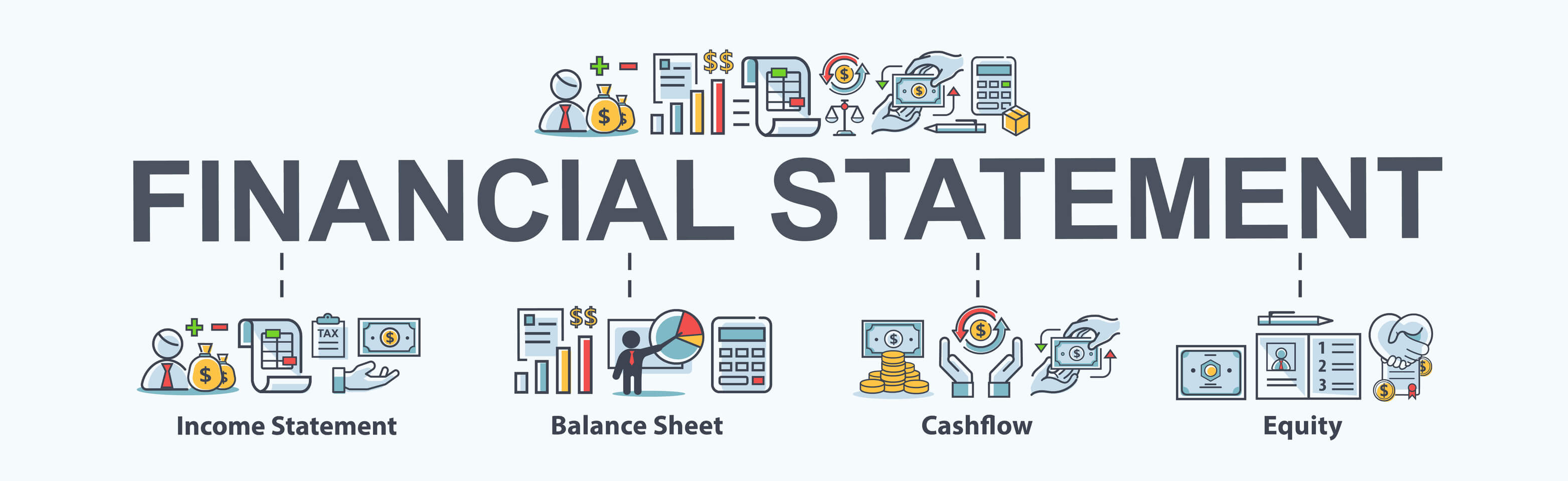
There are four main statements that you will need. These four statements are the income statement, the balance sheet, the owner’s equity statement, and the cash flow statement. Every business owner must understand all four of these statements and the information they provide.
The Income Statement
The income statement helps investors and lenders the idea of your business’s performance over a specific timeframe. The income statement is also known as a profit and loss statement (P & L) or revenue and expense statement. It shows investors and lenders your business’s nonoperating and operating expenses and revenue, no matter what it is called.
A person will share the business’s income statement to help potential investors and lenders understand how your business performs and whether the investment would be a good one.
The Balance Sheet
The balance sheet is also known as a statement of net worth or a statement of financial position. The balance sheet is based upon the equation assets = equity + liability. This statement will show investors and lenders your business assets, liabilities, and equity. It also provides them with the overall position of your business over a specific timeframe. Generally, the balance sheet is used to help your accountant calculate financial ratios.
The balance sheet is perhaps the most commonly shared financial statement because it gives a great overview of its financial position. It also quickly gives investors and lenders an idea of whether financing your business is a safe and minimal risk.
The Cash Flow Statement
The cash flow statement is also known as a statement of cash flow or a statement of financial position changes. The cash flow statement is used by investors or lenders, and the business owner and accountants to see whether the business generates enough cash to meet obligations and operating expenses. In other words, it gives everyone an understanding as to how the business is managing its cash flow.
The cash flow statement is crucial for understanding the business’s ability to pay bills, accounts payable, and meet payroll and inventory demands. This statement should not be confused with the owner’s equity statement. This is the money used from profits to finance the business’s daily operations and is not an investment.
The Statement of Owner’s Equity
The statement of owner’s equity is also known as the statement of changes in equity or a statement of shareholder’s equity. This statement specifically shows profits and earnings that are being retained by the business and not distributed to shareholders. These earnings are generally used to reinvest in the company, pay off debts, or finance business growth.
This statement is generally used to give an idea of the financial stability and health of a business. It shows if a business can meet financial and operating needs. All done without requiring new contributions of capital from the owners or shareholders.
Conclusion
These very important financial statements will be used in multiple ways. They will be used when seeking investors or trying to obtain business loans. They are also used after a business is established to give shareholders, possible investors, and lenders an assessment of the business’s financial aspects. It is essential that these four financial statements be accurate and up kept. These four financial statements can be the difference between your company receiving funds and financing and going out of business.
About Complete Controller® – America’s Bookkeeping Experts Complete Controller is the Nation’s Leader in virtual bookkeeping, providing service to businesses and households alike. Utilizing Complete Controller’s technology, clients gain access to a cloud-hosted desktop where their entire team and tax accountant may access the QuickBooks™️ file, critical financial documents, and back-office tools in an efficient and secure environment. Complete Controller’s team of certified US-based accounting professionals provide bookkeeping, record storage, performance reporting, and controller services including training, cash-flow management, budgeting and forecasting, process and controls advisement, and bill-pay. With flat-rate service plans, Complete Controller is the most cost-effective expert accounting solution for business, family-office, trusts, and households of any size or complexity.
The excitement of getting a new job and then starting it is unexplainable, but you must first get through the interview before you even get the job. Simultaneously, many will advise you on how to answer questions and present yourself. Another aspect of interview preparations should be learning the types of interviewers and how to recognize them. This knowledge could mean the difference between nailing the interview or failing it.
Every interviewer develops a distinctstyle. An average person changes his job seven times in his whole life that means more than seven interviews. Before going for an interview, it is wise to know about the interviewers and plan how one should face them. Here are seven types of interviewers you might encounter during the interview process and how to prepare for them.
The Geek
Interviews can be scary, especially when your interviewer is ready to tear you apart with their extreme knowledge of the world. These interviewers know a lot about the job description of the position you have applied for. Brace yourself for such an interviewer. You can expect questions about the subject matter, technical details, standard operating procedures, etc. There will not be any personal questions or informal details with this type of interviewer. You should be preparing for this type of interviewer by having a lot of job knowledge specifically related to the position and the company you are applying to.
The Shotgun
This type of interviewer will start asking you questions after questions as soon as you enter the room. Expect a shotgun that will not stop firing at you. You will not have enough time to start a conversation, and you will find yourself preparing for the next question. It would be best to prepare answers for every possible question you can find online or from any other source. Such interviewers ask questions that can be HR based or revolve around your professional knowledge.
The Classic
This kind of interviewer will follow the classic and traditional style of interviewing. The classic interviewer will ask about your skills and your future plans, and your past work experiences. This kind of interview takes thirty to forty-five minutes to finish. You can research many questions online about this traditional kind of interview. Some of the questions are most likely to be repeated so you can consult the person who has been interviewed before. Most classic interviewers love to ask scenario-based questions, so be prepared with a few examples from your past work experiences.
The Calm
These kinds of interviews are what all job-seekers hope for when stepping into an interview room. Such interviewers will make you feel at home, and all you need to do is accept this friendly gesture and go with the flow. The calm interviewer will not make you feel nervous. These kinds of interviewers are tricky as well. They will find out about your strengths and weaknesses without judging your knowledge. Try to start a conversation and establish a bond, yet do not forget to cast a professional impression on this interviewer. The best way to handle a calm interviewer is to remain professional and not get too comfortable.
The Judgmental
Judgmental interviewers believe in the phrase “the first impression is the last impression.” It is difficult to decipher what these interviewers are thinking, as they are extremely difficult to read. They are likely to maintain a grumpy expression on their face or have no expression at all. You will be uncertain about your answers, and you will never know whether your answers were right or wrong. These interviewers are most difficult to deal with, so the best tip here is to be confident about yourself and the answers you give because you will not get an appreciative smile.
The Professional
Professional interviewers are the most balanced and will often have set criteria of outlines for the interview. They are not too rigid, not too friendly, yet they know how to maintain a professional appearance from start to finish. You can expect a few smiles and maybe even a few indications of how well the interview may be going. The tip here is to adjust with their mood and answer the questions carefully and appropriately.
The Distracted
This type of interviewer will make you feel as if they are the busiest person on the face of the earth. You will find them going through their phone and mail repeatedly while answering their questions, and it can be highly distracting. Do not get annoyed with this behavior. Do not get trapped and lose your concentration while answering them. Take the questions seriously and answer them after thinking twice. Do not try to get his attention. Do not get distracted and do not try to avoid the questions.
About Complete Controller® – America’s Bookkeeping Experts Complete Controller is the Nation’s Leader in virtual bookkeeping, providing service to businesses and households alike. Utilizing Complete Controller’s technology, clients gain access to a cloud-hosted desktop where their entire team and tax accountant may access the QuickBooks™️ file, critical financial documents, and back-office tools in an efficient and secure environment. Complete Controller’s team of certified US-based accounting professionals provide bookkeeping, record storage, performance reporting, and controller services including training, cash-flow management, budgeting and forecasting, process and controls advisement, and bill-pay. With flat-rate service plans, Complete Controller is the most cost-effective expert accounting solution for business, family-office, trusts, and households of any size or complexity.
No matter the business’s size, your business culture will drive the type of employees you hire for open positions. While skills and talent are of great importance, you need to hire employees that fit with the company and promote a positive work environment. Every employee you have in your company contributes to the workspace’s morale and energy, and ultimately they represent you and the business to both current and potential customers or clients. Here are nine key steps you need to implement to help in hiring the perfect employee.
Define the Job
Before you post the job online, you must do a job analysis and have a thorough list of job requirements. It would be best to break these into sections such as job description, required skills, education requirements, and environment.
When formulating the job posting, you should use concise wording and bullet points and have a job summary, attitude, and environmental expectations. Chances are you will have many people apply that are not qualified but have defined job requirements, detailed job descriptions, and including the environment and attitude will help pull out applications and resumes of those who match a lot of your keywords.
Plan Your Recruiting Strategy
Generally, a team in the human resources department is dedicated to posting jobs, conducting interviews, and hiring employees in a larger company. However, in a small business, this is generally done by the owner or a trusted employee. Because a smaller business is more intimate, it may be important for all employees to have some input to the hiring and recruiting process.
Create a Checklist
Creating a checklist may seem like a simple process, and in most cases, it is. However, having a checklist of what you need and expect in an employee will help you streamline the hiring process. Creating a checklist can also help keep all current employees involved in the hiring process on the same page as far as expectations and recruits that have potential.
Recruit the Right Candidates When Hiring an Employee
If possible, create the largest talent pool to choose from when hiring a new employee. Use available online tools such as hiring sites and social media to widen your talent pool as much as possible. The more potential candidates you have, the better chance you have of hiring the perfect employee.
Review Applications, Resumes, and Cover Letters Carefully
Have an effective system in place to review cover letters, resumes, and job applications. This process starts with a well-written job description and bullet points and your checklist. Screen all potential candidates against your list of skills, characteristics, job experience, and other important hiring points. Having this part of the process precise and streamlined will ensure that you can narrow the field of good candidates down to great ones.
Prescreen Candidates
While many candidates will look great on paper and have a compelling cover letter, they still may not be the right fit for the position or your company. Before taking the step to set up a face-to-face interview, you should do a phone interview to get an idea if they are still in the running before you go further in the process.
If you feel a candidate isn’t the right fit through the phone interview, you can eliminate them from the process at this point and not waste anyone’s valuable time.
Ask the Right Questions
The hiring team or business owner should develop standard interview questions that will be identical in each interview. This way of designing the interview questions will help you make a side-by-side comparison.
When formulating the questions, make sure every question you ask has value. There should be no throw-away questions to fill time. Organizing the questions will also ensure the interview stays focused and on track.
Do Background Checks and Check References
After you conduct interviews and have further narrowed down the best candidates, you must do thorough background checks. Once candidates have passed these checks, you must check with their references.
In most cases, all of the candidates who have made it this far in the process will also pass these checks. However, there could be candidates in the running that are eliminated because something negative comes up in these checks.
Extend a Job Offer
Once you have completely narrowed the field to the top candidates, you may need to conduct second interviews before making a final decision. When you have decided and have chosen the best candidate, it is time to draw up a job offer.
The job offer should include salary and benefits and the expected start date. Once you have sent the offer, either the candidate will accept the offer, decline it, or make a counteroffer. And the hiring process will come to an end once everyone agrees.
About Complete Controller® – America’s Bookkeeping Experts Complete Controller is the Nation’s Leader in virtual bookkeeping, providing service to businesses and households alike. Utilizing Complete Controller’s technology, clients gain access to a cloud-hosted desktop where their entire team and tax accountant may access the QuickBooks™️ file, critical financial documents, and back-office tools in an efficient and secure environment. Complete Controller’s team of certified US-based accounting professionals provide bookkeeping, record storage, performance reporting, and controller services including training, cash-flow management, budgeting and forecasting, process and controls advisement, and bill-pay. With flat-rate service plans, Complete Controller is the most cost-effective expert accounting solution for business, family-office, trusts, and households of any size or complexity.
When you come to the financial point in your adult life where you have decided it’s time to look into investing some of your hard-earned money, there are many types of investments you could consider. There is the stock market, mutual funds, 401(k) or other retirement savings accounts, and countless other investments you could (and should) look into to diversify your investment portfolio.
However, real estate investing is often an area people don’t think they can invest in for many reasons. It could be credit issues, lack of start-up investment capital, or fear of the risks involved in investing. Whatever the reasons you have hesitated to invest in real estate, here are five good reasons you should consider real estate investments.
Property Appreciation
Property appreciation isn’t that you appreciate that you own the property. This use of the word means the increase in the value of a property. Many purchases of property depreciate as soon as you purchase them, such as a car. A car depreciates in value the second you drive it off the lot because it immediately has factors attached to it that decrease the value, such as mileage and previous ownership.
Real estate is not like that. Real estate property values increase (or decrease) according to the real estate market. While it is true that there have been severe downturns in the real estate market over the years, for the most part, if you can ride these downturns out with the property you own while possibly obtaining more properties for spare change on the dollar, you can make out well during those few and far between times.
If you are investing in a property you intend to flip and sell, then a slower or bottom market would not be ideal since you might get the property for a steal but may not be able to resell it. However, buying a property to use for passive rental income, buying low, and investing enough to fix any issues, then renting it out will be ideal. You can then wait for the market to heat back up and resell it (once the lease is up) for a nice profit. Or you may choose to keep it as a rental property collecting that sweet passive income.
Cash Flow Income
Speaking of passive income and rental properties. Cash flow income is, as mentioned before, using your purchased property or even buying already established rental properties for the sole purpose of renting out space(s) for continuous passive income.
The cash flow income can be more resilient if the real estate market takes a hit or crashes. These passive income properties can even sustain you through overall economic downturns or personal financial difficulties.
Real Estate Related Income
You may be thinking we have been talking about real estate related income this whole time, and we have, but this particular use of the phrase is referring to income generated from a real estate job-related source.
Real estate-related jobs could be a real estate agent or real estate broker, both of which gain their income from real estate sales commissions. Another real estate related job is property management. This job entails running a property such as a building with offices, an apartment complex, or a hotel for an owner who wants to remain hands-off and have someone else manage their investments.
While this may not seem like an investment in real estate, if you do not own the properties yourself, these real estate related jobs are an investment in your career and future financial stability.
Ancillary Real Estate Investment Income
When most people hear real estate investing, they likely conjure up the idea of owning real estate property and either reselling for a profit or using it as a rental property as a passive income. Ancillary real estate investing is ownership of investments that generate income, such as vending machines, paid laundry facilities, ATMs, and other smaller businesses operated within larger real estate investments.
Because these types of machines are in places that make them convenient, they can create a decent income due to the customers’ semi-captive nature. These types of real estate investments could be a great starting point for someone without a lot of capital to invest or without a lot of experience in real estate investing.
Your First Property Investments
If you have the capital for a down payment and the credit score to do it, you may want to consider purchasing your first real estate property through a mortgage loan. You can then use this property a few ways to get returns on your investment. You can make sure the mortgage loan includes money for upgrades and fix it and flip it for a profit, which will pay off the mortgage and give you a profit. Or you can use it as a rental property setting the rent to cover the monthly mortgage and yearly dues and property taxes along with padding for profit.
If you don’t have a lot of starting capital to invest in a property on your own, there are crowdfunded investment groups. Each person in the group will invest a minimum amount, and the group will invest in a property and split the profits made through rentals or resale.
You can also look into the option of ancillary real estate options as they are often fairly inexpensive to invest in and can gain you immediate profits from day one of placement.
Conclusion
Keep in mind that different liabilities depend on what type of real estate investing you get into and weigh these liability risks against the rewards. Overall, real estate investing is a great investment path to take and is, for the most part, far less risky than the stock market. Look into the options mentioned and see if any of them is right for you.
About Complete Controller® – America’s Bookkeeping Experts Complete Controller is the Nation’s Leader in virtual bookkeeping, providing service to businesses and households alike. Utilizing Complete Controller’s technology, clients gain access to a cloud-hosted desktop where their entire team and tax accountant may access the QuickBooks™️ file, critical financial documents, and back-office tools in an efficient and secure environment. Complete Controller’s team of certified US-based accounting professionals provide bookkeeping, record storage, performance reporting, and controller services including training, cash-flow management, budgeting and forecasting, process and controls advisement, and bill-pay. With flat-rate service plans, Complete Controller is the most cost-effective expert accounting solution for business, family-office, trusts, and households of any size or complexity.
There are several kinds of accounting software available to small businesses. Whether it is overall accounting and bookkeeping software, inventory software, payroll software, or other business-related software that helps with the financial aspects of operations, most small businesses employ the use of one or more of these. Now there is software specifically related to electronic invoicing.
Some accounting software includes an electronic invoicing in the overall business accounting software package, but many do not. This would be the reason you may want to consider getting electronicinvoicing software. Here are eight reasons you should be electronically invoicing now!
Save time
Because of the automation, electronic invoicing saves a large amount of time previously spent manually invoicing. Many of the steps are eliminated once the process is automated because they are unnecessary in the electronic invoicing process.
Reducing Costs
When using the manual, paper invoicing, there are several costs involved. Printer ink, paper, envelopes, and postage are all costs involved in manual and paper invoicing. Besides the initial cost of the software, there is no cost involved in electronically invoicing your customers. It also saves money if you have to follow-up with reminders and late notices. Some companies give the customer the option to go paperless, but you will save money by electronically invoicing.
Reducing Errors
Because manual invoicing requires so many steps done manually, it increases the chances of errors in the process. There are many opportunities for errors, whether typos or incorrect data in the invoice or incorrectly addressing the envelope. Electronic invoicing still requires input. However, it will generally prompt error checks, and the rest of the process is automated and via email, so the chance of errors is minimized.
Customer Service
Because of the reduction in time, cost, and errors, there is a direct benefit to your customer. Also, because they will receive their invoices immediately, they can add the cost to their budget. Electronic invoicing is also more professional and can increase the overall positive impression of your business. The ease, accuracy, and speed will also increase customer confidence in your business’s abilities creating long-term customers.
Get Paid Quickly
Because the customer is invoiced immediately instead of the time it takes to mail an invoice, it is far more likely the invoice will be paid quickly. Most customers who fail to pay forget about the payment. With electronic invoicing, they will receive the initial invoice, but remindersare more easily sent because of the simplification of the process.
Reducing Paper Use
With awareness of the environment and recycling being the focus of many, reducing paper use will benefitthe environment. The reduction of paper for the invoice and the envelope will positively impact and give your customers who are concerned with the environment another reason to choose your company.
Accurate Record-Keeping
Because the process is generated and recorded through the software, this will ensure accurate records. This accuracy is especially important for taxes and operations. It also allows an overview of outstanding invoices that may require more intense measures to recover. Overall you will have easy to understand records that will help keep accounting and bookkeeping accurate and efficient.
More Control
Manual invoicing also means manual record-keeping and other processes. Having the electronic invoicing process from beginning to recording in the software gives you more control over your invoices and the invoicing process. Most of the invoicing issues are that the manual process can allow the invoices to get away from you. This control and accuracy, ease of access to what has been received, and what is out will give you strong invoicing control.
Conclusion
There are no downsides to electronic invoicing, and no reason it should not be utilized in your business immediately. Electronic invoicing saves time, money, and errors and will give you and your accountantaccuracy and more control.
About Complete Controller® – America’s Bookkeeping Experts Complete Controller is the Nation’s Leader in virtual bookkeeping, providing service to businesses and households alike. Utilizing Complete Controller’s technology, clients gain access to a cloud-hosted desktop where their entire team and tax accountant may access the QuickBooks™️ file, critical financial documents, and back-office tools in an efficient and secure environment. Complete Controller’s team of certified US-based accounting professionals provide bookkeeping, record storage, performance reporting, and controller services including training, cash-flow management, budgeting and forecasting, process and controls advisement, and bill-pay. With flat-rate service plans, Complete Controller is the most cost-effective expert accounting solution for business, family-office, trusts, and households of any size or complexity.







 About Complete Controller® – America’s Bookkeeping Experts Complete Controller is the Nation’s Leader in virtual bookkeeping, providing service to businesses and households alike. Utilizing Complete Controller’s technology, clients gain access to a cloud-hosted desktop where their entire team and tax accountant may access the QuickBooks™️ file, critical financial documents, and back-office tools in an efficient and secure environment. Complete Controller’s team of certified US-based accounting professionals provide bookkeeping, record storage, performance reporting, and controller services including training, cash-flow management, budgeting and forecasting, process and controls advisement, and bill-pay. With flat-rate service plans, Complete Controller is the most cost-effective expert accounting solution for business, family-office, trusts, and households of any size or complexity.