Starting a personal business is one of the financial dreams that many people wish could come true. Although most people think that the lack of resources, a complex market situation, or some other significant factor stops them from initiating their own company, the most potent element is themselves resisting to get into entrepreneurship. In essence, the only thing that can hinder you from starting your business is YOU!
Procrastination is because entrepreneurship begins with taking calculated risks, accepting responsibility, and striving to turn the idea into reality.
Until and unless you do not take an intelligent threat, you cannot initiate a business.
There is no perfect or ideal time for starting your business. Instead, you must find the time to create it regardless. You don’t need permission from anyone. You are the only obstacle standing between your idea and its fulfillment. And you are the only person who can turn your vision into reality and build a business you have always desired.
Consequently, there is no reason to wait for someone else to start your business, such as a digital agency, bookkeeping, a taxation firm, a bookstore, a real-estate company, and a photo studio. Here are the five most common yet biggest fears most people face that you must overcome to effectively land on the road to entrepreneurship.
Fear of failure
According to psychologists and mind experts, the fear of failure is more bitter and unbearable than the loss of autonomy and the fear of separation. It is one of the leading factors stopping you from starting your business.
To overcome this fear, you must redefine the meaning of success. You must realize that a decent job with handsome pay and so-called financial security with employment is not the definition of success. Instead, chasing your dreams and achieving your goals is a real success. Once you realize it, you will begin working towards your vision instantly.
Inadequacy
There may be a voice in your head repeatedly telling you that no one would take your idea seriously. Instead, your idea is a poor thought that can barely produce fruitful results. Also, the voice may be reassuring you that your current job is a necessity, at least for now.
To conquer the fear of inadequacy, spend time with entrepreneurs who are naturally confident entrepreneurs past and present successful biography, telling you how they transcended their fear. You will know that successful entrepreneurs think of success, networking, and confidence instead of feelings of inadequacy, insecurity, and unworthiness, which is familiar with others who only dream of having a business. Once you realize the truth, your fear of inadequacy will diminish, thus starting your business will become easier.
Humiliation
The fear of ridicule and rejection can be more damaging than the fear of failure. Being anxious about what others will think and how you could be embarrassed is another factor stopping you from starting your business.
Once you start taking steps towards initiating your business, you will be surprised to see that people will incredibly encourage and support you. They will appreciate your idea and efforts instead of criticizing you for your bold step. Also, many people will rally to join your venture.
Poverty
Poverty is another big fear stopping you from starting your business, especially with individuals who have grown up in a low-income family and feel worried that they would stay poor if they do not have a secure job. For them, compromising on the job is like inviting poverty into their life.
To overcome the fear of poverty, you must realize that you must sacrifice something to ‘gain’ something. A closed fist cannot hold anything. It would help if you opened your palm to get anything special.
Separation
The self-contemplated sense of separation from your resources and even very close relationships for working towards your dreams is another factor stopping you from becoming an entrepreneur. On the contrary, starting your business begins with taking the first step alone, and then you will find many other following your footsteps. Remember, even if your first attempt to fulfill your dream fails, you will know who your real friends are and see the true face of life. Once you know who is always with you, equally in your good times and bad times, it will undoubtedly help you fulfill your dream. With that in mind, take the first step!
About Complete Controller® – America’s Bookkeeping Experts Complete Controller is the Nation’s Leader in virtual bookkeeping, providing service to businesses and households alike. Utilizing Complete Controller’s technology, clients gain access to a cloud platform where their QuickBooks™️ file, critical financial documents, and back-office tools are hosted in an efficient SSO environment. Complete Controller’s team of certified US-based accounting professionals provide bookkeeping, record storage, performance reporting, and controller services including training, cash-flow management, budgeting and forecasting, process and controls advisement, and bill-pay. With flat-rate service plans, Complete Controller is the most cost-effective expert accounting solution for business, family-office, trusts, and households of any size or complexity.
A statement giving a clear picture of the net worth of a business is known as a balance sheet. A balance sheet is a financial tool for all companies to list their assets, liabilities, and owner’s equity to calculate the actual worth of the business. Creating a financial statement is standard practice for all businesses. Governing agencies later audit these statements for taxes and other purposes. The commonly used financial statements of a company include the following.
Income statement:
An income sheet covers sales, cost of goods sold, expenses, net income, taxes, and earnings per share. It creates annually, half-yearly or quarterly.
Balance sheet:
A balance sheet displays a snapshot of the net worth of the business.
It is at the year-end and the date specifies on the balance sheet.
Cash flow statement:
A cash flow statement merges both above information to display the utilization of the cash in three main business activities, including:
Operating activities
Financial activities
Investing activities
What is a balance sheet?
A balance sheet is a financial statement that consists of the balances of multiple different ledger accounts. This bookkeeping method helps list the ledger balances in the below-mentioned categories so that a company can get an idea of its financial position. These categories are:
Assets:
Assets are all properties/belongings/things owned by the business. They can include the properties, cash, machinery, and even prepaid expenses.
Liabilities:
The liabilities of a business include regular dues, which the company is supposed to clear in the coming days or years. They have long-term loans, short-term loans, and an accrued account of the business.
Owner’s equity:
The owner’s equity is the capital of the owner who invested in the business. It includes the retained earnings and finances generated from issuing stocks and debentures.
Therefore, a balance sheet can define as “A statement which consists of assets, liabilities and owner’s equity (capital) on a particular date.” The balance sheet got its name as the closing balance at the year-end.
Components of a balance sheet
Types of assets
Real assets
Fixed assets
Tangible assets
Building
Plant
Fixture and fittings
Furniture
Machinery and vehicles
Intangible assets
Goodwill
Patent rights
Trademarks
Current assets
Quick assets
Stock debtor
Cash
Cash at bank
Floating assets: which keep on converting from one form to another, such as:
On the sale of goods, the inventory changes into debtors
On purchase of goods, cash converts into inventories
Fictitious assets
Preliminary expenses
Loss on the issue of shares
Types of liabilities
Fixed liabilities
Debentures
Long-term loans
Current liabilities
Deferred liabilities: The payback period is less than a year and more than a month
Short term loans
Quick penalties: The payback period is within a month
Bank overdraft
Outstanding expenses
Creditors
Equity or internal liabilities
Reserves
Owner’s equity
Share’s capital
Retained earnings
Features of a balance sheet
The balance sheet is the final stage of the financial accounts in bookkeeping records.
It prepares at the year-end.
It is just a statement, not a ledger account.
The balance sheet has two sides which show the assets on the left side and liabilities on the right side.
Both the right and left sides of a balance sheet should always balance.
The balance sheet only reflects the balances of the asset accounts and liability accounts. They do not reflect revenue accounts.
The balance sheet also reflects the business’s solvency.
The balance sheet is designed after the income statement as it requires the net profit or net loss in the equity section.
Why is a balance sheet crucial?
There are plenty of benefits to creating a balance sheet for your business. However, for smaller companies, the balance sheet is not an essential requirement as they are not opting for listing their businesses for stocks or they are paying huge taxes. Regardless, a balance sheet can be beneficial in reflecting the whole heart of your business.
It acts as a snapshot of the business’s financial health on a specific date
It helps you in expanding your business
Can help you get financial aid through investors or loans as your business performance and current health documents
Prioritizes your work, showing you all your liabilities that need your immediate attention
You can even generate financial ratios very quickly if you have an appropriately detailed balance sheet documented
About Complete Controller® – America’s Bookkeeping Experts Complete Controller is the Nation’s Leader in virtual bookkeeping, providing service to businesses and households alike. Utilizing Complete Controller’s technology, clients gain access to a cloud platform where their QuickBooks™️ file, critical financial documents, and back-office tools are hosted in an efficient SSO environment. Complete Controller’s team of certified US-based accounting professionals provide bookkeeping, record storage, performance reporting, and controller services including training, cash-flow management, budgeting and forecasting, process and controls advisement, and bill-pay. With flat-rate service plans, Complete Controller is the most cost-effective expert accounting solution for business, family-office, trusts, and households of any size or complexity.
An audit ready company is a business that keeps its books current, controls documented, and compliance evidence organized so it can pass scrutiny from auditors, lenders, customers, and investors without a fire drill. That readiness translates directly into faster deals, smoother due diligence, easier funding conversations, and more market share—because trust and speed win business.
In my two decades leading Complete Controller, I’ve had a front-row seat to thousands of small and mid-sized businesses across nearly every industry, and I can tell you this: the companies that grow fastest aren’t always the flashiest—they’re the ones that can prove they run a clean shop. According to KPMG’s 2023 CEO Outlook, 83% of CEOs plan to pursue acquisitions, which means audit readiness is no longer optional if you want to be on the buy side or the sell side of any big opportunity. In this article, I’ll walk you through what audit readiness really looks like, why it accelerates market share, where most companies stumble, and how to build the habits that turn compliance into a competitive weapon.
What is an audit-ready company and how do you become one?
Answer: An audit-ready company maintains organized financial records, documented internal controls, and current compliance evidence that can be produced quickly for auditors, investors, lenders, and customers.
Clean books, closed on time: Reconciliations tie to the trial balance, and every transaction has support.
Documented controls: Internal controls are written down, operating, and explainable to outsiders.
Continuous compliance: Evidence is collected year-round, not scrambled together the week before an audit.
Cross-framework alignment: One set of controls maps to SOC 2, ISO 27001, NIST, GDPR, or PCI DSS as needed.
What Does It Mean to Be an Audit-Ready Company?
Being audit-ready means your business can hand over financials, policies, and evidence on demand—without asking anyone to work through the weekend. It’s a posture, not a project.
The SEC requires public companies to file their annual Form 10-K within 60 to 90 days after year-end, depending on filer size, which sets a real-world benchmark for what “closing on time” actually looks like. Private businesses may not face that exact deadline, but lenders, investors, and enterprise buyers apply similar pressure. If your books can’t close cleanly and quickly, you’re already behind.
Here’s what an audit-ready operation typically has in place:
Monthly financial closes with reconciled bank, credit card, and loan accounts
Written policies for approvals, spending, and access
A centralized document library instead of scattered inboxes
Assigned owners for compliance evidence and remediation
A vendor and third-party risk management process
Why Does an Audit-Ready Company Capture Market Share Faster?
Audit readiness is a sales accelerator. When a prospect or acquirer asks for security policies, control narratives, or clean financials, the company that responds in hours wins the deal the one that takes weeks loses.
With 83% of CEOs planning acquisitions per KPMG, being ready for diligence means you can command better valuations, faster closings, and cleaner terms. Deloitte Luxembourg reinforces this point, noting that audit readiness supports both statutory compliance and investor reassurance during strategic decisions.
SOC 2 Readiness and ISO 27001 Readiness as trust signals
For SaaS, professional services, and tech-enabled businesses, SOC 2 readiness and ISO 27001 readiness are often the price of admission for enterprise contracts. Buyers want proof that your security, controls, and documentation are mature enough to survive external review.
Compliance documentation that closes deals faster
When procurement asks for access logs, risk assessments, or policy documents, an organized company answers immediately. That responsiveness signals stability—and stability closes deals.
What Are the Fastest Signs a Company Is Truly Audit Ready?
You don’t need a full audit to gauge readiness. A quick internal check reveals a lot.
Monthly books close within 10–15 days of month-end
Reconciliations tie cleanly to the trial balance
Internal controls are documented and operating
Policies, approvals, and evidence live in one central system
Compliance obligations are tracked continuously, not annually
Team members know who owns which evidence and deadlines
Build a stronger, audit-ready business with reliable bookkeeping and financial support from Complete Controller.
How to Transition Your Business Into an Audit-Ready Company
The transition doesn’t require a massive overhaul. It requires sequencing.
Compliance gap assessment audit ready: Start with the highest-risk areas
A gap assessment reveals where policies, controls, or evidence are missing before an auditor—or a customer’s security team—finds them first. Start where the money and risk are biggest: revenue recognition, cash controls, access management, and vendor oversight.
Internal controls that create repeatable trust
Strong internal controls reduce fraud risk, improve reporting accuracy, and give lenders and investors confidence. The COSO Internal Controls Framework is the gold standard reference for building yours.
Internal control documentation for compliance that auditors can follow
Documented workflows, process flowcharts, and evidence logs prove controls actually operate—not just that they exist on paper. This is where most companies win or lose credibility.
Third-party risk management for vendor-heavy businesses
If you sell into enterprise or regulated markets, you need a defensible process for reviewing vendors and subcontractors. Outside dependencies can become your biggest compliance weak point.
Where Most Audit-Ready Efforts Fail Before the Finish Line
Most companies wait until year-end to fix records, which creates delays, higher costs, and avoidable stress. The consequences can be severe.
Consider JetBlue Airways: back in 2002, the airline had to delay its initial public offering after its auditor resigned over concerns about accounting controls and recordkeeping, as reported by The New York Times. A fast-growing, well-funded company lost momentum on one of the biggest events in its history—because readiness wasn’t there.
Audit ready company mistakes that slow growth
Waiting until year-end to reconcile accounts
Relying on one person to know where evidence lives
Treating outside advisors as a substitute for internal ownership
Building paper policies that don’t reflect real operations
SOC 2 audit ready services are not a substitute for internal discipline
Outside support helps, but continuous internal ownership is what keeps evidence current and controls effective. Frameworks like the NIST Cybersecurity Framework and GDPR compliance standards work best when your team lives them daily.
Real-World Proof That Audit Readiness Improves Business Outcomes
The financial upside of readiness is measurable. Savant Labs reported that one Workiva customer saved approximately $300,000 annually after standardizing evidence and workflows in a single system. Reduce rework, eliminate scattered evidence, shorten follow-ups—the savings compound.
Deloitte frames audit readiness as a tool for assessing overall business health and reassuring investors, not just a statutory exercise. That’s exactly the mindset shift growth companies need.
Final Thoughts From Jennifer at Complete Controller
In my experience, the companies that become truly audit-ready are the ones that stop treating compliance as a scramble and start treating it as infrastructure. That shift improves cash flow discipline, reduces stress, and makes leadership more confident when opportunity shows up unexpectedly—and it always shows up unexpectedly.
If you want to capture more market share, start by making your records, controls, and evidence easy to prove. Then build the habit of staying ready all year, not just at audit time. Visit Complete Controller to learn how our team supports businesses that want cleaner books, stronger compliance, and faster growth.
Frequently Asked Questions About Audit Ready Company
What is an audit ready company?
An audit ready company has organized records, documented controls, and current compliance evidence that can be produced quickly for auditors, investors, lenders, or business partners without last-minute scrambling.
Why does audit readiness help win more business?
It reduces friction in procurement, onboarding, due diligence, and contract review because buyers and investors trust companies that can prove compliance and financial discipline quickly.
How do I know if my company is audit ready?
You should be able to close books on schedule, produce reconciliations, explain internal controls to an outsider, and deliver requested evidence without disruption to daily operations.
What frameworks matter most for audit readiness?
Common frameworks include SOC 2, ISO 27001, NIST, GDPR, and PCI DSS. The right mix depends on your industry, customer base, and regulatory obligations.
Do small businesses need audit readiness?
Yes. Even small businesses benefit because readiness improves accuracy, reduces fraud risk, and speeds up loan approvals, investor conversations, and enterprise customer onboarding.
About Complete Controller® – America’s Bookkeeping Experts Complete Controller is the Nation’s Leader in virtual bookkeeping, providing service to businesses and households alike. Utilizing Complete Controller’s technology, clients gain access to a cloud platform where their QuickBooks™️ file, critical financial documents, and back-office tools are hosted in an efficient SSO environment. Complete Controller’s team of certified US-based accounting professionals provide bookkeeping, record storage, performance reporting, and controller services including training, cash-flow management, budgeting and forecasting, process and controls advisement, and bill-pay. With flat-rate service plans, Complete Controller is the most cost-effective expert accounting solution for business, family-office, trusts, and households of any size or complexity.
Jennifer BrazerFounder/CEO
Jennifer is the author of From Cubicle to Cloud and Founder/CEO of Complete Controller, a pioneering financial services firm that helps entrepreneurs break free of traditional constraints and scale their businesses to new heights.
Brittany McMillen is a seasoned Marketing Manager with a sharp eye for strategy and storytelling. With a background in digital marketing, brand development, and customer engagement, she brings a results-driven mindset to every project. Brittany specializes in crafting compelling content and optimizing user experiences that convert. When she’s not reviewing content, she’s exploring the latest marketing trends or championing small business success.
The term unauthorized access means invading the privacy of someone’s computer without their consent. Such a situation can arise if you leave your system unattended or you are using your Internet without any firewall to protect against malware and viruses. To protect your data, you can take preventive measures regardless of the operating system you use.
Today, users are aware of password protection that is essential for wireless networks and systems. Irrespective of the fact that cyber rogues can access your private data, there are still a few loopholes that most users aren’t aware of. Therefore, the shortcomings are utilized by cybercriminals to gain access to your system.
In this article, the best tips and techniques are covered to prevent unauthorized computer or network access:
Install all Security Patches
People who are using Windows PC often ignore Microsoft updates that ensure the security and protection of your confidential data. These usually pop up during work – thus, users tend to ignore them to avoid interruptions. However, they are not aware that these updates are critical as they include updated security patches that ensure better data protection. If you are concerned about why these updates are required, it is because the operating system and browser that you use have certain susceptibilities, which may give unauthorized computer access to hackers. In addition to this, hackers can easily determine the loopholes to invade a computer. It is recommended to set the Microsoft Updates to automatic so that you save your time.
Browsing the Internet? Pay Due Attention to File Sharing
This is critical if you are surfing the internet on a Local Area Network (LAN) where the file-sharing feature is enabled for unlimited users. To keep your data protected, you should disable this feature. In case you do not want to disable it, share files and folders only with users and systems you know. Leaving it enabled can make your system an easy target for hackers to invade.
Keep the Firewall On
If you understand the concept of a firewall, you should know its significance as well. This basically acts as a protective wall or layer between you and the internet. Before sending, a firewall’s primary responsibility is to track and scrutinize all the data exchanged between the computer and the server. In instances where your firewall thinks there is a threat, a pop-up warning message may appear to notify you. Having a firewall turned on, you can easily stop potential threats in the form of malware or virus.
Carefully Read Your Email MEssages and Know the Senders
The majority of the users tend to ignore or neglect email security despite knowing about it. It is imperative to ignore email messages you receive from unknown sources. Further, do not open any attachments included from a source that you do not trust. One of the oldest methods to send malware and viruses is through email attachments.
Maintain a Proper Backup of Your Data Online
One thing that you should avoid doing is surfing the internet for important data on a computer that is infected. It may further create trouble as hackers can easily invade your computer to get unauthorized access to your valuable data and information. It is recommended to create and maintain a backup of all your data online. There are different platforms available to store your data on the server. Rest assured, such platforms are reliable as they offer limited or unlimited storage space for a specific amount.
Make Use of Strong Passwords
It is essential to use a personal password for all your accounts to prevent unauthorized access. A user has to be more careful about this if they use a shared system. Apart from this, make sure to change passwords often.
Use antivirus software. “Do not avoid security patches.” Download a strong antivirus to prevent viruses, worms, and others. This will prevent your computer from being hacked.
Keep the software up to date.
Verify your software security. Do not allow any application to make changes to your computer.
Back up early and often. Make use of websites that provide storage and allow you to keep a copy of your information. It will help to keep the data safe.
About Complete Controller® – America’s Bookkeeping Experts Complete Controller is the Nation’s Leader in virtual bookkeeping, providing service to businesses and households alike. Utilizing Complete Controller’s technology, clients gain access to a cloud-hosted desktop where their entire team and tax accountant may access the QuickBooks™️ file, critical financial documents, and back-office tools in an efficient and secure environment. Complete Controller’s team of certified US-based accounting professionals provide bookkeeping, record storage, performance reporting, and controller services including training, cash-flow management, budgeting and forecasting, process and controls advisement, and bill-pay. With flat-rate service plans, Complete Controller is the most cost-effective expert accounting solution for business, family-office, trusts, and households of any size or complexity.
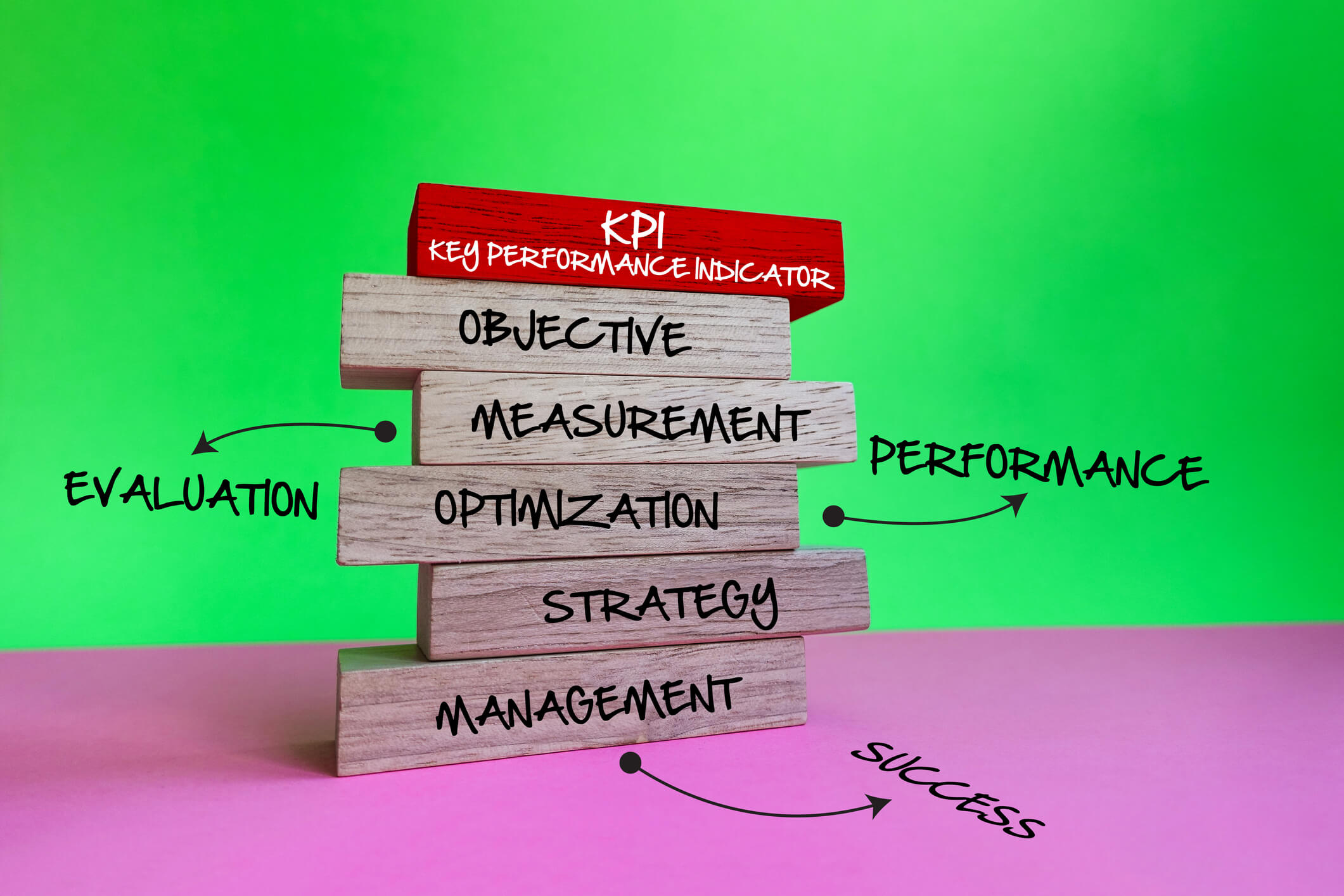
Key Performance Indicator Success: Define What Matters
Key performance indicators success starts with choosing a small set of clear, quantifiable KPIs tied directly to your business goals, then setting targets, tracking them consistently, and acting on what the numbers tell you. When you define success upfront, align each KPI to a specific objective, and review results through a simple analytics dashboard, your metrics stop being a data dump and start becoming a decision-making engine.
After more than 20 years leading Complete Controller and partnering with thousands of small and midsize businesses across nearly every sector imaginable, I’ve watched companies drown in dashboards that look impressive but drive zero decisions. Here’s what I know to be true: a Bain & Company study found that firms using analytics are more than twice as likely to be top performers—and they make decisions about twice as fast as their peers. In this article, I’ll walk you through how to choose the right KPIs, build a lean tracking system, apply KPI discipline to marketing and SEO, and turn weekly reviews into real business momentum.
What is key performance indicators success and how do you define what matters?
Key performance indicators success means using a focused set of KPIs that directly measure progress toward strategic goals, with clear definitions, targets, owners, and tracking routines tied to action.
KPIs differ from generic metrics because they measure what matters most for your objectives—not just anything you can count.
Defining KPI success starts with goals first: clarify outcomes, then choose KPIs that provide objective evidence of progress.
Tracking KPI success requires accurate data, simple visualization through an analytics dashboard, and a regular review cadence that drives decisions.
Sustainable KPI success depends on ownership—every KPI has a point person, and the team knows exactly how to respond when performance shifts.
Understanding KPIs, Metrics, and What “Success” Really Means
Key performance indicators are critical, quantifiable measures of progress toward an intended result, while metrics are broader data points that may or may not connect to key goals. Getting the language right is the foundation of KPI discipline—because when everything is a “KPI,” nothing is.
KPI vs Metric vs Measure: Getting the language right
Think of it as a hierarchy. A measure is the raw number (245 leads this month). A metric is any quantifiable comparison built from measures. A KPI is the small, elite subset of metrics that directly reflects whether you’re winning at your strategic objectives. All KPIs are metrics, but not all metrics deserve KPI status.
This matters because treating every metric as a KPI creates noise. A clean hierarchy keeps your team focused on outcomes instead of vanity numbers like impressions or follower counts that feel productive but don’t move the business.
How different types of KPIs support business success
A complete KPI system blends leading indicators (qualified leads, demo bookings) that predict future results with lagging indicators (revenue, profit) that confirm outcomes. You also want a mix of strategic KPIs for long-term direction and operational KPIs for daily execution.
The legendary Balanced Scorecard approach by Kaplan and Nortonpopularized the idea decades ago: you need a small, balanced set of measures across four views—financial, customer, internal processes, and learning and growth—not just dollar signs. That framework still holds up.
From Goals to KPI Success: A Step-by-Step Framework
Key performance indicators success starts with clear objectives; you then work backward to define KPIs, targets, and tracking methods. Here’s the framework I use with every client at Complete Controller.
Define success in plain language
Start with strategic objectives, not numbers. Ask: “What does success look like 12 to 24 months from now?” Then translate vague aspirations (“grow faster”) into SMART outcomes like “reduce average invoice-to-cash collection time from 45 days to 30 days within 12 months.”
Choose KPIs that reflect those outcomes
Brainstorm every possible metric, then filter ruthlessly. Ask: “If this number moved, would we consider it real progress?” Keep 3–7 KPIs per major area. Each one should be:
Aligned with strategy
Simple enough that anyone can understand it
Built on reliable, accessible data
Actionable—a change triggers a specific decision
Balanced between leading and lagging signals
Document targets, owners, and cadence
Write each KPI as a complete statement with action, value, unit, and timeframe (“Increase NPS from 35 to 50 within 12 months”). Assign a point person. Decide the review rhythm—weekly for operational KPIs, monthly or quarterly for strategic ones.
Marketing KPI Success: From Vanity Metrics to Revenue Impact
Marketing is where KPI confusion explodes—page views and followers multiply while sales stay flat. The fix is designing key performance indicators for marketing performance that connect to revenue.
Marketing KPI tracking best practices
A marketing metric becomes a marketing KPI only when it’s a proven driver of a business objective. Core marketing KPIs that earn their place include:
Marketing qualified leads (volume and quality)
Customer acquisition cost and customer lifetime value
Conversion rate across each funnel stage
Marketing-sourced or influenced revenue
Strong marketing KPI tracking best practices start with aligning every KPI to a business goal, then unifying data inside a single analytics dashboard pulled from your CRM, marketing automation, and web analytics tools.
Measuring ROI using KPIs
Measuring ROI using KPIs means tying campaign spend directly to qualified opportunities, closed deals, and revenue. Track ROI percentage by campaign, payback period for marketing spend, and pipeline generated per channel. When you spot bottlenecks in conversion rate at a specific funnel stage, you know exactly where to invest next.
SEO KPI Success: Turning Traffic Into Revenue
Search traffic is meaningless if it doesn’t lead to outcomes. SEO KPI success means elevating metrics that tie organic performance directly to pipeline—not just rankings.
Choosing the right SEO KPI for business outcomes
The smartest SEO KPI isn’t “number of ranking keywords”—it’s “qualified leads per month from organic search.” Track both leading indicators (rankings, click-through rate from Google Search Console) and lagging indicators (leads, deals, revenue).
SEO analytics dashboard reporting
Effective SEO analytics dashboard reporting segments performance by branded vs. non-branded queries and by high-intent vs. informational searches. If organic traffic climbs but conversion rate stays flat, don’t celebrate—fix your landing pages and offers before pouring more budget into content.
Tracking and Visualizing KPIs: Dashboards That Drive Action
Defining KPIs is only half the job. Real KPI success depends on how quickly and clearly you can see them—and how fast you act. This is exactly why Bain found analytics-driven firms make decisions twice as fast as peers.
Building an effective analytics dashboard
A useful dashboard displays a small set of top-tier KPIs at a glance, uses simple visuals (trend lines, gauges, traffic lights), and allows drill-down into the underlying data. Standardize definitions across the company—”What exactly counts as a qualified lead?”—so trends stay meaningful over time.
Data quality and governance
Pull data from authoritative systems only: accounting, CRM, web analytics. Maintain a KPI dictionary with definitions, owners, formulas, and cadence. Audit periodically. A KPI built on dirty data is worse than no KPI at all because it creates false confidence.
Case Study: KPI Discipline in Action
A mid-sized firm profiled by Doeren Mayhew implemented structured KPI tracking around profit margin, cash flow, and operational efficiency. By putting KPIs in full view through dashboards and tying every review to concrete action plans, leadership made faster, better decisions and lifted overall performance.
Google’s famous Project Oxygen tells a similar story. As Laszlo Bock detailed in Harvard Business Review, Google used KPI-driven research to identify eight key manager behaviors, trained managers on them, and measured improvement through follow-up surveys. The throughline in both cases: transparency plus accountability turns KPIs from passive reports into a performance engine.
Conclusion: Define What Matters, Review It Relentlessly
After two decades of helping founders untangle their numbers, I can tell you that KPI success is less about finding the “perfect” metric and more about being brutally honest about what success looks like—then reviewing those few numbers relentlessly. Clarify your goals, pick a small set of well-defined KPIs, build a simple dashboard, and tie every review to action. Your business will get sharper, faster, and far more resilient.
If you’d like help defining, tracking, and acting on KPIs—especially around cash flow, margins, and financial health—visit Complete Controller to see how our team can support yours.
Frequently Asked Questions About Key Performance Indicators Success
What is a key performance indicator with an example?
A KPI is a quantifiable measure of progress toward a business objective. Examples include revenue growth rate, customer retention rate, net promoter score, and average days sales outstanding.
What are the 5 key performance indicators of business success?
Common cross-industry KPIs include revenue growth, profit margin, customer retention rate, net promoter score (NPS), and employee engagement or turnover rate.
What’s the difference between a KPI and a success metric?
Success metrics include any measures used to judge whether goals are met. KPIs are the critical subset formally designated to track progress toward your most important objectives.
How do you choose KPIs for your business?
Start from your strategic objectives, define success in measurable terms, then select a few KPIs that directly reflect those outcomes using criteria like alignment, simplicity, data availability, and actionability.
How do you track KPIs effectively?
Use clear definitions, accurate data sources, regular collection, dashboard visualization, assigned owners, and a review cadence that links every KPI movement to a concrete action plan.
About Complete Controller® – America’s Bookkeeping Experts Complete Controller is the Nation’s Leader in virtual bookkeeping, providing service to businesses and households alike. Utilizing Complete Controller’s technology, clients gain access to a cloud platform where their QuickBooks™️ file, critical financial documents, and back-office tools are hosted in an efficient SSO environment. Complete Controller’s team of certified US-based accounting professionals provide bookkeeping, record storage, performance reporting, and controller services including training, cash-flow management, budgeting and forecasting, process and controls advisement, and bill-pay. With flat-rate service plans, Complete Controller is the most cost-effective expert accounting solution for business, family-office, trusts, and households of any size or complexity.
Jennifer BrazerFounder/CEO
Jennifer is the author of From Cubicle to Cloud and Founder/CEO of Complete Controller, a pioneering financial services firm that helps entrepreneurs break free of traditional constraints and scale their businesses to new heights.
Brittany McMillen is a seasoned Marketing Manager with a sharp eye for strategy and storytelling. With a background in digital marketing, brand development, and customer engagement, she brings a results-driven mindset to every project. Brittany specializes in crafting compelling content and optimizing user experiences that convert. When she’s not reviewing content, she’s exploring the latest marketing trends or championing small business success.
Beginning a business can be exhausting, yet fiercely satisfying. It can be very entangled and may move prospective entrepreneurs in ways they had not envisioned. Knowing and envisioning the obstacles that can lead to start-up mistakes could enable the entrepreneur to get ready proactively and potentially evade basic impediments that can lead to their business ending.
Raising Finance – Avoiding Start-Up Mistakes
Launching products, employing key staff, and fitting out new office spaces could all give an extreme hit to any entrepreneur’s account. Getting a bank loan is not a simple process, particularly since the credit crunch is stinging since the extreme financial crash of 2008. Indeed, even with the crowdfunding schemes and other options skimming around, finances are as yet not promptly accessible to all business visionaries. Especially, as new entrepreneurs do not have basic bookkeeping knowledge, finance can be mind-boggling for such cases.
Financial skills are lumped together to fund the greatest and most encouraging organizations. It can be truly debilitating to new business people, particularly as it misleadingly restrains the pool of potential trendsetters who could drive the economy forward.
While some people are blessed with good investors, attempting to persuade investors for your business is justified regardless of their cash, particularly when it’s your first business. To successfully raise finance, entrepreneurs need to have the capacity to sell their thoughts and vision to potential investors. Start-up loans can be taken from family and friends or from financial institutions, should there be no inherited fortune at hand. This advance is normally spread over a sensible measure of time and permits you the flexibility to pay back over time without crushing your business to an end.
To ensure correct deployment of finances, it is most important for entrepreneurs to have an able bookkeeping professional at their side. Not assessing correct financial sources and its execution is a fundamental start-up mistake.
Marketing – Fundamental Start-Up Blunders to Avoid
Once entrepreneurs have had their idea and potentially a heavy investment from a generous investor, or they have acquired a loan, there is now the challenge of visibility.
Marketing a start-up is an alternate ball game from marketing a conventional business or enterprise. First of all, the entrepreneur will not have any brand acknowledgment to get into the entryway, the financial plan is typically restricted, and on most occasions, the entrepreneur is managing potential clients in a highly competitive atmosphere.
It’s critical that sound content is put out to market the business in the best light for the intended target market. Most new businesses don’t see the need to enlist creative professionals exclusively for quality content creation. In most circumstances, entrepreneurs wind up struggling for composing strategies to sell their ideas successfully. In this regard, articles and papers are published to market the business and sell its idea to the mass audience. Thankfully, such measures can be undertaken with the assistance of cutting-edge writers who better convey the business message to the potential customers. These strategies have to be formulated as part of start-up tasks.
Contracting the Right Individuals
There is an immense pool of aspiring candidates available. Be that, in any case, choosing an appropriate candidate to fit the team could be an overwhelming assignment as the decisions in early stages of business can have far-reaching consequences. It is one of the greatest challenges confronting new businesses in this digital age.
Certain abilities are vital for your business to survive and develop such as bookkeeping skills. Knowing the correct aptitudes required – and how to get those fundamental individuals – may decide how well your start-up flourishes. Postponements in finding the correct staff won’t just take up significant time yet also serious, prompt bottlenecks such as the delayed launch of new products or services. Looking for the assistance of trusted agencies could also help take care of these issues. Hiring the wrong people is a critical start-up mistake.
Customer Loyalty
It is frequently stated that customer is king, and rightly so. Winning a client’s trust is of paramount importance among the most imperative obstacles that organizations, as a rule, should overcome. With a very satisfied and steadfast customer base, new businesses can scale quickly and gain ground towards progress.
To win clients’ trust and steadfastness, new businesses need to work forcefully to actualize client driven working philosophies. This would obviously empower them to prevail in the quest for achieving sustainable development in this highly competitive business environment.
Avoiding crucial start-up mistakes from the day and finding the right resources and partner can improve any businesses’ chances of success and survival.
About Complete Controller® – America’s Bookkeeping Experts Complete Controller is the Nation’s Leader in virtual accounting, providing services to businesses and households alike. Utilizing Complete Controller’s technology, clients gain access to a cloud-hosted desktop where their entire team and tax accountant may access the QuickBooks file and critical financial documents in an efficient and secure environment. Complete Controller’s team of US based accounting professionals are certified QuickBooksTMProAdvisor’s providing bookkeeping and controller services including training, full or partial-service bookkeeping, cash-flow management, budgeting and forecasting, vendor and receivables management, process and controls advisement, and customized reporting. Offering flat rate pricing, Complete Controller is the most cost effective expert accounting solution for business, family office, trusts, and households of any size or complexity.
Most motivated professionals and expert entrepreneurs know the importance and advantages of investing in themselves – developing and sharpening valuable skills that boost their strengths over time. While you certainly require guts and patience to initiate and run a new venture, you also must concentrate on nurturing these six essential business skills that are vital to succeed as an entrepreneur in very critical situations.
1. Communication
Your company can instantaneously turn from a good situation to a bad situation when your communication lacks clarity, purpose and impact. On the contrary, effective communication has enough potential to revolutionize an idea, thus, breathing a new life into your product or brand. Besides being a creative and design genius, Steve Jobs, the founder of Apple, was also an influential communicator. If you revisit his marketing taglines and keynote speeches, you will immediately realize how communication played a key role in building one of the most valuable companies in the world. In fact, many psychologists and business experts also believe that effective communication is one of the most important skills to become a successful entrepreneur.
2. Branding (Personal as well as Business)
In today’s digitally evolved corporate environment, knowing how to establish yourself as an expert professional in your industry is critical to your entrepreneurial success. In fact, branding now includes being active on social media platforms like Facebook, YouTube, Instagram, and SnapChat. It is shaped by content marketing both on and off your business website. However, poor content can result in negative branding. Consequently, it is necessary to determine how to share your content and marketing resources so that your target audience not only wants what you have to offer but also finds it valuable.
3. Critical Thinking
The objective analysis and assessment of a matter to form a logical judgment is collectively known as critical thinking. It typically begins with questing assumptions, hypothesis, opinions, and claims rather than simply accepting them as gospel. Just like bookkeeping is fundamental to creating business accounts, critical thinking is essential to smart entrepreneurial decisions, making that, in turn, a key to becoming a successful businessperson.
Today, we are continuously bombarded with tactful content and sound bites. That is why our ability to question in order to determine what is real and what is not, to understand casual relationships, and to reason logically instead of generalizing from a given data point, has become more critical than ever before.
Consequently, question each and everything, especially superstitions and common doctrines. Also, listen to people who challenge your popularly held beliefs. Here, you must resist habitual pressure to look at matters in “us vs. them” or black and white terms. In addition, you should learn to view the world from different viewpoints, perspectives, and angles.
4. Sales
Although you may not identify as a salesperson, you are involved in sales to a great extent when you are running a business. You might have a great sales team handling all of your corporate sales. However, whenever you give a presentation about your business products, negotiate with a vendor, or simply convince anyone of anything, you are typically tapping into your sales skills.
There are numerous strategies to sell even without selling. Take a moment to think about corporate conversations you have with your potential clients. Those that rendered a sale are probably not hard pitches to get your potential customers to purchase from you. In fact, they largely focus on helping them find a solution to their problem. Thus, you should also concentrate on helping them, instead of selling. This way you will have more confidence in terms of the sales process, making you bring in more sales, too.
5. Confidence and Assertiveness
While listening is necessary for effective business communication, you also have to determine when you should take control of a conversation and assert your viewpoints, opinions and beliefs. Although you need to have an attentive ear to other people’s requests and claims, you also must understand when to say no. You must learn to be consistent and open-minded in order to earn trust and respect from those around you.
6. Perseverance
Most successful entrepreneurs have faced devastating failures and defeats in their lives. Instead of looking at such situations as a demotivating factor, they view them as stepping stones towards their business success. Besides maintaining their perseverance and optimism, they also make smartly calculated changes to their future efforts. Always remember that you fail only when you do not try, as persistence is the key to success in just about any aspect of a business.
About Complete Controller® – America’s Bookkeeping Experts Complete Controller is the Nation’s Leader in virtual accounting, providing services to businesses and households alike. Utilizing Complete Controller’s technology, clients gain access to a cloud-hosted desktop where their entire team and tax accountant may access the QuickBooks file and critical financial documents in an efficient and secure environment. Complete Controller’s team of US based accounting professionals are certified QuickBooksTMProAdvisor’s providing bookkeeping and controller services including training, full or partial-service bookkeeping, cash-flow management, budgeting and forecasting, vendor and receivables management, process and controls advisement, and customized reporting. Offering flat rate pricing, Complete Controller is the most cost effective expert accounting solution for business, family office, trusts, and households of any size or complexity.
The essential elements in fraud are risk and materiality. The assessment of the importance of these factors will, to some degree, determine how seriously the corporation treats fraud prevention and detection. It will also affect the means dedicated to fraud-related tasks, so all assessors need to consider the risk and materiality of fraud in their organization. Not everyone can afford the high-tech resources necessary for fraud prevention, but anyone can practice some definite preventive measures.
Types of Fraudulent Acts
You can commit fraud through many media types, including mail, wire, phone, and the Internet (Computer Crimes and Internet fraud). The international magnitudes of the web, the comfort with which users can hide their location, the trouble of checking identity, and legality online. The simplicity with which hackers can distract browsers to fraudulent sites and steal credit card details has subsidized the rapid growth of internet fraud. In some countries, tax fraud is under false billing or tax forgery.
Fraud as a Civil Wrong
The court structure observes fraud as a civil wrong, known as a “tort.” Each jurisdiction has a definite description of fraud, but it is the intentional misrepresentation of essential facts. For a civil wrong, certain features must be in place, including:
Demonstrating the state of mind of both the committer and victim at the time of the crime
Substantiating the fraud occurred with clear and conclusiveevidence
Fraud is a Criminal Offense
Certain varieties of fraud are categorized as criminal offenses, mainly if the offender is involved in theft under false simulations. Like civil wrongs, certain features must be in place for fraud to fall under the category of a criminal offense.
Deliberate sham by pretense with the intent to persuade the victim to part with money or property
The belief in the dishonesty by the victim, who parts with the money or property under the pretenses
The perpetrator keeping, or aiming to keep, the money or property in inquiry
Fraud Prevention
It is vital for an association, large or small, to have a fraud prevention plan in place. Fortunately, there are ways you can minimize fraud incidences by executing different measures and controls.
Know your employees: Fraud committers often display behavioral mannerisms that can indicate the intent to commit fraud. Observing and listening to employees can help you identify a potential fraud risk. It is essential for management to be involved with their employees and take the time to get to know them.
Make employees aware/set up a reporting system: Awareness affects all personnel. Everyone within the association should be conscious of the fraud risk policy containing fraud and its consequences. Those who plan to commit fraud will know that management is watching and will hopefully be dissuaded by this.
Implement internal controls: Internal controls are the plans and programs applied to safeguard your company’s possessions, ensure the reliability of its accounting records, and prevent and detect fraud and theft.
Monitor vacation balances: You might be curious about the employees who haven’t missed a day of work in years. While these may sound like loyal employees, it could be a sign that they have something to hide and are worried that someone will detect their fraud if they are out of the office for some time. It is also a good idea to rotate workers to various jobs within a firm.
Hire experts: Certified Fraud Examiners (CFE), Certified Public Accountants (CPA), and CPAs who are certified in Financial Forensics (CFF) can help you establish anti-fraud policies and procedures. These specialists can provide a wide range of facilities, from complete internal control audits and forensic analysis in general to essential consultations.
Live the corporate culture: A positive work environment can prevent employee fraud and theft. There should be a clear organizational structure, written policies and procedures, and fair employment practices. An open-door policy can also provide a great fraud prevention system as it gives employees open lines of communication with the administration.
Final Note
Those who are willing to commit fraud do not differentiate. It can happen in large or small companies across various industries and geographic locations. Professional fraud can result in enormous financial loss, legal costs, and a ruined reputation that can eventually lead to a business’s downfall. Ensure you have the proper plans in place that can suggestively reduce fraudulent activities from occurring or cut losses if fraud has already happened. Following through with the policy, enforcing the noted steps, and enforcing the consequences are crucial to preventing fraud.
About Complete Controller® – America’s Bookkeeping Experts Complete Controller is the Nation’s Leader in virtual bookkeeping, providing service to businesses and households alike. Utilizing Complete Controller’s technology, clients gain access to a cloud platform where their QuickBooks™️ file, critical financial documents, and back-office tools are hosted in an efficient SSO environment. Complete Controller’s team of certified US-based accounting professionals provide bookkeeping, record storage, performance reporting, and controller services including training, cash-flow management, budgeting and forecasting, process and controls advisement, and bill-pay. With flat-rate service plans, Complete Controller is the most cost-effective expert accounting solution for business, family-office, trusts, and households of any size or complexity.
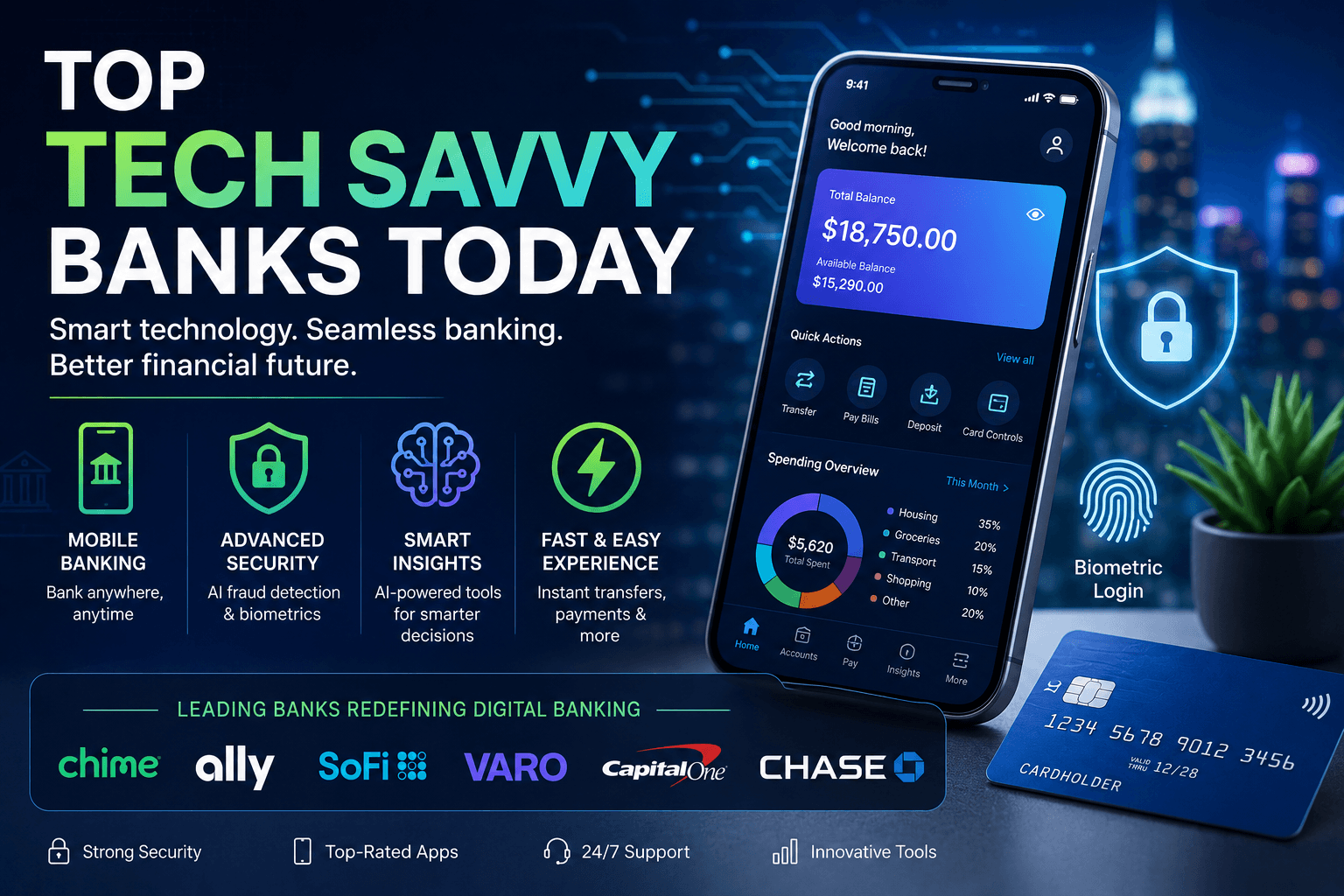
Top Tech-Savvy Banks: Cutting-Edge Digital Banking
Tech savvy banks are financial institutions that deliver cutting-edge digital banking through fast, secure mobile apps, robust online banking platforms, AI-driven insights, and advanced security like biometrics and real-time fraud detection. The leaders in this space—including digital-first players like Chime, Ally, SoFi, and Varo, alongside modernized traditional banks like Capital One and JPMorgan Chase—stand out because their technology actually makes everyday money management simpler, faster, and safer for both personal and business customers.
After more than 20 years running Complete Controller and partnering with thousands of small and mid-sized businesses across nearly every industry imaginable, I’ve had a front-row seat to how banking technology can either accelerate a company’s growth or quietly choke it. Here’s a stat that says it all: 65% of U.S. bank customers now use mobile apps as their primary way to access their accounts—up from just 15% a decade ago (Federal Reserve, 2024). In this article, I’ll walk you through what truly defines a tech-savvy bank today, which features genuinely matter, how modern banks protect your money with AI and biometrics, what business owners specifically should look for, and how to choose a digital banking partner that grows with you.
What are the top tech savvy banks and what makes their digital banking truly cutting-edge?
Top tech savvy banks combine feature-rich mobile banking, seamless online banking, fintech partnerships, and advanced security like biometrics and AI-driven fraud detection.
Their mobile apps deliver instant transfers, mobile check deposit, card controls, and in-app support—built for daily use, not just checking balances.
Their online banking platforms unify bill pay, budgeting, savings, and business cash management under one intuitive dashboard.
Behind the scenes, they run on modern digital banking platforms—APIs, cloud cores, and AI engines—that personalize insights and keep uptime high.
They invest heavily in security: multi-factor authentication, biometric logins, real-time fraud monitoring, and continuous system upgrades.
What Makes a Bank “Tech-Savvy” Today?
Being a tech-savvy bank in today’s market goes well beyond having an app in the App Store. It requires a foundation of modern infrastructure, customer-focused design, and a relentless commitment to security and innovation.
Here are the core criteria I look for when evaluating whether a bank truly earns the “tech-savvy” label:
Modern mobile banking experience with high app ratings, mobile check deposit, P2P payments, instant card controls, and in-app secure messaging
Robust online banking with integrated bill pay, scheduled transfers, external account linking, and role-based access for business users
Advanced financial technology (FinTech) stack built on platforms like Temenos Digital, nCino, or Mambu with open APIs for budgeting and accounting tools
Smarter digital security including biometric authentication, continuous AI monitoring, and zero-trust access principles (ABA)
Customer-centric design with fast digital onboarding (eKYC, OCR, AML automation) and 24/7 chat support
Why digital banks and neobanks often lead in innovation
Digital banks and neobanks have a structural advantage—they’re cloud-native from day one, which means they can ship new features faster than legacy banks weighed down by old core systems. Fintech services and neobanks tend to focus on mobile-first experiences targeting specific niches, like tech savvy banks for millennials, freelancers, or families. Platforms like Meniga power AI-based engagement for over 100 million end users globally, turning raw transaction data into personalized financial coaching.
Top Tech Savvy Banks and Digital Banking Leaders Worth Considering
The best digital banks for tech users share one trait: they treat your phone as the bank branch. Whether you’re choosing a neobank or a modernized traditional institution, the lineup below represents the standout names worth your shortlist.
Consumer-facing digital banks with standout mobile banking:
Chime — Excellent mobile UX, early direct deposit, fee-free overdraft protection; ideal for everyday consumers.
Ally Bank — Strong online banking, competitive savings rates, robust budgeting tools; great for digital-first savers.
SoFi — All-in-one banking, investing, and lending platform with sleek mobile design.
Varo — Fully chartered neobank with mobile-first design and cash advance features.
Capital One — A traditional bank that genuinely modernized—strong mobile banking features and security, plus accessible physical cafés.
JPMorgan Chase — Heavy AI investment, strong business banking tools, and broad integration options.
For business owners, I also recommend evaluating Relay, Bluevine, and Mercury—all of which offer multi-user access, accounting integrations, and a seamless online customer experience banks built for entrepreneurs need.
Your bank should make cash flow easier, not harder to track. Complete Controller helps business owners connect smarter banking with cleaner books, better visibility, and fewer financial surprises.
The Features That Actually Matter in Tech Savvy Banks
Not every shiny feature is worth chasing. The ones that genuinely save time and protect your money are the ones tied to daily friction points—security, speed, and clarity.
Mobile banking features and security that save time
The mobile banking features and security capabilities I tell clients to demand include:
One-tap card lock/unlock and travel notices
Push notifications for every transaction and login
Mobile check deposit with fast availability
In-app card replacement and virtual card issuance
Built-in multi-factor authentication and biometric logins
These features aren’t luxuries—they’re frontline fraud defense. The FTC reported consumers lost more than $10 billion to fraud in 2023, the highest level ever recorded (FTC, 2024). Real-time alerts are your earliest warning system.
AI-driven banking services and smart insights
AI-driven banking services automatically categorize transactions, surface spending trends, and deliver predictive cash-flow alerts. A landmark example: JPMorgan Chase built an AI system called COiN to read commercial loan agreements. Work that previously took 360,000 lawyer hours annually now completes in seconds (Bloomberg, 2017). That’s the kind of efficiency reshaping how banks serve customers—from automated bookkeeping reconciliation to instant credit decisions.
How Banks Use Smart Technology to Protect Your Money
Security is where tech savvy banks separate themselves from the pack. The combination of biometrics, AI fraud detection, and zero-trust architecture creates layered defense that static passwords simply cannot match.
Biometric authentication and AI fraud detection in action
Modern banks deploy:
Biometric authentication — fingerprint, face ID, and voice recognition on mobile devices
AI fraud detection — real-time scanning that flags unusual geo-locations, device changes, and spending anomalies
Continuous monitoring of customer channels and internal systems to reduce breach risk (Finextra)
When one regional bank deployed AI-driven fraud monitoring paired with biometrics, it saw faster detection and fewer false alarms—shrinking losses while raising customer trust scores. Ask your bank exactly which AI tools they use and how they handle suspicious activity.
How Tech Savvy Banks Support Small Businesses and Founders
This is where my Complete Controller team lives every day—at the intersection of business banking and clean books. The right bank can cut your monthly bookkeeping workload in half. The wrong one can create chaos.
Features that matter for founders and small-business owners include multi-user access with permissions for staff and bookkeepers, integration with accounting platforms like QuickBooks, same-day payouts, and dedicated business mobile apps. Pair these with cloud-based bookkeeping services and you’ve got a financial engine that scales.
What I see when connecting client books to tech savvy banks
Across 20+ years of onboarding clients, the pattern is unmistakable. Clients banking with modern digital institutions hand us clean data feeds, reliable exports, and solid audit trails. Clients stuck with laggard banks bring us missing transaction details, broken feeds, and clunky approval workflows that delay every close. Better digital banking directly reduces bookkeeping time, errors, and the back-and-forth that drains your team’s energy.
Before committing to any bank, take it for a 90-minute test drive: open a small account, run a bill pay, do a transfer, deposit a check, and export a transaction report. How it feels in those 90 minutes is how it’ll feel forever.
How to Choose the Right Tech Savvy Bank for Your Needs
Matching the bank to your life stage and goals is where most people get tripped up. Use this quick framework:
Millennials and Gen Z: Prioritize instant notifications, zero-fee ATM networks, and best-in-class mobile apps
Families: Look for joint accounts, sub-accounts for kids, and shared budgeting tools
Business owners and freelancers: Demand invoicing integration, clean separation between personal and business, and strong online banking features
Smart questions to ask any bank: What biometric and AI monitoring do you use? Can my CPA get read-only access? How often do you ship new features? Vague answers are red flags.
Final Thoughts: Building a Banking Stack That Supports Your Goals
Choosing a tech-savvy bank is a strategic decision, not a habit. The right partner blends mobile excellence, robust online banking, AI-driven insights, and bulletproof security to make your financial life lighter, not heavier. After two decades helping business owners untangle their finances, I can tell you the clients who upgraded to truly modern digital banks ended up with cleaner books, fewer surprises, and faster decisions across the board.
Your bank should accelerate your goals, not slow them down. If you’re ready to align your banking choices with efficient, cloud-based bookkeeping and long-term financial control, the team at Complete Controller is here to help you build a stack that actually works.
Frequently Asked Questions About Tech Savvy Banks
What is a tech-savvy bank?
A tech-savvy bank is a financial institution that prioritizes digital-first experiences—powerful mobile apps, intuitive online banking, AI-driven insights, biometric security, and seamless integration with fintech tools. Examples include neobanks like Chime and SoFi, plus modernized traditional banks like Capital One.
Are digital banks safer than traditional banks?
Digital banks often deploy more advanced security—biometrics, AI fraud detection, and zero-trust architecture—than legacy banks relying on static passwords. As long as the bank is FDIC-insured, your deposits are protected up to $250,000 just like any traditional bank.
Which banks have the best mobile banking apps?
Chime, Capital One, Ally, SoFi, and JPMorgan Chase consistently rank at the top for mobile banking features and security. Look for high app store ratings, frequent updates, biometric login, and in-app support before choosing.
What security features should I look for in online banking?
Insist on multi-factor authentication, biometric login options, real-time transaction alerts, encryption, and AI-driven fraud monitoring. Banks that follow zero-trust principles and continuously update their systems offer the strongest protection.
How do I switch to a more tech-savvy bank without disrupting my finances?
Open the new account while keeping the old one active, update direct deposits and autopays one at a time, leave a buffer in the old account for 60 days, and coordinate with your bookkeeper to update accounting integrations cleanly.
About Complete Controller® – America’s Bookkeeping Experts Complete Controller is the Nation’s Leader in virtual bookkeeping, providing service to businesses and households alike. Utilizing Complete Controller’s technology, clients gain access to a cloud platform where their QuickBooks™️ file, critical financial documents, and back-office tools are hosted in an efficient SSO environment. Complete Controller’s team of certified US-based accounting professionals provide bookkeeping, record storage, performance reporting, and controller services including training, cash-flow management, budgeting and forecasting, process and controls advisement, and bill-pay. With flat-rate service plans, Complete Controller is the most cost-effective expert accounting solution for business, family-office, trusts, and households of any size or complexity.
Jennifer BrazerFounder/CEO
Jennifer is the author of From Cubicle to Cloud and Founder/CEO of Complete Controller, a pioneering financial services firm that helps entrepreneurs break free of traditional constraints and scale their businesses to new heights.
Brittany McMillen is a seasoned Marketing Manager with a sharp eye for strategy and storytelling. With a background in digital marketing, brand development, and customer engagement, she brings a results-driven mindset to every project. Brittany specializes in crafting compelling content and optimizing user experiences that convert. When she’s not reviewing content, she’s exploring the latest marketing trends or championing small business success.
The use of shared drives is becoming more common among small businesses. Thus, many users are required to browse through internal filling systems. Such shared drives are like a modern-day version of physical filing cabinets. Back in the day, secretaries were experts at setting up systems for proper internal filing, using well-established nomenclature. Any filing system in the modern-day needs to allow its users to navigate with ease and intuition.
Common nomenclature pitfalls
The naming conventions developed naturally depend on what kind of industry you are in, along with the type of data you categorize. The following outlines a few essential tips you can adapt to organize your filing system.
Avoid the use of symbols
In file names, steer clear of using characters such as @ or &, limiting their use to folder names. Only use symbols if the service is employed officially in your company. As an example, take a department called Accounts & Finance. Using the character ‘&’ would be appropriate in their designated folder. Meanwhile, another department called social media and Marketing (note the use of ‘and’ instead of ‘&’), abbreviating ‘and’ to ‘&’ should be avoided.
If having such characters in the names of specific folders causes any trouble, it will be easy to change because only a few folders would contain them. The use of symbols in file names, however, is something that should never be practiced. It makes searching for specific files a hassle. In addition, new software that might not support the use of symbols could result in a nightmare of having to rename hundreds or even thousands of files.
Avoid abbreviations
Abbreviations are a big no-no. Your nomenclature system should not include them unless and until a particular abbreviation is commonly used. Specific departments in many organizations have their jargon abbreviations. If such abbreviations are used in file naming, it might create problems for other departments wishing to retrieve any data. Another thing that should be kept in mind while naming files is the convenience of future users who may want to retrieve the data. Doing this will avoid using abbreviations, which might be commonly used today, but may not be widely known among company members after some time.
The use of spaces
Standardize your company policy for spaces. Consistency is critical, and you need to make sure that everyone in your company uses the same format for areas. There are three different options when it comes to standardizing the policy on sites:
Using spaces in filenames
Complete omission of spaces
The traditional method of replacing areas with the ‘_’ symbol
Whatever you choose, make sure that all users know the policy and that the naming of files is as consistent as possible.
Establishing a standardized and comprehensive structure for hierarchy
Standardization helps users in navigating through the filing system. It also lets users know the proper method of filing things. Standardization can be different for every organization, but here is a basic structure with which you can begin thinking of your strategy for standardization.
Tier 1:
To develop the first tier, you should investigate your company’s organizational structure. Most businesses with a centralized system organize files and folders by the department. Companies that operate at different locations might have their files sorted into areas and then into departments.
Tier 2:
The second tier of your hierarchy can consist of project categories that each department handles. For example, your marketing department might have three dimensions for their projects: Online Marketing, Offline Marketing, Customer Retention, etc. An accounting department might have separate folders for payroll, bookkeeping, taxes, etc.
Tier 3:
The third tier is usually based on time. The period varies from department to department and company to company. This could be in days, weeks, months, quarters, years, etc.
It is essential to discuss the requirement with relevant heads of departments to better optimize the third tier for each department. For example, accounting and finance may need folders for fiscal years and quarters, while the operations department may need daily and monthly folders.
Tier 4:
This is the final tier and would include files. The naming of files in tier 4 should be consistent, and every employee who uses the filing system should be aware of the set standards for file naming, i.e., the Nomenclature System.
About Complete Controller® – America’s Bookkeeping Experts Complete Controller is the Nation’s Leader in virtual bookkeeping, providing service to businesses and households alike. Utilizing Complete Controller’s technology, clients gain access to a cloud platform where their QuickBooks™️ file, critical financial documents, and back-office tools are hosted in an efficient SSO environment. Complete Controller’s team of certified US-based accounting professionals provide bookkeeping, record storage, performance reporting, and controller services including training, cash-flow management, budgeting and forecasting, process and controls advisement, and bill-pay. With flat-rate service plans, Complete Controller is the most cost-effective expert accounting solution for business, family-office, trusts, and households of any size or complexity.




 Until and unless you do not take an intelligent threat, you cannot initiate a business.

 About Complete Controller® – America’s Bookkeeping Experts Complete Controller is the Nation’s Leader in virtual bookkeeping, providing service to businesses and households alike. Utilizing Complete Controller’s technology, clients gain access to a cloud platform where their QuickBooks™️ file, critical financial documents, and back-office tools are hosted in an efficient SSO environment. Complete Controller’s team of certified US-based accounting professionals provide bookkeeping, record storage, performance reporting, and controller services including training, cash-flow management, budgeting and forecasting, process and controls advisement, and bill-pay. With flat-rate service plans, Complete Controller is the most cost-effective expert accounting solution for business, family-office, trusts, and households of any size or complexity.