


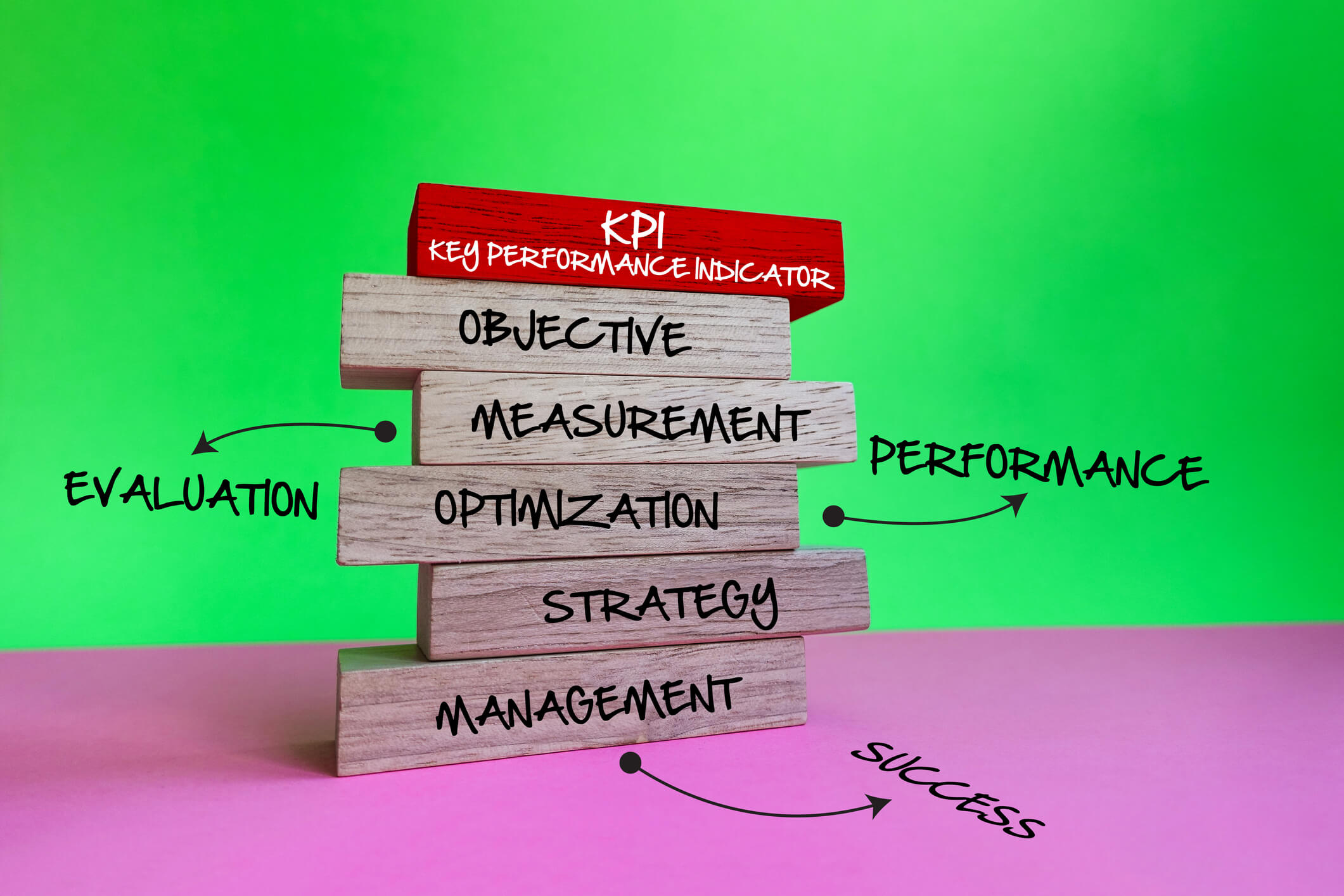
Key Performance Indicator Success:
Define What Matters
Key performance indicators success starts with choosing a small set of clear, quantifiable KPIs tied directly to your business goals, then setting targets, tracking them consistently, and acting on what the numbers tell you. When you define success upfront, align each KPI to a specific objective, and review results through a simple analytics dashboard, your metrics stop being a data dump and start becoming a decision-making engine.
After more than 20 years leading Complete Controller and partnering with thousands of small and midsize businesses across nearly every sector imaginable, I’ve watched companies drown in dashboards that look impressive but drive zero decisions. Here’s what I know to be true: a Bain & Company study found that firms using analytics are more than twice as likely to be top performers—and they make decisions about twice as fast as their peers. In this article, I’ll walk you through how to choose the right KPIs, build a lean tracking system, apply KPI discipline to marketing and SEO, and turn weekly reviews into real business momentum.
What is key performance indicators success and how do you define what matters?
- Key performance indicators success means using a focused set of KPIs that directly measure progress toward strategic goals, with clear definitions, targets, owners, and tracking routines tied to action.
- KPIs differ from generic metrics because they measure what matters most for your objectives—not just anything you can count.
- Defining KPI success starts with goals first: clarify outcomes, then choose KPIs that provide objective evidence of progress.
- Tracking KPI success requires accurate data, simple visualization through an analytics dashboard, and a regular review cadence that drives decisions.
- Sustainable KPI success depends on ownership—every KPI has a point person, and the team knows exactly how to respond when performance shifts.

Understanding KPIs, Metrics, and What “Success” Really Means
Key performance indicators are critical, quantifiable measures of progress toward an intended result, while metrics are broader data points that may or may not connect to key goals. Getting the language right is the foundation of KPI discipline—because when everything is a “KPI,” nothing is.
KPI vs Metric vs Measure: Getting the language right
Think of it as a hierarchy. A measure is the raw number (245 leads this month). A metric is any quantifiable comparison built from measures. A KPI is the small, elite subset of metrics that directly reflects whether you’re winning at your strategic objectives. All KPIs are metrics, but not all metrics deserve KPI status.
This matters because treating every metric as a KPI creates noise. A clean hierarchy keeps your team focused on outcomes instead of vanity numbers like impressions or follower counts that feel productive but don’t move the business.
How different types of KPIs support business success
A complete KPI system blends leading indicators (qualified leads, demo bookings) that predict future results with lagging indicators (revenue, profit) that confirm outcomes. You also want a mix of strategic KPIs for long-term direction and operational KPIs for daily execution.
The legendary Balanced Scorecard approach by Kaplan and Norton popularized the idea decades ago: you need a small, balanced set of measures across four views—financial, customer, internal processes, and learning and growth—not just dollar signs. That framework still holds up.
From Goals to KPI Success: A Step-by-Step Framework
Key performance indicators success starts with clear objectives; you then work backward to define KPIs, targets, and tracking methods. Here’s the framework I use with every client at Complete Controller.
Define success in plain language
Start with strategic objectives, not numbers. Ask: “What does success look like 12 to 24 months from now?” Then translate vague aspirations (“grow faster”) into SMART outcomes like “reduce average invoice-to-cash collection time from 45 days to 30 days within 12 months.”
Choose KPIs that reflect those outcomes
Brainstorm every possible metric, then filter ruthlessly. Ask: “If this number moved, would we consider it real progress?” Keep 3–7 KPIs per major area. Each one should be:
- Aligned with strategy
- Simple enough that anyone can understand it
- Built on reliable, accessible data
- Actionable—a change triggers a specific decision
- Balanced between leading and lagging signals
Document targets, owners, and cadence
Write each KPI as a complete statement with action, value, unit, and timeframe (“Increase NPS from 35 to 50 within 12 months”). Assign a point person. Decide the review rhythm—weekly for operational KPIs, monthly or quarterly for strategic ones.
Marketing KPI Success: From Vanity Metrics to Revenue Impact
Marketing is where KPI confusion explodes—page views and followers multiply while sales stay flat. The fix is designing key performance indicators for marketing performance that connect to revenue.
Marketing KPI tracking best practices
A marketing metric becomes a marketing KPI only when it’s a proven driver of a business objective. Core marketing KPIs that earn their place include:
- Marketing qualified leads (volume and quality)
- Customer acquisition cost and customer lifetime value
- Conversion rate across each funnel stage
- Marketing-sourced or influenced revenue
Strong marketing KPI tracking best practices start with aligning every KPI to a business goal, then unifying data inside a single analytics dashboard pulled from your CRM, marketing automation, and web analytics tools.
Measuring ROI using KPIs
Measuring ROI using KPIs means tying campaign spend directly to qualified opportunities, closed deals, and revenue. Track ROI percentage by campaign, payback period for marketing spend, and pipeline generated per channel. When you spot bottlenecks in conversion rate at a specific funnel stage, you know exactly where to invest next.
SEO KPI Success: Turning Traffic Into Revenue
Search traffic is meaningless if it doesn’t lead to outcomes. SEO KPI success means elevating metrics that tie organic performance directly to pipeline—not just rankings.
Choosing the right SEO KPI for business outcomes
The smartest SEO KPI isn’t “number of ranking keywords”—it’s “qualified leads per month from organic search.” Track both leading indicators (rankings, click-through rate from Google Search Console) and lagging indicators (leads, deals, revenue).
SEO analytics dashboard reporting
Effective SEO analytics dashboard reporting segments performance by branded vs. non-branded queries and by high-intent vs. informational searches. If organic traffic climbs but conversion rate stays flat, don’t celebrate—fix your landing pages and offers before pouring more budget into content.
Tracking and Visualizing KPIs: Dashboards That Drive Action
Defining KPIs is only half the job. Real KPI success depends on how quickly and clearly you can see them—and how fast you act. This is exactly why Bain found analytics-driven firms make decisions twice as fast as peers.
Building an effective analytics dashboard
A useful dashboard displays a small set of top-tier KPIs at a glance, uses simple visuals (trend lines, gauges, traffic lights), and allows drill-down into the underlying data. Standardize definitions across the company—”What exactly counts as a qualified lead?”—so trends stay meaningful over time.
Data quality and governance
Pull data from authoritative systems only: accounting, CRM, web analytics. Maintain a KPI dictionary with definitions, owners, formulas, and cadence. Audit periodically. A KPI built on dirty data is worse than no KPI at all because it creates false confidence.
Case Study: KPI Discipline in Action
A mid-sized firm profiled by Doeren Mayhew implemented structured KPI tracking around profit margin, cash flow, and operational efficiency. By putting KPIs in full view through dashboards and tying every review to concrete action plans, leadership made faster, better decisions and lifted overall performance.
Google’s famous Project Oxygen tells a similar story. As Laszlo Bock detailed in Harvard Business Review, Google used KPI-driven research to identify eight key manager behaviors, trained managers on them, and measured improvement through follow-up surveys. The throughline in both cases: transparency plus accountability turns KPIs from passive reports into a performance engine.
Conclusion: Define What Matters, Review It Relentlessly
After two decades of helping founders untangle their numbers, I can tell you that KPI success is less about finding the “perfect” metric and more about being brutally honest about what success looks like—then reviewing those few numbers relentlessly. Clarify your goals, pick a small set of well-defined KPIs, build a simple dashboard, and tie every review to action. Your business will get sharper, faster, and far more resilient.
If you’d like help defining, tracking, and acting on KPIs—especially around cash flow, margins, and financial health—visit Complete Controller to see how our team can support yours.

Frequently Asked Questions About Key Performance Indicators Success
What is a key performance indicator with an example?
A KPI is a quantifiable measure of progress toward a business objective. Examples include revenue growth rate, customer retention rate, net promoter score, and average days sales outstanding.
What are the 5 key performance indicators of business success?
Common cross-industry KPIs include revenue growth, profit margin, customer retention rate, net promoter score (NPS), and employee engagement or turnover rate.
What’s the difference between a KPI and a success metric?
Success metrics include any measures used to judge whether goals are met. KPIs are the critical subset formally designated to track progress toward your most important objectives.
How do you choose KPIs for your business?
Start from your strategic objectives, define success in measurable terms, then select a few KPIs that directly reflect those outcomes using criteria like alignment, simplicity, data availability, and actionability.
How do you track KPIs effectively?
Use clear definitions, accurate data sources, regular collection, dashboard visualization, assigned owners, and a review cadence that links every KPI movement to a concrete action plan.
Sources
- Adobe Inc. “What Are Key Performance Indicators? Measurement and Examples.” Adobe Business Blog. https://business.adobe.com/blog/basics/key-performance-indicator
- Bain & Company. (2013). “Big Data: The Organizational Challenge.” https://www.bain.com/insights/big-data-the-organizational-challenge/
- Bock, Laszlo. (2013, December). “How Google Sold Its Engineers on Management.” Harvard Business Review. https://hbr.org/2013/12/how-google-sold-its-engineers-on-management
- Britannica. “Key Performance Indicator.” https://www.britannica.com/topic/key-performance-indicator
- Doeren Mayhew. “Effectively Tracking Key Performance Indicators.” https://doeren.com/articles/effectively-tracking-key-performance-indicators/
- Google. “Search Console Help: Search Analytics.” https://support.google.com/webmasters/answer/7576553?hl=en
- Kaplan, Robert S., and David P. Norton. (1992). “The Balanced Scorecard—Measures That Drive Performance.” Harvard Business Review. https://hbr.org/1992/01/the-balanced-scorecard-measures-that-drive-performance-2
- Klipfolio. “KPI vs Metric vs Measure.” https://www.klipfolio.com/resources/articles/what-is-a-key-performance-indicator
- KPI.org. “What Is a Key Performance Indicator (KPI)?” https://www.kpi.org/kpi-basics/
- Pennsylvania State University. “KPI and Metrics.” https://opair.psu.edu/metrics/
- Phocas Software. “Business KPIs: 5 Important Characteristics of a Good KPI.” https://www.phocassoftware.com/business-intelligence-blog/5-characteristics-of-a-good-kpi
 About Complete Controller® – America’s Bookkeeping Experts Complete Controller is the Nation’s Leader in virtual bookkeeping, providing service to businesses and households alike. Utilizing Complete Controller’s technology, clients gain access to a cloud platform where their QuickBooks™️ file, critical financial documents, and back-office tools are hosted in an efficient SSO environment. Complete Controller’s team of certified US-based accounting professionals provide bookkeeping, record storage, performance reporting, and controller services including training, cash-flow management, budgeting and forecasting, process and controls advisement, and bill-pay. With flat-rate service plans, Complete Controller is the most cost-effective expert accounting solution for business, family-office, trusts, and households of any size or complexity.


 Brittany McMillen
Brittany McMillen
Brittany McMillen