


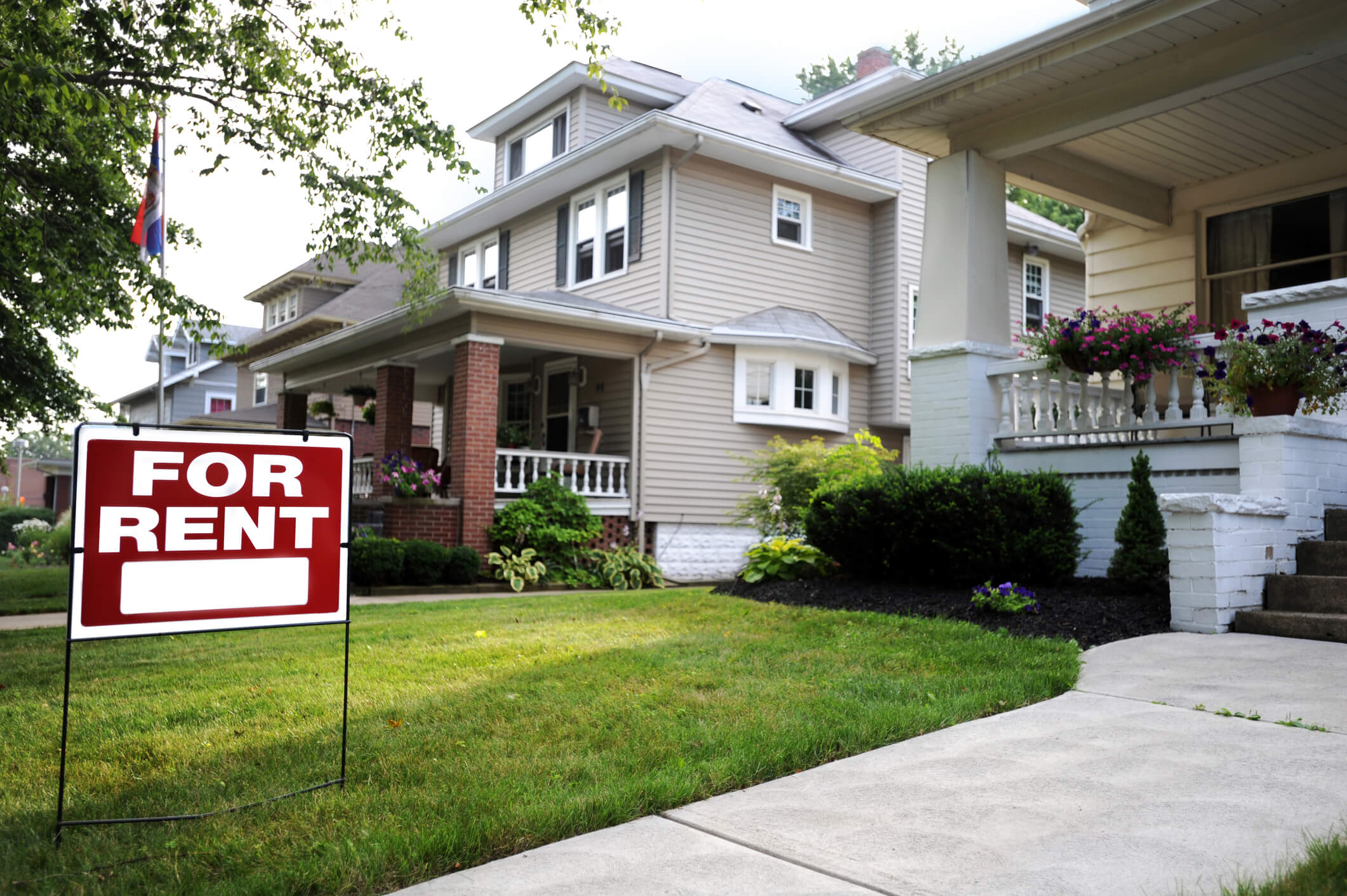
Smart Strategies to Invest in Rental Properties Successfully
Investing in rental properties offers one of the most reliable paths to financial independence, combining monthly cash flow with long-term appreciation and significant tax advantages—but success requires strategic planning, market knowledge, and disciplined financial management from day one. Unlike volatile stock markets or speculative investments, rental properties provide tangible assets that generate predictable income while building equity through tenant-paid mortgages and natural appreciation, creating multiple wealth streams that compound over decades.
Over my 20 years as CEO of Complete Controller, I’ve worked with thousands of real estate entrepreneurs across every market condition imaginable. The investors who build lasting wealth aren’t necessarily those with the most capital or the best “deals”—they’re the ones who understand their numbers, select markets strategically, and maintain disciplined financial systems. National rental yields currently average 6.51%, but savvy investors in markets like Houston achieve 9.20% while coastal markets lag at 4.63%, proving that market selection alone can double your returns. This guide provides the exact framework our most successful clients use to build rental portfolios generating six-figure passive income, from acquiring your first property through scaling to financial freedom.

What does it mean to invest in rental properties successfully?
- • Investing in rental properties means purchasing real estate specifically to generate rental income and appreciation, creating dual revenue streams from monthly cash flow and long-term value growth
- • Success requires positive cash flow where monthly rent exceeds all expenses including mortgage, taxes, insurance, maintenance, and vacancy reserves
- • Strategic market selection determines profitability—secondary markets like Houston yield 9.20% versus San Francisco’s 4.63%
- • Tax advantages multiply returns through depreciation deductions, expense write-offs, and favorable capital gains treatment
- • Leverage amplifies wealth building as tenants pay down your mortgage while property values appreciate over time
Understanding Different Rental Property Investment Models
Each rental strategy serves different goals, risk tolerances, and time commitments. Your investment model shapes everything from property selection to financing options.
Long-term buy-and-hold rentals
Buy-and-hold remains the foundation of generational wealth through real estate. Properties purchased today generate monthly cash flow while appreciating—U.S. home values increased 53% between 2020 and 2024, with some markets like Ocean City seeing 87.8% appreciation.
A $300,000 property with 20% down ($60,000) generating $1,800 monthly rent typically nets $600–800 after expenses. Over 15 years, that’s $108,000–144,000 in cash flow plus $120,000+ in principal paydown and 40–60% appreciation. Your initial $60,000 investment potentially returns $300,000+.
The strategy demands patience. Markets fluctuate, tenants turn over, and maintenance surprises occur. Yet investors who weather these challenges build substantial wealth—one documented case showed progression from -$16,000 net worth to $500,000+ in five years through disciplined buy-and-hold investing.
Short-term vacation rentals
Vacation rentals through Airbnb or VRBO can generate 50–100% higher revenue than traditional rentals. A property renting for $1,400 monthly might produce $3,500–5,000 as a vacation rental.
Higher revenue comes with higher complexity:
- Cleaning costs ($150–300 per stay)
- Platform fees (10–15% of revenue)
- Constant guest communication
- Regulatory restrictions in many cities
- Higher vacancy risk during off-seasons
Success requires treating the property as an active business rather than passive investment.
House hacking your way to wealth
House hacking accelerates wealth building by eliminating your largest expense—housing—while building equity. Buy a duplex, triplex, or fourplex, live in one unit, rent the others.
Real example: An investor bought a $292,000 property in Idaho with 10% down ($29,200). Monthly payments totaled $1,600. Renting two bedrooms at $550 each ($1,100 monthly) reduced their housing cost to $500 while building equity in a $292,000 asset. This strategy transformed their net worth from negative to $500,000+ over five years.
The trade-offs include living near tenants and handling maintenance personally, but the financial acceleration proves transformative for disciplined investors.
The Financial Framework: Calculating True Returns
Most rental property failures stem from poor financial analysis. Understanding real numbers separates successful investors from those who lose money.
True cash flow calculation
Never trust seller projections. Calculate actual cash flow using:
Gross Rent – (Mortgage + Property Tax + Insurance + Maintenance Reserve + Vacancy + Management + HOA) = True Cash Flow
Example analysis:
- Property price: $280,000
- Down payment (20%): $56,000
- Monthly mortgage (6.5%): $1,332
- Gross rent: $1,600
- Property tax: $220
- Insurance: $120
- Maintenance (1% annually): $233
- Vacancy (5%): $80
- Management (10%): $160
True monthly cash flow: $1,600 – $2,145 = -$545
This property loses money monthly despite appearing profitable. Successful properties follow the 1% rule—monthly rent should equal 1% of purchase price for positive cash flow.
Understanding total returns
Cash-on-cash return shows immediate profitability:
Annual Cash Flow ÷ Total Investment = Cash-on-Cash Return
A property netting $400 monthly ($4,800 annually) with $61,000 invested yields 7.9%—decent but not exceptional.
Total return includes:
- Cash flow: $4,800
- Principal paydown: $8,000
- Appreciation (3%): $8,400
Total Year 1 return: $21,200 (34.8% on investment)
This demonstrates real estate’s wealth-building power through multiple profit channels.

Building Your First Investment Strategy
Step 1: Define your investment goals
Cash flow investors target secondary markets where cap rates reach 6–8%. Properties in Houston, Philadelphia, or Atlanta generate immediate income but appreciate modestly.
Appreciation investors accept lower initial returns (3–5% cap rates) in primary markets like Seattle or Boston, banking on 4–6% annual appreciation. Most sophisticated investors blend both approaches—acquiring cash-flowing properties initially, then pivoting to appreciation plays.
Property insurance costs have surged 75% since 2019, with landlords absorbing 72% of increases. Factor rising expenses into projections—a property generating $600 monthly today might yield only $400 in three years without rent increases.
Step 2: Secure proper financing
Investment property loans require:
- 20–25% down payment
- Credit score 680+
- Debt service coverage ratio ≥1.2x
- 6–12 months reserves
Financing sources include:
- Conventional mortgages (current rates 6.5–7.5%)
- Portfolio lenders offering flexible terms
- Home equity lines for down payments
- Self-directed retirement accounts
Step 3: Assemble your team
Success requires professionals:
- Investment-focused real estate agent who understands cap rates
- Mortgage broker specializing in investment properties
- Property manager for scalability
- CPA experienced with real estate for tax optimization
- Bookkeeper to track cash flow systematically
Maximizing Tax Benefits
Rental properties offer unmatched tax advantages. Rental income avoids self-employment tax (15.3% savings versus W-2 wages).
Deductible expenses include:
- Mortgage interest
- Property taxes
- Insurance premiums
- All maintenance and repairs
- Property management fees
- Depreciation (non-cash deduction)
Depreciation changes everything: A $300,000 property might allocate $250,000 to the building, generating $9,091 annual depreciation. With $4,800 cash flow minus $9,091 depreciation, you show a $4,291 tax loss despite receiving cash—potentially offsetting other income.
Professional tax preparation maximizes these benefits through cost segregation studies and strategic entity structuring.
Tenant Selection and Occupancy Optimization
Quality tenants determine profitability. One bad tenant costs $15,000+ through eviction, damages, and vacancy.
Screen thoroughly:
- Credit score 650+
- Income 3x monthly rent
- Stable employment (2+ years)
- Clean rental history
- Background check
Price slightly below market—charging $1,700 instead of $1,800 attracts better applicants and reduces vacancy. The $100 monthly discount pays for itself through reduced turnover and consistent occupancy. Current data shows 33.6% of renters stay 5+ years, with 16.6% staying 10+ years, proving tenant stability when properly screened.
Scaling to Portfolio Success
The reinvestment strategy
- Year 1: First property generates $400 monthly ($4,800 annually)
- Year 2: Reinvest cash flow plus appreciation into second property
- Year 3: Two properties generate $9,600 annually
- Year 5: Four properties generate $19,200+ annually
Apartment demand absorbed 660,000 units in 2024 versus 590,000 delivered, creating 95% occupancy nationally. With construction declining 20% in 2025, supply constraints favor rent growth—positioning current buyers for appreciation.
Streamlined portfolio management becomes critical at scale. Professional bookkeeping, standardized processes, and systematic tracking separate hobbyists from wealth builders.
Final Thoughts
Rental property investing builds lasting wealth through disciplined execution, market knowledge, and professional financial management. The combination of monthly cash flow, mortgage paydown, tax benefits, and appreciation creates unmatched wealth-building potential—but only for investors who understand the numbers and execute strategically.
Start with one property in a cash-flowing market, maintain strict tenant standards, and reinvest profits systematically. Partner with professionals who understand real estate’s unique financial dynamics. Most importantly, think long-term—real wealth comes from decades of disciplined ownership, not quick flips.
Ready to build your rental empire with confidence? The experts at Complete Controller provide the financial foundation successful real estate investors need. Contact us today to discover how professional bookkeeping and strategic financial management accelerate your path from first property to financial freedom.

Frequently Asked Questions About Invest in Rental Properties
How much money do I need to start investing in rental properties?
Most investment properties require 20-25% down payment plus closing costs and reserves. For a $200,000 property, plan for $40,000-50,000 down payment, $3,000-5,000 closing costs, and $10,000-15,000 in reserves—approximately $60,000-70,000 total initial investment.
What’s the difference between cap rate and cash-on-cash return?
Cap rate measures a property’s return without considering financing (Net Operating Income ÷ Property Value), while cash-on-cash return measures actual return on your invested capital (Annual Cash Flow ÷ Total Cash Invested). Cash-on-cash better reflects your real returns.
Should I manage properties myself or hire a property management company?
Self-management saves 8-10% of gross rent but requires significant time. Start by self-managing your first property to understand operations, then hire management as you scale. Most investors transition to professional management after 3-4 properties.
How do I know if a rental property will be profitable?
Follow the 1% rule—monthly rent should equal 1% of purchase price. Also ensure the property cash flows positively after all expenses including mortgage, taxes, insurance, 10% vacancy allowance, 10% maintenance reserve, and management fees.
What are the biggest mistakes new rental property investors make?
Underestimating expenses (especially maintenance and vacancy), poor tenant screening, buying in declining markets, overleveraging with insufficient reserves, and failing to treat rentals as a business requiring professional bookkeeping and tax planning.
Sources
- Apartment Dealer. (2025). “Navigating the 2025 Multi-Family Investment Landscape in Southern California.” Retrieved from https://theapartmentdealer.com/navigating-the-2025-multi-family-investment-landscape-in-southern-california/
- Carson, C. “How I Rented My House and Bought Another – Case Study.” Coach Carson Real Estate Blog. Retrieved from https://www.coachcarson.com/rent-house-buy-another/
- Complete Controller. “How to Streamline Your Investment Portfolio.” Retrieved from https://www.completecontroller.com/how-to-streamline-your-investment-portfolio/
- Complete Controller. “Managing Business Accounting.” Retrieved from https://www.completecontroller.com/managing-business-accounting/
- Complete Controller. “Tax Preparers: Roles and Qualifications.” Retrieved from https://www.completecontroller.com/tax-preparers-roles-qualifications/
- Federal Reserve. (2025). “Rising Property Insurance Costs and Pass-Through to Rents for Apartment Buildings.” Federal Reserve Econres Notes. Retrieved from https://www.federalreserve.gov/econres/notes/feds-notes/rising-property-insurance-costs-and-pass-through-to-rents-for-apartment-buildings-20250919.html
- Global Property Guide. (2025). “Gross Rental Yields in the United States: New York and 14 Other Cities (Q3 2025).” Retrieved from https://www.globalpropertyguide.com/north-america/united-states/rental-yields
- Internal Revenue Service. “Publication 527: Residential Rental Property.” Retrieved from https://www.irs.gov/publications/p527
- JP Morgan. (2025). “2025 Multifamily Market Update for Real Estate Investors.” Retrieved from https://www.jpmorgan.com/insights/real-estate/commercial-term-lending/local-multifamily-market-outlook
- Lopez, T. (2023). “Real Estate Investing: House Hacking.” The Financial Fire. Retrieved from https://www.thefinancialfire.com/p/real-estate-investing-house-hacking
- National Association of Home Builders (Eye on Housing). (2025). “House Price Appreciation by State and Metro Area: Fourth Quarter 2024.” Retrieved from https://eyeonhousing.org/2025/03/house-price-appreciation-by-state-and-metro-area-fourth-quarter-2024/
- U.S. Census Bureau. “Housing Vacancies and Homeownership (CPS/HVS).” Retrieved from https://www.census.gov/housing/hvs/index.html
- U.S. Federal Trade Commission. “Background Checks and Credit Reports.” Retrieved from https://www.consumer.ftc.gov/articles/0152-background-checks-and-credit-reports
 About Complete Controller® – America’s Bookkeeping Experts Complete Controller is the Nation’s Leader in virtual bookkeeping, providing service to businesses and households alike. Utilizing Complete Controller’s technology, clients gain access to a cloud platform where their QuickBooks™️ file, critical financial documents, and back-office tools are hosted in an efficient SSO environment. Complete Controller’s team of certified US-based accounting professionals provide bookkeeping, record storage, performance reporting, and controller services including training, cash-flow management, budgeting and forecasting, process and controls advisement, and bill-pay. With flat-rate service plans, Complete Controller is the most cost-effective expert accounting solution for business, family-office, trusts, and households of any size or complexity.




 Brittany McMillen
Brittany McMillen
Brittany McMillen