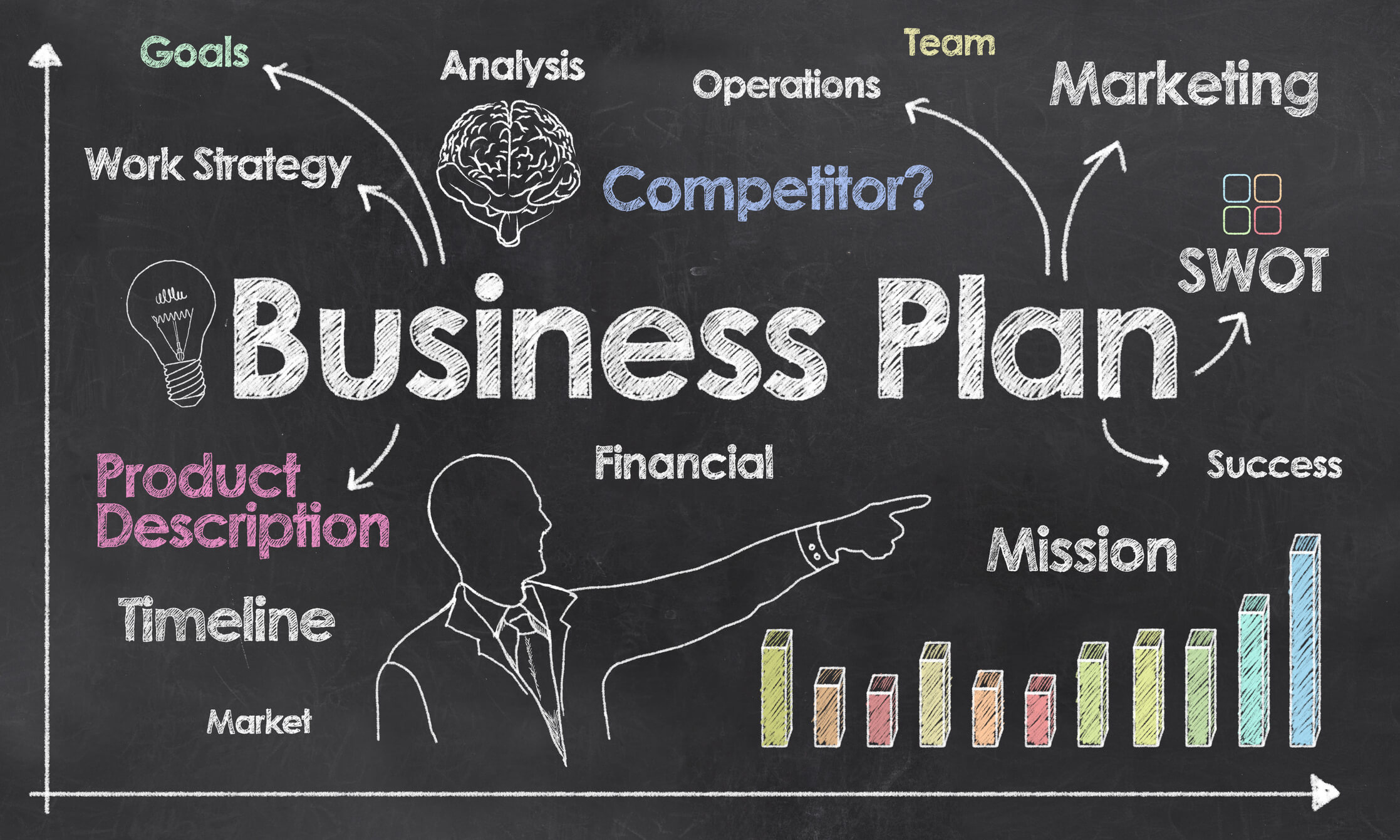
Every entrepreneur is aware that a business goes through changes throughout the journey. To make it adaptable to the external constantly changing factors, entrepreneurs keep on bringing major and minor changes. A business plan is associated with a business that constantly changes through the incubation and initial few other stages of a business. At every stage of the business, you need to make some changes that allow your business to blend in with other market competitors. But the main question that comes to mind here is how to write an influential business plan? How to catch the attention of lenders and investors?
Albeit a few Founders are wary about preparing for their organizations. Setting up a strong business plan is vital for some reasons, including, yet not constrained to:
Raising account through venture
Applying for a business credit
Budgeting for the long and present moment
Gaining a more profound comprehension of how your business functions
What is even more crucial to the organizational health is the adaptability in your business plan that will allow it to blend in with every tiny or huge change that your business and industry is going through. It must fit in and blend in with every such change and should be the blueprint of your business at each stage.
Here are a few critical elements of a business plan that every entrepreneur should consider in their plans.
Executive Summary
The first thing appearing in your business plan is the executive summary, which highlights whatever you have mentioned in there in detail. Often people consider writing the executive summary section in the very end because after writing the whole business plan, you have a better idea about whatever you went through during the creational phase and what you have written in the business plan.
It speaks to the peruser’s initial introduction to your business. Thus, it will probably characterize its feelings as it keeps pursuing the marketable strategy.
A decent Executive Summary incorporates key realities about your business, for example,
Business and portrayal of the offerings
Current situating and focusing on
Monetary standpoint and prerequisites
Past and future accomplishments and objectives
Overview of your business
Once you are done with the executive summary, you must proceed with presenting your business idea. It would help if you gave an overview of what your business proposition is and the relation of your idea with the dynamics of the market in which you are looking to operate. In this part of your business plan, you ought to clarify unequivocally:
what your organization does
what are its items or administrations
in which advertise it works
who are its clients
While depicting your business, you should make a point that the peruser realizes what sort of market condition your business works in and how it can flourish in such a situation from a serious perspective.
Marketing strategy
The marketing strategy section represents your position in your industry, along with other competitors, and how well you delve into your market segment. It also showcases your position with your customers and how you create your niche in the industry. It also tells your marketing reach and determines your market space. In this section of your Sales and Marketing strategy, you should plot:
Meaning of your objective market – incorporate its size, existing and developing patterns, and your anticipated share of the market
An evaluation of your market – this ought, to sum up, how appealing your objective market is to your organization and why Porter’s Five Forces or the later Six Forces Model are valuable devices to characterize this
Dangers and Opportunities – you can utilize a SWOT Analysis to introduce these
Target Consumers – regardless of whether you’re a B2B or B2C organization, it’s a smart thought to incorporate a perfect client profile to depict precisely what niche(s) you are going to target
Key Competitors – explore and break down some other players inside or outside your market whose offering may rival you straightforwardly or by implication
Plan and Budget for the marketing department – diagram the promoting and publicizing strategies you will use to advance your business, giving an outline of your image and of the correspondence components that help it
Financial Plan
This section must be written with utter concentration, as it is one of the most critical sections of your business plan. It contains the financial projections and health of your business, and it is the section that interests your investors the most. They look into the financial projections and health of your business to see the viability of their investment. They invest in your business based on the financial health of your business.
About Complete Controller® – America’s Bookkeeping Experts Complete Controller is the Nation’s Leader in virtual bookkeeping, providing service to businesses and households alike. Utilizing Complete Controller’s technology, clients gain access to a cloud-hosted desktop where their entire team and tax accountant may access the QuickBooks™️ file, critical financial documents, and back-office tools in an efficient and secure environment. Complete Controller’s team of certified US-based accounting professionals provide bookkeeping, record storage, performance reporting, and controller services including training, cash-flow management, budgeting and forecasting, process and controls advisement, and bill-pay. With flat-rate service plans, Complete Controller is the most cost-effective expert accounting solution for business, family-office, trusts, and households of any size or complexity.
When a business owner or stakeholders want to know the business’s financial health, the best way to get a clear picture is through financial statements. There are three financial statements every business should maintain. They are the Balance Sheet, the Profit and Loss Statement, the Income Statement, and the Cash Flow Statement. Depending on the business’s size, these statements could be maintained through an accounting department in a larger business and by the owner in a small business. Here are each of the three statements and their purposes explained.
Balance Sheet
The balance sheet is a statement that reflects the number and values of specific data. It is composed of three categories, which are assets, liability, and equity. Equity is the assets minus the liabilities.
Assets
Assets are broken down into current assets, fixed assets, and long-term assets.
Current Assets
Current assets include inventory, receivables, prepaid expenses, and current cash and account balance.
Inventory is broken down into raw material, work in progress, and finished goods. This breakdown gives the owner and stakeholders an idea of which inventory is deadstock and swift selling stock.
Receivables are a breakdown of which of them is in good standing and which have fallen into bad debt. This breakdown gives the owner and stakeholders the conversion of credit sales into cash flow.
A prepaid expense results from the business making advanced payments for goods or services to be received in the future.
Cash and account balance is the money the business currently has on hand in cash or its accounts.
Fixed Assets
Fixed assets include land, buildings, equipment, furniture, or any other type of asset with an accountingcycle of more than a year.
Long-Term Assets
Long-term assets include fixed assets, stocks and bonds, real-estate investments, and investments in other companies.
Liabilities are broken down into two categories, current liabilities and long-term liabilities.
Liability
Current Liability
Current liabilities are short-term financial obligations that typically have to be paid back within a year. Some examples of current liabilities are payments to vendors or suppliers, and the company’s everyday expenses. Current business operation profits pay back these liabilities.
Long-Term Liability
Long-term liabilities are financial obligations that go beyond a year. Some examples of long-term liabilities are long-term leases, mortgage loans, equipment, or vehicle loans. These liabilities are paid back by business operation profits or paid back by future investment returns or future liquidated assets.
Equity
Equity is the assets minus the liabilities and represents the owner’s and stakeholder’s stake in the company. Equity includes the capital of the owners, reserves, and retained earnings.
Profit and Loss Statement or Income Statement
The profit and loss statement is also known as the income statement. It is a financial statement that summarizes the revenues, costs, and expenses incurred during a specified period. These records provide information about a company’s ability or inability to generate profit by increasing revenue, reducing costs.
The profit and loss statement is important when looking at how a business can be more financially stable by identifying expenses and gains. It is also an essential statement when the business is obtaining loans.
Cash Flow Statement
The cash flow statement is a financial statement that shows how changes in balance sheet accounts and income affect cash and cash equivalents, and breaks the analysis down to operating, investing, and financing activities. The most important of these are operating activities, as it gives the entire balance of operating sources and operational needs, which is vital for daily business functions.
While investing and financing activities are also important, when it comes to the purpose of the cash flow statement, they take a backseat to operations since that is how the business continues to exist.
About Complete Controller® – America’s Bookkeeping Experts Complete Controller is the Nation’s Leader in virtual bookkeeping, providing service to businesses and households alike. Utilizing Complete Controller’s technology, clients gain access to a cloud-hosted desktop where their entire team and tax accountant may access the QuickBooks™️ file, critical financial documents, and back-office tools in an efficient and secure environment. Complete Controller’s team of certified US-based accounting professionals provide bookkeeping, record storage, performance reporting, and controller services including training, cash-flow management, budgeting and forecasting, process and controls advisement, and bill-pay. With flat-rate service plans, Complete Controller is the most cost-effective expert accounting solution for business, family-office, trusts, and households of any size or complexity.
Net neutrality is the principle that Internet service providers should enable access to all content and applications regardless of the source, and without favoring particular products or websites.
This means that service suppliers cannot offer different types of services to other kinds of traffic. All traffic should be treated in the same manner, whether from your neighborhood food blog or Netflix. Rivals of this concept are mostly telecommunications goliaths. These companies oppose the additional regulations imposed by the Federal Communications Commission (FCC.) Those who largely support it are companies like Facebook, Google, and Netflix, all companies that benefit from their sites or services.
How did net neutrality come to be?
Comcast was asked to stop blocking traffic from a file-sharing service known as BitTorrent. The (FCC) stepped in, and Comcast was accused of unethical business practices. Comcast filed a case against the FCC, alleging the commission did not have the appropriate authority. After three years, the courts ruled in favor of Comcast. Back then, the FCC also accused Comcast of regulating traffic among person-to-person file-sharing services providers on their networks. Comcast answered by stating that they were trying to fix the spread of illegal copyrighted material. Even though few online communities were irritated, the government did not have any legitimate authority to do anything about it. Hence, Comcast was permitted to block any sites or services they chose.
Another similar case in 2012 emerged where AT&T blocked the users of the iPhone from making face-to-face calls until they purchased a new-shared data package. AT&T argued that the video calling app caused overcrowding on its systems. New Federal Communications Commission officials and the Obama administration in 2015 found a way to dispute the authority needed by the FCC when they felt broadband corporations were not using their power objectively, and due to these factors, net neutrality was born.
How can the end of net neutrality affect your wallet?
If the Federal Communications Commissions’ long history suggests anything, these verdicts will be rechallenged at some point. Internet providers want to limit access to certain content providers unless they are willing to pay for higher stage services. This means content providers will, in turn, charge more for their services, hitting consumers in their wallets. Without net neutrality, telecommunicationcompanies can hold customer services hostage until they pay for upgrades to access services or content.
Net neutrality is controversial but ultimately protects the consumer and content providers from large telecommunication companies looking to increase their bottom line while depleting your wallet.
How does net neutrality affect businesses?
Net neutrality is essential to all businesses but is especially crucial for small-business owners, startups, and entrepreneurs. These businesses rely on the open internet to launch their enterprises, create markets, advertise their products and services, and reach customers. Without the open internet, we can’t promote growth, business success, or innovation. All of these areas are vital to a robust economy.
The American economy is dependent on entrepreneurs to continue to launch businesses that push everyone towards growth and innovation. If a small business didn’t launch because there is no net neutrality, the repercussions would be felt in the economy for years to come. Net neutrality has pushed small businesses and entrepreneurs to thrive online, and without it, ISPs can exploit their position and destroy the internet’s level playing field.
The bottom line
Net neutrality only has an upside for Internet service providers. Consumers and business owners and everyone in between would suffer if it were not for net neutrality. Without it, there could be denied access to certain sites, which could grow into ISPs having the ability to choose the content you can and cannot view. This could set a dangerous precedent in which consumer’s rights are violated, opening up ISPs to lawsuits and losing customers and revenue.
About Complete Controller® – America’s Bookkeeping Experts Complete Controller is the Nation’s Leader in virtual bookkeeping, providing service to businesses and households alike. Utilizing Complete Controller’s technology, clients gain access to a cloud-hosted desktop where their entire team and tax accountant may access the QuickBooks™️ file, critical financial documents, and back-office tools in an efficient and secure environment. Complete Controller’s team of certified US-based accounting professionals provide bookkeeping, record storage, performance reporting, and controller services including training, cash-flow management, budgeting and forecasting, process and controls advisement, and bill-pay. With flat-rate service plans, Complete Controller is the most cost-effective expert accounting solution for business, family-office, trusts, and households of any size or complexity.
While most responsible adults have steady bill-paying jobs, many don’t have savings or a budget, leaving them financially unhealthy. Understandably, working Americans live paycheck to paycheck, but they don’t have to, even if their income is not that of a millionaire. Here are six easy steps to financial stability.
No More Excuses!
We all do it; make excuses for every failure we have in life. Financial matters are no exception. Often there are excuses you are making that are hindering you from financial stability like you don’t make enough, or the cost of living is too high, or a budget doesn’t work for you. The solution is to stop making excuses! It would help if you sat down and budget to see where your money is going and where the deficits are in your income. Once you stop making excuses and use that energy to make a budget, you can make the changes to put you on the path to financial stability.
Stop Putting the Entire Paycheck in Your Checking Account!
Having a checking account is necessary to pay bills and have a central location for your money to be held safely until you spend it. But you should take advantage of direct deposit and have a fixed amount or percentage of your paycheck put into savings or investments. Another way you can save without even trying is to use apps that are for spare change investments. Micro investments can add up, and they are an excellent place to start before moving to more significant investments.
Cut Unnecessary Expenditures Now!
Cutting unnecessary expenditures is a no-brainer, but amazingly we all fail to do it over and over. There are entertainment apps, delivery apps, coffee shops, and impulse buys at the grocery store that tempts us to spend money on things we don’t need. The truth is, if we had the budget in place that was mentioned earlier, we might curb these expenses or at least have them at the forefront of our mind when we pull out our cash or debit card. When you complete your budget, divide it into necessities and non-necessities and decide those expenditures you can cut.
Set Financial Goals Like It’s Your Job!
Throughout life, we set goals. When we are young, it is to finish school, maybe to go to college. As responsible adults, our goals may change. Our goals could be to get married, get a better job, or have kids. But many people, while having personal goals, lack financial goals to get them on the path to saving for the future or even for a car or a house. If you are having difficulty setting financial goals, you may want to consider hiring a financial advisor. A professional financial expert will help you figure out what you want regarding money and your future. These advisors will further help you layout the plan to reach every goal.
Don’t Be Afraid to Invest!
Understandably, many people are afraid of investing. When people think of investing, they imagine the stock market and find it confusing and even a little scary because of the risks. However, with some professional advice and risk tolerance assessment, anyone can find ways to invest that they will be able to withstand. Many investment options are low to almost no risk.
Say NO to Credit Cards!
The best way to avoid credit card debt is never to get a credit card. If you have good credit or are a student, the credit card offers come pouring in with immediate activation. Avoid the temptation! But, if you decide to get a credit card for emergency purposes, make sure you get one with low interest and truly only use it for emergency purposes. When you do charge something to your card, pay it in full immediately. Payments, especially at the minimum amount due, generally only pay towards the interest and not the principal.
Conclusion
You can become financially stable quickly if you take these easy steps. If you stop making excuses, save some of your paycheck, cut unnecessary expenses, set goals, invest, invest, INVEST, and say no to credit cards, you will be financially stable in no time!
About Complete Controller® – America’s Bookkeeping Experts Complete Controller is the Nation’s Leader in virtual bookkeeping, providing service to businesses and households alike. Utilizing Complete Controller’s technology, clients gain access to a cloud-hosted desktop where their entire team and tax accountant may access the QuickBooks™️ file, critical financial documents, and back-office tools in an efficient and secure environment. Complete Controller’s team of certified US-based accounting professionals provide bookkeeping, record storage, performance reporting, and controller services including training, cash-flow management, budgeting and forecasting, process and controls advisement, and bill-pay. With flat-rate service plans, Complete Controller is the most cost-effective expert accounting solution for business, family-office, trusts, and households of any size or complexity.
Self-employed business owners can claim early retirement benefits from Social Security any time between ages 62 and 65. Many factors should be considered before choosing to take early retirement because it will result in less involvement in your business. If you still have a passion for your business or want to remain heavily involved, this would not be the right choice for you. Here are some things to consider before making the decision to retire.
There are limits to the income and number of hours you can continue to work in your business and collect early retirement benefits. The income limits vary from year-to-year depending on when you will reach full retirement, and the hour limits are currently set between 15 to 45 hours per month. Consult Social Security to verify limits and other restrictions for the self-employed retiree.
The self-employed have an additional condition when collecting early retirement, even if they are within hourly and income limits. If they perform what is considered by Social Security to be substantial services, early retirement benefits may be reduced or eliminated. Social Security implemented this provision because small business owners were collecting early retirement while still taking on most of the work and paying a friend or family instead of themselves to remain under the limits.
Substantial services are not just the number of hours, even if you legitimately limit working in the business to between 15-45 hours. If the duties they perform are considered highly-skilled, this is defined by Social Security as substantial services as well. This could mean you are the only person in the business that can perform the skill or that the duties performed require high-level training.
Social Security considers the following when determining if the early retiree is performing substantial services.
The type of services performed
The type of business involved
The comparison of services performed before and after retirement
The presence and performance of a business manager
The amount of capital the retiree has invested in the business
The duties performed are considered highly skilled
To determine if a person is genuinely retired and not performing substantial services, staying within and income limits, and working the limited 15 to 45 hours monthly, Social Security may audit the business and require more information. These inquiries will only be made if you maintain ownership of the business or continue to work within the business or both.
When considering early retirement, contact Social Security in advance to find out the current limits and to determine what documents are needed to collect early retirement. After retirement, if Social Security determines at any time that you are exceeding the limits, your retirement benefits may be reduced or eliminated. For self-employed early retirees, each year of early retirement, Social Security will request earnings estimates for the following year. This estimate will determine retirement benefits for the first few months of the year and adjusted according to accurate self-employment information. Once full retirement is achieved at age 65, all limits are lifted, and there are no further criteria for the self-employed retiree.
If you are self-employed, being able to retire early and collect benefits may be a good option. But before you take steps to retire early, determine if you are genuinely ready to give up the business or reduce your involvement. Social Security sets strict early retirement limits, and if you are not prepared to stay within them, then early retirement is not for you. There is nothing that says an entrepreneur or small business owner has to retire at 62 or 65. If you are enjoying what you do and unable to give up the business, don’t force it. But if you are ready to close the business or give over the reigns, this information will help you do it as early as 62.
About Complete Controller® – America’s Bookkeeping Experts Complete Controller is the Nation’s Leader in virtual bookkeeping, providing service to businesses and households alike. Utilizing Complete Controller’s technology, clients gain access to a cloud-hosted desktop where their entire team and tax accountant may access the QuickBooks™️ file, critical financial documents, and back-office tools in an efficient and secure environment. Complete Controller’s team of certified US-based accounting professionals provide bookkeeping, record storage, performance reporting, and controller services including training, cash-flow management, budgeting and forecasting, process and controls advisement, and bill-pay. With flat-rate service plans, Complete Controller is the most cost-effective expert accounting solution for business, family-office, trusts, and households of any size or complexity.
To remain successful as a small business, you must keep up with the times. Trends in technology, customer service, and marketing can significantly impact small business, so knowing what the current trends are and how you can implement them into your business is vital. Here are some of the current trends for small businesses and ideas on integrating them into your small business operations.
Green and Socially Responsible Businesses
The past decade has seen a rise in customers looking for businesses going green or being socially responsible. These values are especially important to Millennials and Generation Z. Depending on your target demographic; you may consider adding some green or socially responsible practices to your business. Here are some changes you can make to be greener and socially responsible.
Use local products or services
Recycle and encourage customers to recycle also
Use green cleaning products
Use vendors that are green or socially responsible
Going green or being more socially responsible doesn’t require a total revamp of your business and can be done through small but high-impact changes.
Customer Review Impact
Businesses getting online reviews is not a new concept, but it is a concept that is expected to grow year over year. When deciding where to take their business, many customers rely heavily on reviews and ratings to make those decisions. It is crucial, as a small business, to have a strong online presence that is positive. As a business owner, it is your responsibility to ensure your business is listed on any site a customer can create a review. The more positive reviews, the better, so don’t be afraid to ask satisfied customers to review your business; you can even give them incentives to take the time, such as discounts or freebies.
E-Commerce
Most people think of enormous online retailers when they hear e-commerce; however, many storefront businesses are opting for an online purchasing presence. This trend isn’t going anywhere anytime soon. While some customers will always prefer to shop in person, many consumers opt to buy online. The convenience is the number one reason that many shoppers love an online purchasing option. Even if you are a business that offers services rather than products, there are e-commerce options you can add by having products related to the service you offer. You can also become an affiliate for a business with products.
Mobile Marketing
Mobile marketing is also nothing new, but the growth and popularity are making it a trend to consider. Here are a few mobile marketing ideas a small business owner might consider adding.
Geo-targeting with ads to customers close to the business
Creating an interactiveapp for your business (it’s easier than you think)
Use of text message marketing
Mobile methods of payment
Livestreams, Videos, and Stories
Small businesses are using these interactivetrends to get more customers with great success. These social media trends have been building over the last couple of years and are expected to expand as technology advances. Posts are still an excellent way to connect. Still, Facebook and Instagram stories and live streaming bring a visual and interactive aspect to your business and should be considered a significant trend you should implement. People love to get visuals, interact, and be involved, so using videos, stories, and especially live streams can pay off big.
Conclusion
These are a few of the current trends that small businesses need to watch, but trends are forever changing. Responsible business owners always need to make changes to their businesses using trends when it makes sense for them. The worst thing a small business can do is change too much towards trends, the small business should be authenticallyyou, and any changes you adopt should flow with your current business, or you risk losing your already loyal client base.
About Complete Controller® – America’s Bookkeeping Experts Complete Controller is the Nation’s Leader in virtual bookkeeping, providing service to businesses and households alike. Utilizing Complete Controller’s technology, clients gain access to a cloud-hosted desktop where their entire team and tax accountant may access the QuickBooks™️ file, critical financial documents, and back-office tools in an efficient and secure environment. Complete Controller’s team of certified US-based accounting professionals provide bookkeeping, record storage, performance reporting, and controller services including training, cash-flow management, budgeting and forecasting, process and controls advisement, and bill-pay. With flat-rate service plans, Complete Controller is the most cost-effective expert accounting solution for business, family-office, trusts, and households of any size or complexity.
Financial planners will give varying advice on savings and how to work towards retirement. If you get started saving in your twenties and invest well, you will likely have the recommended three times your annual income saved by forty. When people are young, they are often worried about college and student debt, starting a young family, and beginning a career, so it is less likely that a plan to save money is executed.
If you are approaching forty and have not yet saved towards retirement, it’s not too late. Below are some tips to help you save money for retirement, emergencies, and other goals.
Investments Rather than Savings Accounts
When people hear the word savings, they generally think of taking a set percentage of their paycheck and putting it directly into a banking institution’s savings account. While this is a good idea in the respect that you are working to save money, bank savings accounts are not the way to save towards big goals.
Savings accounts are often low interest and are closer to putting your savings under your mattress or in the cookie jar. Instead, consult a professional financial planner and find ways to invest money to gain you more interest and grow your money more quickly. This could be through mutual funds, investment savings plans, investing in stocks, or buying properties or items that appreciate over the length of ownership. The essential thing to remember about investments is that you should research options and understand the risks and rewards.
Additional Streams of Income
Besides investments that increase your existing income, another way to save towards your goal of three times your annual income by age forty is through additional income streams. In today’s world, the side hustle is typical as people make ends meet or work towards savings or other life goals financially.
Like investments, additional streams of income should be well researched. Some options require little of your time and virtually no interference with your main job paying the bills. These additional streams of income could be gig work like driving for a rideshare app, delivering food, or freelancing. It could also be from becoming a consultant or advisor. There are several ideas you could try to create more streams of income.
Retirement Funds
Many companies offer a retirement fund. This is a fund that the employee will contribute to from each paycheck. In most cases, the companies that provide retirement funds will also have offers to match a certain percentage of what the employee is investing in.
While retirement funds are a great way to save money that has you seldom missing the money put into them, there are also some drawbacks to this type of savings. There are often penalties on early withdrawals of the money. Also, because most of these funds are not taxed at the time of savings, you will owe a tax percentage on the savings when you withdraw the funds.
Many retirement funds are also attached to mutual funds to increase them and are vulnerable to market fluctuations. When the economy is in a downturn or recession at retirement or the time of withdrawal, your money will not hold as much value.
Conclusion
Whether you begin saving in your twenties or closer to your forties, it is crucial to saving something. Those dependent on the government to carry them through retirement will find it a struggle, depending on how much they contributed to social security during their career. It is crucial to look for ways to save while you are still young for retirement, emergencies, and other financial goals. These savings could be through investments, multiple streams of income, retirement plans, or interest-gaining savings accounts. Whatever you do, start saving now!
About Complete Controller® – America’s Bookkeeping Experts Complete Controller is the Nation’s Leader in virtual bookkeeping, providing service to businesses and households alike. Utilizing Complete Controller’s technology, clients gain access to a cloud-hosted desktop where their entire team and tax accountant may access the QuickBooks™️ file, critical financial documents, and back-office tools in an efficient and secure environment. Complete Controller’s team of certified US-based accounting professionals provide bookkeeping, record storage, performance reporting, and controller services including training, cash-flow management, budgeting and forecasting, process and controls advisement, and bill-pay. With flat-rate service plans, Complete Controller is the most cost-effective expert accounting solution for business, family-office, trusts, and households of any size or complexity.
There are many causes of stress for small business owners. The constant pressures of building your business, growing the bottom line, paying your employees, and juggling the many tasks necessary to run a business can take a stressful toll. That toll can hurt the business and other staff members,s so before that happens, you need to focus on your mental health. Here are some tips to help you manage stress while continuing to focus on your business.
Focus on the Positive
As a small business owner who takes on the entirety of the stresses of owning a business, it is easy to begin focusing only on the sources of stress or the negative. Changing your mindset towards focusing on the positive and the things that are going right can refresh your perspective and minimize stress while also benefiting the business and its employees by boosting morale.
Prioritize Tasks
Making a list and prioritizing tasks is one of the quickest ways a business owner can relieve stress. Even if the list seems long, having the tasks at hand prioritized will make the day run smoother. It also helps the staff know what needs to be done and assists with delegation. Many business owners carry a lot of stress because they try to do it all themselves, even when they have capable employees.
Empty Your Brain
When you are a small business owner, it’s hard to punch out of the office and leave work at work. Often, all the tasks at hand, issues that need attention, and other business concerns will be on the owner’s mind non-stop. There are a few things you can do to help empty your brain of business thoughts so you can recharge and rest. Watch a show, play a game, or read a book with nothing to do with your business and escape. This escapism will help you clear your mind of business thoughts and wind you down to a good night’s sleep. If you continue to have trouble shutting your brain down for rest, try writing down your thoughts or make a list of things you need to focus on the following day and leave them for tomorrow.
Take Breaks
It is easy to get bogged down with business and forget to take breaks. While employees have scheduled breaks and lunches, the business owner often won’t approach breaks in the same way. An easy fix is to schedule yourself breaks and a lunch that equals that of your employees. If you don’t have employees treat yourself as one anyone. A great way to remind yourself of a scheduled break or lunch is to set the alarm; every smartphone has one. Additionally, you can take more extensive breaks from the business by way of vacations or day trips. Time entirely away from the business can go a long way in relieving stress.
Take Care of Yourself
Most business owners don’t take great care of themselves physically or mentally. To combat this, there are stress-busting things an owner can do. Schedule yearly physicals and checkups to medically keep an eye on your physical and mental well-being. Also, get regular massages, or set up spa days. You can also eat healthier, exercise more, and take vitamins.
Conclusion
Besides business operations, managing stress is of the highest importance for a small business owner. Even if the business is a success, it can adversely affect the company if the owner is stressed. If you are a business owner or part of the staff of a small business and there is stress, use these tips to help you manage stress. Some businesses fail due to financial struggles, but others fail because the owner becomes overwhelmed. This is your dream; take care of your stress so you can make your dream a success and live a stress-free life while you do it!
About Complete Controller® – America’s Bookkeeping Experts Complete Controller is the Nation’s Leader in virtual bookkeeping, providing service to businesses and households alike. Utilizing Complete Controller’s technology, clients gain access to a cloud-hosted desktop where their entire team and tax accountant may access the QuickBooks™️ file, critical financial documents, and back-office tools in an efficient and secure environment. Complete Controller’s team of certified US-based accounting professionals provide bookkeeping, record storage, performance reporting, and controller services including training, cash-flow management, budgeting and forecasting, process and controls advisement, and bill-pay. With flat-rate service plans, Complete Controller is the most cost-effective expert accounting solution for business, family-office, trusts, and households of any size or complexity.
To beat the competition, you need a three-pronged approach: leveraging data-driven insights to understand where competitors are weak, crafting a distinctive value proposition that customers can’t ignore, and executing operational excellence that makes your business leaner and faster than rivals. In 2026, outmaneuvering competitors isn’t about outspending them—it’s about outsmarting them through precision, agility, and customer obsession.
Over my 20 years leading Complete Controller, I’ve watched countless SMBs lose market share not because they lacked talent or heart, but because they were reactive instead of strategic. They competed on price rather than value. They chased trends instead of setting them. The businesses that truly outmaneuver competitors don’t play by industry rules—they rewrite them. In this article, I’ll share the exact frameworks, strategies, and tactical moves that separate market leaders from the rest, drawn from working with hundreds of businesses across every sector imaginable. By the end, you’ll have a concrete roadmap to transform competitive threats into growth opportunities.
How do you beat the competition? A quick strategic recap
Leverage data and competitive intelligence to identify gaps in the market and weaknesses in competitor positioning
Develop a unique value proposition (USP) that clearly articulates why customers should choose you over alternatives
Master customer-centric market penetration by deepening relationships and building long-term loyalty
Adopt innovation and technology strategically to improve efficiency and stay ahead of industry shifts
Execute operational excellence to control costs, improve margins, and respond faster than competitors
Become a Data-Driven Competitor (Not a Guessing Game)
Data is the competitive superpower of 2026. According to BARC research, 58% of companies still base at least half of their regular business decisions on gut feel rather than data. Best-in-class companies show a dramatically different pattern—only 40% of top performers rely on gut instinct, compared to 70% of laggards. This gap represents your competitive opportunity.
The businesses that win make decisions based on real insights, not hunches. Most competitors are still guessing what works. You’ll know exactly what works—and what doesn’t.
Build your data-driven competitive advantage
Start by collecting intelligence on three fronts:
Customer Data: Use surveys, social listening, and CRM systems to understand exactly what your audience wants, when they want it, and what frustrates them about competitors. This reveals hidden pain points competitors are ignoring.
Competitor Tracking: Monitor where rivals are investing marketing dollars, what messaging resonates with their customers, and where gaps exist in their offerings. Tools like SEMrush, Similarweb, or even manual competitive audits reveal spending patterns and strategic blind spots.
ROI Measurement: Stop running campaigns and hoping they work. Measure what converts, what’s eating your budget, and where your dollars generate real returns. Most businesses waste 40% of their marketing spend on channels that don’t move the needle.
A SaaS company I worked with analyzed competitor reviews on G2 and Capterra. They discovered that 70% of complaints about the market leader centered on poor onboarding support. Instead of competing on features (they couldn’t win), they built an exceptional customer success program. Within 18 months, they captured 15% market share by solving a pain point competitors ignored.
Develop a Unique Value Proposition That Commands Loyalty
Most businesses sound like their competitors. They promise “quality,” “innovation,” and “customer service”—words so generic they mean nothing. To beat the competition, your value proposition must answer this question in a way no competitor can: Why should I choose you?
A strong USP isn’t a slogan. It’s a specific, defensible reason customers choose you. It should address a customer pain point better than any alternative.
Building a USP that sticks
Your Angle
Competitor Weakness
Your USP
Speed
Competitors have 5-day turnaround
Next-day delivery on all custom orders
Price
Premium market leader dominates
Same quality, 30% lower price (through operational efficiency)
Service
Competitors offer transactional support
Personal account manager for all clients, regardless of size
Niche Focus
Competitors serve everyone poorly
Built exclusively for [specific industry], with deep domain expertise
Transparency
Black-box pricing and process
Fixed-rate, itemized billing with full visibility into every cost
When we launched Complete Controller, the market was dominated by large firms charging enterprise prices and small operators offering subpar work. Our USP? Founder-led expertise with cloud-based efficiency—the rigor of a Big Four firm at SMB pricing. We weren’t cheaper than everyone; we were better-than-small and cheaper-than-big. That clarity attracted exactly the right customers.
Master Customer-Centric Market Penetration
Customer loyalty is your ultimate competitive advantage. You can’t be outmaneuvered if your customers are so satisfied they wouldn’t dream of switching. Harvard Business Review research shows acquiring a new customer costs between 5 and 25 times more than keeping an existing one. Yet most businesses chase new logos while neglecting existing customers.
By 2025, 89% of businesses compete primarily on customer experience, surpassing traditional factors like product features and price. The competitive battlefield has shifted. Speed, personalization, responsiveness, and ease of use are now the primary battlegrounds.
Three pillars of customer-centric penetration
Personalization at Scale: Starbucks demonstrates this perfectly with their 34.6 million-member loyalty program. Members visit 5.6 times more frequently than non-members, and the program generates nearly 59% of total U.S. sales. They track purchase history and send hyper-personalized offers. If a customer typically orders a latte on Tuesday mornings, they receive a targeted offer for that exact drink at that exact time.
Retention Through Lifetime Value: Calculate the lifetime value of your customer base. Then allocate resources to deepen those relationships through loyalty programs, exclusive offers, and proactive support. Every dollar spent on retention generates 3-5x more ROI than acquisition spending.
Speed and Responsiveness: Competitors might offer similar products. What they can’t match is your ability to respond to customer needs in hours, not days. Faster websites, quicker customer service, and smoother checkout experiences create immediate competitive advantage.
Winning strategy needs financial clarity. See how Complete Controller gives you the edge.
Stay Ahead Through Strategic Innovation and Technology Adoption
Innovation separates winners from stagnant competitors. Deloitte’s 2026 manufacturing outlook shows 80% of executives plan to invest 20% or more of their improvement budgets in smart manufacturing and AI initiatives. In 2026, AI isn’t optional—it’s the baseline. However, only 6% of organizations achieve payback on AI investments within the first year—most take 2-4 years to see ROI.
Innovate without breaking the bank
Product and Service Evolution: Don’t wait for the perfect product. Tesla exemplifies iterative development, regularly updating vehicles based on user feedback. Launch, gather feedback, improve, repeat. Your competitors move at the speed of quarterly strategy reviews. You can move at the speed of customer feedback.
Affordable Technology Adoption: Small businesses win by adopting technology selectively. You don’t need every shiny tool. Identify one or two automation opportunities that save time, reduce errors, and improve customer experience:
A CRM system that centralizes customer data
An accounting platform that syncs with your bank feeds
A chatbot that handles 60% of customer questions
Tailored Marketing Through Technology: Use marketing automation, email segmentation, and retargeting to stay in front of prospects until they’re ready to buy. Technology allows you to nurture relationships at scale.
At Complete Controller, we integrated AI to categorize expenses automatically and flag anomalies in real-time. What took our human team 6 hours per client now takes 90 minutes. Clients get faster, more accurate reports. We improved margins. And we communicate this as a competitive advantage: AI-enhanced accuracy with human oversight—better than pure automation, smarter than manual work.
Financial Agility—Control Costs While Competitors Waste Money
This is where most content falls short. Beating the competition includes operational excellence—managing costs so efficiently that you have more resources for strategic investments than rivals.
Southwest Airlines built a competitive moat through relentless operational efficiency. They implemented rapid 10-15 minute aircraft turnarounds, used a single aircraft type to reduce maintenance complexity, and chose point-to-point routes over hub-and-spoke models. The result? 47 consecutive years of profitability while maintaining prices 30-50% lower than competitors.
How financial discipline becomes a competitive weapon
Eliminate Cost Waste: Most businesses have invisible cost drains—redundant software subscriptions, inefficient processes, overstaffed functions. Audit your spending ruthlessly. Where is your money going? Which costs drive customer value? Which don’t?
When I review client P&Ls at Complete Controller, I consistently find the same pattern: They’re spending 3-5% of revenue on accounting and bookkeeping alone, often without visibility into the work being done. By switching to cloud-based, AI-enhanced bookkeeping, they cut that cost in half while getting better insights.
Invest the Savings in Customer Value: Don’t just cut costs to improve margins. Reinvest savings into customer experience, product development, or market expansion. This creates a flywheel: operational efficiency funds innovation, which attracts more customers, which improves scale, which further reduces unit costs.
Pricing Strategy: Value-Based, Not Cost-Based: Most businesses price based on costs or competitor pricing. Winners price based on the value they deliver. If your operational excellence saves a customer $50,000 per year, charging $5,000 for that solution is a bargain. You’ve created asymmetric pricing power—customers pay for value, not hours.
Build a Sustainable Competitive Moat
Quick wins matter in the short term, but sustainable competitive advantage comes from building barriers competitors can’t easily replicate.
Niche Mastery: Instead of competing in a crowded general market, own a specific niche where you’re the undisputed expert. Complete Controller focuses on mid-market businesses and professional service firms—a niche where deep domain expertise creates a moat. We understand their pain points better than generalists ever will.
Strategic Partnerships: Form alliances that competitors can’t easily replicate. Partner with technology vendors, complementary service providers, or industry associations. These relationships compound over time, creating switching costs for customers.
Customer Obsession as Culture: Embed customer-centricity into your team’s DNA. When every employee makes decisions with customers in mind, you’ll outmaneuver competitors driven by quarterly targets or cost-cutting mandates. This is difficult to replicate because it’s cultural, not tactical.
Continuous Improvement Mindset: Make strategy a daily practice, not an annual event. Review what’s working. Double down. Kill what isn’t. Competitors hold strategy meetings once a year. You’re adapting in real-time.
Final Thoughts
The strategies I’ve outlined aren’t theoretical—they’re battle-tested approaches that have helped hundreds of businesses transform competitive threats into growth catalysts. The common thread? Winners don’t compete on the same battlefield as everyone else. They change the game entirely.
Your competitors are stuck in yesterday’s playbook—competing on price, features, or empty promises. You now have the blueprint to outmaneuver them through data-driven decisions, customer obsession, operational excellence, and strategic focus. The question isn’t whether these strategies work. It’s whether you’ll implement them before your competitors do.
Ready to transform your competitive position? The experts at Complete Controller can help you build the financial foundation and operational excellence needed to outmaneuver any competitor. Let’s turn your competitive challenges into your greatest opportunities.
Frequently Asked Questions About Beating the Competition
What is the most important strategy to beat competition?
Listening to customers and solving their problems better than anyone else. If you nail this, the rest follows. Customer-centric businesses generate 60% more profit than product-focused competitors.
How do small businesses compete with larger companies?
By focusing on personalized customer experiences, leveraging local market knowledge, forming strategic partnerships, and maintaining operational agility. Smaller firms can respond faster to market changes and build stronger customer loyalty than corporate giants.
What makes a business more competitive?
Three factors create lasting competitive advantage: superior customer experience, operational efficiency that funds innovation, and a clear value proposition that resonates with a specific target market. Businesses that master all three outperform competitors by 2-3x.
How do you identify competitive advantages?
Analyze customer complaints about competitors, audit your operational efficiency versus industry benchmarks, survey why customers choose you, and identify processes you execute better than rivals. Your advantages hide where competitors show weakness.
What is a competitive edge in business?
A competitive edge is any capability, asset, or position that allows you to deliver more value to customers than alternatives. This could be faster service, deeper expertise, better technology, lower costs passed to customers, or superior relationships.
About Complete Controller® – America’s Bookkeeping Experts Complete Controller is the Nation’s Leader in virtual bookkeeping, providing service to businesses and households alike. Utilizing Complete Controller’s technology, clients gain access to a cloud platform where their QuickBooks™️ file, critical financial documents, and back-office tools are hosted in an efficient SSO environment. Complete Controller’s team of certified US-based accounting professionals provide bookkeeping, record storage, performance reporting, and controller services including training, cash-flow management, budgeting and forecasting, process and controls advisement, and bill-pay. With flat-rate service plans, Complete Controller is the most cost-effective expert accounting solution for business, family-office, trusts, and households of any size or complexity.
Jennifer BrazerFounder/CEO
Jennifer is the author of From Cubicle to Cloud and Founder/CEO of Complete Controller, a pioneering financial services firm that helps entrepreneurs break free of traditional constraints and scale their businesses to new heights.
Brittany McMillen is a seasoned Marketing Manager with a sharp eye for strategy and storytelling. With a background in digital marketing, brand development, and customer engagement, she brings a results-driven mindset to every project. Brittany specializes in crafting compelling content and optimizing user experiences that convert. When she’s not reviewing content, she’s exploring the latest marketing trends or championing small business success.
If you are considering opening a merchant account for your business, this is an excellent decision that will benefit your company in the long-term. In this modern era of globalization and cutthroat competition, almost everybody utilizes their credit cards or debit cards to purchase products. Less often, you see individuals using cash or checks to fulfill their financial obligations. A merchant account is an ideal route for your business to venture into the cutting-edge era. It enables the person to acknowledge various types of payments. Some of the key advantages of getting your business a merchant account are:
A merchant account supports business operations and the ability to acknowledge payments that customers are making through credit cards and debit cards from their respective banks. Consequently, more customers are purchasing products by using credit cards consistently. This usage makes having a merchant account a positive impact on both customers and your business.
In reality, the concept of merchant accounts and credit cards has trickled down through various studies and researches conducted in this domain. An average customer makes much more purchases when they are permitted to utilize a credit card, rather than using physical fiat currency. This is a psychological impact on the customer, who cannot see the cash leaving the hands when swiping the credit cards on a POS machine.
One of the extra advantages offered by opening up a merchants account is that you can deal with the payments through the internet or online portal. This empowers the business to deal with daily exchanges efficiently. Once the merchant account has been opened, the small business or the business of any size will not require the management and its employees to toil hours toward the finish of the business day, bookkeeping, and reconciliation. All purchases will be recorded in proper order, electronically and chronologically. Merchant Accounts makes the business much more disciplined (financially) and is in a strong position to oversee income effectively.
When the businesses have a merchant account with respective banks, customers will be more confident in providing payment to your business. The acceptance of credit or debit cards as a form of payment will increase traffic as more people every day are almost eliminating cash and paying via credit or debit card. Customers like the convenience and will often choose where they shop by the experience, including how they pay for their purchases. When it comes to business, it is important to stay up with technology and remain competitive in your industry.
By opening a merchant account to streamline the payment process, business operations and bookkeeping will effectively remain reconciled and corroborated with the profit and gross revenue stream. The point of sale device of the merchant account can also send point-by-point and month-to-month statements of all transactions that have been made, in any currencies, and with which payment strategies, and other pertaining information and data. This makes it simpler to manage expenses and take advantage of the benefits.
Opening a merchant account has no downside for the business that wants to expand and offer their customers options to pay. This ability to be flexible and receive multiple forms of payment will expand the business and ensure that every customer that comes into your business has options.
The bottom line is that customers are looking for their shopping or business experience to be smooth and easy. They also want to be able to pay with the form of payment of their choosing. You, as a business owner, can ensure this by opening a merchant account. The benefits of opening a merchant account may also be that your business will be able to grow.
About Complete Controller® – America’s Bookkeeping Experts Complete Controller is the Nation’s Leader in virtual bookkeeping, providing service to businesses and households alike. Utilizing Complete Controller’s technology, clients gain access to a cloud-hosted desktop where their entire team and tax accountant may access the QuickBooks™️ file, critical financial documents, and back-office tools in an efficient and secure environment. Complete Controller’s team of certified US-based accounting professionals provide bookkeeping, record storage, performance reporting, and controller services including training, cash-flow management, budgeting and forecasting, process and controls advisement, and bill-pay. With flat-rate service plans, Complete Controller is the most cost-effective expert accounting solution for business, family-office, trusts, and households of any size or complexity.






 About Complete Controller® – America’s Bookkeeping Experts Complete Controller is the Nation’s Leader in virtual bookkeeping, providing service to businesses and households alike. Utilizing Complete Controller’s technology, clients gain access to a cloud-hosted desktop where their entire team and tax accountant may access the QuickBooks™️ file, critical financial documents, and back-office tools in an efficient and secure environment. Complete Controller’s team of certified US-based accounting professionals provide bookkeeping, record storage, performance reporting, and controller services including training, cash-flow management, budgeting and forecasting, process and controls advisement, and bill-pay. With flat-rate service plans, Complete Controller is the most cost-effective expert accounting solution for business, family-office, trusts, and households of any size or complexity.