Many people dream of opening their own business but don’t know what they want or where to start. Owning and operating a coffee shop can be fun and fulfilling, and a lot of hard work. Here are six steps to starting your own coffee shop.
Write a Business Plan
When starting any business, you must have a business plan before you begin. It should be the first step before going forward with any plans. It is suggested that you hire a professional to write your business plan for you. However, if you do enough research, you can write your business plan successfully. Your business plan should include the following:
Executive summary: The executive summary is the first thing potential investors will read and should include your goals and summarize your business. Though it is first, it should be written last.
Company Overview: The company overview will include an overview of its operations and structure and include your business’s mission statement.
Market Analysis: The Market analysis will need to include an analysis of the market in the area you intend to enter. It will also include a competitor and customer analysis.
Marketing Plan: The marketing will be a detailed plan of how you intend to market the business and its costs.
Operating Plan: The operating plan will be how you intend the business to operate and those costs.
Management Team: The management team will include who will be included in the business’s administrative operation function.
Financial Plan: The financial plan will be at least the six-month financial plans and your business projections.
Find a Location
The location of your coffee shop will be as important as the cost of the lease. Most coffee shops need to be in an area where they will receive a lot of foot traffic. A café is not a business that will be successful tucked away where no one can see or find it. When searching for the location, consider the other businesses around you to positively and negatively affect your business. The location of your coffee shop is extremely important and could be the difference between success or failure.
Develop a Floor Plan
Once you have chosen a location, you need to make a floor plan. The floor plan needs to include the following:
Seating and tables
Equipment setup
Walking space
Distancing
Line location
Hire an Accountant
Though you have not taken the crucial step to obtain financing, you hire an accountant specializing in starting a new business. An accountant will help you keep track of your funds once you obtain them and assist in the business’s financial operations. Starting with an accounting professional will ensure the business’s success and set the tone for tracking your business finances.
Find Funding Options
There are several options when it comes to funding your business. Here are the options most business owners should consider:
Personal savings
Investors
Small business loan
Friends or Family
Save Money for Initial Expenses
You will need some capital for the initial expenses and to keep you afloat while you get the business started. Most businesses are not going to operate in the black right away; it will take time. Therefore, having enough saved to pay operations and payroll for the first three to six months of the business. These savings will help sustain you while you wait for funding and for the business to turn a profit.
Develop a Marketing Plan
While you should already have set forth a marketing strategy in your business plan, you must develop that further in a comprehensive way that can be implemented easily. Since your business is virtually unknown, you have to do a bit of a media blitz to let people know about your business, the location, and the products and services you offer.
Set High Standards
Coffee shops are a dime a dozen, and you will be competing against coffee giants. To combat the competition in the market, you need to set high standards. The standards need to be in every aspect of the business. You need to offer quality products, exceptional service, an inviting atmosphere and décor, and accessibility. You need to have the standards set high and keep them there to give you and your employee’s goals to achieve daily.
About Complete Controller® – America’s Bookkeeping Experts Complete Controller is the Nation’s Leader in virtual bookkeeping, providing service to businesses and households alike. Utilizing Complete Controller’s technology, clients gain access to a cloud-hosted desktop where their entire team and tax accountant may access the QuickBooks™️ file, critical financial documents, and back-office tools in an efficient and secure environment. Complete Controller’s team of certified US-based accounting professionals provide bookkeeping, record storage, performance reporting, and controller services including training, cash-flow management, budgeting and forecasting, process and controls advisement, and bill-pay. With flat-rate service plans, Complete Controller is the most cost-effective expert accounting solution for business, family-office, trusts, and households of any size or complexity.
Bankruptcy is a last resort remedy for those who are so financiallydevastated; they cannot recover any other way. Many people hear the word bankruptcy and think of it as an irreversible and adverse remedy. While a setback, the truth is that bankruptcy can be a relief to those who have been struggling against financial losses or burdens. Here is everything you need to know about bankruptcy.
Bankruptcy Is Not a Quick Process
Leading into going into court to present your bankruptcy case, there is a lot of preparation. Once it gets to the courtroom, the process does not get any faster. Small claims court cases are usually only a day, while bankruptcy can take upwards of six months for chapter seven bankruptcy, which is the most common chapter for individuals. For the other most popular chapters, thirteen and eleven, it can take up to five years.
Bankruptcy Opens Your Finances to Public Scrutiny
While everyone involved will certainly attempt to preserve your dignity through the proceedings, they are all public and will only be held privately in extenuating circumstances. Because this is a public proceeding, you need to be prepared that your friends and family may become aware of your financial situation and learn the intricatedetails. These details include assets, expenses, income, debts, and recent financial transactions. And in most cases, you are required to attend a meeting with creditors, which is held in a public courtroom while your creditors can question you.
Complete Disclosure Is Required
One of the most required things by the court to consider relieving you of debt is that you are transparent, honest, and offer complete disclosure. This means you cannot leave out an asset, debt, or access to creditors. If it has been discovered that you have withheld any pertinent information to your case, not only can you lose your bankruptcy case, but depending on what you withheld, there could be an investigation opened against you by the FBI. Bankruptcy fraud is a federal crime with considerable fines and possible jail time.
Bankruptcy Forms Are Complicated
Because bankruptcy is a detailed scrutiny of your financial situation, the forms can be as complicated if not more complicated than tax forms. Filing bankruptcy requires you to answer substantial questions and make sure that you thoroughly include every detail. Because this is so complicated, you must hire a bankruptcy attorney. Hiring a professional will help you avoid mistakes that could cost you money, assets, or freedom.
The Bankruptcy Discharge Protects Only You
When considering filing bankruptcy, you must keep in mind that this only covers you and your debts. If you have any shared debts with another person, they will not be covered if you get bankruptcy relief. Therefore, if you share any debts such as a home or car loan, it is not wiped out. This means that though you will no longer be responsible for this debt, creditors can still fully collect it from the cosigner. This should be heavily considered before deciding to file bankruptcy. If bankruptcy is your only choice, you should look for ways to protect your cosigner before filing.
Filing for Bankruptcy Is Expensive
Bankruptcy can be an expensive endeavor. If you hire an attorney to help you with your case, it will cost you hundreds and possibly thousands of dollars, depending on the attorney. This expense may be a surprise considering most people are filing bankruptcy because they are struggling. Even if you proceed on your own without an attorney, the fees are still fairly substantial. In some cases, those fees can be waived by the court. This possible waiver is completely dependent upon your income, which cannot be greater than 150% of the federal poverty level.
Declaring Bankruptcy Affects Your Credit for Years
Most creditors will not extend any credit for someone with a bankruptcy on their credit history. Bankruptcy doesn’t mean that you will not receive any credit as some creditors will give you a second chance. However, this is usually a high cost through interest and fees because you are considered high risk. When considering filing bankruptcy understand that while it will help you with your current debt, it will adversely affect your credit score for years to come.
To help counteract the damage bankruptcy does to your credit score, you can build your score on other things. However, this would require that you obtain more credit, which could lead to more debt. You mustn’t incur any debt after you file for bankruptcy. Therefore, if you do obtain credit lines, be sure you pay them in full each time you use it. This can help build your credit and defray the damage that bankruptcy does to it.
About Complete Controller® – America’s Bookkeeping Experts Complete Controller is the Nation’s Leader in virtual bookkeeping, providing service to businesses and households alike. Utilizing Complete Controller’s technology, clients gain access to a cloud-hosted desktop where their entire team and tax accountant may access the QuickBooks™️ file, critical financial documents, and back-office tools in an efficient and secure environment. Complete Controller’s team of certified US-based accounting professionals provide bookkeeping, record storage, performance reporting, and controller services including training, cash-flow management, budgeting and forecasting, process and controls advisement, and bill-pay. With flat-rate service plans, Complete Controller is the most cost-effective expert accounting solution for business, family-office, trusts, and households of any size or complexity.
Many people use credit cards regularly, and credit card companies are finding new ways to cash in. Some will offer lower interest rates if you accept their card with a monthly spending minimum. This means they will set a minimum you have to spend to avoid penalties. This guarantees you will have perpetual credit card debt. While overall, it is recommended that you don’t get a credit card with a spending minimum, here are ways you can meet your spending minimum.
Use your card to pay all, including your utilities. Using your credit card with a spending minimum to pay bills will help you meet the minimums on bills you would already pay each month. Once you have charged these bills, use your paycheck to pay the amount down immediately to avoid interest and deeper debt.
Only get one card at a time. If one card has the spending minimum you can handle, don’t get any other cards with a spending minimum, or you may default on one or more of those requirements and build up fees and penalties.
Use your card for rent or car payments, or mortgage. Because these are the biggest bills people generally have if you can charge these payments to the card, use your paycheck to pay off the balance each month.
Use your card to prepay your bills. If you can charge your bills to prepay your bills and get them ahead, this will help you reach your minimum spending requirement. The key to keep your debts down will be to pay the balance as soon as possible to minimize interest and debt.
Use your card to pay quarterly taxes or end of year taxes due. Using your credit card to pay your taxes can help get your minimum spending requirement met. The IRS accepts all credit cards and debit cards to make tax payments, and depending on how much you owe, this could quickly meet the requirement.
Use your card to pay reimbursable business expenses. Often employees are required to use company credit cards for business purchases. However, if your company allows you to use your card and get reimbursed, use this card to pay your business expenses.
When your credit card has a spending minimum requirement, you must pay your bill within the established deadline or risk credit card debt. If you do not, be prepared to pay late or late fees and other financial charges. When you pay your credit card bill, your card issuer must credit the payment to your account the same day you receive it, but there are some exceptions.
The issuer of your credit card can specify requirements for the crediting of payments. For example, your card issuer may set a reasonable time limit to receive your payment and credit it that same day. Still, generally, you can not specify a deadline before 5 p.m. of the expiration date in the place specified by the issuer.
To avoid additional charges, follow the payment instructions of the card issuer. If you send your payment to an incorrect address – even if the issuer receives and accepts payment at another of your offices – the credit to your account could be delayed for up to five days. If you usually send your payments by mail but lose the envelope with the payment address, look up the payment address in your billing statement or call the issuer to ask for the correct address. If you pay your bill online, mark a reminder a week or a few days before your bill’s due date to pay it on time, and be sure to transmit your payment to the correct electronic address. Establish an electronic receipt notice to have a receipt stating that the company received your payment online. Whichever method you use to pay your credit card bill, check your billing statement to ensure you know the due date and place of payment for each account.
Automatic debit to your bank account can be a convenient way to pay bills, but you have to consider some factors. For example, the amount to be paid each month may be different, and to pay your bills, you will need to have sufficient funds in your bank account. Otherwise, you could overdraw your bank account. You could be charged for insufficient funds, which could hurt your credit rating. Under federal law, you cannot be required to agree to use automatic debits on your bank account to repay a credit extension.
If you find an error on your bill, you can dispute the charge and withhold payment of that amount while the charge is investigated. The error could be due to a charge for an incorrect amount, for something you did not accept, or for an item that was not delivered as agreed. But you must pay any other part of the invoice that is not in dispute, including financial charges and other charges not related to the amount in dispute.
To dispute a charge, write a letter to the issuer and send it to the address indicated in your account summary for “inquiries or billing inquiries.” Include in your letter your name, address, account number, and a description of the billing error.
Send your letter as soon as possible. Your letter must arrive at the address of the issuer of your credit card before a period of 60 days from the date on which the issuer sent you by mail the first invoice with the error. The card issuer must acknowledge receipt of your complaint in writing within 30 days after receipt of your letter unless the problem has been resolved before. The card issuer must resolve the dispute within two billing cycles or 90 days, whichever is later.
About Complete Controller® – America’s Bookkeeping Experts Complete Controller is the Nation’s Leader in virtual bookkeeping, providing service to businesses and households alike. Utilizing Complete Controller’s technology, clients gain access to a cloud-hosted desktop where their entire team and tax accountant may access the QuickBooks™️ file, critical financial documents, and back-office tools in an efficient and secure environment. Complete Controller’s team of certified US-based accounting professionals provide bookkeeping, record storage, performance reporting, and controller services including training, cash-flow management, budgeting and forecasting, process and controls advisement, and bill-pay. With flat-rate service plans, Complete Controller is the most cost-effective expert accounting solution for business, family-office, trusts, and households of any size or complexity.
Despite everyone’s good intentions, many people end up holding credit card debt from time to time. Overall, Americans owe about $85 billion in credit card debt. This is not a negligible figure. If one has a high-interest rate for credit card debt, they should not panic. There are many options to help them take control and get out of this situation. Here are eight tips to help you get out of credit card debt.
Stop spending more money than what is available
For impulse buyers, materialists, and those who never manage to meet their budgets, the cure is simple enough: take charge. Set a monthly budget, and do not spend more than what is available. The sooner a person realizes that they are not a Rockefeller, the easier it will be for them to live within their means, and they should jump off the treadmill and stop trying to catch up with their neighbors.
Do not stop paying the credit cards
It doesn’t matter if a person’s interest rate is highest or at 0%. They should always repay as much of their credit card debt as they can afford each month. The more often they pay, the less chance they will give their debt to increase. Delaying is a common stress response that will only cost money. Renouncing will ruin their credit score and make their future options even worse than they currently have.
Consolidate the debts on a low-interest balance transfer card
If one has balanced on several credit cards with high-interest rates, they are in luck. They can get a credit card that transfers their high-interest balances to a lower interest credit card. There are many balance transfer offers in Canada, with some offer rates as low as 0% for 12 months, with a transfer fee of 1%. They should use the interest-free year to pay off as much of their debt as they can, to feel free.
Negotiate with the credit card company
If one believes it or not, calling their credit card company and asking for a reduction in their rate can work. Card issuers will often offer a 5% or more discount on the interest rate, just for asking for it. It does not hurt to ask, and the worst that can happen is that they say no. That said, the best credit card officers are willing to work with people to make sure they do not change companies. It’s in their interest to do so. Some banks even have a low-interest credit card option that anyone can apply for.
Use the home equity line of credit
Sometimes, interest rates are generally low. Credit card rates rarely reflect the truth of interest rates, but mortgages do. Also, because their home secures one’s home equity line of credit, it will reflect an even lower rate than unsecured loans. Taking advantage of this by paying their high-interest debt with their home equity line of credit can prove beneficial. They should make sure they do not default because if they do, the banks will get their home.
Personal loan and interest rates
While personal loans and interest rates are generally not as attractive as balance transfers or home equity lines of credit, some personal loans in Canada may be a good option for those who want to consolidate their debt and pay a fixed monthly payment until their debt is paid off completely. That said, beware of the super-high fees hidden in the fine print.
Pay the smallest debts first
Sometimes taking control is the first step. In light of this, repaying one’s smaller debts first helps eliminate the number of payments they have to make. Getting rid of a series of small debts restores order and a sense of success, encouraging them to continue making payments on time.
Pay credit cards with the highest interest rate first
If there is a significant gap in a person’s credit card interest rates, it is always worthwhile to first eliminate the highest interest rates. Whether the balance is small or large, repaying the higher interest balances will save the most money in the long run and help you become debt-free faster.
About Complete Controller® – America’s Bookkeeping Experts Complete Controller is the Nation’s Leader in virtual bookkeeping, providing service to businesses and households alike. Utilizing Complete Controller’s technology, clients gain access to a cloud-hosted desktop where their entire team and tax accountant may access the QuickBooks™️ file, critical financial documents, and back-office tools in an efficient and secure environment. Complete Controller’s team of certified US-based accounting professionals provide bookkeeping, record storage, performance reporting, and controller services including training, cash-flow management, budgeting and forecasting, process and controls advisement, and bill-pay. With flat-rate service plans, Complete Controller is the most cost-effective expert accounting solution for business, family-office, trusts, and households of any size or complexity.
Every company strives to be successful and wants to be the best in the business. A company invests time and a large amount of money to generate as much revenue as possible. However, some bad practices and financial mistakes that a company makes during startup can land them in a financial crisis. Here are nine common startup mistakes business owners make.
Inappropriate pricing
When a business sets pricing for products and services, they have to consider a few things. They have to price high enough to cover production and overhead while low enough to be competitive. The pricing also has to be in line with the market but can be at the higher or lower end of what the market can bear. Pricing can be appropriately decided by researching your product or service and the nearest competitors and other market research information.
Ignoring Data
Market research is important when setting pricing, and it is also important when building a marketing strategy. Many businesses that fail ignored market research altogether. A business owner needs to collect and use data to run the business and be competitive in the market.
Inappropriate Budget Plans
While many businesses have a budget plan, they don’t have room for expenses that may come up. There should be a clear budget with fixed and variable expenses. The budget should also have built-in expenses for those unforeseen things that can happen.
High Fixed Costs
When setting up the business, there will be fixed and variable expenses in the budget. That is the same or fixed costs every month, and those that vary due to usage or other reasons. Fixed costs are generally the rent or lease and some fixed utility costs. When searching for a location and setting up services, you should be negotiating or seeking out the lowest costs possible because you generally can’t cut from these once you are locked into a contract.
Failing to Reinvest
When the business becomes profitable, it is important to reinvest those profits back into the business. A business is not truly making a profit until it fully funds operations and payroll and has money left over. Some business owners use the money for non-business related funding and fail to reinvest, and the business struggles financially.
Self-Financing
Approximately 50% of the entrepreneurs finance the entire business with their own money. This can lead to companies drowning if they lack customers, and there is a gap between income and the payment of liabilities. It is wiser to self-finance a business if the investment is minimum. If the investment is huge, taking some loans or getting finance from someone should be considered.
Low Business Credit Score
It takes time to qualify for a business credit score, but business owners should consider it very important from the beginning. Strive to register on a business credit bureau report as soon as possible. There must be separate credit reports for business and personal credit reporting. Once the business credit is built, it will be less likely to affect the personal credit if it goes into a loss.
No Business Plan
Every business, especially at startup, should have a business plan. The business plan needs to include a thorough market and financial research. This plan will be a breakdown of the business to use for potential investors or lenders. Many business owners are intimidated by the business plan because it is detailed and difficult. Still, it needs to be a part of every phase of your business and regularly updated.
No Drawing of Salary
Often business owners sacrifice, giving themselves a salary because they are trying to keep the business running and making money. Though this may seem like the right idea, the business owner must draw a salary. This salary can’t be at the expense of other employees, but it does need to be factored into the business’s expenses.
About Complete Controller® – America’s Bookkeeping Experts Complete Controller is the Nation’s Leader in virtual bookkeeping, providing service to businesses and households alike. Utilizing Complete Controller’s technology, clients gain access to a cloud-hosted desktop where their entire team and tax accountant may access the QuickBooks™️ file, critical financial documents, and back-office tools in an efficient and secure environment. Complete Controller’s team of certified US-based accounting professionals provide bookkeeping, record storage, performance reporting, and controller services including training, cash-flow management, budgeting and forecasting, process and controls advisement, and bill-pay. With flat-rate service plans, Complete Controller is the most cost-effective expert accounting solution for business, family-office, trusts, and households of any size or complexity.
Big box stores and e-commerce are constantly snuffing out traditional brick and mortar small businesses through online retailers. If you are a small business owner that operates a traditional brick-and-mortar retail store, you may be wondering if you are going to survive.
Despite what appears to be a bleak outlook, it has been predicted that 80% of sales will still happen in physical stores in the next year. This statistic includes big box stores, grocery stores, and small businesses. So as a small business owner, you need to make a strategy to not only survive but get enough of that 80% to come your business to make you thrive. Here are four easy strategies to help your small business thrive.
Have an Online Presence
The great news is that you can compete to get some of the online retail market shares. You need little to no capital to have an online presence through a snappy website, social media, and electronic ads. The first thing you want to focus on is getting yourself a website. Having a website on which customers can see your business, find out the hours of operation, and order products and services legitimize your business. Think about the last time you got a recommendation or searched online for a certain type of business. If you are like most people, the first thing you did was go to their website.
Building an amazing website can be free to little cost. If you don’t need a retail option, it can be completely free, and even if you are a website building novice, most sites offering free website templates, walk you through everything. There is no reason your business should exist today without a website for your customers and potentialcustomers to view.
You can also have a heavier online presence by being on the three major social media platforms, Facebook, Twitter, and Instagram, as long as you have fun and engaging content or use these platforms to advise of offers, sales, and special events.
Make it Aesthetically Pleasing
Just like your website should be appealing, so should your store. If your store is inviting, warm, and clean, people will want to come in and experience shopping or to receive services in person. This can also help with customer retention if customers feel connected to the environment.
Make sure your décor, colors, and displays fit what you sell or the services you offer. Don’t be a cookie-cutter store that looks like every other store in your market. Research to find out what colors and displays attract the most customers. Know your target customer and tap into what they like. If your target customer is tech-savvy Millennials, your store will look far different from the small business owner who’s primary customers are middle-aged women. Understand your market, what is pleasing, and your target customer, and make sure your business is decorated to appeal to them.
Highlight the Personal Touch
No matter who your customer is, they will all have one thing in common. Everyone loves to have a personal touch. The personal touch is not confused with being a pushy salesperson who pounces on the customers when they walk in the door. Offering the personal touch means you make sure they cross the threshold to the moment they leave. You want to make sure they will want to come back the next time they need what your business offers. Not only that, but if you are good at the art of the personal touch, those customers will recommend you to everyone they know.
Ultimately, everyone has an ego (some larger than others). If you carefully navigate your customers’ egos through the personal touch, you will create a loyal customer for life.
Make Customers Offers They Cannot Refuse
If your goal is to get customers in the door and away from the online retailers or the big box stores, you have to offer customers something they do not. The greatest asset you have as a small business owner is that you have no corporate headquarters to answer to, and you don’t have to do everything the same as every other store. You can be creative to do whatever you want to get your share of the market.
Make offers to your customers for discounts, savings, or free gifts with purchase that they can’t get anywhere else. Make all your special offers favor them coming into the shop in person to take advantage of them. People can never resist a great deal, so make them offers they cannot refuse!
About Complete Controller® – America’s Bookkeeping Experts Complete Controller is the Nation’s Leader in virtual bookkeeping, providing service to businesses and households alike. Utilizing Complete Controller’s technology, clients gain access to a cloud-hosted desktop where their entire team and tax accountant may access the QuickBooks™️ file, critical financial documents, and back-office tools in an efficient and secure environment. Complete Controller’s team of certified US-based accounting professionals provide bookkeeping, record storage, performance reporting, and controller services including training, cash-flow management, budgeting and forecasting, process and controls advisement, and bill-pay. With flat-rate service plans, Complete Controller is the most cost-effective expert accounting solution for business, family-office, trusts, and households of any size or complexity.
In the U.S., Social Security is a government benefit dedicated to three general groups of people: retirees, families of disabled or deceased workers, and people with disabilities.
The American social security system is considered one of the best social security systems worldwide because of its benefits and management. Yet, we know very little about the system feeding the retirees, disabled, and families. Below are some key aspects that everyone should know about the United States’ social security system.
How does it work?
Everyone who has reached their retirement age and has served at least ten years is eligible for these benefits. Full retirement age is now 67 years, which in the past has been 62, but you can start claiming your money when you reach 62. If you want greater benefits, you can delay the claim until the age of 70. For calculating your amount, 35 years of highest earnings are contributed towards your social benefits.
Here is what you get: An average worker pays 6.2% of their total earnings into the Social Security system of the United States. In comparison, these workers’ employers also contribute 6.2% for each worker making it 12.4%. Self-employed people have to pay 12.4% of their total income annually by themselves.
More money if you claim later: People can get better than an 8% increased amount than their actual social security earnings. Every year, they delay claiming the money up until the age of 70 years. After that, you will not have any increase in the payments.
Married couples have more options: Married couples can claim Social Security based on their work record or payments worth up to 50% of the higher earner’s benefit. And when one spouse dies, the other will receive an amount equal to the higher earner’s benefit. Ex-spouses are also eligible for Social Security benefits if the marriage lasted at least ten years. Couples can claim their spousal payments when they reach retirement age and switch to their regular payments later, which would have then be accumulated and would be higher because of delaying the claim so you can get the double benefits.
Increased payments with inflation: According to the Consumer Price Index for Urban Wage Earners and Clerical Workers Social Security, social security payments are adjusted every year to meet the minimum living standard, as measured by. The government of the United States has increased $25 in this regard last year, which is the highest increase since the program started.
Retirees are not the only beneficiaries: Social Security is not only for the people who are retiring. People who have reached their age of working and contributing towards taxes and social security but cannot do so because of any disability are also eligible for the social service benefits. Not only that, but a working married couple whose spouse has died is eligible for some benefits.
View your status online: For convenience, most of the Social insurance system is now working online. Now your Social Security statements can be viewed online instead of receiving the paper statements home. The system tells your history of earnings, taxes you have paid as well as the estimated amount of your claims.
Funds are depleting: The news of social insurance funds being depleted came as a shock to people who are serving and will retire in the near future. Social security funds being depleted do not mean that the United States is running of social security funds. There will be no funds in the future to support retirees, the disabled, and the people whose spouses have died. It simply means that the social security administration is running on a surplus amount of money. Why is that? Because the government keeps borrowing money and keeps utilizing it in other projects, the administration has more money going out than coming in. If the trend prevails, the consequence would be serious in future times, but things are okay right now.
About Complete Controller® – America’s Bookkeeping Experts Complete Controller is the Nation’s Leader in virtual bookkeeping, providing service to businesses and households alike. Utilizing Complete Controller’s technology, clients gain access to a cloud-hosted desktop where their entire team and tax accountant may access the QuickBooks™️ file, critical financial documents, and back-office tools in an efficient and secure environment. Complete Controller’s team of certified US-based accounting professionals provide bookkeeping, record storage, performance reporting, and controller services including training, cash-flow management, budgeting and forecasting, process and controls advisement, and bill-pay. With flat-rate service plans, Complete Controller is the most cost-effective expert accounting solution for business, family-office, trusts, and households of any size or complexity.
Invoice Terms & Conditions: 3 Crucial Rules to Follow
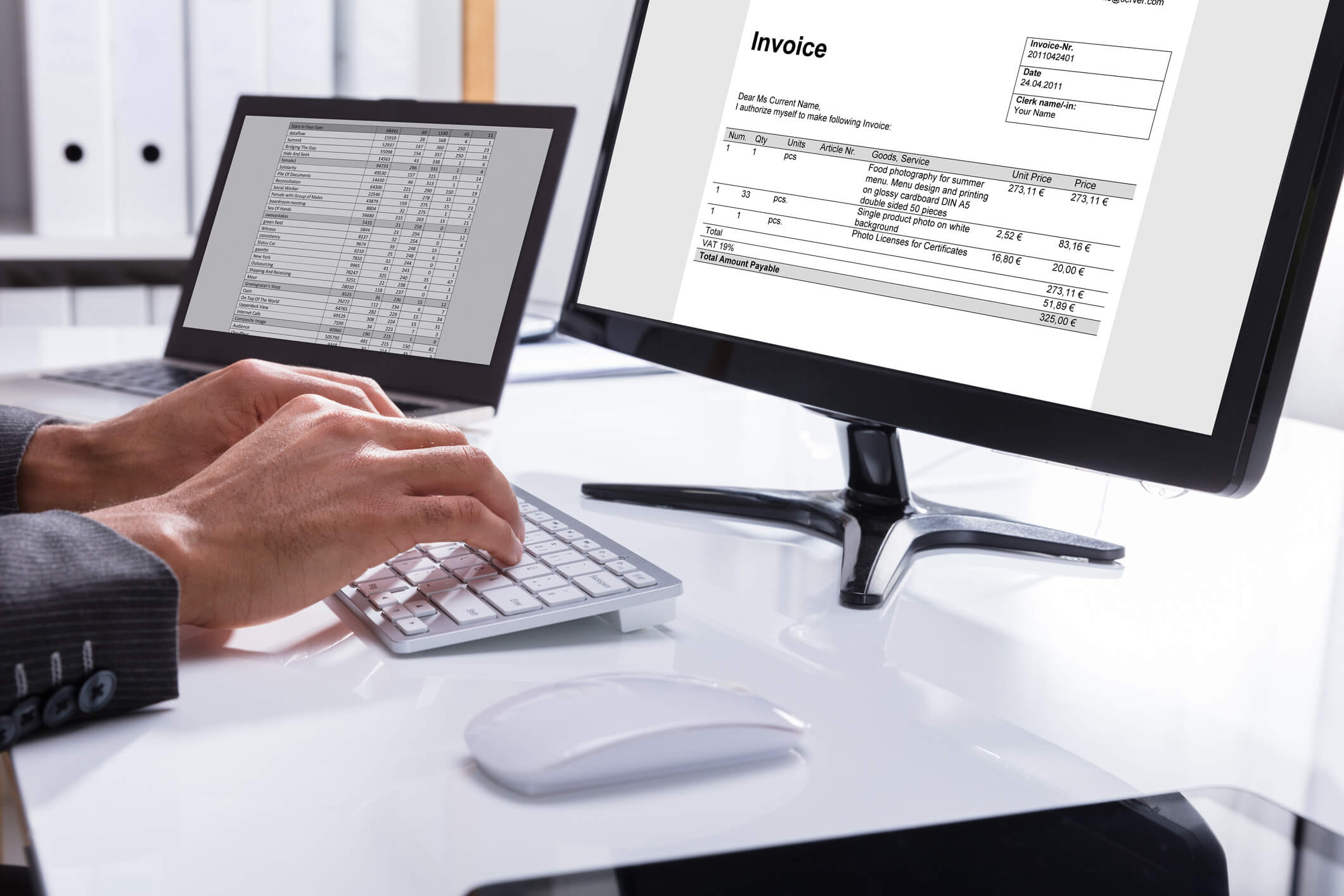
Invoice terms and conditions rules are the clear, written requirements on your invoices that spell out how and when clients must pay, what happens if they pay late, and which legal and compliance clauses apply—so you get paid on time and avoid disputes. When you define payment terms, late payment penalties, and protective clauses up front on every single invoice, you reduce late payments, strengthen cash flow, and dramatically cut down on chargebacks and disagreements.
Here’s a wake-up call: 49% of B2B invoices in the U.S. were overdue in a recent global survey, and 52% globally. That’s nearly half your billings sitting in limbo—a silent killer of small business cash flow. Over the past 20+ years building Complete Controller into a cloud-based bookkeeping and accounting services provider, I’ve reviewed thousands of invoices across nearly every industry imaginable. The businesses that treat their invoices like mini-contracts—with airtight terms, clear due dates, and enforceable late fees—get paid weeks faster than those who don’t. In this article, I’ll walk you through the three crucial rules that separate professionally paid businesses from chronically chasing ones, plus the implementation roadmap to make these rules stick.
What are invoice terms and conditions rules and how do you get them right?
Invoice terms and conditions rules are payment, legal, and compliance clauses that define when payment is due, how it must be made, and what happens if something goes wrong.
They should cover payment terms (due dates, methods, discounts, late fees) in plain language so both sides understand the billing schedule and net terms.
They must include legal and tax requirements for your jurisdiction so the invoice is enforceable in a dispute.
They should define risk-control clauses—late payment penalties, refund policy, and a clear invoice dispute process.
They work best when standardized, often in an invoice terms and conditions PDF, and built into your accounts payable invoice approval workflow.
The 3 Non-Negotiable Invoice Terms & Conditions Rules
After two decades of watching small businesses struggle with the same preventable cash flow problems, I can tell you the fix usually comes down to three rules. Skip any one of them, and you’re leaving money—and leverage—on the table.
These rules aren’t theoretical. They’re built from real client wins (and a few painful losses) that taught me what holds up when a deal goes sideways.
Make your payment terms unambiguous and easy to enforce
Your payment terms need to read like a calendar, not a suggestion. “Net 30” alone won’t cut it—you need a specific invoice due date that leaves zero room for interpretation.
State a precise payment due date. Write “Due on July 31, 2026” alongside the invoice date. Vague language gives clients permission to stall.
Match net terms to your cash flow reality. Net 15 works for service providers with tight payroll cycles. Net 30 terms conditions are standard for established B2B relationships. “Due on receipt” suits one-time projects.
Spell out the billing schedule. Upfront deposits, progress billing, and retainer cycles all need their own language so clients can’t claim surprise.
List accepted payment methods. ACH, card, check, online links—include account details and any processing fees as part of your invoice payment policy.
One client of ours tightened terms from Net 45 to Net 20 with specific due dates and trimmed two full weeks off their days-sales-outstanding. That’s real money freed up for payroll.
Put late payment penalties in writing and apply them consistently
With nearly half of B2B invoices going overdue in the U.S., late payment penalties aren’t optional anymore—they’re a survival tool.
Write the fee directly on every invoice. A standard phrasing: “1.5% per month (18% per annum) on all past-due balances.” For a compliance reference point, 31 U.S.C. § 3717 sets the federal benchmark for unpaid government invoices—useful context, though you still need to check your state’s interest caps.
Offer a carrot, too. A “2/10 Net 30” discount for early payment often outperforms aggressive collections. People love a deal more than they fear a fee.
Document a follow-up sequence. Reminder at day 5 past due, formal notice at day 15, escalation at day 30. Consistency is what makes late fees actually collectible.
Stay polite but firm.Government guidance supports staged reminders before escalation—it protects the relationship while protecting your bottom line.
Protect yourself with dispute, refund, and compliance clauses
This is where most small business owners drop the ball, and it’s where the biggest dollars get lost. Every invoice needs a written dispute process, a refund policy, and the legal disclosures that make it enforceable.
Add a dispute window. “Disputes must be raised in writing within 10 business days of invoice receipt.” That single sentence prevents months of back-and-forth.
Define your refund policy for invoices. Non-refundable deposits, partial refunds, service credits—state it up front, not after the argument starts.
Include legal and tax essentials. Legal business name, tax ID, jurisdiction. Without these, your terms and conditions for invoice payments may not hold up in court.
Standardize as a PDF attachment. Keep a short summary in the invoice footer and link to the full invoice terms and conditions PDF for the long-form clauses.
Strong invoice terms protect cash flow. Strong bookkeeping protects everything else. See how Complete Controller helps businesses stay financially organized.
What Every Compliant Invoice Must Include
Beyond the three rules, certain elements are simply non-negotiable for compliance. Skip them, and accounts payable teams will reject your invoice before it ever hits an approver’s queue.
Core legal and tax requirements
Business and customer identification: Legal names, addresses, and contact info for both parties. Incomplete info is the #1 reason large AP teams kick invoices back.
Unique invoice number and dates: Sequential numbering plus invoice and payment due dates. The accounts payable invoice approval workflow depends on these for matching and tracking.
Tax breakdown: Sales tax, VAT, GST, registration numbers, and any required disclosures. The IRS also expects records retained for several years.
Pricing detail that prevents disputes
Vague descriptions are dispute magnets. Every line item needs quantity, unit price, and service period. Show your math: subtotals, discounts, taxes, total due. PO numbers and job codes help AP departments match and approve fast.
Case Study – When Weak Invoice Terms Cost a Business $50,000
A mid-sized B2B service provider came to us after writing off over $50,000 in disputed invoices. Their terms said “Net 30.” That was it. No dispute window. No late fees. No defined deliverables.
The client delayed for months, citing vague “quality concerns,” then demanded a discount. With no acceptance criteria or dispute escalation clause in writing, the service provider had no leverage. They wrote off the balance and lost the relationship.
This isn’t rare. Freelancers faced the same problem in New York City for years until the Freelance Isn’t Free Act passed in 2017, requiring written contracts and damages for late or nonpayment. The lesson applies to every business: treat invoice terms like a mini-contract with deadlines and dispute steps, or expect to fight for your money.
Your 7-Step Rollout Plan for Stronger Invoice Terms
Knowing the rules is one thing—operationalizing them is another. Here’s the rollout I recommend to clients:
Map your typical disputes. Where do clients push back—scope, timing, quality, refunds?
Draft or update core clauses. Payment terms, late fees, refund policy, dispute process, tax disclosures.
Get legal review. Especially for interest rates and jurisdiction language.
Configure your invoicing tools. Build templates so terms auto-populate every time.
Train sales and service teams. No verbal promises that contradict written terms.
Integrate into your AP workflow. Standardize how you send, follow up, and escalate.
Review quarterly. Track DSO, dispute rates, and write-offs, then adjust.
Final Thoughts: Turn Invoices Into Cash-Flow Tools
After 20+ years helping businesses untangle financial messes, I can tell you the difference between getting paid on time and chasing money for months almost always comes down to your invoice terms. Make payment terms explicit. Put late penalties and early-pay incentives in writing. Protect every invoice with dispute, refund, and compliance clauses.
An invoice isn’t paperwork—it’s a financial control tool. Audit one invoice today, tighten its terms before your next billing cycle, and watch what happens to your cash flow. When you’re ready to take it further, the experts at Complete Controller are here to help you build invoicing workflows and back-office systems that actually protect your business.
Frequently Asked Questions About Invoice Terms and Conditions Rules
What are standard terms and conditions on an invoice?
Standard clauses cover payment terms (due date and methods), late payment penalties, tax information, refund and cancellation rules, delivery details, and a dispute resolution process. Together, they make your invoice enforceable and clear.
What are the rules for payment terms on an invoice?
Payment terms should specify a clear due date, defined net terms like Net 30, accepted payment methods, any early-payment discount, and late fees for overdue balances—all compliant with local interest rate regulations.
What should be included in invoice terms and conditions?
Include payment terms, late payment penalties, refund policy, invoice dispute process, tax and legal details, confidentiality or force majeure clauses where appropriate, and contact information for billing inquiries.
Are late payment fees legal on invoices?
Yes, late payment fees and interest are legal when they comply with state or national interest-rate caps and are clearly disclosed in your invoice terms and the underlying contract. The federal benchmark under 31 U.S.C. § 3717 is a useful reference, but always confirm your state’s cap.
How do I write simple payment terms for my invoices?
Try this template: “Payment is due within 30 days of the invoice date. A late fee of 1.5% per month applies to past-due balances. We accept ACH, credit card, or check. Direct billing questions to [email/phone].”
About Complete Controller® – America’s Bookkeeping Experts Complete Controller is the Nation’s Leader in virtual bookkeeping, providing service to businesses and households alike. Utilizing Complete Controller’s technology, clients gain access to a cloud platform where their QuickBooks™️ file, critical financial documents, and back-office tools are hosted in an efficient SSO environment. Complete Controller’s team of certified US-based accounting professionals provide bookkeeping, record storage, performance reporting, and controller services including training, cash-flow management, budgeting and forecasting, process and controls advisement, and bill-pay. With flat-rate service plans, Complete Controller is the most cost-effective expert accounting solution for business, family-office, trusts, and households of any size or complexity.
Jennifer BrazerFounder/CEO
Jennifer is the author of From Cubicle to Cloud and Founder/CEO of Complete Controller, a pioneering financial services firm that helps entrepreneurs break free of traditional constraints and scale their businesses to new heights.
Brittany McMillen is a seasoned Marketing Manager with a sharp eye for strategy and storytelling. With a background in digital marketing, brand development, and customer engagement, she brings a results-driven mindset to every project. Brittany specializes in crafting compelling content and optimizing user experiences that convert. When she’s not reviewing content, she’s exploring the latest marketing trends or championing small business success.
Google, social networks, online videos, and applications are all part of the digital ideas from QDQ Media, a Microsoft advertising platform for business. That today the Internet has become a transforming force of both society and the business world is a fact. Moreover, the arrival of mobile devices and, soon, the large-scale penetration of the Internet of things and wearables will give a new twist to the way we relate to our environment, our needs, and, therefore, to the way of doing business.
For this reason, “think digital” has become a compulsory subject for any company or business, regardless of its size, sector, or budget, if its objective is to grow and consolidate in these times (and in which they are coming).
Fortunately (or unfortunately for those who do not yet understand the need to “change the chip”), the possibilities that the Internet makes available to small businesses to expand and grow their businesses are increasing. The network has managed to “democratize” the ability to reach our customers, breaking spatial and temporal barriers.
And when we had to “change the chip,” we not only refer to that “change of mentality” that has to occur in traditional businesses to adapt to this new era dominated by digital environments, but also to companies born in the heart of This digital revolution, which must also be readjusted to the continuous changes of an industry that evolves day by day.
However, when addressing this task, large companies’ situation differs from those of small businesses and micro-SMEs, which have less economic resources to deal with them but, on the contrary, enjoy greater agility and ability to adapt to changes because their “machinery” is much less heavy.
Also, to address this task, small businesses have many resources at their disposal to help them make the leap to the Internet and achieve their business objectives through a digital strategy, from training resources and tools that can be found in the network itself to professional services from agencies and companies that have adopted both their services and their rates to these new small companies’ needs and pockets decided to immerse themselves in the digital era.
The digital ideas of QDQ media for your business
And although more and more agencies have veered part of their offer in this direction. A complete text is divided into 12 thematized chapters that, in turn, include 30 quick tips with digital marketing keys so that SMEs can have a recommendation for each day of the year on how to improve their performance in the network.
It is the second publication dedicated to SMEs that the agency has put into circulation, collecting all the good practices and recommendations that it carries out in its daily work with small businesses and whose result can be collected in the opinions QDQ average of clients who have managed to give a new impetus to their business after their immersion in the digital world.
“With this second book, our goal is to offer a support manual for SMEs that helps them develop a complete digital strategy. Many entrepreneurs and entrepreneurs have been able to receive information about digital marketing. Still, in practice, they do not know how to implement it in their businesses “, explains the Marketing Director of QDQ media.
In this way, the publication gathers all the elements with which the digital strategy of an SME has to count and offers concrete answers and practical application to questions about web development, SEO, directories, search engine advertising, digital advertising, e-mail marketing, mobile marketing, web analytics, social networks, digital content, online reputation or multi-site marketing.
All in All
The best businesses are always looking for ways to improve. The best businessperson is ready to learn new things every day, whether improving the products or making the entire work process efficient for effective results. Please pay close attention to other organizations and competitors around you and learn from their achievements and failures.
A good businessman takes notes of others’ failures and takes them as lessons for their own business. Moreover, they not only take notes from the failures but from their success stories as well. Remember, it’s okay to fall, but get back up and keep trying, but don’t stop! Your success is right around the corner!
About Complete Controller® – America’s Bookkeeping Experts Complete Controller is the Nation’s Leader in virtual bookkeeping, providing service to businesses and households alike. Utilizing Complete Controller’s technology, clients gain access to a cloud-hosted desktop where their entire team and tax accountant may access the QuickBooks™️ file, critical financial documents, and back-office tools in an efficient and secure environment. Complete Controller’s team of certified US-based accounting professionals provide bookkeeping, record storage, performance reporting, and controller services including training, cash-flow management, budgeting and forecasting, process and controls advisement, and bill-pay. With flat-rate service plans, Complete Controller is the most cost-effective expert accounting solution for business, family-office, trusts, and households of any size or complexity.
There are many things to take care of when starting your own business. Perhaps one of the most important is choosing a location for your business. When choosing a location, there are many things you should consider to ensure you have chosen the best and most profitable location for your business. It would be best if you also made it convenient for you and your staff. Here are eight essential things to consider when choosing a location for your business.
Location Characteristics
the characteristics of the location of your business should mirror the characteristics of the business itself. If your business is industrial and being in an industrial location makes sense. However, if your business is a bakery, you would not want to be located in the industrial area because the location characteristics would not match the business’s characteristics.
Affordability
While the main concern when choosing a location should be the business’s needs as far as what the building already has in place to meet your operational needs, there are other factors to consider. Most businesses that are just starting or are relocating have limited funds; therefore, the cost should be within the company’s budget. Even if the location is perfect and has all the features your business needs, you have to move on to the next property if it is not affordable.
The Type of Business
As mentioned before, when discussing the location characteristics, the type of business you have will greatly affect your location choices. Some businesses don’t have location restrictions and could set up shop anywhere. However, many businesses have specific needs when it comes to a location that has to be heavily considered.
Customers
Location can make or break a business. If your business depends on walk-in is customers, you have to be in a location that is easily seen and found by potential customers. However, if your customers will seek you out for specialized products or services, your location can be more tucked away. When considering the location, customers, and how they will interact with the business in that location will and should heavily impact your decisions regarding choosing a location.
Property Taxes
Different areas and principalities have different property tax regulations and percentages. When choosing your location, especially if on a budget or with limited funds, the taxes for that location need to be heavily considered. If the property tax is too high, you should consider other locations in areas where it is lower.
Safety
The safety of your business and your staff and customers should be of high importance to every business owner when searching for a location. The safety considerations could include the neighborhood, police and security presence, and your ability to add a security system if one does not already exist. Your business must be safe for all those involved.
Accessibility
When considering your location, its accessibility should be a high priority. There are two kinds of accessibility to consider when choosing your location, accessibility to the disabled, and physical accessibility to the location. If you choose a location that is not easily accessed by disabled people, you could lose some valuable customers. If your location is difficult to get in and out of, your business will suffer as customers will choose to take their business somewhere that is easier to get in and out of.
Quality
While everyone loves a fixer-upper, now is not the time to renovate when it comes to your business location. When choosing your location, choose one that is already in great repair and ready for move-in. Though you can get the location for a steal in some cases, it may not be one after you sink a lot of money into renovations.
Conclusion
There is the saying that there are three things that are important when considering starting your business location, location, location. That statement is timeless and still stands today. There have been many fantastic businesses that failed strictly due to poorly choosing their location. If you apply these eight things to your search for your business location, you will not be one of these businesses that fail but rather one that succeeds!
About Complete Controller® – America’s Bookkeeping Experts Complete Controller is the Nation’s Leader in virtual bookkeeping, providing service to businesses and households alike. Utilizing Complete Controller’s technology, clients gain access to a cloud-hosted desktop where their entire team and tax accountant may access the QuickBooks™️ file, critical financial documents, and back-office tools in an efficient and secure environment. Complete Controller’s team of certified US-based accounting professionals provide bookkeeping, record storage, performance reporting, and controller services including training, cash-flow management, budgeting and forecasting, process and controls advisement, and bill-pay. With flat-rate service plans, Complete Controller is the most cost-effective expert accounting solution for business, family-office, trusts, and households of any size or complexity.







 About Complete Controller® – America’s Bookkeeping Experts Complete Controller is the Nation’s Leader in virtual bookkeeping, providing service to businesses and households alike. Utilizing Complete Controller’s technology, clients gain access to a cloud-hosted desktop where their entire team and tax accountant may access the QuickBooks™️ file, critical financial documents, and back-office tools in an efficient and secure environment. Complete Controller’s team of certified US-based accounting professionals provide bookkeeping, record storage, performance reporting, and controller services including training, cash-flow management, budgeting and forecasting, process and controls advisement, and bill-pay. With flat-rate service plans, Complete Controller is the most cost-effective expert accounting solution for business, family-office, trusts, and households of any size or complexity.