


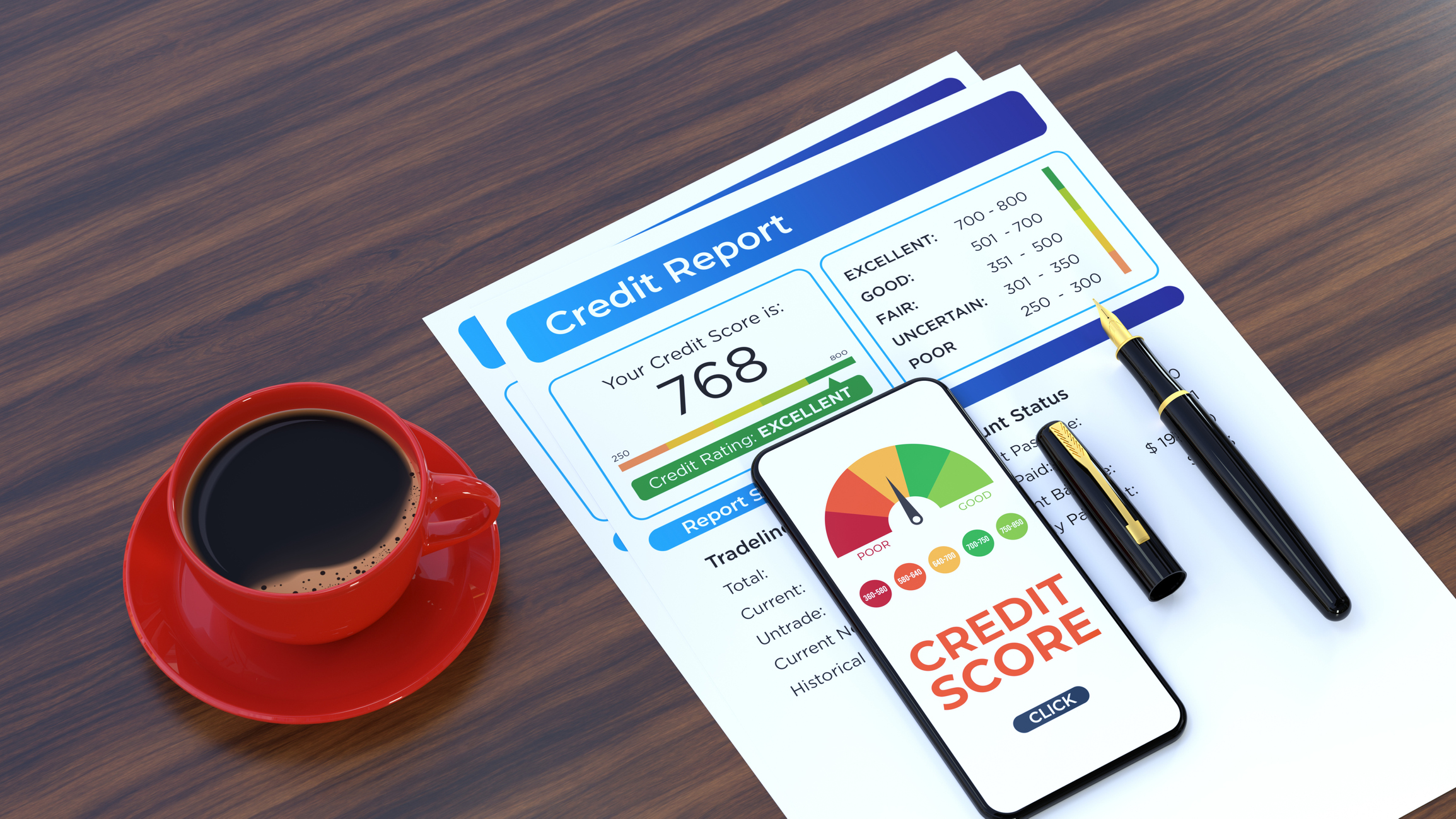
Understanding Your Credit Score:
Key Insights and Tips
Your credit score works by condensing your entire financial behavior into a three-digit number between 300 and 850 that predicts how likely you are to repay borrowed money on time, calculated using five key factors: payment history (35%), amounts owed (30%), length of credit history (15%), credit mix (10%), and new credit inquiries (10%).[10][12] This single number determines whether you qualify for loans, credit cards, mortgages, and even rental agreements, plus it directly controls the interest rates you’ll pay—potentially costing or saving you tens of thousands of dollars over your lifetime.
Over the past 20 years running Complete Controller, I’ve watched countless business owners discover too late that their personal credit score was quietly sabotaging their business dreams. One client with perfect payment history couldn’t understand why his loan was denied until we found a single credit card $20 over its limit—dropping his score by over 100 points and blocking $78,000 in business funding he desperately needed.[6] That moment crystallized a truth I see daily: most people think they understand credit scores, but small misunderstandings create massive financial consequences. This article reveals exactly how credit scoring algorithms work, exposes the hidden factors that matter most, and provides actionable strategies that can boost your score by 50-100 points within months.

How does your credit score actually work?
- Your credit score predicts loan repayment likelihood by analyzing payment history, debt levels, credit age, account types, and recent applications
- Payment history dominates at 35% weight—one late payment can drop scores 100+ points and haunt you for seven years
- Credit utilization (30% weight) measures debt-to-limit ratio—staying under 30% usage signals financial stability to lenders
- Credit history length (15%) rewards patience—keeping old accounts open builds scoring power even with zero balances
- Credit mix (10%) and new inquiries (10%) round out the formula, rewarding diverse account management while penalizing credit-seeking sprees
Ready to turn insight into action? Complete Controller can help.
Payment History: Your Financial Reputation (35%)
Payment history answers the single question lenders care about most: will you pay them back on time? Every credit card payment, auto loan installment, mortgage payment, and student loan you’ve ever made gets recorded and weighted into this dominant scoring factor.[10] The math is unforgiving—research shows a single 30-day late payment can crater a previously perfect 750 score down to 650 or lower, and that black mark stays visible to lenders for seven full years.[1][12]
The damage compounds exponentially with payment lateness. A 30-day late payment hurts, but 60-day and 90-day delinquencies signal serious financial distress to scoring models. Someone with excellent credit who misses one payment faces a steeper point drop than someone with fair credit who adds another late payment to their existing collection. The algorithm interprets the first mistake as a behavioral change requiring immediate score adjustment.
Building bulletproof payment history
Perfect payment history starts with automation. Setting up automatic minimum payments eliminates human error and guarantees you’ll never accidentally miss a due date while traveling or during busy seasons. Even if you manually pay the full balance later, that automated safety net protects your score from devastating late payment damage.
Consider payment history your credit score foundation—without it, nothing else you do matters. Consumers with 800+ credit scores average just 0.01 delinquencies compared to 1.6 for typical Americans, proving that payment perfection separates exceptional credit from average.[1]
Credit Utilization: The Hidden Score Killer (30%)
Credit utilization measures how much of your available credit you’re actually using, and it’s the second-most powerful factor in how your credit score works. The calculation is straightforward: divide your total credit card balances by your total credit limits.[9] If you have $10,000 in total credit limits and carry $3,000 in balances, you’re at 30% utilization—the threshold experts identify as the danger zone.
The 30% rule exists because lenders interpret high utilization as financial stress, regardless of perfect payment history. Someone using 90% of available credit appears one emergency away from default, even if they’ve never missed a payment. This explains why paying down maxed-out cards often produces dramatic score improvements within 30 days.[6]
Strategic utilization management
Multiple cards help more than you’d expect. Spreading $3,000 in balances across three cards with $5,000 limits each (20% utilization) scores better than carrying that same $3,000 on a single $5,000 card (60% utilization). The individual card utilization matters as much as overall utilization.
- Request credit limit increases without hard inquiries to instantly reduce utilization ratios
- Pay down cards before statement closing dates to report lower balances
- Keep paid-off cards open to maintain available credit cushion
- Consider becoming an authorized user on accounts with low utilization
Americans with exceptional credit maintain just 6% average utilization compared to 28% for typical consumers, demonstrating the massive scoring advantage of low credit usage.[1]
Credit History Length: Time Builds Trust (15%)
Length of credit history rewards financial stability and patience—qualities that predict reliable repayment behavior. The scoring algorithm examines your oldest account age, newest account age, and the average age across all accounts.[10] This explains why closing old credit cards hurts your score even after paying them off completely.
Your credit age calculation includes both open and closed accounts, but closed accounts eventually fall off your report after 10 years. A 20-year-old credit card anchors your history even if unused for years, while opening new accounts dilutes your average account age. This mathematical reality means building excellent credit takes time—there’s no shortcut to aging accounts.
Maximizing history length benefits
Young adults benefit enormously from becoming authorized users on established accounts with perfect payment history. Research shows this strategy can add 29 points to scores by age 30, improving mortgage qualification odds and lifetime financial opportunities.[5] Parents adding responsible teenagers as authorized users give them a massive head start in credit building.
The patience required frustrates many consumers, but time remains one of the few scoring factors that costs nothing to improve. Every month your accounts age, your score incrementally improves, rewarding those who start early and maintain accounts responsibly.
Credit Mix and New Inquiries: The Final 20%
Credit mix contributes 10% to your score by rewarding borrowers who successfully manage different credit types—revolving credit like cards versus installment loans like mortgages or auto financing.[10] Lenders interpret diverse credit management as financial sophistication, though you shouldn’t force artificial variety. Natural credit mix development through life stages works perfectly fine.
New credit inquiries, the final 10%, penalize rapid credit seeking as a desperation signal. Each hard inquiry typically drops scores 5-10 points and remains visible for two years, though the scoring impact fades after 12 months.[12] The exception: rate shopping for mortgages or auto loans within 14-45 days counts as a single inquiry, acknowledging rational comparison shopping.[12]
Smart credit shopping strategies
Consolidate applications when possible. If you need multiple credit accounts, apply within the rate shopping window to minimize score damage. Avoid retail store card temptations—that 10% discount costs you credit score points that take months to recover.
Understanding soft versus hard inquiries prevents unnecessary score damage. Checking your own credit, prequalified offers, and employer credit checks create soft inquiries with zero scoring impact. Only applications for new credit trigger score-reducing hard inquiries.
 [12]
[12]
Credit Score Ranges: Numbers That Change Your Life
Credit scores aren’t abstract numbers—they’re financial gatekeepers that determine your access to life’s major purchases. FICO scores range from 300-850 with distinct quality tiers: poor (300-579), fair (580-669), good (670-739), very good (740-799), and excellent (800-850).[12] Only 23% of Americans achieve 800+ scores, with older consumers dominating this elite group.[1]
The practical difference between score tiers translates directly to your wallet. On a $300,000 mortgage, a borrower with a 620 score pays approximately 7.89% interest while someone with 760+ enjoys 7.07% rates—a difference exceeding $100,000 in total interest over 30 years.[2][3] Every 20-point improvement in the 620-740 range can save thousands annually.
The hidden costs of mediocre credit
Beyond loan rates, credit scores affect insurance premiums, rental applications, employment opportunities, and utility deposits. Landlords routinely reject applicants below 650, and many employers check credit for positions involving financial responsibility. Poor credit creates a cascade of higher costs and missed opportunities throughout life.
Understanding your current score position helps set realistic improvement goals. Moving from fair to good credit (580 to 670+) opens mainstream lending access, while reaching very good territory (740+) secures premium rates and terms. Each tier crossed represents tangible financial progress worth thousands in savings.
Why You Have Multiple Credit Scores
Most consumers don’t realize they have dozens of different credit scores, not just one. The three major bureaus—Experian, Equifax, and TransUnion—each calculate scores independently based on slightly different data.[11] Additionally, FICO has multiple versions (FICO 8, FICO 9, FICO 10) plus industry-specific scores for auto lending, credit cards, and mortgages.
VantageScore, FICO’s main competitor, uses different calculations and can generate scores with just one month of history versus FICO’s six-month requirement. July 2025 brought game-changing news: Fannie Mae and Freddie Mac now accept VantageScore 4.0 for mortgages, potentially qualifying 2.7 million additional borrowers who include rent and utility payments or have thin credit files.[7]
Managing multiple score reality
Monitor all three bureau reports annually through AnnualCreditReport.com to catch discrepancies.[11] Scores can vary 20-50 points between bureaus due to reporting differences—one late payment might appear on Experian but not TransUnion, creating frustrating inconsistencies.
Focus improvement efforts on factors affecting all scores: payment history and utilization universally matter regardless of scoring model. While you can’t control which score lenders check, improving fundamental behaviors lifts all scores simultaneously.
Immediate Actions to Transform Your Credit Score
Strategic credit improvement starts with understanding that scores respond dynamically to behavior changes. Unlike static grades, credit scores recalculate monthly based on latest data, meaning focused efforts produce rapid results.
First 30 Days Action Plan:
- Pull all three credit reports from AnnualCreditReport.com and dispute any errors—even small mistakes can suppress scores significantly[11]
- Identify cards over 30% utilization and pay them below that threshold for quick score boost
- Set up automatic minimum payments on every account to guarantee perfect future payment history
- Stop applying for new credit to let recent inquiries age and reduce their impact
60-90 Day Momentum Building:
- Request credit limit increases on existing cards without hard inquiries to improve utilization ratios
- Become an authorized user on accounts with long history and low utilization
- Pay down highest utilization cards first—getting any card from 90% to 30% utilization helps more than reducing multiple cards from 40% to 30%
- Consider debt consolidation only if it genuinely reduces utilization without closing old accounts
Long-Term Excellence Strategy:
- Maintain zero late payments—perfection compounds over time
- Keep utilization under 10% for exceptional score territory like the 800+ club maintains[1]
- Let accounts age naturally while keeping old cards active with small periodic charges
- Build natural credit mix through life stages without forcing unnecessary debt
Conclusion
Understanding how your credit score works transforms it from a mysterious number into a controllable tool for financial success. The five factors—payment history (35%), credit utilization (30%), history length (15%), credit mix (10%), and new inquiries (10%)—operate on clear mathematical principles you can leverage strategically. While building exceptional credit takes time and discipline, even modest improvements unlock better rates, expanded opportunities, and significant lifetime savings.
I’ve spent two decades helping business owners and individuals master their credit, and the transformation stories never get old. Whether you’re recovering from past mistakes or optimizing already-good credit for excellence, the path forward remains the same: consistent on-time payments, strategic utilization management, and patience as accounts age. Your credit score responds to actions, not circumstances—meaning you control your financial destiny.
Take the first step today by checking your credit reports and identifying one area for improvement. For comprehensive guidance on credit management, financial strategy, and business growth, the experts at Complete Controller stand ready to help you break free from limitations and achieve your financial goals. Visit us at Complete Controller to discover how our full-service financial solutions can transform your business and personal finances.

Frequently Asked Questions About How Your Credit Score Works
How long does it take for my credit score to update after I pay off debt?
Credit scores typically update within 30-45 days after your creditor reports the payment to the credit bureaus. Most creditors report monthly on your statement closing date, so paying down balances before that date shows faster improvement. Some scoring changes appear within days on real-time platforms, but official FICO scores used by lenders update monthly.
Can I have a good credit score with only one credit card?
Yes, you can achieve good credit (670-739) with just one credit card if you maintain perfect payment history and low utilization. However, reaching excellent territory (740+) becomes easier with 2-3 cards showing long history and responsible management. Quality matters more than quantity—one well-managed card beats five maxed-out accounts.
Do utility bills and rent payments affect my credit score?
Traditional FICO scores don’t include utility or rent payments unless they go to collections for non-payment. However, newer scoring models like VantageScore 4.0 can incorporate these payments if reported through services like Experian Boost. As of July 2025, mortgage lenders can use VantageScore 4.0, making rent payment history valuable for first-time homebuyers.[7]
Why did my credit score drop when I paid off my car loan?
Paying off installment loans can temporarily lower scores by reducing your credit mix and active account count. The closed loan also stops contributing to payment history, though the positive history remains on your report for 10 years. This drop is usually minor (10-20 points) and temporary—your score recovers as other accounts age and demonstrate continued responsible management.
Should I close credit cards I don’t use anymore?
Keep unused credit cards open unless they charge annual fees you can’t justify. Open cards contribute to your credit history length and available credit, both helping your score. Closing cards reduces available credit (raising utilization) and eventually removes that positive history from your average account age calculation. Instead, use old cards occasionally for small purchases to keep them active.
Sources
- Experian. (July 22, 2025). How Many Americans Have an 800 Credit Score or Greater? https://www.experian.com/blogs/ask-experian/how-many-americans-have-800-credit-score/
- Experian. (January 3, 2025). Average Mortgage Rates by Credit Score. https://www.experian.com/blogs/ask-experian/average-mortgage-rates-by-credit-score/
- The Mortgage Reports. (2025). Current Mortgage Rates by Credit Score | 2025. https://themortgagereports.com/87625/mortgage-rates-by-credit-score
- The Week. (April 2025). Gen Z is Facing a Credit Score Crisis. https://theweek.com/business/economy/gen-z-credit-score-crisis-fixes
- Fortune. (October 9, 2025). Gen Z’s Credit Scores Just Suffered the Biggest Drop of Any Generation. https://fortune.com/2025/10/09/gen-z-credit-score-catastrophic-drop-fico-report-student-loans-doomspending-to-blame/
- Midwest Corporate Credit. (June 20, 2022). Case Study – 114-Point Credit Score Increase in 30 Days. https://www.midwestcorporatecredit.com/2022/06/20/case-study-114-point-credit-score-increase-in-30-days/
- FHMTG (Florida Home Mortgage Trends & Guides). (August 14, 2025). What Are the Differences Between VantageScore 4.0 vs. FICO® 10T. https://fhmtg.com/2025/08/14/what-are-the-differences-between-vantagescore-vs-fico-credit-scoring-models/
- Urban Institute. (2024). Credit Scores Perpetuate Racial Disparities, Even in America’s Most Prosperous Cities. https://www.urban.org/urban-wire/credit-scores-perpetuate-racial-disparities-even-americas-most-prosperous-cities
- Opportunity Insights. (July 2025). Credit Access in the United States. https://opportunityinsights.org/wp-content/uploads/2025/07/CreditAccess_Nontech.pdf
- MyFICO. What Influences Your Credit Scores. https://www.myfico.com/credit-education/what-influences-your-credit-scores
- Annual Credit Report. Free Annual Credit Reports. https://www.annualcreditreport.com/index.action
- Consumer Financial Protection Bureau. Credit Reports and Scores. https://www.consumerfinance.gov/consumer-tools/credit-reports-and-scores/credit-scores/
- Complete Controller. How to Manage Your Credit Responsibly. https://www.completecontroller.com/how-to-manage-your-credit-responsibly/
- Complete Controller. Personal Lines of Credit. https://www.completecontroller.com/personal-lines-of-credit/
- Complete Controller. Managing Business Accounting. https://www.completecontroller.com/managing-business-accounting/
 About Complete Controller® – America’s Bookkeeping Experts Complete Controller is the Nation’s Leader in virtual bookkeeping, providing service to businesses and households alike. Utilizing Complete Controller’s technology, clients gain access to a cloud platform where their QuickBooks™️ file, critical financial documents, and back-office tools are hosted in an efficient SSO environment. Complete Controller’s team of certified US-based accounting professionals provide bookkeeping, record storage, performance reporting, and controller services including training, cash-flow management, budgeting and forecasting, process and controls advisement, and bill-pay. With flat-rate service plans, Complete Controller is the most cost-effective expert accounting solution for business, family-office, trusts, and households of any size or complexity.




 Brittany McMillen
Brittany McMillen
Brittany McMillen