


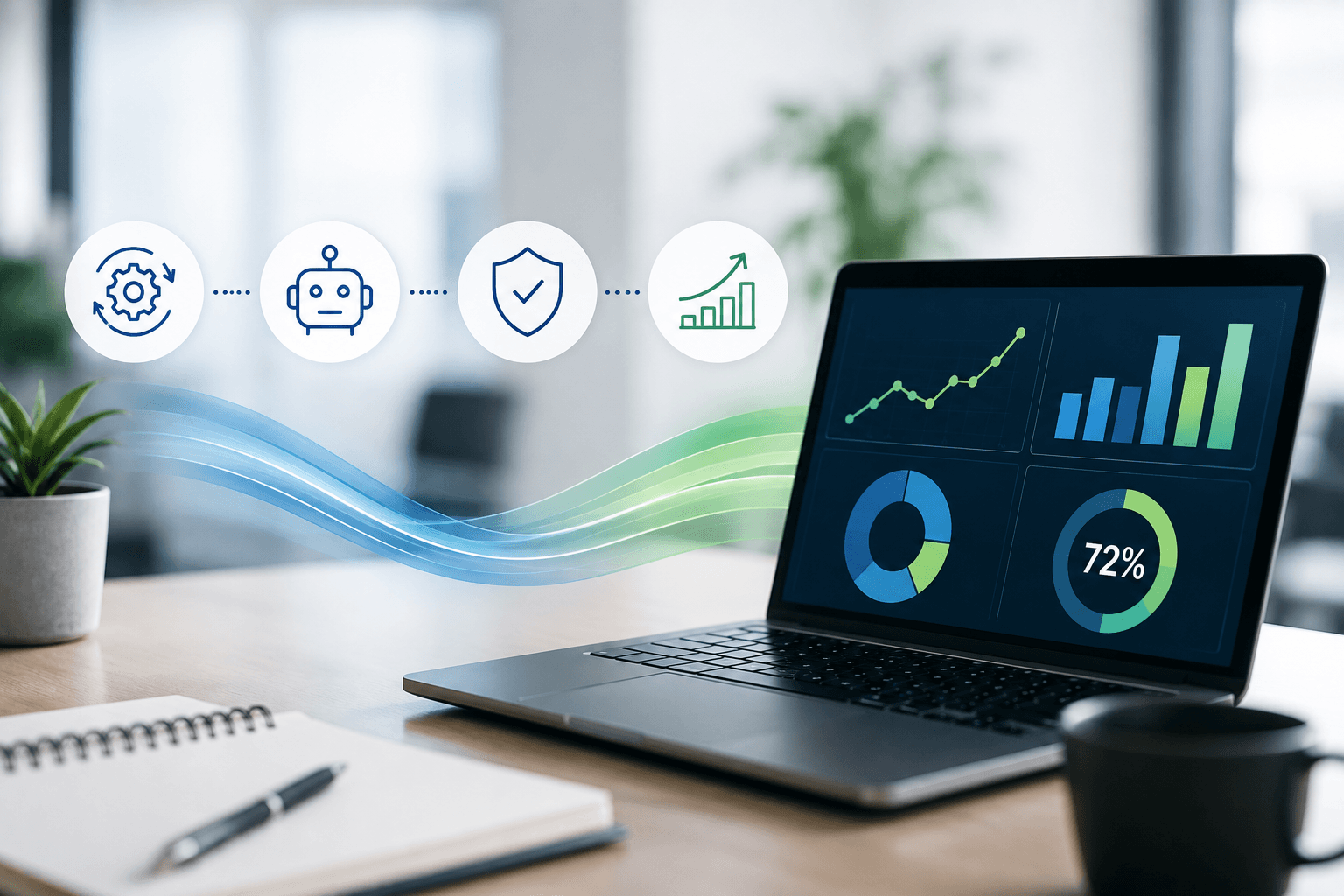
Financial Systems Optimization:
How to Build a Finance Engine That Actually Works for You
Financial systems optimization is the process of streamlining, automating, and integrating your accounting tools, workflows, and data so your business runs on accurate numbers, faster processes, and fewer manual errors. In plain terms? It means making your financial operations work for you instead of against you.
Here’s what I’ve seen after two decades leading Complete Controller: most businesses aren’t struggling because they lack financial data—they’re drowning in it. Spreadsheets that don’t talk to each other. Invoices approved by email chains. A month-end close that takes three weeks. If that sounds familiar, you’re not broken—your system is. And systems can be fixed.
What is financial systems optimization and how do you do it right?
- Financial systems optimization means integrating your tools, automating repetitive processes, cleaning your data flows, and building reporting you can actually trust.
- Integration connects your ERP, banking, payroll, and accounting platforms so data flows without rekeying.
- Automation removes manual tasks from accounts payable, accounts receivable, and reconciliations.
- Data integrity ensures every report pulls from a single, accurate source of truth.
- Optimized reporting turns your close process into a decision-making advantage instead of a monthly scramble.

Why Financial Systems Optimization Matters More Than Ever
Manual finance work isn’t just annoying—it’s expensive. Research from Ardent Partners shows the average cost to process a single invoice manually can exceed $10, while automated processing drops that to under $3. Multiply that across hundreds of invoices per month, and you’re bleeding money on busywork.
And it’s not just cost. According to PwC, finance teams spend nearly 30% of their time on data gathering and manual processing—time that should go toward analysis and strategy. When your team is stuck copying numbers between systems, nobody’s watching the numbers that matter.
The foundation starts with disciplined operational habits. I’ve outlined the best practices for financial systems optimization that every business owner should master before layering on technology—because automating a broken process just gives you faster mistakes.
Start with Your ERP: The Backbone of Enterprise Financial Systems
Your ERP is the central nervous system of your finance function. When it’s configured well, everything—purchasing, inventory, payroll, reporting—flows through one connected platform. When it’s not, you get data silos and duplicate entry everywhere.
Understanding financial systems optimization for ERP means recognizing that these platforms exist to connect business processes across departments, not just record transactions.
Signs your ERP needs optimization
- Your team exports data to Excel to “fix it” before reporting
- Different departments report different numbers for the same metric
- Month-end close takes more than five business days
- You’ve built manual workarounds nobody documented
If two or more of these hit home, your system is due for a tune-up—not necessarily a replacement. Optimization often costs a fraction of a new implementation.
Automate Your AP and AR Workflows
Once your core system is solid, automation is where the real transformation happens. Accounts payable optimization and accounts receivable optimization are the fastest wins because they’re high-volume, rules-based, and error-prone when done by hand.
Robotic process automation isn’t science fiction—even government agencies use it to eliminate repetitive tasks. Digital.gov documents how organizations automate financial processes and workflows to free their people for higher-value work. Gartner research echoes this, finding that automation can eliminate up to 25,000 hours of avoidable rework annually in large finance departments.
Where to automate first
- Invoice capture and approval routing—stop chasing signatures through inboxes
- Payment scheduling—capture early-pay discounts automatically
- Customer invoicing and reminders—get paid faster without awkward phone calls
- Bank reconciliations—daily matching instead of monthly marathons
Notice the order matters here: capture clean data first, then automate what happens to it.
Ready to make your financial systems work smarter? Complete Controller delivers streamlined bookkeeping, better workflows, and clearer financial insights to help your business thrive.
Optimize Cash Flow Visibility and Working Capital
Automation feeds directly into the metric every owner cares about most: cash. You can’t manage what you can’t see, and fragmented systems make cash visibility nearly impossible.
This is where cash flow management optimization becomes a competitive advantage. When your systems track the full cash conversion cycle—from inventory purchase to customer payment—you can shorten that cycle deliberately. Faster receivables, smarter payables timing, leaner inventory. Every day you shave off the cycle is cash back in your business.
A U.S. Bank study famously found that 82% of business failures trace back to poor cash flow management. Optimized systems don’t just save time—they can save your company.
Tighten Your Financial Reporting and Close Process
Clean data and automated workflows set the stage for the final piece: reporting you can stake decisions on. Your close process should produce accurate, consolidated financials quickly—and stand up to scrutiny.
Regulators take this seriously, and so should you. The SEC’s guidance on financial reporting optimization reinforces why structured, reliable disclosure processes matter even for private companies. Trustworthy reporting builds credibility with lenders, investors, and buyers.
Building a faster, cleaner close
Standardize your chart of accounts, document close procedures, and reconcile continuously instead of monthly. When reconciliation happens daily through automation, your “close” becomes a review—not an archaeology dig.
Embrace Modern Finance Technology and Culture
Optimization isn’t a one-time project—it’s a mindset. The tools evolve constantly: AI-assisted categorization, real-time dashboards, cloud-based collaboration. Staying current with accounting innovation directly improves finance workflow efficiency and keeps you ahead of competitors still living in spreadsheets.
I pioneered cloud-based bookkeeping services back when people thought “the cloud” was a weather report. What I learned then still holds: technology adoption is 20% software and 80% leadership. Your team follows your example. Champion the change, and they will too.
Conclusion
Financial systems optimization comes down to four moves: integrate your platforms, automate your workflows, protect your data integrity, and build reporting you can trust. Do those well, and you’ll spend less time wrestling numbers and more time using them to grow.
You don’t have to figure this out alone. My team at Complete Controller has guided thousands of businesses through exactly this transformation—we built the playbook for cloud-based bookkeeping and controller services. Visit Complete Controller for expert guidance from the team that’s been optimizing financial systems since before it was trendy. Your numbers should work as hard as you do.

Frequently Asked Questions About Financial Systems Optimization
What is financial systems optimization?
It’s the process of integrating, automating, and streamlining your accounting tools and workflows so financial data flows accurately with minimal manual effort.
How do I know if my financial systems need optimization?
Warning signs include a close process longer than five days, heavy reliance on spreadsheets, duplicate data entry, and inconsistent numbers across reports.
What financial processes should I automate first?
Start with accounts payable invoice processing and accounts receivable invoicing—they’re high-volume, rules-based, and deliver the fastest ROI.
Do I need to replace my ERP to optimize my financial systems?
Usually not. Most businesses can reconfigure workflows, improve integrations, and add automation tools to their existing platform at far lower cost.
How does financial systems optimization improve cash flow?
It shortens your cash conversion cycle by speeding up invoicing and collections, optimizing payment timing, and giving you real-time visibility into liquidity.
Sources
- Complete Controller. Efficient Business Finance Management. https://www.completecontroller.com/efficient-business-finance-management/
- Complete Controller. Accounting Innovations and Trends. https://www.completecontroller.com/accounting-innovations-trends/
- Complete Controller. Mastering the Cash Conversion Cycle. https://www.completecontroller.com/mastering-the-cash-conversion-cycle/
- Wikipedia. Enterprise Resource Planning. https://en.wikipedia.org/wiki/Enterpriseresourceplanning
- Digital.gov. (2019). Robotic Process Automation. https://digital.gov/2019/05/14/robotic-process-automation/
- U.S. Securities and Exchange Commission. Division of Corporation Finance Financial Reporting Manual. https://www.sec.gov/corpfin/cf-manual
 About Complete Controller® – America’s Bookkeeping Experts Complete Controller is the Nation’s Leader in virtual bookkeeping, providing service to businesses and households alike. Utilizing Complete Controller’s technology, clients gain access to a cloud platform where their QuickBooks™️ file, critical financial documents, and back-office tools are hosted in an efficient SSO environment. Complete Controller’s team of certified US-based accounting professionals provide bookkeeping, record storage, performance reporting, and controller services including training, cash-flow management, budgeting and forecasting, process and controls advisement, and bill-pay. With flat-rate service plans, Complete Controller is the most cost-effective expert accounting solution for business, family-office, trusts, and households of any size or complexity.



 Brittany McMillen
Brittany McMillen
Brittany McMillen