


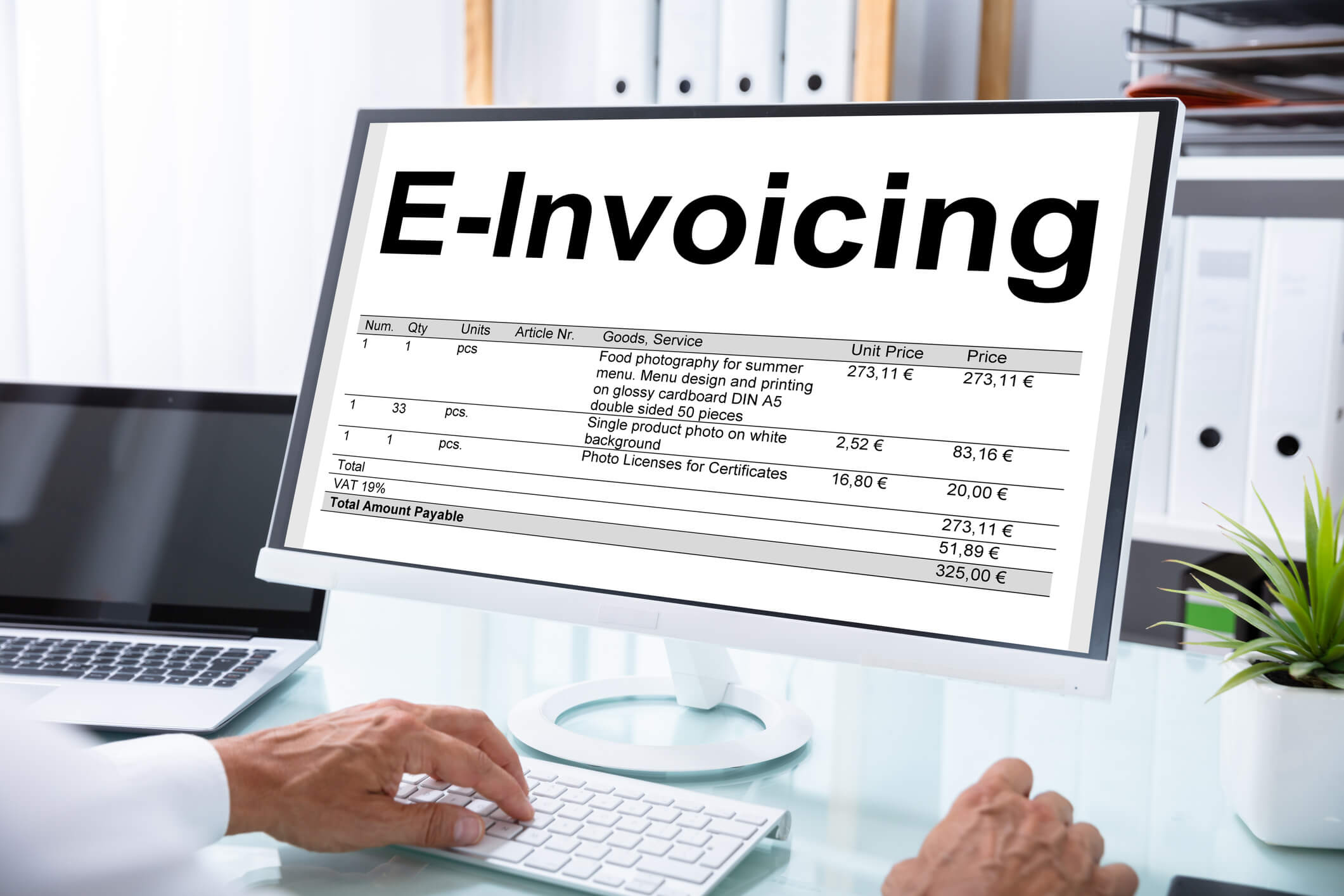
Master E-Invoicing and Billing:
Essential Insights for Success
E invoicing and billing are digital systems that automate invoice creation, delivery, validation, and payment processing, dramatically accelerating cash flow while reducing errors and compliance risks. These sophisticated electronic systems replace paper-based processes with structured, machine-readable data formats like XML and JSON, enabling real-time validation, automated matching with purchase orders, and seamless integration with accounting software to transform how businesses handle their financial transactions.
As the founder of Complete Controller, I’ve witnessed firsthand how e invoicing and billing revolutionize business operations across every industry imaginable. Over my 20 years leading a cloud-based financial services provider, I’ve guided thousands of businesses through their digital transformation journeys, watching them slash processing costs by 60%, accelerate payment cycles by up to 7 days, and virtually eliminate invoice fraud through automated validation. This article reveals the exact strategies and insights I’ve gathered from helping businesses leverage e-invoice software, navigate complex e-invoicing compliance requirements in 2025, and build competitive advantages through strategic implementation of electronic invoicing solutions that go far beyond mere regulatory compliance.

What are e invoicing and billing, and how do they lead to business success?
- E-invoicing and billing automate invoice creation, delivery, validation, and payment through structured digital formats, ensuring faster payments and compliance with 2025 regulations
- Electronic invoicing uses machine-readable data formats (XML, JSON) that integrate directly with accounting systems for automated processing
- Digital billing processes eliminate manual data entry, reducing errors from 10% to less than 0.5% while cutting processing time by 39 minutes per invoice
- Automated validation matches invoices to purchase orders instantly, preventing fraud and duplicate payments before they occur
- Real-time tracking and secure transmission accelerate payment cycles by an average of 1.4 days globally
Choosing the Right E-Invoicing Software: What to Look For
Selecting effective e-invoice software forms the foundation of successful digital transformation in your billing processes. The right platform transforms invoicing from a cost center into a strategic advantage, but choosing poorly can create more problems than it solves.
The most critical feature to prioritize is seamless e-invoicing integration with accounting systems. Your chosen solution must connect directly with your existing financial infrastructure, enabling one-click data flow between platforms. This eliminates duplicate data entry and creates a single source of truth for all financial information. Look for platforms offering pre-built integrations with major accounting software like QuickBooks, Xero, or enterprise ERP systems.
Invoice automation tools represent another essential capability. Advanced platforms automatically validate incoming invoices against approved purchase orders, flag discrepancies for review, and route documents through predefined approval workflows. This automation reduces manual processing time from hours to minutes while maintaining strict controls over spending authorization.
Given the evolving regulatory landscape, e-invoicing compliance requirements must be built into your platform from the ground up. The software should support multiple international formats, maintain audit trails that satisfy regulatory scrutiny, and update automatically as new mandates emerge. Platforms that treat compliance as an afterthought will create massive headaches as regulations tighten globally.
Security features deserve equal attention. Look for solutions offering:
- Role-based access controls limiting who can view and approve invoices
- Digital signatures ensuring document authenticity
- Encryption protocols protecting data during transmission
- Comprehensive audit trails tracking every action taken
Popular electronic invoicing solutions fall into three main categories. Cloud-based SaaS platforms like FreshBooks and Bill.com offer accessibility and rapid deployment for small to medium businesses. ERP add-ons from vendors like SAP and Oracle provide deep integration for larger enterprises already invested in these ecosystems. API-based platforms deliver maximum flexibility for organizations needing custom workflows or unique integration requirements.
Compliance, Security, and Risk: Why 2025 Is a Turning Point for E-Invoicing
The year 2025 marks a watershed moment for global e-invoicing adoption as mandatory regulations sweep across major economies. Understanding this shifting landscape is crucial for maintaining compliance and avoiding costly penalties.
Germany’s B2B e-invoicing mandate, effective January 1, 2025, requires all domestic business-to-business invoices to meet specific technical standards using structured formats. This isn’t simply digitizing paper invoices—it demands machine-readable data that tax authorities can process automatically. France follows in 2026 with comprehensive requirements affecting all business transactions. Australia mandates that by December 2026, all government suppliers must process invoices through the Peppol network, a requirement that will cascade throughout supply chains.
These mandates reflect governments’ recognition that comprehensive e-invoicing dramatically improves tax collection and reduces economic informality. Brazil and Mexico pioneered this approach starting in 2005, demonstrating that mandatory e-invoicing can reduce tax gaps by billions annually while simplifying compliance for honest businesses.
The technical requirements vary by jurisdiction but share common elements:
- Structured data formats (typically XML or JSON variants)
- Digital signatures ensuring authenticity
- Real-time or near-real-time reporting to tax authorities
- Unique invoice identifiers preventing duplication
- Secure transmission protocols protecting sensitive data
Non-compliance carries escalating consequences. Direct penalties range from thousands to millions in fines depending on violation severity and business size. Beyond fines, non-compliant businesses face delayed payments from government contracts, exclusion from public tenders, and reputational damage that impacts private sector relationships. Perhaps most damaging, the operational chaos created by last-minute compliance scrambles disrupts business operations when management attention should focus on growth and innovation.
Smart organizations recognize compliance as an opportunity rather than a burden. Early adopters gain competitive advantages by positioning themselves as sophisticated, reliable partners ready to transact with any organization globally. They avoid the panic and mistakes that accompany rushed implementations while building operational efficiencies that benefit the bottom line regardless of regulatory requirements.
The Business Benefits of E-Invoicing and Billing: Beyond Compliance
While regulatory compliance drives many e-invoicing implementations, the operational and financial benefits far exceed mere regulatory adherence. Understanding these advantages helps build the business case for proactive adoption.
Recent research by Avalara and the Centre for Economics and Business Research quantifies the massive economic potential of e-invoicing adoption. Full implementation across six major economies could generate $616 billion in annual gains through improved productivity, accelerated cash flow, and reduced fraud. In the United States alone, comprehensive adoption could unlock $116 billion yearly, with 83% of gains flowing to small and medium businesses that currently lag in adoption rates.
The financial impact on individual businesses is equally compelling. Manual invoice processing costs between $13 and $40 per invoice when accounting for labor, error correction, and payment delays. Automated e-invoicing reduces this to $1.42 to $6.00 per invoice—a reduction of up to 90%. For businesses processing 1,000 monthly invoices, this translates to annual savings exceeding $120,000.
Payment acceleration delivers another substantial benefit. E-invoices settle 5 to 7 days faster than paper invoices on average, with some regions seeing acceleration up to 2.5 days. This improvement directly impacts working capital, reducing reliance on expensive short-term credit and enabling faster reinvestment in growth opportunities. Large U.S. businesses report annual cash flow improvements exceeding $14,000 from payment acceleration alone.
The advantages of e-invoicing extend beyond pure financial metrics:
- Error rates drop from 10% with manual processing to under 0.5%
- Invoice disputes decrease by 75% due to automated validation
- Processing time per invoice drops by 39 minutes
- Fraud and duplicate payments virtually disappear
- Lost invoices, affecting 40% of paper-based systems, become impossible
These operational improvements cascade throughout organizations. Finance teams shift focus from error correction to strategic analysis. Supplier relationships improve as payment delays and disputes vanish. Management gains real-time visibility into cash flow and spending patterns, enabling better decision-making.

How to Successfully Implement E-Invoicing: A Step-by-Step Roadmap
Successful e-invoicing implementation requires careful planning and systematic execution. Based on hundreds of implementations I’ve overseen, this roadmap maximizes success probability while minimizing disruption.
Step 1: Assess your current billing and accounting processes
Begin by documenting existing invoice workflows from receipt through payment. Identify bottlenecks where invoices stall, error-prone manual steps, and integration gaps between systems. This assessment reveals both quick wins and areas requiring deeper transformation. Pay particular attention to exception handling—how your organization manages invoices that don’t match purchase orders or require special approval.
Step 2: Select and Configure Your E-Invoice Solution
Match platform capabilities to your specific needs rather than choosing based on features alone. Ensure your selection supports required formats for all jurisdictions where you operate. Configure the system to mirror your approval hierarchies while eliminating unnecessary steps that automation makes redundant. Build templates for common invoice types to accelerate processing.
Step 3: Integrate with your accounting system
Deep integration between e-invoicing and accounting platforms is non-negotiable. Configure automatic data flow so approved invoices post directly to your general ledger without manual intervention. Set up coding rules that automatically assign expenses to appropriate accounts based on vendor, description, or other criteria. Test integration thoroughly before going live.
Step 4: Educate internal teams and clients
Change management often determines implementation success or failure. Create clear training materials showing exactly how new processes work. Address concerns proactively—many employees fear automation will eliminate their jobs when actually it elevates their roles from data entry to analysis. Communicate benefits clearly to suppliers, providing simple onboarding guides that minimize their effort.
Step 5: Test, launch, and optimize
Run pilot implementations with friendly suppliers before broad rollout. Start with simple, high-volume invoice types before tackling complex scenarios. Monitor key metrics including processing time, error rates, and payment cycles. Gather feedback from all stakeholders and refine processes based on real-world experience.
Step 6: Stay current with regulatory changes
Assign clear ownership for monitoring regulatory updates across all relevant jurisdictions. Subscribe to vendor compliance updates and industry publications. Build buffer time into implementation schedules as new mandates often arrive with tight deadlines. Consider joining industry groups where peers share compliance strategies and lessons learned.
Real-World Success: How a Global Retailer Streamlined Billing with Invoice Automation
A compelling case study demonstrates e-invoicing’s transformative potential when implemented strategically. This global retail chain operated across 15 countries, each with unique invoicing regulations and payment customs. Their legacy system required manual entry of every invoice, leading to mounting delays and compliance risks as operations scaled.
The company selected a cloud-based e-invoice software platform supporting all required international formats while integrating seamlessly with their SAP system. The implementation began with high-volume, low-complexity domestic invoices before expanding to international transactions. Automated matching rules eliminated 95% of manual invoice coding, while exception workflows routed complex invoices to appropriate approvers without delays.
Results exceeded projections across every metric. Average payment cycles compressed from 40 days to 22 days—a 45% improvement that released millions in working capital. Staff time devoted to invoice processing dropped 60%, allowing the finance team to redeploy toward strategic initiatives like spend analysis and vendor negotiations. Most remarkably, the company reported zero compliance fines in their first year post-implementation despite operating in multiple high-regulation jurisdictions.
The implementation revealed unexpected benefits beyond the original business case. Real-time invoice data enabled proactive cash flow management, allowing treasury to optimize currency hedging and minimize borrowing costs. Vendor satisfaction scores increased as payment predictability improved. The finance team’s morale improved dramatically as they shifted from mundane data entry to meaningful analysis that influenced business strategy.
This success story illustrates a critical principle: e-invoicing delivers maximum value when viewed as business transformation rather than mere technology implementation. Organizations that redesign processes around digital capabilities rather than simply digitizing existing workflows capture exponentially greater benefits.
Unlocking Competitive Advantage: Smarter Billing for Smarter Decisions
Most e-invoicing discussions focus on cost reduction and compliance, overlooking the strategic advantages that separate leaders from laggards. Smart organizations leverage invoice data as a strategic asset that drives competitive differentiation.
Modern e-invoicing platforms capture rich data about spending patterns, vendor performance, and payment behaviors. This information, when analyzed systematically, reveals optimization opportunities invisible in paper-based systems. Organizations can identify vendors consistently delivering late or with quality issues, spot pricing anomalies suggesting negotiation opportunities, and predict cash flow with unprecedented accuracy.
The key to extracting these insights lies in balancing automation with human judgment. While systems excel at processing routine transactions and flagging exceptions, human expertise remains essential for interpreting patterns and making strategic decisions. The most successful implementations maintain human oversight of automated processes, with finance professionals elevated to analysts rather than relegated to data entry.
Building client trust through modern billing practices creates sustainable competitive advantages. Businesses demonstrating sophisticated financial operations through seamless e-invoicing signal their readiness for complex partnerships. This technological sophistication serves as a trust proxy—partners reasonably assume that organizations managing invoicing expertly likely excel at other operational dimensions.
Communication amplifies these benefits. Proactively highlighting your e-invoicing capabilities during sales processes positions your organization as forward-thinking and operationally excellent. Share specific benefits partners will experience: faster payment processing, reduced errors, and simplified reconciliation. This transparency transforms a back-office function into a competitive differentiator.
Final Thoughts
After two decades helping businesses modernize their financial operations, I can state definitively that e invoicing and billing represent the most impactful transformation available to finance teams today. The convergence of regulatory mandates, technological maturity, and proven ROI creates an unprecedented opportunity for organizations ready to act decisively.
The path forward is clear: assess your current processes honestly, select technology that fits your specific needs, and implement systematically while maintaining focus on the human elements that determine success. Organizations that view e-invoicing as strategic transformation rather than regulatory compliance will capture benefits far exceeding cost savings alone.
Don’t wait for mandates to force your hand. The businesses thriving in 2025 and beyond will be those that recognized e-invoicing’s potential early and acted boldly. Ready to transform your billing operations and unlock the full potential of electronic invoicing solutions? Visit Complete Controller to discover how our team of experts can guide your journey from paper-based processes to digital excellence.

Frequently Asked Questions About e invoicing and billing
What exactly is the difference between e-invoicing and simply sending PDF invoices by email?
E-invoicing uses structured, machine-readable data formats like XML that integrate directly with accounting systems for automated processing, while PDF invoices are just digital images requiring manual data entry and offering no automation benefits.
How much does implementing e-invoice software typically cost for a small business?
Cloud-based e-invoice software for small businesses typically costs $20-100 per month depending on invoice volume and features, with implementation taking 2-4 weeks and delivering ROI within 3-6 months through labor savings and faster payments.
Which countries currently require mandatory e-invoicing for B2B transactions?
As of 2025, countries with mandatory B2B e-invoicing include Italy, Turkey, and several Latin American nations, while Germany begins enforcement January 2025 and France follows in 2026, with many other countries planning similar mandates.
Can e-invoicing software integrate with my existing QuickBooks or Xero accounting system?
Yes, most modern e-invoice software platforms offer pre-built integrations with popular accounting systems like QuickBooks and Xero, enabling automatic data synchronization and eliminating duplicate entry.
What happens if my business doesn’t comply with new e-invoicing mandates?
Non-compliance typically results in financial penalties ranging from thousands to millions depending on jurisdiction and violation severity, plus potential exclusion from government contracts, payment delays, and significant reputational damage affecting private sector relationships.
Sources
- Datamation Group. “Global E-Invoicing Compliance: Key Do’s and Don’ts for 2025 and Beyond.” datamationgroup.com
- Emagia. “Comprehensive Guide To E-Invoicing Requirements 2025.” emagia.com
- SolidGigs. “The 2025 Guide to Electronic Invoices (e-Invoicing).” solidgigs.com
- Billing Bee. “Why 2025 Could Be the Year Governments Force Every Business to Go Digital.” billingbee.co
- OpenText. 2025 Guide to Global E-Invoicing Mandates. opentext.com/media/guide
- xSuite. “Global E-Invoicing Compliance: Key Do’s and Don’ts for 2025.” xsuite.com
- Billtrust. “eInvoicing Compliance Update, July 2025.” billtrust.com
- QuickBooks. “e-Invoicing 2025 Trends & Regulations.” quickbooks.intuit.com
- Thomson Reuters. “E-invoicing basics for compliance professionals.” tax.thomsonreuters.com
- SPS Commerce. “E-invoicing: all the basics you need to know.” spscommerce.com
 About Complete Controller® – America’s Bookkeeping Experts Complete Controller is the Nation’s Leader in virtual bookkeeping, providing service to businesses and households alike. Utilizing Complete Controller’s technology, clients gain access to a cloud platform where their QuickBooks™️ file, critical financial documents, and back-office tools are hosted in an efficient SSO environment. Complete Controller’s team of certified US-based accounting professionals provide bookkeeping, record storage, performance reporting, and controller services including training, cash-flow management, budgeting and forecasting, process and controls advisement, and bill-pay. With flat-rate service plans, Complete Controller is the most cost-effective expert accounting solution for business, family-office, trusts, and households of any size or complexity.




 Brittany McMillen
Brittany McMillen
Brittany McMillen