When you plan to save money, you will have to account for each transaction and circumstance that currently concerns your life. Learning how to save and manage your money at a young age will equip you with the skills to budget your money at any age. When you are young, there are not many obligations that give you the liberty to experiment and develop a budget.
Making thoughtful financial decisions will ensure that your financial health stays in balance and you have enough set aside for unforeseen situations. Below are some tips that will help you manage money throughout your life.
Your 20’s
Your 20’s is a transitioning period for students as they are moving on into their salaried life. For every 7 out of 10 students in 2017, the average college debt $30,000. Paying off this debt will take years and robust budget management. While budgeting, you must ensure to account for loans and set aside enough money to pay them off as early as possible. Budgeting for rent and other living expenses along with student debt takes serious effort and money management skills.
Cut back on nonessentials
Budgeting your money at any age requires you to make a realistic budget that accounts for even the smallest expenses. Log everything in a notebook or use a mobile application to keep track of daily expenditures. Before you can start creating a budget, you will need to know what you spend daily. Once you have data to explain your spending behaviors, it will be easier for you to set limits on some categories related to entertainment, clothing, and luxury goods. These are considered non-essential, and once you are accustomed to living without them, you may not miss them. In either case, limiting non-essential payments will significantly cut down your expenses.
A 50/30/20 rule is often a good way to manage your expenses. 50% of your income should go essentials, 30% can be allocated to your wants, while 20% should be put into savings.
Get a saving account
Planning a large purchase like a car or a house may require you to save more than 20% of your income. The best option is to get a dedicated savings account that offers a higher interest rate. Forget about the money you put aside in this account and only use it according to plan.
Your 30’s
Hopefully, you will have adopted a healthy budgeting habit at this point. There would not be issues related to late payments, unnecessary credit card usage, and keeping track of expenses. Your 30’s is usually a career transition phase, and there is a high probability that you will get married too, so managing your finances becomes even more significant.
Open a retirement account
Amidst the money management paradigm, you must start making contributions to your retirement account. The Internal Revenue Service (IRS) retirement account is a great option if you do not have an employer-sponsored retirement account. This is one of the most critical times when budgeting your money at any age, and setting a retirement account now will ensure that you put enough into it for your future.
Emergency fund
This is something that you should pick up in your late 20’s and carry forward into your 30’s. You never know what might happen, so it is better to be prepared. In case you have not saved up for an emergency fund, you may end up dipping into your retirement account or maxing out your credit cards which are not the best options.
Your 40’s
Whether you have settled into family life or are pursuing a career passionately, your 40’s is the best time to invest your money and generate income. This will ensure that you generate enough side income to pay for luxury goods and fulfill your desires. Making smart investments is key, and it is recommended that you do not put all your eggs in one basket.
Generate alternate incomes
Even if you are happy with your career and saving enough money for a rainy day, you should invest your money in stocks, real estate, trading, or any field related to your expertise. This will allow you to maintain a healthy family life while meeting your additional expenses. Both your short and long-term goals can be achieved early if you make intelligent investment decisions. The best strategy is to diversify your investment portfolio to minimize the risk and gain all the benefits of budgeting your money at any age.
Revise the budget
Saving and spending goals need to be revised amidst growing expenses, including family needs, life insurance, medical bills, and paying off tuition fees. It can be an arduous task if you fail to make necessary budget amendments.
Your 50’s and Retirement
Now that most debts are paid off, and there are no more tuition bills remaining, you can shift your focus towards retirement. Consider how many more years you want to work and focus your investments based on the area you have benefited from the most in your recent experiences.
Reconsider your choices
This is the time when you should start pursuing what interested you throughout your life but could not. For example, if you wanted to travel and could not, you should immediately plan a trip. Make some adjustments in your lifestyle to account for the travel expenses, as you should now be a pro at budgeting your money at any age.
Consult a retirement planner
Though you had learned to manage your own money by now, it can still be beneficial to have a second opinion. Consult with a retirement professional and discuss your investment decisions and options. You might be missing something that could dramatically increase the return on your investment.
Following these tips will ensure that you retire with grace and can budget at any age.
About Complete Controller® – America’s Bookkeeping Experts Complete Controller is the Nation’s Leader in virtual bookkeeping, providing service to businesses and households alike. Utilizing Complete Controller’s technology, clients gain access to a cloud-hosted desktop where their entire team and tax accountant may access the QuickBooks™️ file, critical financial documents, and back-office tools in an efficient and secure environment. Complete Controller’s team of certified US-based accounting professionals provide bookkeeping, record storage, performance reporting, and controller services including training, cash-flow management, budgeting and forecasting, process and controls advisement, and bill-pay. With flat-rate service plans, Complete Controller is the most cost-effective expert accounting solution for business, family-office, trusts, and households of any size or complexity.
The concept of restaurant inventory management is directly tied to planning your menu. Tracking inventory is one of the best ways to be efficient and cost-effective. It’s an ultimately crucial task that certifies and ensures supply. In the restaurant business, clientele satisfaction is essential, and every customer’s orders are met to the best of your abilities.
Saying “sorry, we are out of that” or recommending another item on the menu is not always what the customer is looking for and may discourage them from visiting again. Without proper tracking of inventory, that happens a lot! Apart from that, businesses’ yearly profit by regular inventory tracking and monitoring leads to increased profits.
Restaurant inventory management brings growth and positively impacts planning your menu, kitchen activities, staff protocols, etc. It is detrimental to understanding operations. Being aware of raw materials is essential for the daily efforts of staff to perform their functions.
Showing attention towards providing ease in their daily workload is encouraged. Small takeaways would benefit from regularly purchasing on a day-to-day basis. Each day, a new menu may be offered. Therefore, buying things daily is recommended. To keep ingredients fresh and with a small number of resources and staff, supervision is made more accessible.
Restaurant inventory management not only helps in planning your menu but other important aspects as well. By effectively handling all material coming in and out, along with what is needed or procured, a positive effect is achieved, setting things on the road to growth for a restaurant.
Menu Planning
Effectively planning a menu is the first of many benefits of proper inventory management. Half of the menu dilemma is solved by knowing what is in the kitchen and the tools needed to deliver great food to hungry clients. By tracking the ingredients used and utensils required to furnish an item on the menu, you can quickly determine how many you can serve. By planning your pantry, crafting menus becomes convenient, practical, and, by keeping variety high, appreciated by devoted clientele.
Avoid Wastage
Tracking well must become a habit to avoid wastage. Keeping an excessive amount of perishables must be minimized. Tracking also keeps a healthy stock so that no emergencies happen. Always check how ingredients are used over a certain period.
With the purchase of ingredients, it is understood that a particular standard is maintained, which is vital for cost-effectiveness. For example, sometimes, a specific ingredient in restaurant inventory management is often in high demand. Therefore, a sufficient quantity of that ingredient is procured as it is vital.
However, you have to be careful not to over-order items in lower demand. Over-ordering can cause certain products to go bad and contributeto wastage.
Calculating Costs
After all, money is being spent to produce everything, so keeping records and files help in financial matters such as setting prices. This record gives a clear picture of how much you’ve spent and how much you need to earn to yield profits. From these records, budgets can be created, and an item’s usage frequency can be determined. This budget awareness helps reveal an image of overall financial health.
Other Restaurant inventory management benefits
Knowing and planning your costs, many cost-effective benefits allow business owners to have more control over their business. An accurate inventory will lead you to cope confidently and more effectively with customer orders and requests. Because of the First-In-First-Out (FIFA) rule, inventory of vegetables, meats, fruits, and dairy products are easily handled, and, with a bit of effort, nothing will be wasted.
Also, by utilizing everything and not wasting food, businesses can tackle expenses that overburden a business by lowering wastage and utilizing efficiency. Chances for success increase while creating an atmosphere for growth. Restaurant inventory management is crucial for more than just planning your menu.
Inventory Taking Pointers
Organizing and regular upkeep help decrease time-consuming activities such as item-wise stock taking. By setting up a daily schedule and tasking a responsible staff member to update and maintain all stock levels, you can quickly pay attention to the quantities available.
Throwing out expired or non-usable items is strongly recommended, and managing space well is essential.
Using containers and boxes by labeling and storing in a specific order for ease in retrieving. Kitchen operations are automated, and your staff executes and processes orders with careful attention to the stock. Track the availability of ingredients by creating routines and kitchen protocols with restaurant inventory management details and information.
Planning your business and using cost-effective, proficient, inexpensive software and computer programs will significantly help many levels.
About Complete Controller® – America’s Bookkeeping Experts Complete Controller is the Nation’s Leader in virtual bookkeeping, providing service to businesses and households alike. Utilizing Complete Controller’s technology, clients gain access to a cloud platform where their QuickBooks™️ file, critical financial documents, and back-office tools are hosted in an efficient SSO environment. Complete Controller’s team of certified US-based accounting professionals provide bookkeeping, record storage, performance reporting, and controller services including training, cash-flow management, budgeting and forecasting, process and controls advisement, and bill-pay. With flat-rate service plans, Complete Controller is the most cost-effective expert accounting solution for business, family-office, trusts, and households of any size or complexity.
Is Your Employer Tracking Your Online Activity at Work?
Employer online activity tracking involves sophisticated monitoring tools that capture keystrokes, screenshots, web browsing data, and device locations to assess productivity and security risks, with 70% of large companies now actively monitoring their workforce. These digital surveillance systems range from basic time-tracking software to invasive AI-driven platforms that flag “idle time,” compare employee performance metrics, and even record audio through device microphones.
Over my 20 years as CEO of Complete Controller, I’ve watched workplace monitoring evolve from simple timesheets to complex digital ecosystems that blur the lines between productivity enhancement and privacy invasion. The dramatic shift is staggering—only 30% of large employers used email analysis and similar monitoring in 2015, but that number jumped to 46% by 2018 and continues climbing toward 70% by 2025. This article breaks down the monitoring landscape, your legal rights, detection methods, and practical strategies to navigate this new reality while maintaining both productivity and personal boundaries.
What is employer online activity tracking?
Employer online activity tracking uses software tools to monitor employee computer usage, including keystrokes, screenshots, web activity, email content, and GPS location data
Keystroke logging captures every character typed, potentially including passwords and private messages sent through work devices
Screen capture technology takes periodic snapshots of active windows to verify productivity and task completion
Web activity monitoring tracks browsing history, time spent on specific sites, and blocks access to non-work platforms
Location tracking uses GPS to monitor company devices, tracking employee movements during work hours and sometimes beyond
How Employers Track Online Activity at Work
Modern workplace surveillance has transformed into a multi-billion-dollar industry projected to reach $7.6 billion by 2030. The technology available today goes far beyond simple time clocks, incorporating sophisticated algorithms and machine learning to analyze every digital interaction.
Core monitoring technologies
The foundation of employee monitoring rests on four primary technologies, each with varying levels of invasiveness. Keystroke logging stands as the most intrusive, recording every character typed including passwords, personal messages, and confidential information. Many employees remain unaware that 78% of productivity tools capture screenshots at regular intervals, creating a visual record of their entire workday.
Screen capture technology has evolved significantly, with some platforms taking snapshots every 10 seconds or triggering captures based on specific keywords or applications. Location tracking has surged 45% since 2021, with 34% of monitoring tools now incorporating GPS capabilities that track employees even during lunch breaks or commutes. Most concerning, 8% of monitoring software can activate device microphones to record audio conversations without notification.
Key monitoring tools and their capabilities
Leading platforms vary significantly in their approach to surveillance:
Tool
Primary Features
Stealth Mode
Invasiveness Rating
Teramind
Keystroke logging, real-time alerts, AI analysis
Yes
Very High
Time Doctor
Screenshots, app tracking, productivity scores
Optional
High
Veriato
Email monitoring, file transfer tracking
Yes
High
Hubstaff
GPS tracking, activity levels, time tracking
No
Moderate
RescueTime
App usage analytics, focus time tracking
No
Low
The market has seen a 42% increase in video monitoring capabilities between 2021 and 2023, while stealth mode usage has actually decreased by 23%, suggesting a slight shift toward transparency—though 38% of tools still operate invisibly.
Legal Limits on Employer Online Activity Tracking
The legal landscape surrounding workplace monitoring creates a complex patchwork of regulations that vary dramatically by location. Understanding these boundaries protects both employers from costly lawsuits and employees from invasive practices.
U.S. workplace surveillance laws
Federal law provides minimal protection for employee privacy, generally permitting employers to monitor company-owned devices and networks without notification. The Electronic Communications Privacy Act allows monitoring of business communications but prohibits intercepting personal emails on private accounts.
State regulations offer varying levels of protection:
California requires employers to provide clear notice about monitoring practices and grants employees the right to access collected data under the California Privacy Rights Act
Connecticut mandates prior written notice before any electronic monitoring begins
Delaware requires notification to employees about monitoring practices during hiring
Texas prohibits monitoring of personal email accounts, even when accessed on company devices
New York requires explicit consent for keystroke logging and limits the monitoring scope
EU and GDPR compliance requirements
European regulations impose strict limitations on workplace surveillance. Under GDPR, employers must demonstrate a legitimate business interest for monitoring, provide transparent policies, and limit data collection to the minimum necessary for stated purposes.
The consequences of non-compliance are severe. H&M faced a €35.3 million fine in 2020 after supervisors at their German service center conducted “welcome back talks” following employee absences, recording intimate details about health conditions, family problems, and religious beliefs. This information was stored digitally and accessible to up to 50 managers, constituting what authorities called “particularly intensive interference” with employee rights.
Amazon’s French operations received a €32 million penalty for excessive warehouse surveillance that tracked individual productivity down to the second, creating what regulators deemed an oppressive work environment. These cases establish clear precedents: monitoring must be proportionate, transparent, and respect fundamental privacy rights.
Signals Your Employer May Be Monitoring You
Despite legal requirements for transparency in some jurisdictions, only 22% of employees report knowing they’re being monitored, creating a massive awareness gap. Recognizing the signs of surveillance helps employees understand their digital environment and make informed decisions about device usage.
Technical indicators of active monitoring
Your computer often reveals monitoring through subtle performance changes. Unexpected system slowdowns, particularly when switching between applications or opening new browser tabs, frequently indicate background monitoring processes consuming resources. Fan activity spikes during routine tasks suggest hidden software working overtime to capture and transmit data.
Network-level signs include:
Restricted access to previously available websites, especially social media or news platforms
Inability to install browser extensions or software without administrator approval
Pop-ups about “system updates” that don’t match standard IT communications
Bandwidth throttling when accessing non-work sites or streaming content
Task Manager showing unfamiliar processes with high CPU usage
Behavioral and policy indicators
Organizations actively monitoring often exhibit specific patterns. Sudden emphasis on “productivity metrics” in team meetings, new requirements to keep cameras on during remote work, or unexplained knowledge of your daily activities by supervisors all suggest active surveillance.
Many companies bury monitoring disclosures in employee handbooks or onboarding paperwork. Look for vague language about “network security” or “productivity optimization” that could mask extensive surveillance. IT departments requesting unusual permissions or pushing mandatory software updates outside normal schedules often signal new monitoring implementations.
Detection methods and limitations
Checking for monitoring software requires careful investigation:
Review installed programs through Control Panel, looking for unfamiliar productivity or security applications
Examine running processes in Task Manager for suspicious entries consuming resources
Check browser extensions for any you didn’t personally install
Monitor network traffic using tools like Wireshark to identify data transmissions
However, sophisticated monitoring tools operate at the kernel level, making detection extremely difficult without administrator access. Stealth mode capabilities in 38% of monitoring software mean even tech-savvy employees might miss surveillance indicators.
Protecting Your Privacy While Being Monitored
Understanding that monitoring exists is only the first step—employees need practical strategies to maintain appropriate boundaries while fulfilling work obligations. These approaches balance legitimate employer interests with personal privacy needs.
Technical safeguards and best practices
The most effective protection involves complete separation of work and personal activities:
Strategy
Implementation
Effectiveness
Device Separation
Use personal devices for all non-work activities
Very High
Browser Profiles
Maintain separate profiles for work and personal use
High
VPN Usage
Encrypt personal browsing (may trigger IT alerts)
Moderate
Virtual Machines
Run personal activities in isolated environments
High
Mobile Hotspots
Use personal internet for sensitive tasks
Very High
Nearly half of monitored employees (49%) admit to faking online activity, while 31% use anti-tracking tools—demonstrating widespread resistance to invasive monitoring. However, these workarounds often violate company policies and could lead to disciplinary action.
Legal rights and advocacy options
Employees possess various rights depending on their location:
Request copies of all collected data under California’s CPRA or EU GDPR regulations
Challenge disproportionate monitoring affecting mental health or career progression
Report GDPR violations to data protection authorities for investigation
Organize collectively to negotiate monitoring policies through unions or employee groups
Document instances of monitoring overreach for potential legal action
California residents can submit formal requests for productivity metrics, keystroke logs, and screenshot archives. European employees enjoy even stronger protections, including the right to object to processing and request data deletion under specific circumstances.
Balancing Productivity and Privacy
The tension between organizational oversight and individual privacy continues intensifying as technology advances. Both employers and employees must navigate this landscape thoughtfully to maintain productive, trusting relationships.
Organizational perspectives on monitoring
Companies cite legitimate reasons for monitoring: protecting intellectual property, preventing data breaches, and maintaining productivity standards. With remote work expanding, 73% of employers monitor distributed teams, slightly less than the 75% monitoring in-office workers. Security concerns drive much of this adoption, particularly in industries handling sensitive data.
However, excessive monitoring often backfires. Research shows 43% of employees report that monitoring negatively affects morale, while 39% say it damages their relationship with employers. Perhaps most critically, 27% would quit if monitoring began at their workplace—a significant talent retention risk in competitive markets.
Building ethical monitoring frameworks
Responsible monitoring focuses on outcomes rather than surveillance:
Narrow data collection to specific business needs, avoiding personal communications
Transparent policies clearly stating what’s monitored, why, and how data is used
Regular audits to prevent scope creep and maintain proportionality
Employee input through surveys or committees to address concerns
Alternative metrics emphasizing deliverables over time-tracking
Companies succeeding with ethical monitoring report higher trust levels and better retention rates. They use anonymized team data rather than individual tracking, trigger alerts only for security violations rather than productivity dips, and provide employees access to their own monitoring data.
Final Thoughts
Workplace monitoring has evolved from exception to expectation, fundamentally altering the employer-employee relationship. As someone who’s guided thousands of businesses through operational transformations, I’ve seen firsthand how monitoring can either enhance or destroy workplace culture. The key lies in transparency, proportionality, and mutual respect.
Employees must understand their rights, recognize monitoring indicators, and take appropriate steps to protect personal information. Employers need clear policies, ethical frameworks, and restraint in deploying invasive technologies. Both parties benefit when monitoring serves legitimate business purposes without crossing into surveillance theater.
The future workplace will likely feature even more sophisticated monitoring capabilities. Success requires open dialogue about boundaries, regular policy reviews, and commitment to balancing productivity with privacy. Whether you’re implementing monitoring systems or working under them, the experts at Complete Controller can provide guidance on creating frameworks that protect both business interests and employee well-being. Visit Complete Controller to discover how we help organizations navigate these complex challenges while building thriving, trust-based cultures.
Frequently Asked Questions About Employer Online Activity Tracking
Is it legal for my employer to monitor my online activity without telling me?
In most U.S. states, employers can legally monitor company-owned devices and networks without notification, though California, Connecticut, Delaware, and New York require various levels of disclosure. Federal law permits monitoring business communications but protects personal accounts.
Can I detect if monitoring software is installed on my work computer?
You can check for monitoring by reviewing installed programs, examining Task Manager for suspicious processes, and looking for unfamiliar browser extensions. However, 38% of monitoring tools use stealth modes that are virtually undetectable without administrator access.
Do employers need my consent to track my location during work hours?
Consent requirements vary by state. Connecticut requires prior written notice, while most states allow the location tracking of company devices without explicit consent. However, tracking typically must stop outside work hours unless specifically agreed upon.
What rights do I have under GDPR if my employer monitors me?
EU employees can request access to all collected data, demand corrections to inaccurate information, object to excessive processing, and request deletion under certain circumstances. Employers must justify monitoring as necessary and proportionate to legitimate business interests.
How can employers implement monitoring without destroying employee trust?
Successful monitoring programs focus on security over surveillance, provide clean,r transparent policies, limit data collection to specific business needs, offer employees access to their data, and emphasize outcome-based metrics rather than time-tracking.
About Complete Controller® – America’s Bookkeeping Experts Complete Controller is the Nation’s Leader in virtual bookkeeping, providing service to businesses and households alike. Utilizing Complete Controller’s technology, clients gain access to a cloud platform where their QuickBooks™️ file, critical financial documents, and back-office tools are hosted in an efficient SSO environment. Complete Controller’s team of certified US-based accounting professionals provide bookkeeping, record storage, performance reporting, and controller services including training, cash-flow management, budgeting and forecasting, process and controls advisement, and bill-pay. With flat-rate service plans, Complete Controller is the most cost-effective expert accounting solution for business, family-office, trusts, and households of any size or complexity.
Jennifer BrazerFounder/CEO
Jennifer is the author of From Cubicle to Cloud and Founder/CEO of Complete Controller, a pioneering financial services firm that helps entrepreneurs break free of traditional constraints and scale their businesses to new heights.
Brittany McMillen is a seasoned Marketing Manager with a sharp eye for strategy and storytelling. With a background in digital marketing, brand development, and customer engagement, she brings a results-driven mindset to every project. Brittany specializes in crafting compelling content and optimizing user experiences that convert. When she’s not reviewing content, she’s exploring the latest marketing trends or championing small business success.
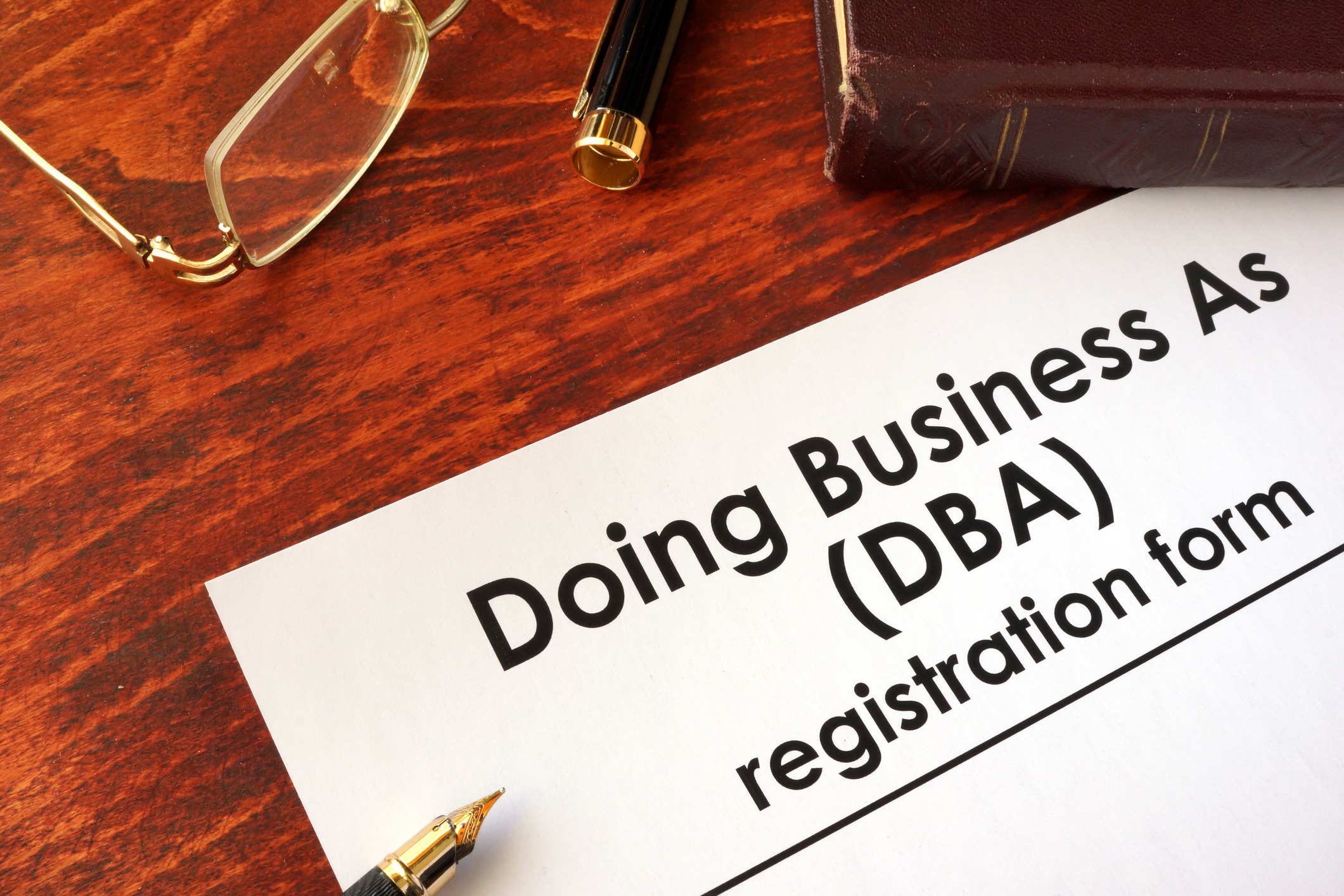
In the progression of running your business, you’ve probably encountered more legal fine print and formalities than you ever thought possible.
What Is a DBA?
In the U.S., a DBA lets the public know who the actual owner of a corporation is. The DBA is also called a Fictitious Business Name or Assumed Business Name. It got its origin as a form of consumer protection so that dishonest business proprietors can’t try to avoid legal trouble by operating under a different name. When someone files a DBA, it’s generally circulated in some print newspaper. It lets the community know exactly who the people are behind a particular business.
Who Needs a DBA?
In general, there are two reasons why a business in the U.S. will need to get a DBA:
Sole Proprietor
If you are operating your business as a single proprietor, then you’ll need to file for a DBA if your business has a different name than your name. In some cases, you don’t need a DBA if your business name is a combination of your name and a description of your product or service.
For example, if a business was called David Jones Gardening Service, it may not need a DBA. But, if it’s just the first name (aka David’s Gardening Service), then a DBA is required. If that sounds confusing, don’t worry; get in touch with your local clerk’s office and ask them if you’ll need a DBA.
Corporation or LLC
If you have filed to become a corporation or LLC, then you’ve already registered your business name and don’t need a DBA. Although, you will need to get a DBA if you plan to conduct business using a name that’s different from the name filed with your LLC/corporation’s paperwork.
If we incorporated the business as Spring Flowers Gardening, the business would need to file a DBA to operate under “SpringFlowersGardening.com” or “Spring Flowers.” In short, you’ll need a DBA to operate with any variation of your original name.
The Importance of a DBA
A DBA might sound like a lot of unnecessary, extraneous paperwork. Yet, there are a few important reasons to get your DBA in order.
It’s the easiest way to register your name. If you’re a sole proprietor, then filing for a DBA is going to be the simplest and least expensive way to use a business name. You can create a separate professional bookkeeping business identity without having to form an LLC or corporation. And, for sole proprietors, a DBA is required to open a bank account and receive payments in the name of your business.
2. For LLCs or corporations, a DBA will let you operate multiple businesses without having to form a separate LLC or corporation for each business. Let’s say your business wants to expand into multiple websites, stores, restaurants, services, etc. You can create a corporation with a comparatively generic name and use a DBA for each business. Incorporation will cut down on your paperwork and expenses when you’re operating multiple projects.
Keeps your business compliant. If your business is an LLC or corporation, you enjoy certain legal protections. But, these protections may be invalidated if you’re operating under a different name and didn’t file for a DBA.
Filing a DBA
The rules, requirements, forms, and fees associated with filing a DBA differ in each state and county. The U.S. SBA provides a chart that details DBA filings state-by-state. By using a legal bookkeeping document filing service, you can ensure that you’re following your county and state requirements perfectly and won’t be unintentionally operating outside of the law.
Conclusion
Filing a DBA name isn’t hard; you need to work under your state or county’s requirements to go about it in the right way. It’s usually best to get this all done before you operate under your intended “doing business as” name, somewhere between 30 and 60 days before opening your doors.
About Complete Controller® – America’s Bookkeeping Experts Complete Controller is the Nation’s Leader in virtual bookkeeping, providing service to businesses and households alike. Utilizing Complete Controller’s technology, clients gain access to a cloud-hosted desktop where their entire team and tax accountant may access the QuickBooks™️ file, critical financial documents, and back-office tools in an efficient and secure environment. Complete Controller’s team of certified US-based accounting professionals provide bookkeeping, record storage, performance reporting, and controller services including training, cash-flow management, budgeting and forecasting, process and controls advisement, and bill-pay. With flat-rate service plans, Complete Controller is the most cost-effective expert accounting solution for business, family-office, trusts, and households of any size or complexity.
Marketing plays a vital role for many organizations in getting through the recession and emerging as an improved brand by practicing vigilant recessionary thinking. Although slashing budgets and laying off the workforce is always an option for businesses, they should initially view tough times as an opportunity to grow internally and externally.
It may appear to go against common sense that a recession can boost periods of economic growth. However, professionals endorse that this is a perfect time to revisit your branding strategies and align them with your core business values.
Making intelligent plans for your business will ensure that you stay ahead of the competition even in dire times. Here are some of the tips that will help you survive critical situations.
Marketing Tips
Focus on Loyal Customers
When times are tough, it is hard to attract new customers as everyone is tight. This is the time to trigger your recessionary thinking and develop effective marketing strategies that keep your existing customers engaged in one way or another. You will need to retain your loyalty through exceptional services/products, personalized marketing channels, and genuine concern for your partners and clients.
Partnerships
Combining your resources with a partner business to target the same clients is a great strategy to cut costs and avoid conflict of interest. The focus should be to partner with firms that want to attract the same customer base as yours but are not directly competing with you.
Encourage your partners by offering incentives that can help their business. This encouragement will form a connection between both companies that can translate into seminars, trade shows, and partner marketing campaigns, which benefit both parties.
Suppose two businesses are working together and share similar business philosophies and objectives. In that case, there is a higher probability that their recessionary thinking is along the same line and is desirable for both.
Don’t Miss an Opportunity
As much as tough times can set you back, there is also a chance for you to acquaint your business with feasible markets. Reevaluate your business units and products that are not profitable and whether they will have any influence after the recession.
This reevaluation is an opportunity for you to audit your business processes internally and get rid of things that can impede your future productivity. Have a keen eye for upcoming market segments as they will provide you with an opportunity to tap them before anyone else. Marketing tips offered by your team of experts will play a vital role in targeting these newly created segments.
Advertise
Advertising in tough times may sound like a flawed idea, but, in reality, this can prove to be significant for the survival of your business. Analyze the placement of all your current marketing campaigns and only continue with creating the most direct impact.
Often businesses cut their advertising budgets in tough times as an easy way to cut down on costs. However, because of lesser competition in the market, you have a higher chance to reach a potential audience. Innovative recessionary thinking is required from you in this situation as you can renegotiate with advertising sources and cut down significantly on the costs.
As you have more leverage over your media agent in bad times, ask them to place your ads where they generate maximum reach.
Outsource
You will practically have the same workload in tough times as you had before. It is often hard to efficiently carry out all the tasks because you may have laid off some of your workforce. Other resources are also limited, and you are in dire need of some practical marketing tips.
Outsourcing some of your tasks like graphic designing, media strategizing, writing, and editing to the handsof an expert will save you the costs associated with them and ensure their high quality. The outsourcing agencies have specialized skills, which can also act as your competitive advantage.
SEO
Search engine optimization is used to divert traffic towards your business through the use of specific keywords. A manager with innovative recessionary thinking will use SEO to carry out most of its marketing plans. It costs less than traditional advertising mediums and, if executed properly, can generate high visitor flow towards your website.
As most of the searches on the internet are through Google and other search engines, your business will be better off if it appears among the top results. However, your website must be highly responsive and aesthetically pleasing to create an impact on its visitors.
Conclusion
Following these marketing tips is essential, especially in the time of recession. Be proactive in your approach and make use of all available resources. Video advertising on social media has emerged as one of the most popular and effective mediums of advertising.
A successful video can generate a broad reach and, if gone viral, can reshape your entire business. The success of your recessionary thinking highly depends on your ability to adapt to the situation and make efficient use of the available tools and resources.
About Complete Controller® – America’s Bookkeeping Experts Complete Controller is the Nation’s Leader in virtual bookkeeping, providing service to businesses and households alike. Utilizing Complete Controller’s technology, clients gain access to a cloud-hosted desktop where their entire team and tax accountant may access the QuickBooks™️ file, critical financial documents, and back-office tools in an efficient and secure environment. Complete Controller’s team of certified US-based accounting professionals provide bookkeeping, record storage, performance reporting, and controller services including training, cash-flow management, budgeting and forecasting, process and controls advisement, and bill-pay. With flat-rate service plans, Complete Controller is the most cost-effective expert accounting solution for business, family-office, trusts, and households of any size or complexity.
Cost of Goods Sold Calculation: Manufacturing Step-By-Step
Cost of goods sold calculation for manufacturing is a sequential process: you total your direct materials, direct labor, and manufacturing overhead, roll those into cost of goods manufactured (COGM) through work-in-process, and then apply the finished goods formula — Beginning Finished Goods Inventory + COGM − Ending Finished Goods Inventory = COGS. Unlike a retailer who simply adjusts purchases against inventory, manufacturers must build COGS from production accounts before it ever hits the income statement.
In my 20+ years running Complete Controller, I’ve watched manufacturing owners lose six-figure margins because they treated COGS as a single formula instead of a chain of inventory accounts that need monthly reconciliation. Working with thousands of small and mid-sized businesses across nearly every industry — from custom furniture shops to specialty food producers — I’ve learned that the operators who win at gross margin are the ones who treat raw materials, WIP, finished goods, and overhead as living, breathing accounts. In this article, I’ll walk you through the exact step-by-step calculation, show you a worked example with real numbers, flag the compliance traps the IRS and SEC actually care about, and give you the framework I’d hand my own team on day one.
How do you calculate cost of goods sold for a manufacturer step by step?
Answer: Calculate direct materials used, add direct labor and overhead to get total manufacturing cost, adjust through WIP for COGM, then apply beginning finished goods + COGM − ending finished goods to arrive at COGS.
Direct materials used = beginning raw materials + purchases − ending raw materials.
Total manufacturing cost = direct materials used + direct labor + manufacturing overhead.
Manufacturers can’t shortcut COGS the way resellers do, because you have to determine the cost of producing the goods before you can determine the cost of selling them. That means three inventory accounts — raw materials, work-in-process, and finished goods — all need to move in concert.
The IRS reinforces this in Publication 538, noting that inventoriable costs include both direct costs like raw materials and laborand indirect costs needed to produce the item, including a share of factory overhead and transportation costs needed to bring goods to a usable state. Skip any of those layers and your COGS is wrong before you even start.
The COGS formula for manufacturers depends on COGM
For a manufacturer, the headline COGS formula is built on finished goods inventory and COGM — not purchases. COGM captures everything that finished production during the period, and the finished goods adjustment captures what actually left the warehouse as a sale.
COGM represents items completed during the period and transferred out of WIP.
Finished goods inventory adjusts for what was available versus what shipped.
This is the bridge from production accounting to income statement expense recognition.
How to Calculate Cost of Goods Sold Using Beginning Inventory and Ending Inventory
The classic inventory-based approach still applies — you just have to apply it to the finished goods account, not the raw materials account. Beginning finished goods inventory represents product already on the shelf when the period started, and ending finished goods inventory represents product that didn’t sell and therefore shouldn’t be expensed yet.
Inventory costing affects every number you plug in
Your inventory costing method directly changes both the inventory balance and the COGS expense. FIFO assumes older costs flow out first, weighted average blends costs across the period, and the method you pick should match your accounting policy — not whichever number looks better this quarter.
FIFO tends to produce lower COGS and higher gross margin in periods of rising costs.
Weighted average smooths volatility, which is helpful for commodity inputs.
Consistency matters more than chasing the lowest tax bill — inventory errors flow straight through to gross profit reporting.
Cost of Goods Sold Calculation With Purchases and Freight
This is where a lot of manufacturers leak money quietly. Freight, duties, and landed costs aren’t optional line items — the IRS specifically says you must include transportation and other costs needed to acquire goods and get them ready for sale as part of inventoriable cost.
Freight-in on raw materials is capitalized into inventory cost.
Freight-out to ship finished goods to customers is a selling expense, not COGS.
Duties, tariffs, and receiving costs on imported materials should be allocated as landed cost.
Calculate COGS from income statement figures
When you only have summary financials, you can still back into COGS using the reported inventory rollforward. Pull beginning inventory, production costs (or purchases), and ending inventory directly from the statements, then reconcile back to the underlying inventory accounts to make sure the math ties.
Accurate COGS starts with accurate books. See how Complete Controller helps manufacturers gain financial clarity.
COGS Calculation for Periodic Inventory System
Under a periodic inventory system, you don’t update inventory continuously — you calculate COGS at period-end using physical counts and adjusting entries. It’s simpler operationally but it puts enormous pressure on the accuracy of your count and your overhead allocation.
Where manufacturers get tripped up
After two decades watching factory books come across our desks, the same three mistakes show up over and over:
Misclassifying overhead as a period expense instead of capitalizing it into inventory.
Forgetting to move items from WIP to finished goods, which understates COGM.
Using outdated physical counts that distort both ending inventory and gross margin.
COGS Formula Under FIFO and Weighted Average
The COGS formula under FIFO and weighted average produces meaningfully different numbers when input costs move. FIFO pushes older — usually cheaper — costs into COGS first, while weighted average smooths them out. Either is acceptable under GAAP; what matters is consistent application and disclosure.
Gross margin is sales minus COGS, so any change in costing method affects reported profitability. Higher COGS means lower gross margin, period. According to QuickBooks, small changes in costing assumptions can shift reported gross margin by several percentage points — enough to change pricing decisions and loan covenants.
Manufacturing Cost of Goods Sold Calculation Example
Here’s the full walkthrough with numbers. This is the exact flow I’d hand a new bookkeeper at our firm.
The Compliance Risks of Accounting for Inventory When COGS Is Wrong
Bad accounting for inventory isn’t just a bookkeeping nuisance — it’s a restatement risk. The SEC has flagged inventory and cost of sales as among the most common areas where companies have to restate financial statements due to accounting errors. That’s a credibility hit no business wants on its record.
A real-world example: when Adidas worked through its Reebok acquisition, excess inventory was one of the biggest operational drags. The company reported reducing Reebok inventory by more than €2 billion over time and directly linked that cleanup to improved margins and a healthier business. Inventory discipline isn’t theoretical — it shows up in the financial statements every quarter.
Where AI and software still need human oversight
Software can automate calculations, but it can’t fix bad source data. Scrap, rework, freight allocations, and unusual shutdown costs still need a human controller to review them before close. For a deeper look at what the IRS expects in inventory documentation, see IRS Publication 538, and for materiality standards on inventory errors, the SEC’s Staff Accounting Bulletin No. 99 is the foundational reference.
Final Thoughts
The most reliable cost of goods sold calculation isn’t the one you scramble together at year-end — it’s the one built from disciplined monthly tracking of raw materials, WIP, finished goods, and overhead. Get the sequence right, apply your costing method consistently, capitalize the costs that belong in inventory, and your gross margin will finally tell you the truth.
If you’re ready to tighten up your manufacturing books and get COGS right the first time, my team at Complete Controller does this every day for businesses just like yours. Reach out — we’d love to help.
Frequently Asked Questions About Cost of Goods Sold Calculation
What is the formula for COGS in manufacturing?
COGS in manufacturing equals beginning finished goods inventory + cost of goods manufactured (COGM) − ending finished goods inventory. COGM itself is built from direct materials, direct labor, overhead, and WIP adjustments.
What’s the difference between COGM and COGS?
COGM is the cost of goods completed during the period and transferred from WIP to finished goods. COGS is the cost of goods actually sold during the period after adjusting for finished goods inventory on hand.
How do you calculate direct materials used?
Direct materials used = beginning raw materials inventory + raw materials purchases (including freight-in) − ending raw materials inventory.
Does freight count in COGS?
Freight-in tied to acquiring raw materials is capitalized into inventory and flows through to COGS when those materials are sold as finished goods. Freight-out to ship products to customers is typically a selling expense, not COGS.
Which inventory method is best for manufacturers, FIFO or weighted average?
It depends on your cost volatility and reporting goals. FIFO produces cleaner margins when input costs are stable; weighted average smooths volatility for commodity-driven manufacturers. The most important thing is applying your chosen method consistently year over year.
Sources
AccountingCoach. “How Do I Calculate the Cost of Goods Sold for a Manufacturing Company?” AccountingCoach. https://www.accountingcoach.com
About Complete Controller® – America’s Bookkeeping Experts Complete Controller is the Nation’s Leader in virtual bookkeeping, providing service to businesses and households alike. Utilizing Complete Controller’s technology, clients gain access to a cloud platform where their QuickBooks™️ file, critical financial documents, and back-office tools are hosted in an efficient SSO environment. Complete Controller’s team of certified US-based accounting professionals provide bookkeeping, record storage, performance reporting, and controller services including training, cash-flow management, budgeting and forecasting, process and controls advisement, and bill-pay. With flat-rate service plans, Complete Controller is the most cost-effective expert accounting solution for business, family-office, trusts, and households of any size or complexity.
Jennifer BrazerFounder/CEO
Jennifer is the author of From Cubicle to Cloud and Founder/CEO of Complete Controller, a pioneering financial services firm that helps entrepreneurs break free of traditional constraints and scale their businesses to new heights.
Brittany McMillen is a seasoned Marketing Manager with a sharp eye for strategy and storytelling. With a background in digital marketing, brand development, and customer engagement, she brings a results-driven mindset to every project. Brittany specializes in crafting compelling content and optimizing user experiences that convert. When she’s not reviewing content, she’s exploring the latest marketing trends or championing small business success.
A Double Dip denotes a recession in which the business declines after a quarter or two of growth and comes back to grow for a short span and then again goes into a declining state.
When a business suffers a double-dip recession, the pressure to perform better increases more than ever. New challenges arrive, and the stress level is increased for entrepreneurs as well as employees. Managing a considerable workload and developing effective strategies to survive through a double-dip recession is highly stressful for entrepreneurs facing this.
The employees related to the business-facing double-dip challenges are often overwhelmed and stressed. Even if the economy is heading down, many business owners/entrepreneurs work on strategies to keep their businesses thriving.
Double Dip Survival guide
During a period of a double-dip, many companies do not survive in the second phase of recession. So, here comes a time for entrepreneurs to make a double-dip survival plan. Entrepreneurs can adopt many policies, techniques, and strategies to survive through a double-dip period and lead their companies towards a growing period.
Reassess pricing of products and services: It is not considered the best option to cut prices all at once. First, consider the adverse effects of cutting the price of your business products/services. Also, consider promotional offers such as a bonus product or service at the same price or placing business products on a limited sale to attract more customers and users of your business.
Keep searching for more opportunities: During a recession period, entrepreneurs should keep looking out for other companies that are losingmarket share.
As the other company loses its market share for the same product or services, try gaining your market share by moving into new markets. Try to win the customers of another company.
Review products and what changes can be made to them: In a period of recession or during double-dip survival, your products and services must be reviewed, and specific modifications and upgrades can be made to attract more customers. For example, try introducing more flavors in processed eatables. Try marketing them in bundles at a reduced introductory price like promotions.
Make agreements: Make agreements with other businesses/professionals. For example: Refer clients to each other and give commission as agreed upon by both parties.
Refresh the packaging: Entrepreneurs can look at the old packaging of their products and see if they are still appealing or not compared to their competitors in the market. Customers often love to buy the same product with new attractive packaging. This repackaging is an excellent technique to promote the same product with a better packaging point of view.
Raise the marketing: Try finding cheaper methods of marketing to reach your customers. Social media is an excellent option to reach your customers, get their feedback, and sort out the queries related to your products or services through social media sites.
Make accounts on social media websites and promote your rebranded products there as well. This rebranding and promotion might attract new customers, and existing customers may return to your product again.
Entrepreneurs must pay attention to loans, as vast sales earnings might have paid back interest. Cut down the inventory if possible and return the loans as much as possible.
Keep a check and balance on bookkeeping. Constantly take a look at your budget and bookkeeping efforts. Observe where you can cut back, where you are spending too much, and what changes can be made so that your company survives the recession.
Entrepreneurs must put all of their efforts and hard work into the business, especially during a double-dip survival period, but must never compromise their physical and mental health. Short breaks and weekly days off must be taken to refresh and come back to work with an eager attitude.
Conclusion
A double-dip survival period is a hard time for entrepreneurs. Many businesses do not survive in the second recession phase if good practices and techniques are not adopted. Entrepreneurs must remain vigilant and cope with stress well throughout the recession periods.
Entrepreneurs should try different strategies to survive and thrive in their business again. Reviewing products and services, promotional offers, managing inventory, building good terms with retailers and wholesalers, and searching for more opportunities are crucial to double-dip survival for entrepreneurs.
About Complete Controller® – America’s Bookkeeping Experts Complete Controller is the Nation’s Leader in virtual bookkeeping, providing service to businesses and households alike. Utilizing Complete Controller’s technology, clients gain access to a cloud-hosted desktop where their entire team and tax accountant may access the QuickBooks™️ file, critical financial documents, and back-office tools in an efficient and secure environment. Complete Controller’s team of certified US-based accounting professionals provide bookkeeping, record storage, performance reporting, and controller services including training, cash-flow management, budgeting and forecasting, process and controls advisement, and bill-pay. With flat-rate service plans, Complete Controller is the most cost-effective expert accounting solution for business, family-office, trusts, and households of any size or complexity.
Accounting tools for small business owners should deliver three things fast: accurate expense tracking, real-time cash flow visibility, and easier tax filing. The must-haves include accounting software, expense management, invoicing tools, bank feeds, receipt capture, reporting dashboards, and tax-ready exports—because those are the tools that cut manual work and keep your books usable at month-end and tax time.
After more than 20 years building Complete Controller into a national cloud-basedbookkeeping services provider, I’ve had a front-row seat to thousands of small business financial setups across nearly every industry. Here’s what I’ve learned: businesses don’t fail because they lack software. They struggle because they have the wrong mix of tools, weak workflows, or nobody owning the numbers end-to-end. In this guide, I’ll walk you through the tools that matter most, where QuickBooks, Xero, FreshBooks, Wave, and Zoho Books actually fit, and how to build a stack that helps your business run smarter—not just look organized.
What are the must-have accounting tools for small business?
Accounting software, expense tracking, invoicing tools, cash flow management, and tax preparation are the core must-haves every small business needs to stay organized and compliant.
The right stack should cut manual data entry, centralize records, and make month-end close and tax prep faster.
Free or low-cost tools can work for very small operations, but growing teams need stronger automation and reporting.
The best choice depends on business size, complexity, budget, and whether you need a simple starter system or scalable cloud accounting software.
If you don’t have in-house bookkeeping bandwidth, professional bookkeeping services can fill the gap while the software handles the workflow.
The Core Accounting Software Every Small Business Should Start With
The foundation of any small business financial system is a single source of truth—your accounting software. The five most-trusted platforms in this space each solve slightly different problems, and picking the wrong one can cost you hours of cleanup later.
QuickBooks, Xero, FreshBooks, Wave, and Zoho Books
These platforms dominate small business bookkeeping because they combine recording, reporting, invoicing, and reconciliation in one system.
QuickBooks is the all-in-one favorite with strong expense tracking and human-expert support, and Intuit reports its automation can save users 30+ hours a month.
Xero wins on cloud collaboration, clean reporting, and accountant-friendly workflows.
FreshBooks is built for service businesses that need invoicing plus light accounting.
Wave Accounting is a smart starting point for freelancers wanting a free option.
Zoho Books fits owners already using a broader Zoho business suite.
How to choose the right accounting software
Pick based on business complexity, not brand popularity. Confirm the platform supports bank feeds, recurring transactions, multi-user access, and reporting strong enough for real decision-making. Compare pricing against time saved—not just monthly subscription cost. And make sure your bookkeeper or accountant can actually work inside it.
Expense Tracking and Invoicing Tools That Keep Cash Moving
Billing speed and spend visibility are where most small businesses leak money. The right invoicing tools tighten your cash conversion cycle, while expense tracking keeps you audit-ready year-round.
Online invoicing and tax reporting for small businesses
Faster, clearer invoices mean faster payment and less cash pressure. Online invoicing and tax reporting works best when billing, payment capture, and categorization all live in one place. Recurring invoices, reminders, and embedded payment links cut collection delays and manual follow-up. For founders, invoicing and expense tracking for startups should be tightly connected so you can see spend vs. collections in one view.
Expense management, receipt capture, and categorization
Automated expense management eliminates hours of manual data entry, while receipt capture protects you when the unexpected hits. When Hurricane Harvey struck in 2017, the IRS urged taxpayers to use photos, videos, and receipts to document property and speed disaster recovery—a stark reminder that receipt habits matter long before tax season ever arrives.
Categorization rules standardize spending so reports stay clean month after month.
Approval workflows protect you on reimbursable employee spending.
Consolidate cards, receipts, and reimbursements into one process to kill fragmentation.
Ready for cleaner books and better financial visibility? See how Complete Controller helps small businesses simplify bookkeeping and stay growth-ready.
Cash Flow Management Tools That Help Small Businesses Stay Alive
Here’s a sobering reality from the U.S. Bureau of Labor Statistics: about 20% of small businesses fail within the first year, and roughly 50% are gone by year five. That makes basic cash tracking and clean books a survival tool—not a “nice to have.”
Cash flow management and real-time reporting
Cash flow management tools help you track what’s coming in, what’s going out, and what’s due next. Bank feeds, dashboards, and aged receivables reports turn raw transactions into decision-making data. Forecasting becomes critical for payroll, tax set-asides, vendor payments, and seasonal swings.
Review cash weekly—not monthly—especially if collections are uneven. A strong stack flags trouble early, before the bank balance is already in pain.
Why reporting matters more than bookkeeping alone
Bookkeeping records history. Reporting helps you act on it. Profit-and-loss, balance sheet, and cash flow statements should be easy to read and easy to access. If your software is hard to read, you’re operating blind. Use reporting to guide hiring, inventory buys, marketing spend, and debt repayment.
Tax Preparation Tools and Compliance Workflows That Reduce Year-End Stress
Tax season pain is almost always caused by ignored bookkeeping in February through November. The fix isn’t a last-minute software download—it’s year-round discipline.
Tax preparation, compliance, and small business bookkeeping
The IRS recordkeeping guidance makes clear that you should keep records supporting income and deductions for at least three years (longer in some cases). Receipt capture, clean categorization, and organized expenses make that requirement easy to meet instead of stressful.
Good systems reduce the risk of missing deductible expenses and duplicate entries. Businesses with payroll, contractors, or sales tax obligations need more structured workflows. The safest approach is software plus periodic review from a qualified small business bookkeeper.
The compliance risks of “good enough” accounting
Too many small businesses underinvest in controls until an error or IRS notice forces cleanup. Mixing personal and business expenses, ignoring bank reconciliations, and skipping a monthly close process are the most common landmines. Cloud accounting software helps—but it still needs human oversight for accuracy and judgment.
Where AI Bookkeeping Still Needs Human Expertise
Automation has changed bookkeeping forever, but it hasn’t replaced the judgment that protects your business. The smartest small business owners use software for speed and humans for review.
Bookkeeping services and the human side of financial control
Automation can speed up data entry, but humans still need to review exceptions, unusual transactions, and tax-sensitive items. Professional bookkeeping services shine when owners don’t have time to monitor categories, reconcile accounts, or correct errors. The right hybrid model is software for efficiency plus human review for judgment.
How to transition to cloud accounting software
Clean up your chart of accounts and remove duplicate systems.
Connect bank feeds and test transaction rules before full rollout.
Move invoicing, expenses, and reporting into one workflow.
Train staff or your bookkeeper on approval steps and monthly review cadence.
Watch the first 60 to 90 days closely so bad data habits don’t stick.
How to Choose Affordable Accounting Tools Without Cutting Corners
Budget matters—but the cheapest tool gets expensive fast if it creates cleanup work later. Buy intelligently by matching tools to the problems you actually need solved.
Free tools can work for early-stage businesses with simple needs.
Watch for hidden costs in add-ons, payroll, extra users, and support tiers.
Choose the smallest system that can support growth for the next 12 to 24 months.
Prioritize bank feeds, invoicing, expense tracking, and reporting before extras.
According to NerdWallet’s analysis, most growing businesses outgrow free tools within a year.
Final Thoughts
Think of your accounting tools as an operating system—not just software. The right mix of accounting software, invoicing tools, cash flow management, and tax preparation workflows will reduce stress, sharpen your visibility, and keep you ready for growth.
From my two decades helping small businesses build smarter back offices, the owners who win are the ones who keep books current, review cash weekly, and pair great technology with real human oversight. If you’d like help designing a cleaner, smarter financial system for your business, the team at Complete Controller is ready to help.
Frequently Asked Questions About Accounting Tools for Small Business
What are the best accounting tools for small business?
The best tools typically include accounting software (like QuickBooks or Xero), invoicing tools, expense tracking, cash flow reporting, and tax prep features. The “best” mix depends on your size, complexity, and growth stage.
Is QuickBooks better than Xero for small business?
QuickBooks is often chosen for broad small-business needs and U.S. accountant familiarity. Xero is praised for cloud collaboration, clean dashboards, and multi-user workflows. Both are solid—pick based on workflow fit, not popularity.
Are free accounting tools enough for a small business?
Free tools like Wave can work for freelancers and very simple businesses. Growing businesses usually need stronger automation, integrations, and reporting, which means upgrading within 12 to 24 months.
Do small businesses still need a bookkeeper if they use software?
Yes. Software records transactions, but a bookkeeper ensures accuracy, catches errors, manages reconciliations, and prepares clean reports for tax filing and decision-making.
What accounting tool features matter most for taxes?
Expense categorization, receipt capture, clean bank reconciliation, and tax-ready reports matter most. These features make filing accurate, defensible, and far less stressful.
About Complete Controller® – America’s Bookkeeping Experts Complete Controller is the Nation’s Leader in virtual bookkeeping, providing service to businesses and households alike. Utilizing Complete Controller’s technology, clients gain access to a cloud platform where their QuickBooks™️ file, critical financial documents, and back-office tools are hosted in an efficient SSO environment. Complete Controller’s team of certified US-based accounting professionals provide bookkeeping, record storage, performance reporting, and controller services including training, cash-flow management, budgeting and forecasting, process and controls advisement, and bill-pay. With flat-rate service plans, Complete Controller is the most cost-effective expert accounting solution for business, family-office, trusts, and households of any size or complexity.
Jennifer BrazerFounder/CEO
Jennifer is the author of From Cubicle to Cloud and Founder/CEO of Complete Controller, a pioneering financial services firm that helps entrepreneurs break free of traditional constraints and scale their businesses to new heights.
Brittany McMillen is a seasoned Marketing Manager with a sharp eye for strategy and storytelling. With a background in digital marketing, brand development, and customer engagement, she brings a results-driven mindset to every project. Brittany specializes in crafting compelling content and optimizing user experiences that convert. When she’s not reviewing content, she’s exploring the latest marketing trends or championing small business success.
Starting a business is often exciting – yet scary at the same time! It is a bit like moving through immense fog where you can only see a few feet in front of the windshield. Hence, you do not know what is awaiting you until it is actually upon you.
However, the more experienced you are when it comes to entrepreneurship, the better you can navigate that fog. From bookkeeping to business management, your knowledge and expertise will enable you to make the right decisions. Here are nine critical factors or vital decisions at startup which can go a long way.
A good sense of timing
You need to understand this in two ways:
Picking the best moment to begin your startup: The ideal moment to start your company is typically a balancing act that is determined by several significant factors, including the availability of necessary startup funds, the success or failure of competitors, the ebb and flow of your industry, and your personal and family circumstances. For instance, you may delay the plan as you expect a baby in the next few months.
Immediate action to grab the opportunity: Since entrepreneurship is all about taking calculated risks, you must leverage an opportunity as soon as it appears. You can achieve this by completing your business plan and making decisive moves to get your company off the ground promptly. But always avoid a rush attitude. You must show diligence in the plan development. However, many startups fail simply because they are too sluggish and wallow to complete any task timely.
Avoid giving heed to statistics
Many people use statistics like 95% of businesses fail’ simply as an excuse to make themselves comfortable about giving up. Even if that number is correct, most of them do not commit to their goals, follow through to the end, or have money management skills.
Do something you love
Do not begin something you will not want to do in the next five years. Making your passion your business means you will still be enjoying and earning in the next five years. It could be anything like painting, singing, engineering, teaching, marketing, auditing, or bookkeeping.
Assess if you have to raise funds to launch your startup
It is often rare if an entrepreneur has enough savings and funds in his bank account to begin their business seamlessly. On the other hand, most startup enthusiasts have to raise finances to turn their idea into reality. Therefore, you might need to use bank loans, leverage assistance from family and friends, or put properties on the mortgage to arrange money to invest in your startup. Hence, assess your business goals to know how much you need to begin.
Know your team members before bringing them on board
The people behind your business are the most critical factor, particularly for startups. As recordkeeping is essential for bookkeeping and as products or services have to be iterated many times until they find their marketplace; similarly, it is all about having the right people doing the right job.
Their direction is more important than the pace of their performance. It would help if you focused on their background story, such as precious experience, companies and qualifications, and what nature of value they bring to the table.
Invest wisely
Warren Buffet says, “Instead of putting all your eggs in the same basket, make multiple investments.” Following this inspiration, you should also diversify your investments that help increase your chances of success and reduce the risk involved. Since these investments are for the long run, always show patience.
Avoid over or underinvestment
Starting a business can significantly affect you and your family financially. You must learn where and when to spend what amount. You should neither waste your precious dollars nor fail or delay to invest adequately where necessary, simultaneously. You often need to spend funds to earn money in any business. Hence, never skimp out or underestimate things your company needs.
Set up your cash flow tracking
Since you will be required to submit a self-employed tax return, you will need to have a good track record of all business transactions. Though opening up a separate business account is not necessary when you are setting up as a sole trader, it could be helpful to keep track. Several online tools help small businesses manage bookkeeping and maintain other accounts and enable large organizations to prepare audit reports and complex financial reports.
Start selling
You must know how to promote your product or service and who to target. Though you have already mentioned it in your business plan, it is time to put the matter into execution. Much of your early budget will be on advertisement and marketing, whether SEO, networking, telemarketing, or targeting retailers. Your first few sales will boost your confidence to show more commitment and dedication towards the business goals.
About Complete Controller® – America’s Bookkeeping Experts Complete Controller is the Nation’s Leader in virtual bookkeeping, providing service to businesses and households alike. Utilizing Complete Controller’s technology, clients gain access to a cloud-hosted desktop where their entire team and tax accountant may access the QuickBooks™️ file, critical financial documents, and back-office tools in an efficient and secure environment. Complete Controller’s team of certified US-based accounting professionals provide bookkeeping, record storage, performance reporting, and controller services including training, cash-flow management, budgeting and forecasting, process and controls advisement, and bill-pay. With flat-rate service plans, Complete Controller is the most cost-effective expert accounting solution for business, family-office, trusts, and households of any size or complexity.
Small businesses are private firms, partnerships, or proprietorships. There are fewer employees, and annual income is lesser than a regular size business. A business is classified as small to qualify for government support and utilize tax resources specifically designed for small businesses.
Small businesses can range from bakeries, grocery stores, salons, service companies, software houses, lawyers, clinics, accountants, and the home industry. Accounting is the application of knowledge related to business bookkeeping systematically and comprehensively.
Accounting is a critical function in every business.
In a small business, accounting can be managed by a single person, while the accounting process needs more accountants in a large business. Accounting is a way to record bookkeeping, manage accounting statements, perform internal audits, advise tax payments, etc. Interpreting accounting statements correctly by the entrepreneur ensures successful entrepreneurship. Accounting explicit profit, loss, liabilities, tax, and equity in a business are essential.
Accounting Software
Accounting Software is a computer program specially designed for performing daily accounting tasks and business bookkeeping functions.
The importance of using accounting software in the business:
Hours are saved by using accounting software for business operations and bookkeeping tasks.
Accounting software aids in monitoring the cash flow in a business. It can create invoices, track expenses, and create a variety of accounting reports. Such software also aids in managing inventory.
Accounting software can be relied on to analyze business operations.
There is a vast range of accounting software in the market. This accounting software is designed to meet the needs of small to large size businesses specifically.
There is software for accounting that is so simple that a small business owner who has no background in accounting can use them efficiently.
Accounting Software for Small Business
An important and challenging step in business is to choose the right software per your business needs. Consider its cost, usability, and extra features for choosing suitable software for your small business.
Features of an Accounting Software
The following accounting tasks are essential for a small business:
Inventory management
Sales tracking
Contact management and contact history tracking
Account to accept credit card payments
Generating Invoices
Financial statements, cash flow statements, and balance sheet
Budget planning
Payrolls
Taxation matters
When choosing accounting software for small businesses, always search for the above features in the software.
Business Specific Accounting Software
There is software that is designed specifically for a specific type of business. Software for manufacturing businesses will require certain features specially designed for manufacturing units. A construction business requires a few features solely helpful in a construction business.
A Cloud-based Accounting Software or an Accounting Software for use on Desktop
Always discuss your requirements and expectations from an accounting software with the software programming company. Discuss with other experienced entrepreneurs and get to know their choices before getting software for you. Many software companies provide specifically designed software that will meet your demands.
Cost
Accounting software cost is an important issue to consider. First, plan out your business needs and finances. Purchasing costly software with highly advanced features will not help your small business. A small business owner can plan to purchase accounting software by giving a full payment at once, or he can give payments in installments or as monthly payments. Plan out which suits your business finances the best.
Modules to be added later
Accounting software often has modules to include features as your business grows. Much software can be upgraded as the requirements for accounting processes increase. For example, a Payroll Module is often added later in much small business accounting software.
Free trial
Go for software where you are given an option of a free trial.
Some Accounting Software for Small businesses is QuickBooks, SaaS, Freshbooks, Xero, Zoho Books, Wave.
Conclusion
Accounting software makes accounting work more accessible and helps on-time completion of accounting processes. Small businesses also need accounting software, just as large businesses do. The accounting software for small businesses is specifically designed with small business features. But good accounting software for small businesses gives an option of upgrading the software or adding modules to that software. Clarify your needs and expectations first, then go for purchasing accounting software.
About Complete Controller® – America’s Bookkeeping Experts Complete Controller is the Nation’s Leader in virtual bookkeeping, providing service to businesses and households alike. Utilizing Complete Controller’s technology, clients gain access to a cloud-hosted desktop where their entire team and tax accountant may access the QuickBooks™️ file, critical financial documents, and back-office tools in an efficient and secure environment. Complete Controller’s team of certified US-based accounting professionals provide bookkeeping, record storage, performance reporting, and controller services including training, cash-flow management, budgeting and forecasting, process and controls advisement, and bill-pay. With flat-rate service plans, Complete Controller is the most cost-effective expert accounting solution for business, family-office, trusts, and households of any size or complexity.







 About Complete Controller® – America’s Bookkeeping Experts Complete Controller is the Nation’s Leader in virtual bookkeeping, providing service to businesses and households alike. Utilizing Complete Controller’s technology, clients gain access to a cloud-hosted desktop where their entire team and tax accountant may access the QuickBooks™️ file, critical financial documents, and back-office tools in an efficient and secure environment. Complete Controller’s team of certified US-based accounting professionals provide bookkeeping, record storage, performance reporting, and controller services including training, cash-flow management, budgeting and forecasting, process and controls advisement, and bill-pay. With flat-rate service plans, Complete Controller is the most cost-effective expert accounting solution for business, family-office, trusts, and households of any size or complexity.