


Construction Risk Management:
Protect Your Project Costs
Construction risk management is the structured process of identifying, assessing, allocating, and mitigating risks across a construction project so you can protect your budget, keep the schedule tight, and handle problems before they eat into your margin. It covers financial, operational, safety, contractual, and compliance exposures—then wraps them in a plan built around risk assessment, clear contract terms, ongoing risk monitoring, and internal controls that keep every dollar accounted for.
Here’s a stat that stops most contractors cold: research from Bent Flyvbjerg and colleagues found that the average large construction project runs 20% longer than scheduled and can come in up to 80% over budget, with about one in five major projects facing cost overruns of 50% or more. In more than 20 years leading Complete Controller, I’ve worked with hundreds of construction firms, developers, and specialty contractors—and I can tell you the winners aren’t the ones who avoid risk. They’re the ones who treat it like a weekly management discipline. In this article, I’ll walk you through the exact finance-first framework I coach clients through: how to build a real risk plan, allocate risk in your contracts, monitor exposures in real time, and turn risk management into a habit that quietly protects every dollar you put into a project.
What is construction risk management and how do you get it right?
- Construction risk management is the systematic process of identifying, assessing, allocating, mitigating, and monitoring risks in construction projects to protect costs, schedules, safety, and quality.
- It starts with a structured risk assessment of scope, site, contracts, and delivery model to reveal financial, operational, and compliance exposures before work begins.
- Effective risk mitigation combines technical controls (design, materials, safety) with commercial tools (insurance, bonds, contract clauses, contingency funds).
- Ongoing risk monitoring through a live risk register and KPIs prevents small variances from turning into cost overruns.
- A clear governance framework with defined risk owners and internal controls is what turns a “risk plan” into daily decisions that protect your budget.

Why Construction Risk Management Is Non-Negotiable for Project Costs
Every unmanaged risk on a construction project eventually shows up on the P&L. That’s the part most project teams miss. Change orders, rework, idle crews, financing costs, and liquidated damages don’t come out of thin air—they’re the downstream cost of upstream decisions no one made in time.
The direct link between construction risk and financial risk
Financial risk in construction is almost always driven by something else: a scope gap, a supply delay, a productivity dip, or a claim nobody documented. The Flyvbjerg study on public works cost overruns is a wake-up call—when large projects routinely land 50% or more over budget, you’re not looking at bad luck. You’re looking at weak risk discipline.
That’s why I tell every construction client: your bookkeeping and job costing system has to speak the same language as your risk register. If you want to see how we structure that, our team’s guide on efficient business finance management walks through how finance and operations can share one view of the numbers.
Operational risk and its impact on schedule and margin
Operational risk covers site logistics, labor shortages, equipment breakdowns, poor sequencing, and weak subcontractor performance. Here’s the margin erosion curve most contractors don’t see coming:
- A 30-minute daily productivity gap per crew
- Multiplied across a 12-month project
- Can quietly erode 2–5% of your margin before anyone notices
Small daily leaks sink big project ships.
Compliance risk, safety, and reputational damage
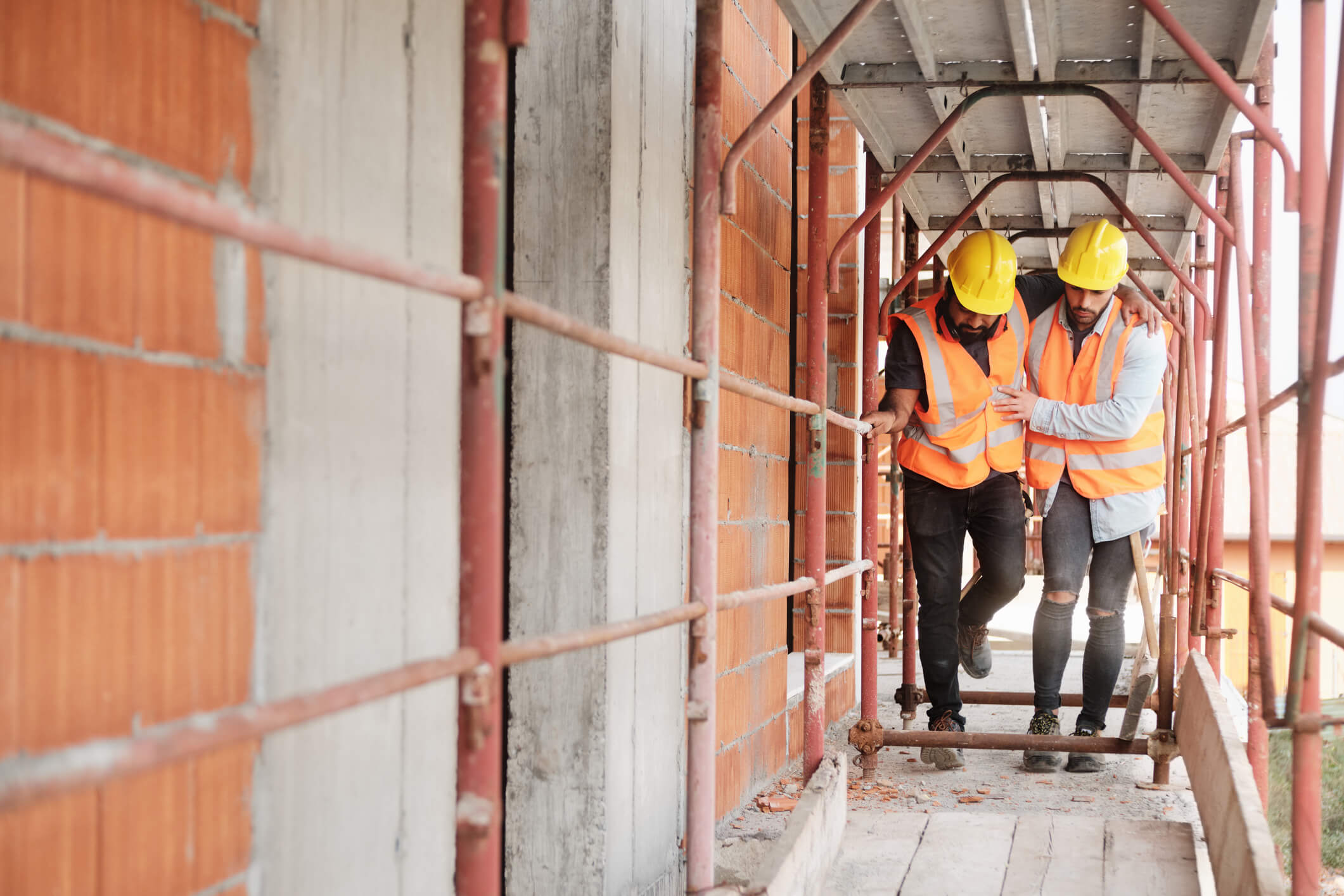
Compliance risk and safety failures are financial risks in disguise. According to the U.S. Bureau of Labor Statistics, construction had 1,056 worker deaths in 2022—the highest of any private industry—with a fatal injury rate about three times the private-industry average. Fines, stop-work orders, insurance premium hikes, and reputational damage all feed back into cost and schedule. Safety isn’t a soft topic. It’s a line item.
Protect Your Margins, Not Just Your Projects. Complete Controller helps construction businesses gain the financial clarity to make smarter decisions. See how we can help.
Core Components of an Effective Construction Risk Management Plan
A construction risk management plan is the document that sets your objectives, methodology, roles, tools, and reporting cadence. If it’s not tied to your budget, it’s just paperwork.
Building a plan that talks to the budget
Your plan should map contingency dollars to specific risk categories and set clear cost-variance thresholds that trigger early action. I recommend structuring the plan across four phases:
- Preconstruction – scope clarity, contract review, feasibility risk
- Procurement – supplier vetting, price locks, bonds
- Execution – daily controls, change management, safety
- Close-out – claims resolution, warranty risk, lessons learned
Construction project risk assessment: a practical framework
Here’s the six-step risk assessment framework I recommend:
- Establish context – scope, delivery model, contract form
- Identify risks – workshops, site walks, historical data
- Analyze risks – likelihood and impact on cost, time, quality, safety
- Evaluate and prioritize – risk matrix and ranking
- Plan mitigation and contingency – targeted controls and fallback plans
- Implement and monitor – integrate into schedule and cost control
Defining risk owners and governance
A risk owner is the person accountable for a specific risk—not just the one doing the task. Assign owners across roles: project manager, superintendent, contract administrator, safety officer, finance controller, and client rep. Then set a weekly risk review, monthly executive summary, and clear escalation paths. That’s your governance framework in one page.
From Identification to Action: Assessment, Mitigation, and Monitoring
Identifying risk is easy. Acting on it is where most teams break down.
Risk mitigation strategies for construction projects
The four classic responses—avoid, reduce, transfer, accept—translate into concrete construction plays:
- Lock in key material prices early
- Build weather and access buffers into the schedule
- Prequalify and manage subcontractor performance
- Use insurance, bonds, and indemnity clauses to transfer non-core risk
- Consider alternative means and methods to reduce technical exposure
Continuous risk monitoring and internal controls
Risk monitoring is ongoing tracking of risk indicators, residual risk, and mitigation effectiveness. Pair it with strong internal controls: documentation standards, change-order approval workflows, segregation of duties in cost coding, and consistent field reporting. If your bookkeeping is weak, your risk data is weak. Our business bookkeeping essentials guide is a good starting point for tightening this up.
Contract Strategy, Claims, and Disputes: Protecting Your Cost Position
Construction contract risk allocation decides who owns what when things go sideways. Get it right before signing—not during litigation.
Contract clauses that protect your cost position
- Clear scope and change order mechanisms
- Liquidated damages and performance incentives
- Force majeure and price escalation clauses
- Insurance, indemnity, and bonding requirements
- Documentation standards for claims
Construction claims and dispute risk management
The five-step claims prevention cycle is simple:
- Set a clear baseline (contract, schedule, budget)
- Identify potential claims events early
- Give timely written notice with contemporaneous records
- Negotiate and mitigate
- Escalate to formal channels only as a last resort
The Autodesk Construction Blog has strong resources on documentation practices that reduce dispute risk. Pair that with construction-savvy accounting support—our CPAs in construction resource covers how to keep unpriced change orders, aging claims, and retention from wrecking your cash flow.
Case Study: What Happens When Risk Isn’t Managed and What to Do Instead
Boston’s “Big Dig” is the textbook example of unmanaged construction risk. Originally forecast at around $2.6 billion in 1982 dollars, the final cost climbed past $14.6 billion, with major delays and safety failures. Design gaps, scope creep, and weak oversight compounded over decades.
Contrast that with the Pooles Dick case study, where a mid-size commercial build faced material price spikes and unforeseen ground conditions. The team ran a structured risk workshop, resequenced work, renegotiated key supply contracts, and refreshed contingency—cutting a projected 15% cost overrun down to 3–5%. Same industry. Same pressures. Different discipline.
Turning Risk Management into a Daily Habit—Your 90-Day Roadmap
Business continuity management is the ability to keep delivering projects despite shocks. Build it into daily routines with short site risk check-ins, a standing risk agenda in weekly coordination meetings, and a monthly financial review that tracks risk-linked variances.
Here’s the 90-day roadmap I coach clients through:
- Days 1–30 – Assess and baseline. Inventory active projects, identify top financial, operational, and compliance risks, and audit contracts for weak risk allocation.
- Days 31–60 – Build and deploy. Finalize your risk management plan template, assign risk owners, set governance cadence, and roll out priority mitigations.
- Days 61–90 – Monitor and refine. Launch live risk registers, review KPIs, tighten internal controls around change orders, and feed lessons learned into future bids.
Final Thoughts: Smart Risk Management Protects Every Dollar
When I look at the construction clients we’ve supported the longest, the pattern is clear. The firms that build structured risk assessment, targeted mitigation, clean contract allocation, and continuous monitoring into their weekly rhythm end up with more predictable margins, fewer disputes, and healthier cash flow. The ones who don’t rely on luck—and luck is not a strategy.
You can start small. A basic risk register. A weekly review. A clean chart of accounts that mirrors your risk categories. Add discipline over time, and the numbers will follow.
If you want help building a finance-driven construction risk management framework, tightening your internal controls, or setting up dashboards that keep project costs and risks visible in real time, the team at Complete Controller is ready to help. Let’s protect every dollar you put into the ground.

Frequently Asked Questions About Construction Risk Management
What is construction risk management?
Construction risk management is the systematic process of identifying, assessing, and mitigating potential risks that could impact a construction project’s successful completion within its budget, schedule, quality, and safety targets.
What are the main types of risks in construction?
The main categories are financial, operational, contractual, safety, environmental, and stakeholder risks. Each affects cost, schedule, and quality in different ways and requires different mitigation tactics.
How do you perform a construction risk assessment?
Establish project context, identify potential risks through workshops and site walks, analyze likelihood and impact, prioritize using a risk matrix, and develop mitigation and monitoring plans tied to your budget and schedule.
Why is risk management important in construction projects?
It reduces cost overruns, prevents delays, strengthens safety, optimizes resource allocation, and supports better decision-making across the project lifecycle—directly protecting profitability.
How can small and mid-size contractors implement risk management without a large team?
Start with a simple risk register, hold regular risk review meetings, assign clear risk owners, and integrate risk controls into your contracts, schedules, and cost tracking. Scale up with technology and outside advisory support as you grow.
Sources
- Acuity International. (2024). “Guide To Risk Management In Construction Industry.” https://www.acuityinternational.com
- Autodesk. (2022). “Construction Risk Management: A Guide to Reducing Risk.” Autodesk Construction Blog. https://construction.autodesk.com
- Bureau of Labor Statistics, U.S. Department of Labor. (December 19, 2023). “Census of Fatal Occupational Injuries Summary, 2022.” https://www.bls.gov/news.release/cfoi.nr0.htm
- Complete Controller. “Business Bookkeeping Essentials.” https://www.completecontroller.com/business-bookkeeping-essentials/
- Complete Controller. “CPAs in Construction.” https://www.completecontroller.com/cpas-in-construction/
- Complete Controller. “Efficient Business Finance Management.” https://www.completecontroller.com/efficient-business-finance-management/
- Construction Management Association of America. (2022). Construction 101: Understanding Risk Management. CMAA.
- CQMS. (2023). “Construction Risk Assessment.” CQMS Blog. https://www.cqms.com
- Flyvbjerg, Bent, Mette K. Skamris Holm, and Søren L. Buhl. (2002). “Underestimating Costs in Public Works Projects: Error or Lie?” Journal of the American Planning Association. https://doi.org/10.1080/01944360208976273
- Grange Insurance. (2023). “The Importance of Construction Risk Management.” https://www.grangeinsurance.com
- Meegle. (2023). “Construction Project Risk Assessment.” https://www.meegle.com
- OSHA, U.S. Department of Labor. “Construction Safety and Health Standards.” https://www.osha.gov/construction
- Pooledick. (2023). “Risk Management in Construction Projects: Best Practices and Case Studies.” https://www.pooledick.co.uk
- Ready.gov. “Business Continuity Plan.” U.S. Department of Homeland Security. https://www.ready.gov/business-continuity-plan
- SafetyCulture. (2023). “Construction Risk Management: A Short Guide.” https://safetyculture.com
- Sipress, Alan. (December 24, 2006). “A Tunnel’s Cost, and Sorrow, Buried Deep.” The Washington Post. https://www.washingtonpost.com/archive/politics/2006/12/24/a-tunnels-cost-and-sorrow-buried-deep/0f5bcf0a-3d0d-4a6a-a3cf-8b0da5200b8b/
- SmartPM. (2024). “Construction Risk Management: The Complete Guide for Safer Projects.” https://www.smartpmtech.com
- StruxHub. (2023). “Construction Risk Management: Top Tools and Best Practices.” https://www.struxhub.com
- Texas A&M School of Architecture News. (2025). “Construction Risk Management: Key Strategies for Construction Teams.” https://archone.tamu.edu
 About Complete Controller® – America’s Bookkeeping Experts Complete Controller is the Nation’s Leader in virtual bookkeeping, providing service to businesses and households alike. Utilizing Complete Controller’s technology, clients gain access to a cloud platform where their QuickBooks™️ file, critical financial documents, and back-office tools are hosted in an efficient SSO environment. Complete Controller’s team of certified US-based accounting professionals provide bookkeeping, record storage, performance reporting, and controller services including training, cash-flow management, budgeting and forecasting, process and controls advisement, and bill-pay. With flat-rate service plans, Complete Controller is the most cost-effective expert accounting solution for business, family-office, trusts, and households of any size or complexity.



 Brittany McMillen
Brittany McMillen
Brittany McMillen