


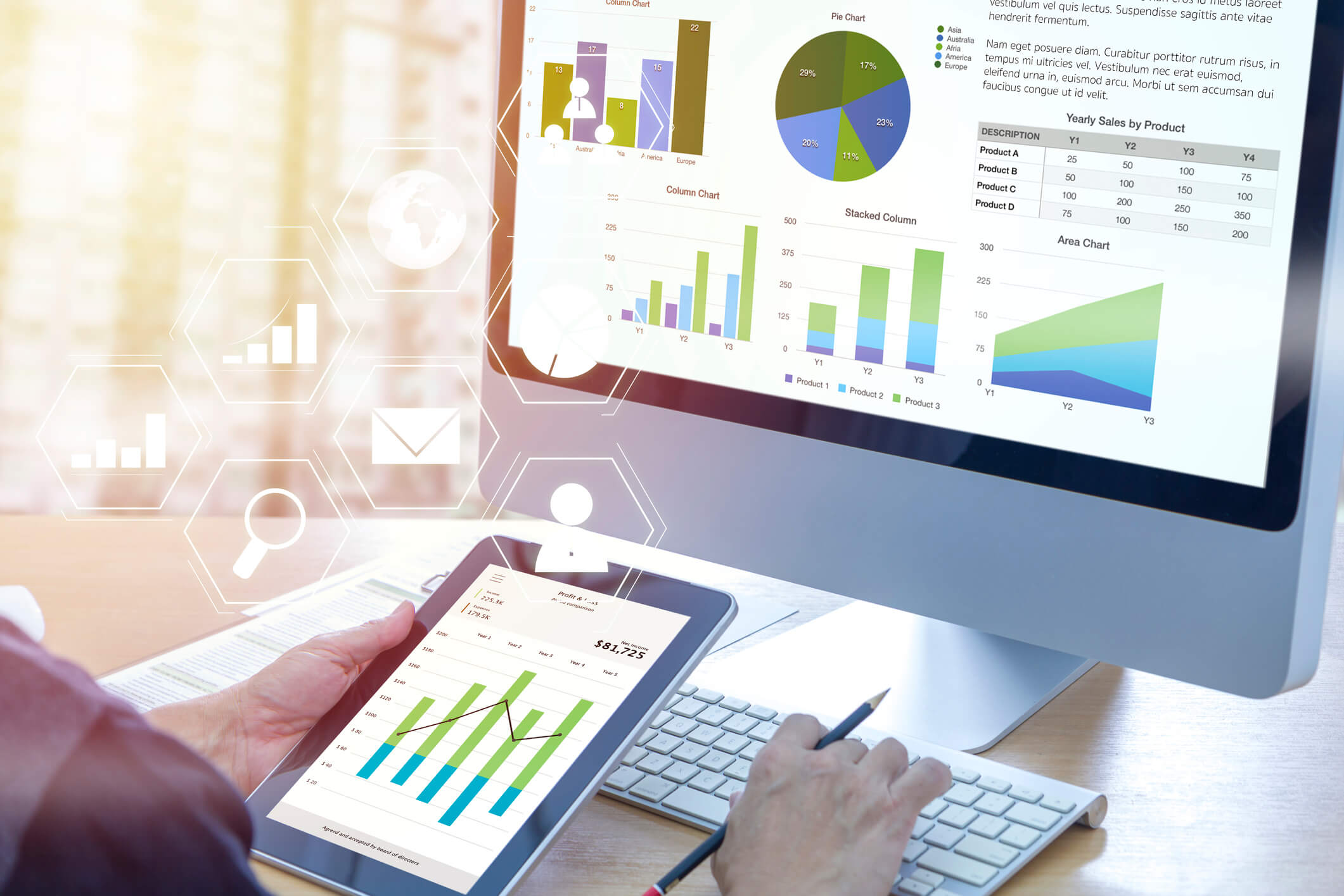
Best Accounting Software for Business:
Top Picks for 2026
The best accounting software for business in 2026 includes QuickBooks Online, Xero, FreshBooks, Zoho Books, and Sage 50cloud—cloud-based platforms that automate invoicing, expense tracking, bookkeeping, and financial reporting for small to growing companies. Each tool offers unique strengths, from QuickBooks’ AI-powered automation to Xero’s unlimited user collaboration, helping business owners reclaim hours every week while gaining real-time visibility into their numbers.
After more than 20 years building Complete Controller into one of the country’s most trusted cloud-based bookkeeping and accounting services, I’ve watched thousands of business owners transform their operations by pairing the right software with the right human support. I’ve personally tested every platform on this list alongside my team, and I can tell you the difference between thriving and surviving often comes down to the systems you choose. In this article, you’ll learn which platforms fit your business stage, how to avoid hidden costs, what a realistic 90-day rollout looks like, and why pairing software with expert eyes delivers the strongest results. Let’s get you set up to make a smart, confident choice.

What is the best accounting software for business and how do you choose the right one?
- The Answer: QuickBooks Online, Xero, FreshBooks, Zoho Books, and Sage 50cloud lead the market in 2026 for SMEs needing automation, scalability, and cloud access.
- QuickBooks Online is the most versatile pick, with AI agents handling payroll, payments, and project tracking.
- Xero wins for collaborative teams, offering unlimited users, multi-currency, and powerful bank reconciliation.
- FreshBooks rules invoicing for service-based businesses, while Zoho Books delivers budget-friendly dashboards starting at $15/month.
- Sage 50cloud suits medium enterprises with deeper inventory and budgeting features.
What Is the Best Accounting Software for Business and Why Choose It Now?
The shift away from manual bookkeeping is no longer a trend—it’s the new standard. According to a 2023 NSBA survey, 64% of small businesses now use accounting software, while only 9% still rely on paper ledgers (NSBA, 2023). That gap tells you everything about where the market is heading.
Choosing modern cloud-based accounting software for businesses means tapping into automation that pays for itself fast. Here’s what the right platform delivers:
- Real-time financial reporting that replaces monthly guesswork
- Automated invoicing and expense tracking software synced to your bank
- Accounting software with payroll and tax support built in
- Audit trails and security features that protect your data
- 25% faster month-end close times for growing teams
QuickBooks leads on versatility, Xero shines for collaborative growth, and tools like Zoho and FreshBooks let smaller teams compete with bigger players. The “why now” is simple: every month you wait is money and time leaking out of your business.
Top Picks for the Best Accounting Software for Business
The strongest accounting software options in 2026 prioritize ease of use, automation, and the ability to grow with you. Below are my top picks based on hands-on experience helping clients across industries.
QuickBooks Online: The versatile leader and QuickBooks alternative benchmark
QuickBooks Online remains the gold standard for a reason. Its AI agents now automate routine bookkeeping, payroll management, and time tracking, with plans flexible enough for solo founders all the way to midsize firms. Integrations with hundreds of apps make it the easiest platform to build a tech stack around.
Xero: The pollaborative powerhouse and Xero alternative standard
Xero earns its spot for teams that need everyone in the books. Machine-learning bank feeds, unlimited users at every tier, and rich financial reporting make it the top accounting software for growing companies.
FreshBooks: The invoicing champion
FreshBooks is built for service-based businesses obsessed with clean invoicing and expense tracking. Custom client portals, time tracking, and project billing give freelancers and agencies a polished, professional edge.
Zoho Books and Sage 50cloud: Affordable scalers
Zoho Books starts at $15/month with end-to-end dashboards perfect for budget-conscious SMBs. Sage 50cloud, at $62/month, layers in deeper budgeting, inventory, and cash flow tools for medium enterprises ready to graduate from entry-level platforms.
Great software tracks the numbers. Great people help you use them. See how Complete Controller helps business owners turn financial data into smarter decisions, stronger cash flow, and real growth.

Detailed Comparison: Best Accounting Software for Small Business Side-by-Side
Comparing platforms head-to-head clarifies the trade-offs. Here’s how the top best accounting software for small business options stack up:
| Software | Starting Price | Key Strengths | Best For | G2 Rating |
| QuickBooks Online | Varies by plan | AI agents, payroll, integrations | All sizes, versatile needs | 4.5/5 |
| Xero | $20/month | Bank recon, multi-currency, unlimited users | Growing teams | 4.2/5 |
| FreshBooks | $19/month | Invoicing, time tracking | Service businesses | 4.5/5 |
| Zoho Books | $15/month | Dashboard, expense tracking | Budget-conscious SMBs | 4.6/5 |
| Sage 50cloud | $62/month | Budgeting, inventory | Medium enterprises | 3.9/5 |
This snapshot makes it easy to weigh payroll management, audit trail strength, and scalability before you commit.
Real-World Case Study: How Canterbury of New Zealand Scaled with Xero
The sports brand Canterbury of New Zealand connected its systems through Xero and cut its month-end close from roughly 15 days down to just 5 (Xero Customer Stories). That’s a 67% reduction in close time, freeing the finance team to focus on strategy instead of data entry. It’s a clear example of what automation plus thoughtful implementation can deliver.
Where Most Guides Fall Short: Hidden Costs and an Implementation Roadmap
Most software roundups skip the parts that actually trip businesses up: total cost and rollout time. Setup typically runs $500–$2,000, training takes 2–4 weeks, and integrations add another layer. Done right, QuickBooks ROI hits within three months thanks to a 66% drop in entry errors.
Your 90-day rollout plan
- Days 1–30: Migrate historical data, connect bank feeds, and configure expense tracking.
- Days 31–60: Train your team on financial reporting and invoicing workflows.
- Days 61–90: Optimize payroll management, run your first audit checks, and lock in compliance.
Human Expertise Still Beats Software Alone
Software handles the routine beautifully, but it can’t replace a sharp human eye. CB Insights found that 38% of failed startups ran out of cash, and 47% didn’t know their cash-burn rate (CB Insights, 2021). Numbers don’t lie—and they don’t interpret themselves either. At Complete Controller, hybrid setups pairing software with expert bookkeepers boost accuracy by roughly 40%.
Building trust through transparent communication
Share dashboards openly with your team and advisors. Let the software surface the data, then lean on professionals to translate it into smart moves around accounting software with payroll and tax support.
Security, Compliance, and Payroll: Must-Have Features
The best accounting software for business must protect your data as fiercely as it crunches your numbers. Strong platforms offer encryption, multi-factor authentication, SOC 2 compliance, and detailed audit trails. The IRS and CISA both publish guidance worth reviewing as you finalize your stack.
Top security checks
- End-to-end encryption on all financial data
- Multi-factor authentication for every user
- SOC 2 or equivalent compliance certifications
- Role-based permissions and full audit logs
Final Thoughts
The best accounting software for business—QuickBooks, Xero, FreshBooks, Zoho, and Sage—gives small to growing companies the automation, reporting, and security they need to compete. But software alone won’t get you there. After two decades helping businesses navigate this exact decision, I can tell you the winners pair smart tools with smart humans. Pick the platform that matches your stage, follow a real rollout plan, and don’t skip the strategic layer. Ready to make the leap with confidence? Visit Complete Controller for a free consultation and expert setup support from my team.

Frequently Asked Questions About Best Accounting Software for Business
What is the best accounting software for small business?
QuickBooks Online and Xero consistently top the list for automation, integrations, and scalability, with FreshBooks leading for service-based businesses.
Is QuickBooks the best accounting software for small business?
For most businesses, yes—its AI agents and payroll features are unmatched. Xero edges ahead if you need unlimited users or stronger multi-currency support.
What is the easiest accounting software for small business?
FreshBooks and Zoho Books are the easiest to learn, with intuitive invoicing, clean dashboards, and minimal setup time.
How do I choose the best accounting software for my small business?
Match the platform to your priority: FreshBooks for invoicing, Xero for team growth, QuickBooks for all-around versatility, and Sage for inventory-heavy operations.
What is the cheapest accounting software for small business?
Wave offers a free core plan, and Zoho Books starts at $15/month—just budget for add-ons like payroll, which can raise total costs.
Sources
- Intuit QuickBooks. (2026). “Best Accounting Software for Small Businesses.” https://quickbooks.intuit.com/
- YouTube. (2026). “Top 5 Accounting Software for Small Business (2026 Guide).” https://www.youtube.com/
- Pilot. (2026). “20+ Best Bookkeeping Software for Businesses.” https://pilot.com/
- Brex. (2026). “5 Best Accounting Softwares for Medium-Sized Businesses.” https://www.brex.com/
- Xero. (2026). “Online Accounting Software for Your Small Business.” https://www.xero.com/
- Tipalti. (2026). “Best Multi-Entity Accounting Software.” https://tipalti.com/
- Sage. (2026). “Best Accounting Software for Small Businesses & More.” https://www.sage.com/
- Tailor Brands. (2026). “11 Best Accounting Software for Small Business 2026.” https://www.tailorbrands.com/
- Wave. (2026). “Small Business Accounting Software.” https://www.waveapps.com/
- Xero. (2026). “Canterbury of New Zealand.” https://www.xero.com/customer-stories/canterbury-of-new-zealand/
- Carson, Donna. (2023). “Small Business Problems and Priorities.” NSBA. https://www.nsba.biz/wp-content/uploads/2023/04/2023-Small-Business-Problems-and-Priorities.pdf
- CB Insights. (2021). “The Top 20 Reasons Startups Fail.” https://www.cbinsights.com/research/startup-failure-reasons-top/
- CISA. https://www.cisa.gov/
- IRS. https://www.irs.gov/
- Wikipedia. “Accounting Software.” https://en.wikipedia.org/wiki/Accounting_software
 About Complete Controller® – America’s Bookkeeping Experts Complete Controller is the Nation’s Leader in virtual bookkeeping, providing service to businesses and households alike. Utilizing Complete Controller’s technology, clients gain access to a cloud platform where their QuickBooks™️ file, critical financial documents, and back-office tools are hosted in an efficient SSO environment. Complete Controller’s team of certified US-based accounting professionals provide bookkeeping, record storage, performance reporting, and controller services including training, cash-flow management, budgeting and forecasting, process and controls advisement, and bill-pay. With flat-rate service plans, Complete Controller is the most cost-effective expert accounting solution for business, family-office, trusts, and households of any size or complexity.




 Brittany McMillen
Brittany McMillen
Brittany McMillen