


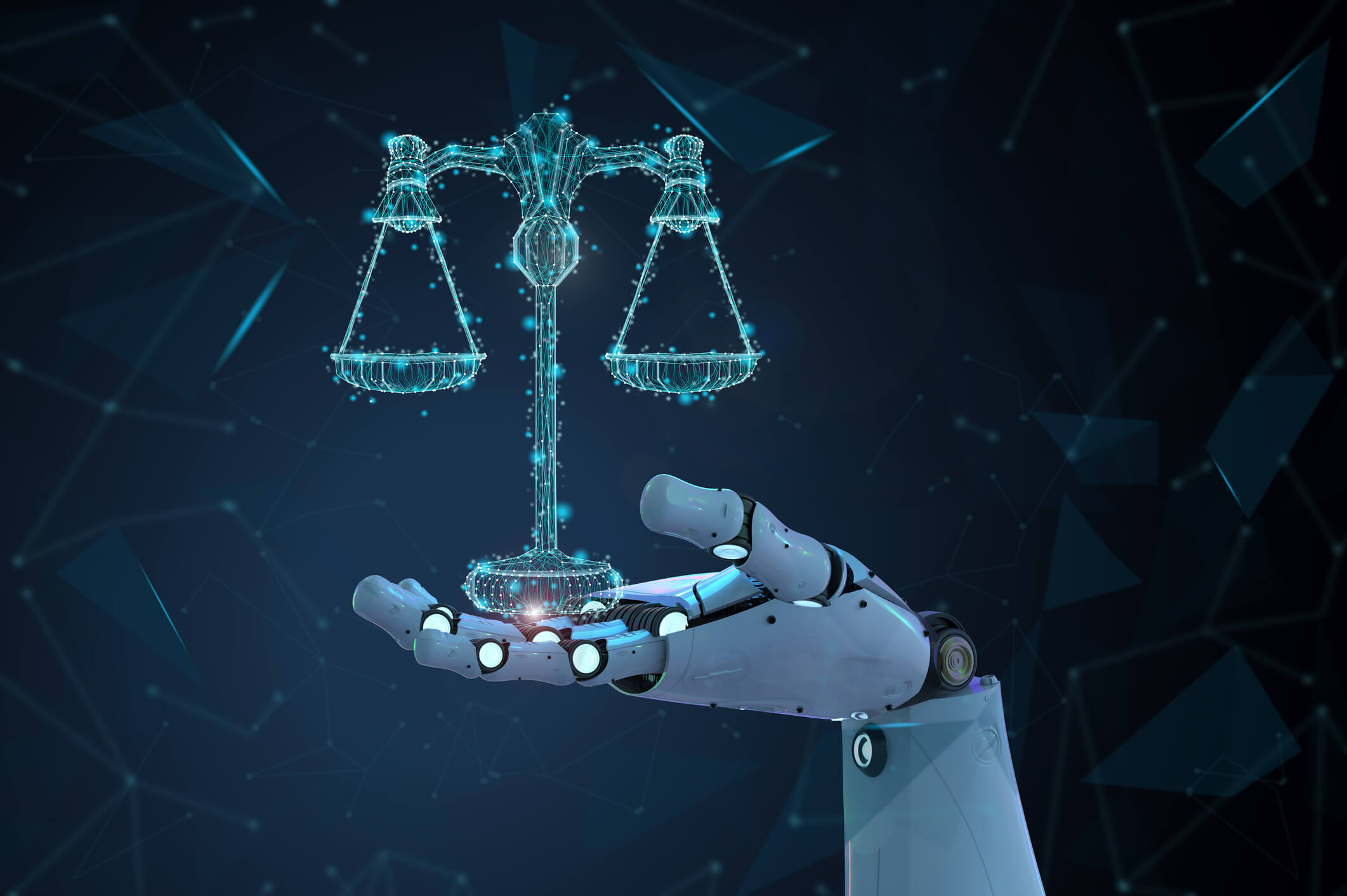
Revolutionizing Justice:
How Technology Innovates Criminal Justice
Technology in criminal justice encompasses the digital tools, data systems, and forensic techniques that modernize how law enforcement investigates crimes, courts process cases, and corrections manage populations—transforming every stage from initial investigation through rehabilitation.[1][5] These innovations include body-worn cameras documenting police encounters, AI analytics predicting crime patterns, digital forensics reconstructing cybercrimes, and integrated databases connecting previously siloed agencies to create a more efficient, transparent justice system.[1][5][11]
Having spent two decades helping businesses transform their operations through cloud technology at Complete Controller, I’ve witnessed firsthand how the right digital infrastructure can revolutionize outdated systems. The parallels between financial services and criminal justice are striking—both traditionally paper-heavy sectors that struggled with data silos, manual processes, and accountability gaps. In this article, I’ll share insights on how technology is reshaping justice delivery, where implementation succeeds versus fails, and what leaders must consider when modernizing their agencies. You’ll discover practical frameworks for digital transformation, understand the ethical implications of surveillance and AI, and learn how to balance innovation with civil liberties—insights that apply whether you’re modernizing a police department or any data-intensive organization.

What is technology in criminal justice and how does it transform the system?
- Technology in criminal justice uses digital tools, data analytics, surveillance systems, and forensic software to investigate crimes, manage evidence, process court cases, and supervise corrections—making justice faster, more accurate, and more transparent.[1][3][5]
- Investigation tools include body cameras, facial recognition, automatic license plate readers (ALPRs), and digital forensics that extract evidence from phones, computers, and cloud services.[1][5][7]
- Court technology encompasses e-filing systems, virtual hearings, digital case management, and AI-powered risk assessment tools that inform bail and sentencing decisions.[3][5][11]
- Corrections innovations feature GPS ankle monitors, rehabilitation apps, and predictive analytics that guide housing, treatment, and reentry planning.[5][11]
- Critical concerns include algorithmic bias, privacy violations, and the risk of expanding surveillance without reducing incarceration—requiring strong governance and community oversight.[9][11]
The New Digital Backbone: Core Technologies Transforming Justice
Technology in criminal justice has evolved from occasional add-ons to the operational foundation of modern law enforcement, creating an interconnected ecosystem that touches every decision point.[1][5][11]
The scale of transformation becomes clear through real numbers. The Pasadena Police Department accumulated over one million pieces of digital evidence within five years of deploying body cameras—a data explosion that forced migration to cloud storage.[12][22] This reflects a broader reality: over 90% of crimes now contain digital elements, from social media posts to GPS records, fundamentally changing investigative work.[9][12]
Essential technologies reshaping each stage
Investigation and Evidence Collection
- Digital forensics extracts data from devices, with the FBI receiving 859,532 cybercrime complaints in 2024 alone, representing $16 billion in losses[7][26]
- Facial recognition helps identify suspects, though MIT research found 35% error rates for dark-skinned women versus 1% for light-skinned men[43][46]
- ALPRs solve 700,000 crimes annually according to Flock Safety’s survey of 123 agencies—roughly 10% of reported crimes nationwide[25]
Court Operations and Case Processing
- Arizona’s remote hearing implementation during COVID-19 reduced failure-to-appear rates from 40% to 13% for eviction cases[12][20][23]
- Digital case management could reduce processing delays by 65% through strategic scheduling alone, per INFORMS research[53]
- Yet 75% of courts still lack digital evidence systems, creating bottlenecks that cascade through dockets[12][22]
Corrections and Supervision
- Electronic monitoring expanded to over 150,000 people daily, increasing ten-fold since 2005[8][11]
- Risk assessment algorithms like COMPAS influence sentencing, though ProPublica found they falsely flag Black defendants at twice the rate of whites[13]
- GPS monitoring costs can exceed $900 monthly, shifting financial burdens to low-income families[8][11]
From Street to Screen: Technology’s Real-World Impact
Technology in criminal justice manifests most visibly where citizens interact with the system—during police encounters and court proceedings.[1][5][7]
The body camera revolution
Body-worn cameras achieved 89% public support, with 47% of law enforcement agencies adopting them by 2023.[3][6] Large departments reached 80% adoption, driven by accountability demands and federal funding.[6]
Yet implementation reveals complex realities. A New York City audit found 18% of reviewed incidents had incomplete footage, with some officers removing cameras during critical moments.[15] The Memphis case of Tyre Nichols demonstrated that cameras alone don’t prevent abuse—officers committed fatal violence despite being recorded.[18]
Success requires more than hardware:
- Clear activation policies with consequences for non-compliance
- Regular footage review protocols
- Community access to recordings
- Integration with complaint investigation processes
Digital transformation in courtrooms
Virtual justice accelerated during the pandemic, producing mixed results that offer valuable lessons.[3][5]
Benefits of Remote Proceedings:
- Reduced transportation barriers for rural participants
- Lower failure-to-appear rates for routine hearings
- Cost savings on prisoner transport
- Continued operations during emergencies
Documented Drawbacks:
- Video bail hearings resulted in 54-90% higher bonds than in-person proceedings[54]
- Immigration courts showed higher deportation rates for video hearings[54]
- Technical issues disrupting proceedings
- Reduced ability to assess credibility and demeanor
Strategic scheduling alone could dramatically improve outcomes—researchers found courts could triple case resolution speed by reallocating judicial time between early and later case stages.[53]
Technology works best when the numbers do too. Explore Complete Controller.

Inside Digital Forensics: The Hidden Engine of Modern Investigations
Digital forensics powers criminal investigations behind the scenes, extracting evidence from an expanding universe of connected devices.[2][6][8]
The five-stage forensic process
Digital forensics follows a structured methodology to maintain evidence integrity:[10][12][16]
- Identification – Locating relevant devices and data sources
- Preservation – Creating forensic copies to prevent alteration
- Extraction – Recovering data including deleted files
- Analysis – Interpreting data patterns and timelines
- Reporting – Documenting findings for court presentation
Cold cases cracked through innovation
The 1979 murder of Cathy Swartz exemplifies forensic evolution’s power. After 36 years without leads, Othram Inc. used advanced DNA technology and genealogical databases to build family trees from microscopic evidence.[14] This led investigators to four brothers, ultimately matching Robert Waters through fingerprints and DNA—bringing closure despite the perpetrator’s subsequent suicide.[14]
Othram’s vision extends beyond individual cases: “Future generations will live in a world where there are no unidentified victims and perpetrators are caught the first time.”[14] This represents the transformative potential when technology meets persistent investigation.
Mobile device forensics in practice
Smartphones contain detailed behavioral records that reconstruct criminal activities:
- GPS data establishing precise locations and movement patterns
- Deleted communications recovered through specialized software
- App usage revealing planning and coordination
- Cloud backups providing historical data
These capabilities transform investigations but require careful handling to maintain chain of custody and admissibility.
The Double Edge: Surveillance, AI, and Civil Liberties
Technology in criminal justice creates unprecedented capabilities alongside unprecedented risks to privacy and fairness.[5][7][9]
When algorithms judge: Risk assessment realities
AI-powered risk assessments influence critical decisions from bail to parole, promising objectivity but often encoding historical biases.[9][11]
The COMPAS algorithm case study reveals systemic issues. Wisconsin courts upheld its use while acknowledging racial bias potential.[13][34] ProPublica’s analysis confirmed these concerns:
- False positive rates for Black defendants nearly double those for whites
- Only 20% of violent crime predictions proved accurate
- Opacity preventing defendants from challenging scores
Mass surveillance infrastructure
New York’s Domain Awareness System exemplifies integrated surveillance, merging cameras, license plates, 911 calls, and arrest records into a $3 billion platform.[21][24] While solving crimes faster, it enables tracking millions of innocent citizens’ movements.[24]
Predictive policing compounds concerns. Plainfield, New Jersey’s Geolitica system generated 23,631 crime predictions with less than 0.5% accuracy—essentially random guessing at taxpayer expense.[57]
Building ethical guardrails
Responsible implementation requires:
- Algorithm transparency and regular bias audits
- Data retention limits and access controls
- Community oversight boards with real power
- Clear policies on acceptable use
- Regular public reporting on outcomes and errors
Lessons from the Field: A Transformation Roadmap
Technology in criminal justice succeeds when leaders treat it as organizational change, not just tool deployment.[3][11]
Common implementation failures
Legacy System Entrenchment
- Dallas Police discovered 90,000 uncategorized digital records risking auto-deletion[12][19][22]
- 18 records permanently deleted impacted a murder investigation[12][19][22]
- Siloed databases preventing information sharing
Change Resistance
- Officers disabling body cameras without consequences
- Courts maintaining paper processes alongside digital systems
- Staff lacking training on new analytical tools
A strategic modernization framework
Drawing from my Complete Controller experience transforming financial operations:
Phase 1: Assessment and Planning
- Map current data flows identifying bottlenecks
- Document manual re-entry points wasting resources
- Engage frontline staff early for buy-in
Phase 2: Pilot Implementation
- Start with high-impact, low-risk improvements
- Digital evidence management before controversial AI
- Measure outcomes, not just adoption metrics
Phase 3: Governance Development
- Establish data retention and access policies
- Create audit procedures for algorithmic decisions
- Build community feedback mechanisms
Phase 4: Scaling and Integration
- Connect previously siloed systems carefully
- Maintain human oversight at decision points
- Regular bias testing and adjustment
Phase 5: Continuous Improvement
- Track disparate impact across demographics
- Survey community trust levels
- Iterate based on outcomes, not vendor promises
Final Thoughts
Technology in criminal justice represents both tremendous promise and serious peril. The same tools that solve cold cases and reduce court backlogs can amplify bias and enable mass surveillance without proper governance.
Success requires treating technology as one component of broader reform—addressing systemic issues rather than automating broken processes. Leaders must balance efficiency gains with civil liberties, transparency with security, and innovation with accountability.
The financial services transformation I’ve led at Complete Controller taught me that sustainable change happens when technology serves clear business objectives while respecting stakeholder needs. Criminal justice faces higher stakes—liberty and life rather than profit and loss—making thoughtful implementation even more critical.
For justice leaders ready to modernize responsibly, the path forward requires courage to challenge legacy systems, wisdom to implement gradually, and commitment to measuring what matters: not just operational metrics but actual justice outcomes. To explore how disciplined transformation practices can support your organization’s goals, visit Complete Controller..

Frequently Asked Questions About Technology in Criminal Justice
How is technology used in the criminal justice system?
Technology operates across three main areas: investigation (body cameras, facial recognition, digital forensics), court operations (e-filing, virtual hearings, case management), and corrections (GPS monitoring, risk assessment algorithms), aiming to improve efficiency, accuracy, and transparency while raising important privacy and bias concerns.[1][3][5][11]
What are examples of criminal justice technology?
Key examples include body-worn cameras recording police interactions, automatic license plate readers tracking vehicles, digital forensics tools extracting phone/computer data, AI risk assessment algorithms informing bail decisions, GPS ankle monitors supervising offenders, and integrated databases connecting agency information systems.[1][3][5][11][14]
How does technology help solve crimes?
Digital forensics extracts evidence from devices, surveillance cameras capture incidents, facial recognition identifies suspects, DNA databases match samples to offenders, integrated systems connect previously isolated clues, and mobile phone data establishes timelines and locations—collectively enabling investigators to solve cases that would have gone cold using traditional methods.[2][4][6][8][14]
What are the advantages and disadvantages of technology in criminal justice?
Advantages include faster case resolution, improved evidence management, better resource allocation, increased transparency through recordings, and ability to solve cold cases through DNA/digital analysis.[1][5][11] Disadvantages include privacy invasions, algorithmic bias amplifying racial disparities, high costs shifting to defendants, technology failures compromising cases, and expansion of surveillance without reducing incarceration.[5][9][11][13]
How will technology impact the future of criminal justice?
Experts predict AI will become standard for case analysis, digital forensics will be required for most investigations, courts will maintain hybrid in-person/remote proceedings, predictive analytics will guide resource deployment, and integrated data platforms will connect all justice agencies—while intensifying debates over ethics, bias, accountability, and the balance between security and civil liberties.[2][3][5][9][11][16]
Sources
- “Digital & Multimedia Evidence.” National Institute of Justice, U.S. Department of Justice, nij.ojp.gov/topics/forensics/digital-multimedia-evidence.[14]
- “Digital Evidence.” National Institute of Standards and Technology, www.nist.gov/digital-evidence.[16]
- Husson University. “The Role of Technology in Criminal Justice.” Husson University Online Blog, 28 Sept. 2023.[1]
- Pace University. “Impact of Technology on the Criminal Justice System.” Pace Online, online.pace.edu/articles/homeland-security/impact-of-technology-criminal-justice-system/.[5]
- Park University. “Innovations in Criminal Justice Administration: A Look Ahead.” Park University Blog, www.park.edu/blog/innovations-in-criminal-justice-administration-a-look-ahead/.[11]
- Phoenix, University of. “How Does Digital Forensics Help Solve Crimes?” University of Phoenix Articles, www.phoenix.edu/articles/it/how-does-digital-forensics-help-solve-crimes.html.[4]
- Post University. “Impact of Digital Forensics in Modern Crime Scene Investigations.” Post University Blog, post.edu/blog/impact-of-digital-forensics-in-modern-crime-scene-investigations/.[6]
- Sadulski, Jarrod. “What Is Digital Forensics? When IT Meets Criminal Justice.” American Military University, www.amu.apus.edu/area-of-study/criminal-justice/resources/what-is-digital-forensics-in-criminal-justice/.[2]
- techUK. “Revolutionizing Justice: How Technology Can Transform Legacy Systems in the Criminal Justice Sector.” techUK, www.techuk.org/resource/revolutionizing-justice-how-technology-can-transform-legacy-systems-in-the-criminal-justice-sector.html.[3]
- “Understanding Digital Forensics: Process, Techniques, and Tools.” BlueVoyant Knowledge Center, www.bluevoyant.com/knowledge-center/understanding-digital-forensics-process-techniques-and-tools.[12]
- “Digital Forensics.” INTERPOL, www.interpol.int/en/How-we-work/Innovation/Digital-forensics.[8]
- “What Are the 5 Stages of a Digital Forensics Investigation?” ERMProtect Blog, ermprotect.com/blog/what-are-the-5-stages-of-a-digital-forensics-investigation/.[10]
- Council on Criminal Justice. “The Implications of AI for Criminal Justice.” Council on Criminal Justice, counciloncj.org/the-implications-of-ai-for-criminal-justice/.[9]
- Northwest Career College. “How Technology Is Revolutionizing Criminal Justice: Innovations and Impacts (Part 1).” Northwest Career College Blog, www.northwestcareercollege.edu/blog/how-technology-is-revolutionizing-criminal-justice-innovations-and-impacts-part-1/.[7]
 About Complete Controller® – America’s Bookkeeping Experts Complete Controller is the Nation’s Leader in virtual bookkeeping, providing service to businesses and households alike. Utilizing Complete Controller’s technology, clients gain access to a cloud platform where their QuickBooks™️ file, critical financial documents, and back-office tools are hosted in an efficient SSO environment. Complete Controller’s team of certified US-based accounting professionals provide bookkeeping, record storage, performance reporting, and controller services including training, cash-flow management, budgeting and forecasting, process and controls advisement, and bill-pay. With flat-rate service plans, Complete Controller is the most cost-effective expert accounting solution for business, family-office, trusts, and households of any size or complexity.




 Brittany McMillen
Brittany McMillen
Brittany McMillen