


Master Trading:
Tips to Fit It Into Your Busy Schedule
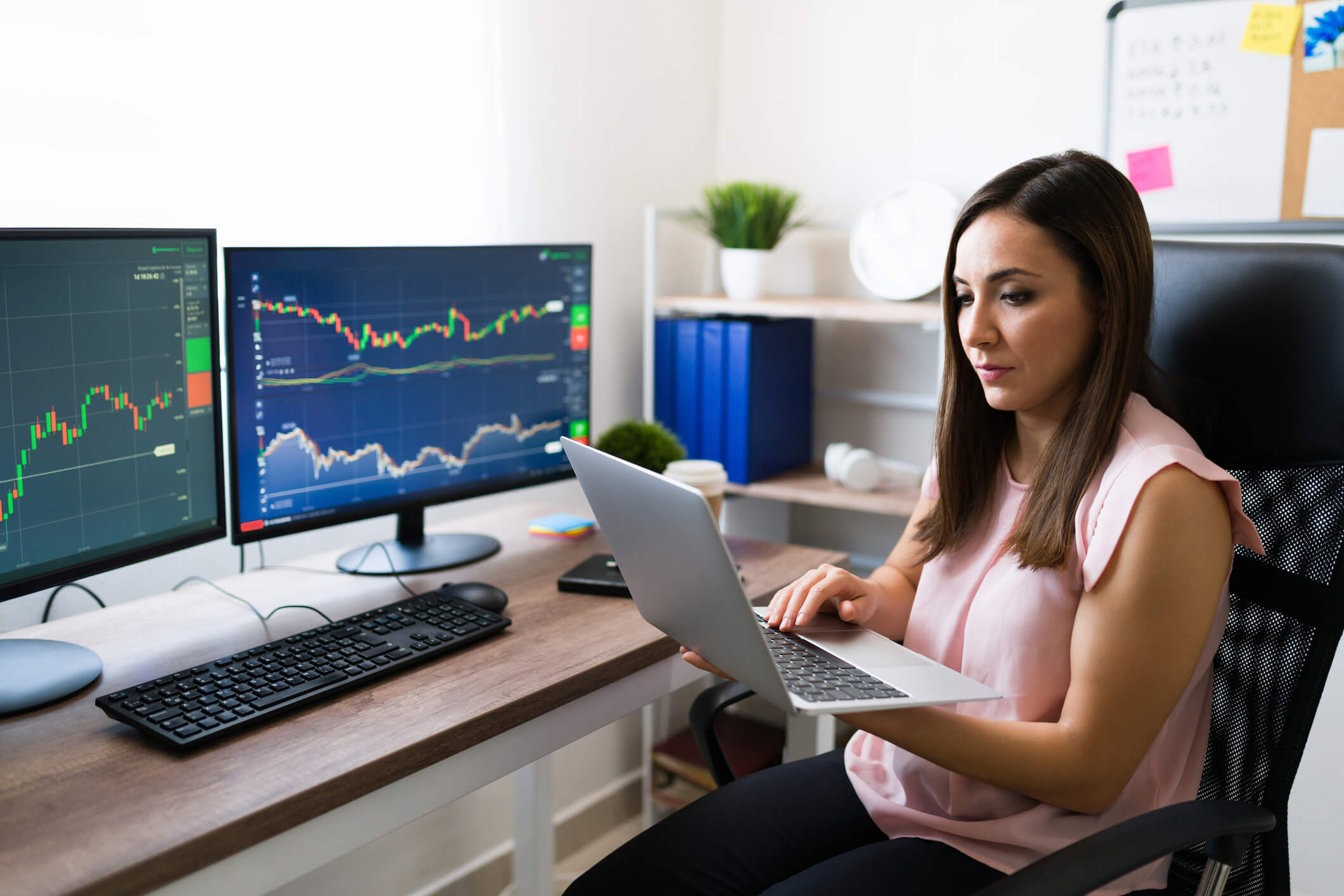
Fitting trading into your busy schedule requires adopting time-efficient strategies like swing trading, leveraging automation tools, and focusing on quality trades during peak market hours—often just 30 minutes to 2 hours daily. Professional traders achieve consistent profits by trading selectively during high-liquidity windows, using structured routines, and prioritizing strategic planning over constant screen monitoring.
I’ve spent over 20 years as CEO of Complete Controller working alongside entrepreneurs who juggle multiple priorities daily. Through this experience—and my own trading journey—I’ve discovered that successful trading isn’t about sacrificing your career or family time. It’s about smart systems, disciplined routines, and choosing the right trading style. This article will show you exactly how to build a profitable trading practice around your existing commitments, including the 30-minute routine that transforms busy professionals into confident traders, technology shortcuts that eliminate hours of screen time, and the surprising truth about why trading less often leads to bigger profits.

How can you fit trading into a busy schedule and still achieve success?
- You fit trading into a busy schedule by adopting swing trading strategies, creating time-blocked routines, using automation tools, and trading during peak liquidity hours
- Swing trading allows you to hold positions for days or weeks, checking charts once daily rather than monitoring constantly
- Time-blocking creates dedicated 30-minute trading windows that prevent analysis paralysis and emotional decisions
- Automation tools like price alerts and conditional orders execute your strategy without constant supervision
- Peak liquidity hours (like the London-New York overlap) provide the best trade setups in the shortest time window
The Best Trading Strategies for Busy Professionals
The truth about trading success might surprise you: professional traders work far fewer hours than most people imagine. Research shows experienced traders average just 0.5 to 2 hours of actual trading daily, plus 5 hours weekly for review and preparation—totaling only 7.5 to 15 hours per week. This efficiency comes from choosing the right trading style and focusing on high-probability setups rather than constant activity.
Swing trading stands out as the optimal strategy for busy professionals. Academic research from Cambridge University tracked 5,472 retail traders over three years and discovered that swing traders achieved average annual returns of +2.1% after costs, while day traders lost -3.8% annually. The data speaks clearly: 89% of retail day traders lose money, while swing traders consistently profit by holding positions for days or weeks instead of minutes.
Why swing trading suits tight schedules
Swing trading targets multi-day price movements using daily and 4-hour charts, requiring only 20-30 minutes of analysis after market close. You identify trends, set entry and exit points, then let the market work while you focus on your career. This approach eliminates the emotional stress of watching every tick and reduces transaction costs that eat into day trading profits.
Best trading style for working professionals
Position trading extends swing trading principles even further, holding trades for weeks or months based on fundamental analysis and major trend changes. Both styles allow you to analyze markets during evenings or weekends, place orders outside market hours, and check positions once daily—perfect for executives, parents, and anyone with demanding schedules.
How swing trading works for part-timers
The key lies in using higher timeframes that filter market noise. Daily charts show clearer trends than minute charts, reducing false signals and improving win rates. You scan for setups after dinner, place orders before bed, and review results the next evening—no lunch break trading or sneaking peeks during meetings required.
30-Minute Trading Routines That Work
Time management research reveals that 10 minutes of planning saves up to 2 hours of wasted time—a 1,200% return on investment. This principle transforms trading from a time drain into a structured process that fits seamlessly into busy schedules.
A proven 30-minute routine consists of three focused blocks: 10 minutes analyzing previous market action and identifying key levels, 10 minutes planning trades and setting entry/exit orders, and 10 minutes reviewing existing positions and adjusting stops. This structure forces discipline, prevents overanalysis, and eliminates emotional decision-making.
Create a trading plan for a busy lifestyle
Start by defining your available trading windows—perhaps 7-7:30 AM before work or 8-8:30 PM after kids’ bedtime. Choose markets that align with these windows; forex offers 24-hour access while stocks require specific hours. Document your strategy rules, risk parameters, and review schedule in writing. This blueprint becomes your trading GPS, eliminating daily indecision.
Sample 30-minute trading checklist for weekdays
- Pre-market (5 minutes): Review economic calendar, check overnight price action, identify support/resistance levels
- Trade planning (15 minutes): Scan watchlist for setups matching your criteria, calculate position sizes using 1-2% risk rule, set entry orders with predetermined stops and targets
- Position management (10 minutes): Review open trades against original thesis, adjust stops to protect profits, close positions hitting targets, document results in trading journal
Time management techniques for traders
Batch similar tasks together—analyze all forex pairs at once rather than checking randomly throughout the day. Use templates for common calculations like position sizing. Schedule market analysis during your peak mental energy hours. Most importantly, set hard time limits for each trading activity to prevent endless scrolling through charts.
Leverage Technology to Automate and Alert
Modern trading technology transforms how busy professionals access markets. Mobile trading applications now offer professional-grade charting, one-click trading, and sophisticated order types previously available only on desktop platforms. These tools let you manage positions during commutes, travel, or brief breaks without sacrificing execution quality.
Price alerts eliminate the need for constant monitoring. Set notifications for key levels, breakouts, or indicator signals, then focus on your primary work until markets demand attention. Conditional orders execute automatically when prices hit predetermined levels, ensuring you never miss opportunities due to meetings or family commitments.
Best mobile apps for busy traders
Leading platforms like MetaTrader, TradingView, and thinkorswim offer full functionality on mobile devices. Cloud synchronization means your analysis transfers seamlessly between devices—start on your laptop at home, review on your phone at lunch, execute trades on your tablet in the evening. Choose apps with robust alerting systems and intuitive interfaces that minimize learning curves.
How to use conditional orders to save time
The SEC explains various order types that automate trading decisions. Stop-limit orders enter positions at specific prices while controlling slippage. One-cancels-other (OCO) orders place both profit targets and stop losses simultaneously. Trailing stops protect profits automatically as positions move favorably. Master these tools to trade effectively without screen time.
Automation vs manual trading for professionals
While full automation sounds appealing, semi-automated approaches often work better for busy professionals. Use technology for execution and risk management while maintaining human judgment for strategy and market analysis. This hybrid approach combines emotional discipline with strategic flexibility, avoiding both the pitfalls of purely mechanical systems and the time demands of manual trading.

Protect Your Time and Your Capital
Professional traders succeed by trading less, not more. Research confirms that multitasking reduces performance by up to 40%, making focused trading sessions far more profitable than scattered attempts throughout the day. Quality trumps quantity in both trade selection and time allocation.
Effective money management starts with position sizing—never risk more than 1-2% of your account per trade. This rule protects capital during losing streaks and prevents emotional decisions. Use stop losses religiously, accepting small losses to avoid devastating drawdowns that derail both accounts and confidence.
How to set trading goals you’ll actually stick to
Replace vague aspirations like “make money trading” with specific, measurable targets: “Generate 15% annual returns with maximum 10% drawdown” or “Execute 2-3 high-probability trades weekly.” Break annual goals into monthly milestones, then weekly actions. Track progress systematically—what gets measured gets achieved.
Why trading less can earn you more
Overtrading destroys accounts through transaction costs, emotional exhaustion, and poor decision-making. Successful part-time traders often make just 1-3 trades weekly, waiting patiently for A+ setups matching all criteria. This selectivity improves win rates, reduces stress, and frees time for career and family—the ultimate win-win scenario.
Building a fail-safe trading routine
Create backup plans for common disruptions. If morning analysis gets interrupted, have an evening backup slot. Use mobile alerts when traveling. Prepare contingency orders before vacations. Document your strategy so thoroughly that you could hand it to someone else to execute—this clarity prevents impulsive decisions during busy periods.
Real-World Results: Busy Professionals Who Succeeded
Lisa, a full-time accountant and mother of two, transformed her financial future using the exact strategies outlined above. Starting with just $5,000 and 30 minutes daily, she focused exclusively on swing trading major forex pairs during the London-New York overlap—the period when 37% of daily volume occurs.
Her routine was simple but disciplined: Sunday evening market analysis (1 hour), daily 6:30 AM check before work (15 minutes), and evening position review after kids’ bedtime (15 minutes). She used TradingView alerts to monitor key levels and OCO orders to manage risk automatically. Within 12 months, Lisa generated 34% returns while missing only three trading days due to family commitments.
Success stories: Trading with a full-time job
Another inspiring example comes from “Coach Mike,” a forex trader who achieved 48% returns in 2024 while maintaining full-time employment and managing a business. His success formula included trading only during peak liquidity windows, using multiple timeframe analysis, maintaining a detailed journal, and working with a performance coach. He explicitly credits his results to trading less frequently but with higher conviction.
Lessons from real traders: What actually works?
Common themes emerge from successful part-time traders: they all use structured routines, focus on one or two strategies, leverage technology wisely, and prioritize continuous education. They view trading as a business requiring systems and discipline, not a hobby or gambling. Most importantly, they started small, learned consistently, and scaled gradually as skills developed.
In Summary: Trading Success Is Possible—Even When You’re Busy
Building trading success around a demanding schedule isn’t fantasy—it’s a systematic process thousands of professionals execute daily. By choosing swing trading over day trading, creating structured 30-minute routines, and leveraging modern technology, you can generate consistent returns without sacrificing career advancement or precious family time.
I’ve witnessed this transformation repeatedly through my work at Complete Controller, where we help entrepreneurs systematize their finances for growth. The same principles that streamline business operations—automation, delegation, and strategic focus—apply perfectly to trading. Start with one strategy, master it through consistent practice, and expand gradually as confidence builds.
Your trading journey begins with a single decision: commit to a structured approach rather than random attempts. Pick your trading window, define your strategy, set up your technology, and execute consistently. Real wealth comes not from constant action but from patient, disciplined execution of a proven plan. Ready to streamline your entire financial system to support your trading goals? Visit Complete Controller to discover how our comprehensive financial services free up more time and mental energy for the opportunities that matter most.

Frequently Asked Questions About fit trading into busy schedule
What’s the best trading style for someone working 50+ hours per week?
Swing trading offers the ideal balance, requiring only 20-30 minutes daily to analyze daily charts and manage positions that last several days to weeks, allowing you to trade successfully without constant market monitoring.
Can I really make money trading just 30 minutes per day?
Yes, professional traders often work just 0.5-2 hours daily by focusing on high-probability setups during peak market hours, with research showing swing traders achieving positive returns while day traders typically lose money.
Should I use automated trading systems to save time?
Semi-automated approaches work best—use technology for alerts and order execution while maintaining human judgment for strategy decisions, combining efficiency with strategic flexibility.
What’s the minimum time commitment to learn trading while working full-time?
Dedicate 5-10 hours weekly for the first 3-6 months to education and practice, then transition to 30-60 minutes daily for actual trading once you’ve developed consistent strategies.
How much starting capital do I need for part-time trading?
Start with $1,000-5,000 for swing trading forex or stocks, using proper position sizing (1-2% risk per trade) to preserve capital while learning—never trade money you can’t afford to lose.
Sources
- CMC Markets. (2024). Swing Trading vs Day Trading: Which Strategy Wins? https://www.cmcmarkets.com/en/trading-strategy/swing-trading-vs-day-trading
- Complete Controller. (2024). Earning with Online Courses. https://www.completecontroller.com/earning-with-online-courses/
- Complete Controller. (2024). 5 Money Management Tips to Help Avoid a Deficit. https://www.completecontroller.com/5-money-management-tips-to-help-avoid-a-deficit/
- Complete Controller. (2024). Stock Markets and Mobile Applications. https://completecontroller.com/stock-markets-and-mobile-applications/
- DayTrading.com. (2024). Productivity & Time Management for Traders. https://www.daytrading.com
- FBS. (2024). The 30-Minute Trading Routine for Busy People. https://www.fbs.com
- Insider Week. (2023). Schulz, Max. 3 Swing Trading Strategies for Professionals and Very Busy People. https://www.insiderweek.com
- Investopedia. (n.d.). Swing Trading. https://www.investopedia.com/terms/s/swingtrading.asp
- Learn To Trade The Market. (2023). The 30-Minute Trading Routine for Busy People. https://www.learntotradethemarket.com/forex-trading-strategies/30-minute-trading-routine
- OptionsTrading.org. (2023). Top Time Management Tips for Part-Time Options Traders. https://www.optionstrading.org
- RealTrading.com. (2024). You Can’t Trade Time! 7 Time Management Tips for Traders. https://www.realtrading.com
- StockTrading4U. (2024). Mastering Systematic Trading: #1 Strategy for Busy Professionals. https://www.stocktrading4u.com
- The American Psychological Association. (n.d.). Multitasking Research. https://www.apa.org/research/action/multitask
- The U.S. Securities and Exchange Commission – Investor.gov. (n.d.). Orders. https://www.investor.gov/introduction-investing/investing-basics/orders
- TradeThatsWing.com. (2024). How Many Hours Day Traders Work – Scenarios Based on Goals. https://tradethatswing.com/how-many-hours-do-day-traders-work/
- Bigul. (2023). 5 Smart Ways Employed Individuals Can Master Option Trading. https://www.bigul.com
- Superhuman Blog. (2024). 17 Time Management Statistics That Will Change How You Work. https://blog.superhuman.com/time-management-statistics/
 About Complete Controller® – America’s Bookkeeping Experts Complete Controller is the Nation’s Leader in virtual bookkeeping, providing service to businesses and households alike. Utilizing Complete Controller’s technology, clients gain access to a cloud platform where their QuickBooks™️ file, critical financial documents, and back-office tools are hosted in an efficient SSO environment. Complete Controller’s team of certified US-based accounting professionals provide bookkeeping, record storage, performance reporting, and controller services including training, cash-flow management, budgeting and forecasting, process and controls advisement, and bill-pay. With flat-rate service plans, Complete Controller is the most cost-effective expert accounting solution for business, family-office, trusts, and households of any size or complexity.



 Brittany McMillen
Brittany McMillen
Brittany McMillen