


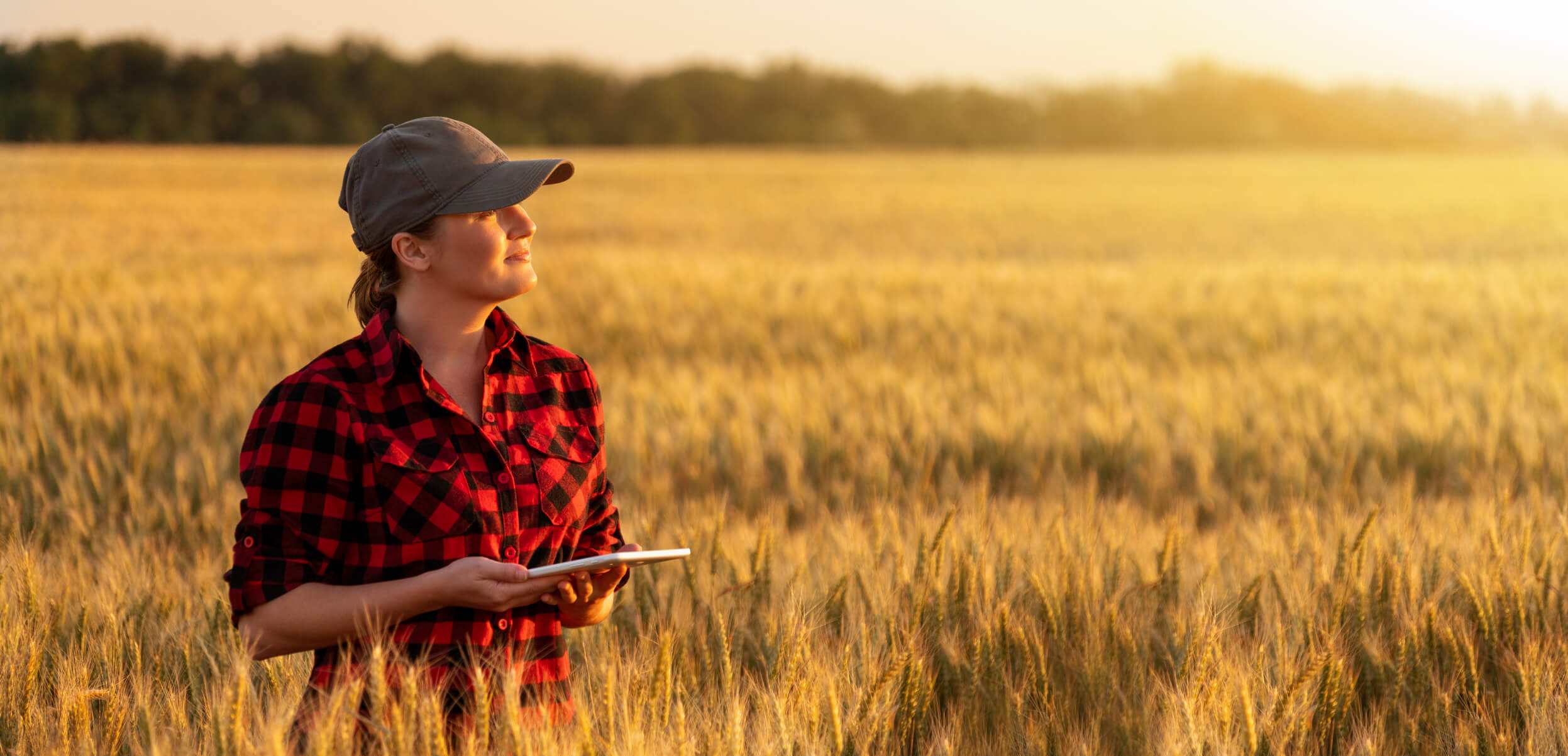
Boost Farm Management For Enhanced Productivity Today!
Farm Management for productivity means using the latest technologies, best practices, and data-driven insights to improve efficiency, increase yields, and streamline operations for every type of farmer—immediate steps like adopting precision agriculture, automating tasks, and optimizing resources are proven ways to see results right away.
Having worked with farms of all types through Complete Controller, I’ve seen firsthand that productivity doesn’t come from working harder—but from working smarter. Whether you run a small plot or large commercial operation, there are actionable strategies and smart tools that can transform your bottom line starting today. Over my 20 years as CEO of a cloud-based financial services provider, I’ve had the privilege of partnering with agricultural businesses across all sectors, witnessing their challenges and triumphs in modernizing operations. This article shares the most powerful farm management best practices I’ve observed, from precision technology adoption to sustainable soil practices, giving you concrete steps to boost yields, cut costs, and build a more resilient farming operation for the future.

What is farm management for productivity and how can you achieve it now?
- Farm Management for Productivity is the systematic use of technology, analytics, and proven agricultural methods to optimize yield, efficiency, and sustainability on your farm
- Leverage precision farming practices and farm management software for data-driven decisions that directly impact output
- Combine traditional practices (like crop rotation) with modern tools (such as smart irrigation and automation) to drive real improvements
- Regularly maintain equipment and invest in ongoing education for your team to sustain progress
- Immediate productivity gains are made by measuring, analyzing, and acting on key performance metrics—starting today
Adopt Precision Agriculture for Higher Efficiency
Modern precision farming practices use GPS, drones, and data analytics to apply every resource—seed, water, fertilizer—exactly where and when needed for best effect. The precision farming market has grown from USD 10.5 billion in 2023 to USD 11.8 billion in 2024, with projections reaching USD 24 billion by 2030.
GPS-based mapping technology generates the largest economic impact among precision agriculture tools, with operating profits increasing by approximately 3 percent on corn farms. Guidance systems raise profits by 2.5 percent, while variable-rate technology increases both profit and returns by 1.1 percent. Though these percentages seem modest, they compound significantly across hundreds or thousands of acres.
How farm management software elevates precision
- Farm management software tracks data from planting to harvest, enables mapping, forecasting, and instant reporting, helping even small farms make informed decisions fast. These platforms integrate weather data, soil sensor results, and historical yield information to create comprehensive management insights.
- Crop management solutions now incorporate artificial intelligence to predict pest pressures, forecast weather impacts, and suggest optimal harvest timing. CropIn, an Indian agritech startup, uses AI-driven remote sensing to analyze crop health and identify early signs of nutrient deficiencies or pest attacks, achieving yield improvements of 20 percent while reducing pesticide use by 30 percent.
- Agricultural productivity tools capture yield data and reveal hidden patterns for continuous improvement. Farmers using GPS-guided variable-rate technology across Iowa, Illinois, and Nebraska corn and soybean operations documented yield improvements of 22 percent, coupled with input cost reductions of 15 percent—translating to additional profits of $150 to $200 per acre.
Automate Key Tasks to Free Up Time and Cut Costs
Automation tackles labor shortages and repetitive work by letting machines handle tasks from seeding to harvest. The U.S. tree fruit industry, generating billions in annual revenue, faces critical labor shortages that automation directly addresses.
Automated tractors and robotic harvesters now achieve 25 to 40 percent labor cost reduction while operating around the clock. These systems deliver yield improvements of 5 to 18 percent through enhanced precision that exceeds human capability.
Real-world impact of automation
A USDA Agricultural Research Service engineer developed an innovative apple harvesting robot that overcomes two critical challenges: picking fruit from clusters and accessing fruit obscured by leaves. Field trials in 2020 demonstrated effectiveness in harvesting from dense clusters and hard-to-reach canopy locations.
Farm efficiency techniques extend to planting operations, where drones monitor corn emergence within the first week after planting. University of Missouri researchers developed methods to identify plant seedlings with over 90 percent accuracy, enabling farmers to make rapid replanting decisions when necessary.

Manage Soil and Water as Your Most Valuable Assets
Soil health forms the foundation of sustained agricultural productivity. Research from Ontario’s Agri-Food Innovation Alliance, conducting soil health studies for over fifteen years, documented that including wheat in a corn-soybean rotation for four years increases expected profits by $52 per acre.
Soil health for improving farm yields
Crop rotation away from monoculture generates substantial productivity gains. When continuous corn fields transition to a two-year rotation, yields improve by 29 percent. Four-year rotations including legume cover crops achieve 48 percent yield improvements.
Cover crop adoption expanded 50 percent between 2012 and 2017 across U.S. cropland. Persistent cover cropping occurs on 69 percent of cotton acres, 56 percent of corn-for-silage acres, and 32 percent of soybean acres.
Water management with technology
Smart irrigation systems automatically adjust watering schedules to site conditions, achieving water savings of 30 to 50 percent compared to traditional controllers. The Irrigation Association and California State University tests showed smart controllers save up to 20 percent more water than traditional systems.
Agricultural technology innovations in irrigation include weather-based evapotranspiration controllers and soil moisture sensor systems. A Saving Water Partnership study calculated annual water savings of 20,735 gallons per site using smart controllers, compared to 10,071 gallons for traditional controllers.
Invest in Data and Analytics to Drive Smarter Decisions
Data forms the foundation of modern productivity—what gets measured, gets managed. Farm management software platforms integrate weather stations, soil sensors, equipment telemetry, and satellite imagery to generate actionable insights across every operational aspect.
TMA Solutions developed an AI-powered pest detection system for Vietnamese rice fields, achieving 90 percent accuracy in identifying eight diseases and eight pest types. Real-time notifications enable immediate management responses, significantly improving regional crop health and productivity.
Brazilian companies use AI models analyzing historical yield data, weather forecasts, and market trends to generate accurate yield predictions weeks in advance. These forecasts enable efficient harvest scheduling and supply chain management, drastically cutting post-harvest waste.
Diversify for Resilience and Profit
Diversification cushions against crop failures and market volatility while opening new revenue streams. Combining staple crops with livestock and specialty produce provides income stability during challenging seasons.
Sustainable agriculture methods like the 4R Nutrient Stewardship principles (Right Source at Right Rate, Right Time, Right Place) increase corn yields up to 20 percent while reducing greenhouse gas emissions. Farmers adopting these principles achieve 60 percent reduction in phosphorus runoff and 67 percent reduction in nitrogen leaching.
Continuous Improvement: Building a Smarter Farm Culture
The best farms make improvement part of daily routine—this mindset accelerates adoption of new ideas and drives consistent productivity gains. Regular equipment maintenance prevents breakdowns during critical operations, while ongoing staff training on new tools and techniques maintains competitive advantage.
Attending industry events and networking keeps you current with the latest agricultural technology innovations. When just ten percent of southern Ontario farms adopted six evidence-based soil health practices, the economic benefit reached $14.6 million annually.
Final Thoughts
As the founder of Complete Controller, I’ve witnessed time and again how embracing new tech, smart planning, and a culture of continuous improvement can revolutionize farm productivity. No matter your farm’s size, you can start with one or two of these strategies and see measurable results—because farm management for productivity is about progress, not perfection. Take the first step today and see what smarter farming can do for you. For help integrating financial management solutions that complement your agricultural technology investments, contact the experts at Complete Controller for guidance tailored to your farming operation’s unique needs.

Frequently Asked Questions About Farm Management for Productivity
What is the most effective way to increase farm productivity?
Adopting precision agriculture technologies, maintaining healthy soil and water practices, automating key processes, and leveraging farm management software deliver the greatest productivity gains.
What is smart farming and how does it impact yield?
Smart farming combines technology (sensors, drones, farm management software) to collect data and optimize every stage of production, boosting yields and reducing resource waste.
How do I start using farm management software?
Begin by mapping your current processes and identifying needs; choose software that integrates with your equipment and offers analytics on production, finances, and inventory.
How do sustainable farming methods improve productivity?
Practices like crop rotation, cover cropping, and reduced chemical use preserve natural resources, enhance soil fertility, and often lead to consistent yields over time.
What is the role of technology in modern farm management?
Technology—from automated equipment to cloud-based analytics—enables farmers to make faster, better decisions for every aspect of the operation, increasing long-term profitability.
Sources
- “Top 7 Tips to Boost Farm Efficiency, Productivity, and Yields.” Morning AgClips, 2025.
- “How Farmers Can Increase Productivity in 2025.” Neptune Farming, 2025.
- Chen, Xie. “The Role of Modern Agricultural Technologies in Improving Agricultural Productivity and Land Use Efficiency.” Frontiers in Plant Science, 2025.
- “Top 10 Commercial Farming Practices for Modern Farmers in 2025.” FJDynamics, 2025.
 About Complete Controller® – America’s Bookkeeping Experts Complete Controller is the Nation’s Leader in virtual bookkeeping, providing service to businesses and households alike. Utilizing Complete Controller’s technology, clients gain access to a cloud platform where their QuickBooks™️ file, critical financial documents, and back-office tools are hosted in an efficient SSO environment. Complete Controller’s team of certified US-based accounting professionals provide bookkeeping, record storage, performance reporting, and controller services including training, cash-flow management, budgeting and forecasting, process and controls advisement, and bill-pay. With flat-rate service plans, Complete Controller is the most cost-effective expert accounting solution for business, family-office, trusts, and households of any size or complexity.




 Brittany McMillen
Brittany McMillen
Brittany McMillen