Welcome to part 1 in a 3 part series about bridging the digital divide in your business!
Without warning, 2020 has made digital solutions more relevant than ever before. We are faced with bridging the digital divide simply because we have no other option, and we need to put the technologies and strategies in place to cope with what may be turbulent years ahead.
Although many businesses have adopted some digital solutions, it is now essential to look at all of the necessary components to fully embrace the cloud as a delivery platform. I know that it can sound like an overwhelming proposition, so let’s break it down into bite-sized portions, and this e-guide is a great place to start. The answer ‘one bite at a time’ holds with any project that looks overwhelming, and certainly, creating a digital bridge is no different.
Turning your business digital is an important next step and will allow for greater efficiencies and save your customers time. At the end of this e-guide, you will find my suggestions for going about this with guidance on which areas of the business to look at. It doesn’t have to be scary if you:
Take a moment to plan it out and see what you want to achieve. Talk it through with staff members
Take one step in that direction – make it a simple one, such as adding each staff member to a virtual phone system
Leverage tools made by other people, so you don’t spend so much in terms of development and time
Alone or in combination, the strategies and tools discussed here will position your business as savvy and supportive as you bridge the technology gap. You can create an environment for technology to be accepted as part of your offering’s total solution. And that is good business as you and your customers prepare for greater dependence on the cloud for daily operations.
Are you ready to make the move to digital solutions? We can help you prepare with this free downloadable template!
Stay tuned for part 2 next week, where we find out the top thing that helps a business contribute to its financial sustainability.
An Internet mortgage is a loan that is requested and serviced through a web-based lender. Instead of applying for a loan through a traditional bank loan officer or broker, the applicant works directly with the lender online. The qualifications, documents, and processes are the same as those with a traditional mortgage, but the rates and fees tend to be lower.
Many Internet mortgage companies have their websites dedicated to receiving and processing quotes and applications 24/7. Due to around-the-clock access to the application process, most borrowers’ questions are addressed in a non-personalized way through its website. Applications, appointments, and subscription approvals are automated, and typically there are no fees or obligations for filling out an application on these websites.
If a potential borrower decides to accept an Internet mortgage loan, an appraisal fee is required to guarantee the loan. As with a traditional mortgage, the online lender will order an evaluation to be conducted at the property through an external provider. The potential borrower has the option to lock in the interest rate that is in effect at the time the loan is secured or take the risk of obtaining the current rate at the time of closing.
If the online borrower qualifies for the loan, the computer system automatically approves most Internet mortgages of the online lender. If there is an issue with the online application, a lender representative will contact the potential borrower and verify the information or obtain the needed documentation. Regardless of whether an applicant is approved automatically or manually, proof of income must be presented to the lender.
Since the loan is not obtained using a loan officer or mortgage broker, there are no commissions involved, resulting in lower fees and a lower interest rate. Some fees are universal such as opening fees and closing costs, whether a traditional mortgage or internet mortgage is obtained. However, a borrower might save money over the loan’s life due to a lower interest rate. Loan funds are usually connected directly by the lender for closing agent documents, and loans are delivered and signed for in a title office or using a lawyer.
Other websites offer internet mortgage leads to potential borrowers. They direct the borrowers to the lenders who are willing to offer direct loans. Some of these sites may allow potential borrowers to compare mortgage rates, interest rates, and loan conditions. Refinancing, new purchases, residences, and rental homes are all eligible for an Internet mortgage.
The Top Nine Online Lenders
Better Mortgage
Some of the features that have Better Mortgage on the list are that it has zero lender fees, which can be a draw to this lender. They also cater to those who don’t have the best credit with an easier credit threshold of just 580. However, one drawback is that Better Mortgage has a smaller range of loan types.
Guaranteed Rate
While Guaranteed Rate may have slightly higher interest rates than other lenders on this list, it still has a lot to offer as a choice for your online lender. Guaranteed Rate has low fees, extremely positive customer reviews, and various loan products backed by the USDA and the VA.
Supreme Lending
Supreme Lending has higher rates than other lenders, but customers love this lender and give it high reviews. These reviews are likely due to Supreme Lending’s reputation as a company with excellent service and customer care.
loanDepot
loanDepot has great mortgage rates and minimal opening fees. And its customers give it high marks on customer reviews, which is always a good sign. Another feature that sets it apart is that loanDepot offers FHA 203(k) loans, which help you finance a fixer-upper. Many lenders are hesitant to loan for a home that needs a lot of work.
Rocket Mortgage
Rocket Mortgage is an all-online mortgage lender and is under the Quicken Loans umbrella. Quicken Loans, known as one of the largest mortgage lenders in America, lends great credibility to its online product.
Reali Loans
Reali Loans was formerly known as Lenda. It makes a list because Lenda was fairly well-rated, and Reali Loans is expected to be the same as it builds its reputation.
SoFi
SoFi makes this list for the low opening fees, rates, and loan costs. It requires the highest credit score of 660 and requires a minimum of 10% down, possibly making it off your list, but if you meet these criteria, it is highly recommended among the others on this list.
Movement Mortgage
Movement Mortgage offers competitive, though not the lowest, costs, fees, and rates. However, it is the highest rated on the list by customers.
NBKC (National Bank of Kansas City)
Though listed last on the list, NBKC is likely the best overall online lender on the list. It scores high on low mortgage rates and involved fees. It also rates among the highest of the Internet lenders on this list.
About Complete Controller® – America’s Bookkeeping Experts Complete Controller is the Nation’s Leader in virtual bookkeeping, providing service to businesses and households alike. Utilizing Complete Controller’s technology, clients gain access to a cloud-hosted desktop where their entire team and tax accountant may access the QuickBooks™️ file, critical financial documents, and back-office tools in an efficient and secure environment. Complete Controller’s team of certified US-based accounting professionals provide bookkeeping, record storage, performance reporting, and controller services including training, cash-flow management, budgeting and forecasting, process and controls advisement, and bill-pay. With flat-rate service plans, Complete Controller is the most cost-effective expert accounting solution for business, family-office, trusts, and households of any size or complexity.
Double Dip Recession: What Business Leaders Need to Know Now
A double-dip recession occurs when an economy briefly recovers from an initial recession, only to fall back into another downturn before achieving full recovery, creating a distinctive W-shaped economic pattern. This economic phenomenon involves two periods of negative GDP growth separated by a short-lived recovery phase, making it particularly challenging for businesses and individuals who believe the worst has passed.
The rarity of double-dip recessions makes them especially dangerous—only two clear examples exist in modern U.S. history since the Great Depression: 1937-1938 and 1981-1982. As someone who’s guided thousands of businesses through economic uncertainty over the past two decades at Complete Controller, I’ve witnessed firsthand how these false recovery signals can devastate unprepared companies. This article arms you with the historical insights, warning signs, and strategic preparation tactics that separate businesses that thrive from those that barely survive when economic recovery falters.
What exactly is a double-dip recession?
A double-dip recession is an economic pattern where recovery from an initial recession fails and the economy contracts again, creating a W-shaped trajectory
The first dip involves negative GDP growth, followed by positive growth that appears promising
The second dip occurs when this recovery stalls and GDP turns negative again before full economic health returns
The pattern typically spans 18-36 months total, making it longer than standard recessions
Both dips must meet the technical recession criteria of two consecutive quarters of negative GDP growth
The Anatomy of Double-Dip Recessions
Double-dip recessions represent one of the most challenging economic patterns businesses can face, distinguished by their deceptive recovery phase that lures companies into premature expansion. The fundamental mechanics involve an economy that exists in recession, grows briefly, then contracts again while still below pre-recession levels. Martha Olney, economics professor at UC Berkeley, captures this perfectly: “The analogy I like to use is when you’re in the hospital and you have surgery, you come out of surgery and you’re in recovery and you’re making progress, and then all of a sudden you have a relapse.”
The W-shaped trajectory creates unique challenges because businesses exhaust resources during the first downturn, begin investing during the false recovery, then face a second contraction with depleted reserves. Statistical analysis reveals that using a broader definition of 18 months between contractions, double dips have occurred in 8 of the 11 U.S. recessions since World War II. The National Bureau of Economic Research emphasizes that classification depends on “the duration and strength of the upturn after the initial trough”—if the recovery proves too weak or brief, the second decline becomes part of the original recession rather than a new event.
Economic patterns that define double-dips
The distinguishing characteristics of double-dip recessions create specific economic signatures that alert observers to developing risks. Recovery periods between dips typically last 6-12 months, long enough to generate optimism but insufficient for structural economic healing. GDP growth during these interim periods often reaches 2-4% annually, creating an illusion of normalcy that masks underlying weaknesses.
Business investment patterns during double dips show initial enthusiasm followed by rapid retrenchment as companies realize the recovery lacks foundation. Employment gains during the false recovery rarely offset initial job losses, leaving unemployment elevated when the second downturn strikes. Credit markets exhibit particular stress during double dips, as lenders who relaxed standards during apparent recovery quickly tighten again, creating financing shortages precisely when businesses need capital most.
Historical Examples and Case Studies
The 1981-1982 U.S. double-dip recession provides the definitive modern example of this phenomenon, demonstrating how policy decisions can transform a manageable downturn into extended economic trauma. The first recession lasted from January to July 1980, triggered by Federal Reserve Chairman Paul Volcker’s anti-inflation campaign that pushed interest rates to 20%. GDP contracted at an 8% annual rate during the worst quarter, but the economy appeared to recover robustly, growing 8.4% annually in early 1981.
This recovery proved illusory as continued Fed tightening pushed the economy back into recession by July 1981. The second downturn devastated employment—auto worker unemployment skyrocketed from 4.8% in 1979 to 24.7% by late 1982, while construction unemployment hit 22%. Overall unemployment reached 10.8% in November 1982, the highest since the Great Depression. The human cost included 12 million Americans unemployed at the peak, with manufacturing regions experiencing depression-level conditions.
International double-dip experiences
Japan’s 1997 experience demonstrates how fiscal policy mistakes can trigger double dips even during apparent recovery. The economy had stabilized following the early 1990s asset bubble collapse, with GDP growing steadily through 1996. However, when the government raised the consumption tax from 3% to 5% in April 1997 while cutting spending, consumption growth collapsed for two years. The policy error coincided with the Asian Financial Crisis, creating a perfect storm that pushed Japan back into recession.
The UK’s 2012 episode offers a fascinating case study in data interpretation challenges. Initial GDP figures showed the UK entering a double dip with negative growth in late 2011 and early 2012. However, subsequent data revisions by the Office for National Statistics erased this recession from the historical record. The episode highlights how real-time economic assessment during potential double dips remains extraordinarily difficult, with initial data often proving unreliable.
Europe’s 2011-2013 experience affected multiple economies simultaneously through interconnected debt crises. Government austerity measures, implemented while economies remained fragile from the 2008 crisis, triggered renewed contractions across Italy, Spain, Portugal, and other nations. The synchronized nature of European double dips demonstrated how policy coordination failures can amplify economic damage across integrated economies.
Root Causes and Contributing Factors
Premature policy tightening emerges as the primary catalyst for double-dip recessions across multiple historical examples. Governments and central banks, observing initial recovery signs, withdraw stimulus or implement restrictive policies before economic foundations solidify. The Congressional Research Service notes that double dips often occur “when government aid helps alleviate economic impacts of a major event, but when the aid runs out, the economy dips again.”
External shocks hitting weakened economies represent the second major double-dip trigger. The 1979-1980 oil price spikes contributed significantly to the U.S. double dip by creating simultaneous inflation and growth challenges. Similarly, COVID-19 variants threatened potential double dips by disrupting recoveries before economies fully healed from initial pandemic shutdowns.
The inflation-policy dilemma
Central banks face an especially cruel dilemma during potential double-dip scenarios when inflation emerges during weak recoveries. The 1980s U.S. experience exemplifies this challenge—inflation hit 13.5% in 1980, forcing the Fed to maintain high rates despite obvious economic weakness. This inflation-fighting imperative overrode growth concerns, ultimately triggering the second recession.
Modern central banks have developed more nuanced approaches, but the fundamental tension remains. When supply shocks create inflation during fragile recoveries, policymakers must choose between accepting higher prices or risking renewed recession. The European Central Bank’s 2011 rate increases, implemented despite sovereign debt concerns, demonstrated how inflation fears can override recession risks in policy decisions.
Structural vulnerabilities
Certain economic structures increase double-dip vulnerability, particularly high debt levels that limit policy flexibility. Economies entering recessions with elevated government debt find stimulus options constrained during recovery phases. Similarly, highly leveraged corporate sectors struggle to weather multiple downturns, as debt servicing consumes resources needed for recovery investments.
Banking system health proves crucial for avoiding double dips, as credit availability determines whether recoveries gain traction. The U.S. avoided a double dip after 2008 partly through aggressive bank recapitalization that maintained credit flows. Conversely, Europe’s slower bank healing process contributed to its 2011-2013 double dip as credit constraints prevented a robust recovery.
Economic Indicators and Warning Signs
Identifying potential double-dip conditions requires monitoring specific indicators that signal false recovery vulnerabilities. Unemployment rates that plateau above historical norms despite GDP growth indicate insufficient recovery momentum. During the 1980-1981 interim period, unemployment remained at 7.2%, signaling continued weakness that materialized in the second downturn.
Stock market behavior during supposed recoveries provides early warning signals, though interpretation requires nuance. Ed Kashmarek of Wells Fargo notes that equity pullbacks during recovery phases often precede double dips, reflecting investor recognition of fundamental weaknesses. However, normal market corrections occur without triggering recessions, making additional confirmation essential.
Credit market stress signals
Credit spreads widening during apparent recoveries flag potential double-dip conditions as lenders recognize continued risks. Business loan standards that tighten despite positive GDP growth indicate credit market skepticism about recovery sustainability. Consumer credit deterioration, particularly rising delinquencies during supposed growth periods, suggests household financial stress that undermines recovery.
The term structure of interest rates provides sophisticated double-dip warnings when yield curves flatten or invert during recovery phases. This pattern suggests bond market expectations of renewed weakness despite current growth. Commercial paper markets, sensitive to short-term business conditions, show stress through widening spreads or volume declines when double dips approach.
Real economy warning signs
Housing market weakness during recoveries strongly predicts double-dip risks, given the sector’s economic importance. The UK’s 2012 near-double-dip featured construction declining 3% despite a supposed recovery, signaling broader economic fragility. Building permits, architectural billings, and mortgage applications provide leading indicators of housing market health.
Business investment patterns reveal corporate confidence in recovery sustainability. Capital expenditure plans that stall or reverse during growth phases suggest business leaders doubt recovery durability. Small business optimism indices prove particularly valuable as smaller firms lack the buffers that allow large corporations to maintain investment despite uncertainty.
Personal Financial Strategies and Preparation
Protecting personal finances during potential double-dip scenarios requires enhanced emergency preparations beyond standard recession planning. While typical advice suggests 3-6 months of expenses in emergency funds, double-dip risks warrant 9-12 months of reserves given extended unemployment possibilities. Regular reserve reassessment becomes crucial—inflation means yesterday’s six-month cushion might only cover four months today.
Debt reduction takes heightened priority when double-dip risks emerge, as multiple downturns strain household finances beyond normal recession impacts. Focus debt paydown on variable-rate obligations that become more expensive if central banks raise rates to fight inflation. Avoid new debt during recovery phases unless absolutely necessary, as the second dip often arrives just as new obligations begin.
Career and income diversification
Double-dip recessions demand aggressive income diversification given extended labor market weakness. Traditional single-employer dependence becomes especially risky when recoveries fail. Developing freelance capabilities, consulting relationships, or side businesses provides income alternatives if primary employment disappears. Skills development accelerates in importance—use any recovery phase to gain certifications or training that improves marketability.
Industry diversification matters as much as income source diversification. The 1980s showed how manufacturing workers suffered disproportionately while the service sectors remained relatively stable. Building skills transferable across industries provides protection against sector-specific devastation. Network building during recovery phases proves crucial, as relationships established during good times provide lifelines during subsequent downturns.
Final Thoughts
Double-dip recessions test businesses and individuals beyond normal economic cycles through their deceptive recovery phases and compounded impacts. Historical analysis reveals these events remain rare but devastating when they occur, making preparation essential despite their low probability. The combination of proper warning sign recognition, enhanced financial reserves, and strategic flexibility provides the best protection against these W-shaped economic patterns.
Success during double-dip scenarios comes from recognizing that initial recoveries might fail and maintaining defensive positioning longer than feels comfortable. Companies that preserved capital and avoided aggressive expansion during the 1981 recovery phase emerged strongest from the subsequent downturn. Individual preparation follows similar logic—those who used false recoveries to strengthen finances rather than resume normal spending patterns weathered the second dip best.
Business leaders seeking expert guidance through potential double-dip scenarios will find that Complete Controller’s team brings two decades of experience helping companies navigate complex economic transitions. Our comprehensive financial services provide the real-time visibility and strategic support essential for recognizing false recoveries and positioning for sustained success. Contact our experts at Complete Controller to develop customized strategies that protect your business regardless of economic patterns.
Frequently Asked Questions About Double-Dip Recession
How can I tell the difference between a normal recession and a double-dip recession?
A normal recession shows a V-shaped pattern with a clear bottom and sustained recovery, while a double-dip recession creates a W-shape where initial recovery fails and the economy contracts again within 18-36 months. The key identifier is a second period of negative GDP growth occurring before the economy fully recovers to pre-recession levels.
How long does a double-dip recession typically last in total?
Double-dip recessions generally last 24-36 months from the start of the first decline to the end of the second recession, significantly longer than typical recessions, which average 11 months. The 1980s U.S. double dip spanned January 1980 to November 1982, totaling nearly three years of economic disruption.
Are certain industries more vulnerable to double-dip recessions than others?
Manufacturing and construction face the highest risks during double dips due to their sensitivity to interest rates and business investment cycles. During the 1980s double dip, auto manufacturing unemployment hit 24.7% while services remained relatively stable, demonstrating clear sector vulnerabilities.
What’s the biggest financial mistake people make during the recovery phase between dips?
The most dangerous mistake involves resuming normal spending and taking on new debt during the false recovery, depleting emergency reserves just before the second downturn strikes. Many households exhausted savings celebrating the “end” of the 1980 recession, leaving them vulnerable when the 1981-1982 recession hit harder.
Can government policy prevent a double-dip recession once warning signs appear?
Governments can reduce double-dip risks through sustained stimulus and avoiding premature policy tightening, though prevention isn’t guaranteed once vulnerabilities develop. Japan’s 1997 consumption tax increase demonstrates how policy mistakes can trigger double dips, while the U.S. avoided one after 2008 through extended monetary support despite criticism.
Sources
ABC News. “Signs of Double Dip Recession.” Ed Kashmarek. URL: www.abcnews.com
Charles Schwab. “Tips for Weathering Recession.” URL: www.schwab.com
Congressional Research Service. (2012). “Double-Dip Recession: Previous Experience and Current Prospect.” Craig K. Elwell. URL: www.crs.gov
Digital Hydra. “SEO During Recession.” URL: www.digitalhydra.com
About Complete Controller® – America’s Bookkeeping Experts Complete Controller is the Nation’s Leader in virtual bookkeeping, providing service to businesses and households alike. Utilizing Complete Controller’s technology, clients gain access to a cloud platform where their QuickBooks™️ file, critical financial documents, and back-office tools are hosted in an efficient SSO environment. Complete Controller’s team of certified US-based accounting professionals provide bookkeeping, record storage, performance reporting, and controller services including training, cash-flow management, budgeting and forecasting, process and controls advisement, and bill-pay. With flat-rate service plans, Complete Controller is the most cost-effective expert accounting solution for business, family-office, trusts, and households of any size or complexity.
Jennifer BrazerFounder/CEO
Jennifer is the author of From Cubicle to Cloud and Founder/CEO of Complete Controller, a pioneering financial services firm that helps entrepreneurs break free of traditional constraints and scale their businesses to new heights.
Brittany McMillen is a seasoned Marketing Manager with a sharp eye for strategy and storytelling. With a background in digital marketing, brand development, and customer engagement, she brings a results-driven mindset to every project. Brittany specializes in crafting compelling content and optimizing user experiences that convert. When she’s not reviewing content, she’s exploring the latest marketing trends or championing small business success.
Crypto Cloud Mining is somewhat similar to that of crypto mining with one basic difference: a cloud-based third party. Crypto cloud mining is the crypto mining process where instead of mining by a particular individual, the process is outsourced or contracted to a third-party. This third party is typically a business who can bear the burden of the cost of electricity and central processing units (CPU), who does all the mining of Bitcoin on behalf of the users without using their computers.
However, suppose one wants to protect his savings and investment in fiat currency. In that case, the person can opt for Bitcoin mining instead of being bogged into the equipment’s cumbersome management and associated paraphernalia. In this regard, crypto cloud mining is the next best substitute. The concept provides earning and owning the coins or token. You can use the cloud to earn your coins. In essence, the purpose of mining or crypto mining will be better understood if one quickly breezes through some technological connotations associated with Bitcoin and another cryptocurrency in an oversimplified way, such as hash, the blockchain, Proof of Work (PoW), and Proof of Stake (PoS)
Importance of Hash Function
Primarily hash is a functional mathematical tool that helps miners translate alphanumeric codes into a heavily encoded random fixed-length number (for security reasons), usually in hexadecimal. For Bitcoin’s blockchain management, creating a hash with the help of an algorithm is vital. Whether it be a single word or sentence, using a hash, the output is in hexadecimal or fixed length, making it very difficult to decipher.
Designing an algorithmic hash function is much need of the day as it empowers the miners to provide secured encryption in creating a new block. Subsequently, hashing demands exponential CPU output on a mass scale, leading to an increase in expenses. Therefore to lure and encourage the individual miners and mining companies to incur a substantial amount of capital expenditure with state of the art technology, the organization behind the development of crypto incentivize them with the option of either in the shape of coins of a transaction fee denominated in fiat currency. It is vital to mention here that miners are awarded only if the created hash is congruent with the requirements and criteria specified in terms and conditions.
Advantages of Cloud Mining
With no chilling towers and cooling fans, the home becomes a haven of calmness and tranquility. Like the miners, while using an algorithmic hash, the CPU tends to be in constant use, the motherboard becomes hot, and to prevent any hardware meltdown, it needs to operate in a cold environment.
To prevent the constant running of cooling equipment, electricity costs have a high tendency to increase. Nearly no users can afford to bear the high cost, so organizations involved in crypto mining comes into play.
As soon as miners discover that that cloud mining is a profitable venture, then disposing of any hardware becomes next to impossible.
Since firms involved in cloud mining can afford to purchase chilling towers and equipment, problems related to aeration are ruled out.
Disadvantages of Cloud Mining
Some cloud mining functions tend to commit fraud when the miners or users also share information regarding their keys and digital wallet.
In cloud mining, the operations of miners become vulnerable and transparent.
There is no control and suppleness in cloud mining.
Cloud mining is primarily a service provider. If they are mining the blockchain, they will charge something in return, which implies that it can be less profitable for the miner or the user.
Ideally, cloud mining is meant for those who do not have the time, are not tech-savvy, and neither owns any cryptocurrency-related equipment. Also, suppose you are based in a country where the electricity costs are scoring high. In that case, it is prudent to subcontract your mining operation to an organization located in a country where the costs are comparatively lower.
About Complete Controller® – America’s Bookkeeping Experts Complete Controller is the Nation’s Leader in virtual bookkeeping, providing service to businesses and households alike. Utilizing Complete Controller’s technology, clients gain access to a cloud-hosted desktop where their entire team and tax accountant may access the QuickBooks™️ file, critical financial documents, and back-office tools in an efficient and secure environment. Complete Controller’s team of certified US-based accounting professionals provide bookkeeping, record storage, performance reporting, and controller services including training, cash-flow management, budgeting and forecasting, process and controls advisement, and bill-pay. With flat-rate service plans, Complete Controller is the most cost-effective expert accounting solution for business, family-office, trusts, and households of any size or complexity.
The primary aim of a finance manager is to manage the cash flow (inflow and outflow). Generally, the finance manager acts as an intermediary between the investor (individual and corporations) and the firm’s operations. The finance manager is responsible for seeing that the operating needs are financed from operating sources to avoid any mismatch.
Depending upon the agreement between the firm’s finance manager and a third-party contract, the terms of services provided will either be paid in cash, credit, or a partial mix of both? This agreement of payment type is essential when the finance manager is accounting for account receivables, purchase of inventory, and account payables. The finance manager needs to consider the terms for payment or receipt, such as 30 days, 60 days, and 90 days. In essence, they are responsible for cash management, credit management, capital expenditure management, and capital budgeting.
Concerning goals on a macro level, they are also responsible for creating value-for-money for the firm’s shareholders. As earlier stated, the finance manager, acting as a bridge to shareholders, has to have complete knowledge and awareness regarding investment decisions, capital budgeting, valuation of securities, and risk associated with the financial contracts.
In simple terms, the cash flow of the firm comprises of many facets. Cash raised from the investors by sowing in more equity, loan subordination, or selling financial assets (such as bonds, shares, stocks, and warrants). It could also be regarding investment in tangible and intangible assets (brand name). Cash generated from operations. In essence, the sales are deduced through working capital budgeting, such as how many products were sold, the cost of goods sold, and the operating expenses and operating income. We must add in the non-expense amount back into the net profit to see how much cash was generated while calculating cash flows.
It is vital to remember that an increase in accounts receivable and inventory is a decrease in cash and needs to be deducted regarding operating needs. Put. It is cash-outflow. Simultaneously, an increase in accounts payable is an increase in cash-inflow. This is how the working capital cycle is assessed in a cash flow statement.
Last but not least, it is inherent that the finance manager should also match the cash flows in accordance with repayment of financial obligations (such as loan payments along with interest). On the other hand, it is at the discretion of the top management that investment is paid either out, in terms of dividend payments, or resort to capital gains).
Thirdly, the valuation of assets (tangible and intangible) is ascertained by its cash flows, as it incorporates both the traits of the time value of money and risk premium. In a free market, the valuation of the asset can be ascertained through demand and supply.
Capital Budgeting
It is a tool provided to the finance manager in deciding which investments are high yielding and less risky. Such projects are credible to generate cash flows for many years in the future. The choice to say yes or no to a project on Capital Budgeting largely depends on evaluating the project’s cash flows and related expenses. Mainly there are only three things, which the top management looks at while making decision-related to Capital Budgeting:
Payback Period
In essence, the Payback Period is associated with recovering the initial cost for a Capital Budgeting project. By following this process, decision-making is relatively easier and quicker if the payback period is less than the projected one and is normally accepted.
Net Present Value (NPV)
While working on the Capital Budgeting project, the Net Present Value (NPV) implies the project’s anticipated influence on the value of the company. Capital Budgeting project yielding a positive NPV is expected to elevate the value of the company. In simple words, a project with a positive NPV should be an acceptable factor when it comes to the process of decision-making. To calculate the NPV, one needs to minus the project’s cash inflows from the present value of the project’s cash outflows.
Internal Rate of Return (IRR)
To put it simply, the Internal Rate of Return (IRR) of any project related to Capital Budgeting is the base rate where NPV equals zero. If the IRR is greater than the cost of capital, the investors’ decision should be positive.
About Complete Controller® – America’s Bookkeeping Experts Complete Controller is the Nation’s Leader in virtual bookkeeping, providing service to businesses and households alike. Utilizing Complete Controller’s technology, clients gain access to a cloud-hosted desktop where their entire team and tax accountant may access the QuickBooks™️ file, critical financial documents, and back-office tools in an efficient and secure environment. Complete Controller’s team of certified US-based accounting professionals provide bookkeeping, record storage, performance reporting, and controller services including training, cash-flow management, budgeting and forecasting, process and controls advisement, and bill-pay. With flat-rate service plans, Complete Controller is the most cost-effective expert accounting solution for business, family-office, trusts, and households of any size or complexity.
Master These 7 Strategies to Outperform Your Competitors
How to beat the competition starts with identifying what your ideal customers truly value, building a unique position around it, and executing relentlessly where others fall short. The key is developing deep customer insights that reveal unmet needs, then creating value propositions your rivals can’t easily replicate while maintaining operational excellence that sustains your advantage over time.
I’ve spent over 20 years as CEO of Complete Controller working with businesses across every sector imaginable, and I’ve witnessed firsthand how companies either thrive or barely survive based on their competitive strategies. The difference isn’t luck—it’s mastering specific approaches that few competitors commit to executing completely. In this guide, I’ll share battle-tested strategies that transformed our cloud-based financial services firm from startup to industry leader, along with real-world examples showing exactly how businesses can not just keep up, but stay ahead.
What strategies help you beat the competition?
Outperforming competitors requires: deep customer insight, unique positioning, strategic partnerships, continuous innovation, talent development, operational excellence, and ethical competitive tactics
Customer insight means understanding not just what people buy, but why they buy and what problems remain unsolved in your market
Unique positioning goes beyond slogans to embed differentiation into your processes, products, and reputation
Strategic partnerships expand your capabilities and reach while sharing resources with aligned organizations
Continuous innovation combined with developing your people creates sustainable competitive advantages rivals struggle to replicate
Know Your Customers Like No One Else: The First Rule in How to Beat the Competition
Understanding your customers goes far beyond demographics—it requires uncovering motivations, triggers, and unmet needs using data, conversations, and digital insights. Customer-obsessed organizations report 41% faster revenue growth and 51% better customer retention compared to non-customer-obsessed competitors, according to Forrester’s research.
Advanced customer research techniques for beating competitors
Your competitive edge starts with sophisticated research approaches:
Social listening tools monitor what customers say about your brand and competitors across all digital channels
Behavioral data analysis reveals what customers actually do versus what they claim in surveys
Journey mapping identifies friction points and moments of delight across every customer interaction
Direct engagement through focus groups and co-creation sessions where customers help shape products
The power lies in triangulating insights across multiple data sources to spot patterns competitors miss.
Personal story—Transforming bookkeeping services by listening first
At Complete Controller, we discovered through client conversations that businesses weren’t just frustrated with bookkeeping errors—they felt trapped by traditional firms’ limited hours and slow response times. This insight led us to develop 24/7 support and real-time financial dashboards, features that became our competitive differentiators. By listening deeply, we transformed from just another bookkeeping service into a technology-enabled partner that gives business owners their time back.
Analyze and Anticipate: Outsmart Rivals with Competitive Intelligence
Regularly reviewing not only what your competitors offer, but what they’re failing to do, creates opportunities to seize gaps for yourself. Effective competitive analysis moves beyond surface-level monitoring to understand structural forces shaping your industry.
Frameworks for effective competitive analysis
Two proven frameworks guide strategic thinking:
Porter’s Five Forces examines competitive rivalry, new entrant threats, supplier power, buyer power, and substitute products to reveal profit distribution patterns
Blue Ocean Strategy identifies how to escape competition by creating new market space rather than fighting for existing customers
Smart companies combine both approaches—understanding current competitive dynamics while simultaneously seeking uncontested market opportunities.
Real-world example—Case study: Canon versus Xerox
Canon disrupted Xerox’s copier monopoly by identifying customers Xerox ignored—small businesses that couldn’t afford premium machines. While Xerox optimized for large organizations through direct sales, Canon built retail distribution networks and introduced affordable copiers using older technology. Within a decade, Xerox’s market share fell below 40% as Canon gradually moved upmarket. The lesson: dominant competitors often create vulnerabilities by over-serving some segments while ignoring others entirely.
Define—and Relentlessly Communicate—Your Unique Value
If you don’t control your narrative, your competition will. Clarifying how you serve customers in ways others don’t creates defensible differentiation that goes beyond competing on price.
Craft a winning brand proposition
Your value proposition must:
Address specific pain points rather than generic benefits—Death Wish Coffee targets customers seeking premium, ethically-sourced coffee with “#1 Organic and Fair Trade” positioning
Communicate clear outcomes—Stripe doesn’t just process payments but provides “financial infrastructure to grow your revenue”
Differentiate on factors customers value—speed matters only if customers will pay for it over lower prices
Remain authentic and deliverable—broken promises destroy brands faster than weak positioning
Case in point—Enterprise’s messaging consistency
Enterprise Rent-A-Car built market leadership through consistent segment-specific messaging. Fleet managers heard about cost control and efficiency. Insurance companies learned about streamlined claim handling. Vacation travelers discovered convenience and reliability. Same company, same service—but messaging tailored to what each audience valued most, creating deeper connections than one-size-fits-all competitors.
Forge Powerful Partnerships to Expand Reach and Authority
Alliances allow you to tap into new markets, share resources, and boost credibility. The key is recognizing when to build internally, when to acquire, and when strategic partnerships create more value than either approach.
Strategic partnership models for beating the competition
Successful partnerships share common characteristics:
Aligned objectives where both parties benefit from shared success
Complementary strengths with each partner contributing unique capabilities
Clear value creation generating outcomes neither could achieve alone
Defined boundaries preventing scope creep and maintaining focus
Pharmaceutical companies partner with research institutions because labs provide scientific expertise while companies offer manufacturing and distribution—each contributes what the other lacks.
Lessons from the field—Starbucks and Earthwatch
Starbucks partnered with conservation group Earthwatch to bring employees to coffee farms, creating authentic connections to sustainability efforts. This partnership deepened both employee engagement and customer loyalty by demonstrating real commitment beyond marketing claims. The collaboration strengthened Starbucks’ ethical positioning while giving Earthwatch unprecedented corporate support for conservation work.
Out-Innovate and Adapt Faster Than Your Rivals
Innovation isn’t just about invention; it’s about continuous improvement and making bold changes before your competition does. Small companies often possess natural advantages here through speed and flexibility.
Systems for sustained innovation and adaptability
Building innovation capability requires:
Rapid experimentation cycles that test ideas quickly and cheaply
Internal feedback loops connecting frontline insights to decision-makers
Permission to fail on small bets while learning valuable lessons
Cross-functional collaboration breaking down silos that slow innovation
Companies sustaining innovation longest embed these practices into daily operations rather than treating innovation as special projects.
Small business agility—How to use speed as a competitive lever
Zara revolutionized fashion retail through speed, designing and delivering new styles in 2-3 weeks versus the industry’s 6-9 month standard. By limiting inventory and creating scarcity, Zara generates €38+ billion in annual revenue while spending just 0.3% on advertising compared to competitors’ 3-4%. The lesson: when you can’t match competitors’ resources, use speed and agility to render their advantages irrelevant.
Build and Nurture an Unstoppable Team
Your team powers your competitive edge—the right culture and incentives fuel resilience, creativity, and loyalty that competitors cannot easily replicate.
Key practices to attract, retain, and develop top talent
Winning the talent war requires:
Transparent communication about company direction and individual impact
Continuous skill development through training, mentorship, and stretch assignments
Ownership mindset where employees think like partners, not just workers
Recognition systems celebrating both results and behaviors aligned with values
Companies investing in these areas see dramatically lower turnover and higher productivity than those treating employees as interchangeable resources.
Real-world application—Reducing turnover leads to customer wins
Snack Nation reduced employee turnover 50% by investing in professional development programs and creating clear advancement paths. Lower turnover meant experienced employees served customers better, leading to 30% improvement in customer satisfaction scores. The connection is direct: happy employees create happy customers, generating competitive advantage through human capital competitors struggle to poach.
Play to Win: Advanced “Hardball” Tactics Without Losing Your Ethics
Aggressive strategies can shift competitive terrain in your favor—but only when executed ethically and strategically. The goal is competing fiercely while maintaining integrity.
Legal boundaries and risk management in competitive moves
Ethical hardball tactics include:
Targeting profit sanctuaries—identifying competitors’ most profitable segments and offering superior value there
Innovative pricing models that disrupt traditional industry economics
Operational excellence that enables profitable pricing competitors cannot match
Strategic resource allocation concentrating forces where they create maximum impact
These approaches stay within legal boundaries while applying maximum competitive pressure.
Rapid response: When and how to get ruthless—but not reckless
When competitors attack your core business, swift response prevents market share erosion. Options include temporary pricing adjustments in specific segments, focused advertising highlighting your advantages, operational improvements reducing costs, or strategic partnerships blocking competitor expansion. The key is responding decisively without overreacting—measured aggression beats panicked price wars.
Conclusion: Outperforming Your Competitors Is a Mindset—Here’s How I’ve Made It Work
Building Complete Controller taught me that outlasting and outperforming competitors requires choosing execution over excuses. Success comes from being ruthlessly customer-focused, innovating consistently, and never stopping learning from both wins and losses.
These seven strategies work because they address competition holistically—from understanding customers better than anyone else to building teams competitors can’t replicate. The companies that win don’t just match what others do; they create new value propositions and execute with discipline rivals lack.
Ready to implement these strategies in your business? Contact the experts at Complete Controller for guidance on building competitive advantages through better financial operations and strategic insights.
Frequently Asked Questions About How to Beat the Competition
What are the best ways for a small business to beat larger competitors?
Small businesses beat larger competitors through speed, personalization, and niche focus. Move faster than big companies by making quick decisions, provide personalized service they can’t match, and dominate specific market segments they overlook. Use your size as an advantage—you can pivot strategies in days while large competitors need months.
How can I find my business’s unique selling proposition?
Start by asking current customers why they chose you over competitors. Look for patterns in their responses, then validate these insights against competitor offerings. Your USP lives at the intersection of what customers value most, what you deliver exceptionally well, and what competitors struggle to replicate.
What’s the fastest way to learn what my competitors are doing?
Combine digital tools with human intelligence. Set up Google Alerts for competitor names, monitor their social media and review sites, and mystery shop their services. Most valuable: talk to customers who chose you over them and those who left you for competitors—they’ll reveal competitive dynamics no tool can uncover.
How do partnerships help beat the competition?
Strategic partnerships multiply your capabilities without massive investment. Partners can provide technology you lack, access to new customer segments, complementary services that create complete solutions, or credibility through association. The right partnership transforms competitive weaknesses into strengths overnight.
How does innovation play into outperforming rivals?
Innovation creates competitive moats by solving customer problems in new ways. This doesn’t require breakthrough technology—innovative business models, service delivery methods, or customer experiences often matter more. Consistent small innovations compound over time, keeping you ahead while competitors play catch-up.
About Complete Controller® – America’s Bookkeeping Experts Complete Controller is the Nation’s Leader in virtual bookkeeping, providing service to businesses and households alike. Utilizing Complete Controller’s technology, clients gain access to a cloud platform where their QuickBooks™️ file, critical financial documents, and back-office tools are hosted in an efficient SSO environment. Complete Controller’s team of certified US-based accounting professionals provide bookkeeping, record storage, performance reporting, and controller services including training, cash-flow management, budgeting and forecasting, process and controls advisement, and bill-pay. With flat-rate service plans, Complete Controller is the most cost-effective expert accounting solution for business, family-office, trusts, and households of any size or complexity.
Jennifer BrazerFounder/CEO
Jennifer is the author of From Cubicle to Cloud and Founder/CEO of Complete Controller, a pioneering financial services firm that helps entrepreneurs break free of traditional constraints and scale their businesses to new heights.
Brittany McMillen is a seasoned Marketing Manager with a sharp eye for strategy and storytelling. With a background in digital marketing, brand development, and customer engagement, she brings a results-driven mindset to every project. Brittany specializes in crafting compelling content and optimizing user experiences that convert. When she’s not reviewing content, she’s exploring the latest marketing trends or championing small business success.
Even financially responsible adults are making money mistakes they shouldn’t be making. Whether you have a healthy income or are living paycheck to paycheck, you should be practicing good money management. To do this, you must recognize the mistakes you are making and stop making them.
Before you correct your money mistakes, you mustn’t beat yourself up and focus on avoiding them in the future. Here are eight money mistakes people commonly make and how to avoid them.
No Savings
Every financial advisor will suggest you not only have a savings account but more than one, yet many working and financially responsible adults do not have anything saved. The claim by those who do not have a savings account is generally that they can’t afford to save anything. Understandably, you may not think you can afford to save, but if you were to analyze your budget, you could probably find a few things you could cut back on to put into your savings account.
Ignoring Interest
First, many of those obtaining credit cards or loans that carry interest don’t pay attention to the percentage of the interest they are agreeing to at the time of the loan or signing the credit card agreement. If you have no choice but to agree to a higher interest rate, such as with a car loan, you need to make that account pay off priority and always pay more than the minimum payment. Early payoffs of any accounts carrying interest or high interest will minimize the cost and debt damage that interest can do to your finances.
Don’t Be Impulsive
When it comes to spending, people are sometimes impulsive. While making impulse purchases on occasion will not significantly damage your overall finances, if you are regularly impulsive when it comes to spending, you must get it under control. From shopping at the store to passing a sale or seeing an ad on tv, you have to resist making unplanned purchases as much as possible.
Don’t Be Overconfident
While you can and should invest in the stock market, you have to be careful and not get overconfident. The stock market can be a risk that will often have a high reward; however, you have to be thoughtful in your investments and use caution rather than cockiness. Sometimes we will make a great trade and make a lot of money, which builds our confidence, and if we get overly confident, it can cause us to make critical mistakes and lose more than we can handle.
Paying Retail
While brand loyalty and trust is understandable, paying retail when there are ways to save and still have quality products is a waste of money. There are outlet and discount options that will allow you to have your name brand still while saving money. Alternatively, there are generally no-name brand products that are equal to the name brand in quality at a fraction of the price simply because it doesn’t have the name attached.
Bad Credit
Most people already realize that your credit score plays a large role in your financial health. Even if you don’t plan to make large purchases using a lender that requires your credit score to be high, having a low credit score can cost you. Many companies, such as insurance, cell phone, and utilities, use your credit score to determine fees and deposits or down payments. There are even some jobs that will reject you for hire if you have a low credit score. With so many sites or apps that offer free credit reports, there is no reason you shouldn’t know what your score is and what the issues are. Repair your credit, and do it now!
Not Negotiating Bills
Most people don’t realize that many of your bills and services can be negotiated. Utilities, phone or internet services, and medical bills are a few that you can sometimes negotiate to a lower amount. Even if the answer is no, you should make an effort to negotiate your bills and payments to a lower amount or refinance if your credit is in a better position.
Spending Tax Refund
Many Americans get a little to thousands of dollars back on their taxes each year, and while it is good for the economy to spend that refund, you should save some of it or invest it so it will grow into more revenue. It would be best to save or invest it all, but one financial treat is acceptable.
About Complete Controller® – America’s Bookkeeping Experts Complete Controller is the Nation’s Leader in virtual bookkeeping, providing service to businesses and households alike. Utilizing Complete Controller’s technology, clients gain access to a cloud-hosted desktop where their entire team and tax accountant may access the QuickBooks™️ file, critical financial documents, and back-office tools in an efficient and secure environment. Complete Controller’s team of certified US-based accounting professionals provide bookkeeping, record storage, performance reporting, and controller services including training, cash-flow management, budgeting and forecasting, process and controls advisement, and bill-pay. With flat-rate service plans, Complete Controller is the most cost-effective expert accounting solution for business, family-office, trusts, and households of any size or complexity.
While contemplating starting a non-profit business, the main misconception people have is that running a non-profit is easy as there is no pressure from investors and no dealing with taxes. However, they are wrong as running a non-profit business can be as grueling as any other business and can also be hard to manage without proper awareness and knowledge.
Any non-profit business owner will tell you that there is a lot involved in starting a non-profit business, unlike for-profit businesses. Luckily, the internet is full of information and knowledge regarding starting and running a non-profit business with ease. Below are a few useful and authentic tips that will help a non-profit business owner make better decisions.
Learn the Importance of Market Research
To successfully run your non-profit business, it is essential to keep an eye on the ups and downs of the market you are tackling or working in. Unlike for-profit businesses, a non-profit business owner often has difficulty finding contributor’s support if another organization, whether non-profit, for-profit, or even government-operated, is engaging in the same work. Knowing your surroundings is a key factor that can make a significant difference between the success and failure of your non-profit business.
Have A Clear Mission Statement
The mission statement is why your non-profit organization or business exists because, with no clear mission, your non-profit can easily get lost in the crowd of non-profit organizations and end up achieving nothing. Having a clear mission will also help in getting more funds for services and other programs.
Good Record Keeping Practices
Whether it is a for-profit or non-profit business, keeping records plays an important role in any business success. A non-profit organization must maintain its non-profit status and keep its tax-exempt status by filing the IRS’s required paperwork. It is also important to keep accounting and financial records safe and up-to-date.
Founding and Keeping Funding Sources
It is almost impossible for a non-profit business or organization to stay up and running without any funding backing it up. Finding and keeping a legit funding source for a non-profit business is extremely important for its survival and growth. The best way to generate donors is to have a determined management team managing the donor database while maintaining corporate sponsors through other contacts and means. To retain donors, you must keep them up-to-date on your progress and let them know they are appreciated by inviting them to a thank-you lunch on occasion.
Maintain Good Public Relations
Even though you are running a non-profit business, having good public relations is as important as any for-profit business. Never miss an opportunity to promote your non-profit business, whether you are with friends and family, at a corporate event, or in other situations where people are gathered. Besides networking, another great way to build public relations is to create a press release as it can put your name in the mainstream and inform people about your non-profit and even encourage them to donate.
Avoid Doing Everything Yourself
Non-profit business owners often get founder’s syndrome, which makes them overly engaged in the day-to-day operations of the non-profit. Most non-profit businesses have capable staff, and as the owner, you have to let some of the responsibilities go and give them to the appropriate staff member.
Having a Board of Directors
An organization’s board of directors is a community of leaders and is one of the most important aspects of a non-profit business. The main purpose of having a board of directors is to provide legal support and proper supervision of the non-profit. Having a proper management system can lead to better teamwork among employees and encourage them to work harder, ultimately benefiting your non-profit business.
About Complete Controller® – America’s Bookkeeping Experts Complete Controller is the Nation’s Leader in virtual bookkeeping, providing service to businesses and households alike. Utilizing Complete Controller’s technology, clients gain access to a cloud-hosted desktop where their entire team and tax accountant may access the QuickBooks™️ file, critical financial documents, and back-office tools in an efficient and secure environment. Complete Controller’s team of certified US-based accounting professionals provide bookkeeping, record storage, performance reporting, and controller services including training, cash-flow management, budgeting and forecasting, process and controls advisement, and bill-pay. With flat-rate service plans, Complete Controller is the most cost-effective expert accounting solution for business, family-office, trusts, and households of any size or complexity.
Whether you make any purchases that require a great credit score or not, the importance of having a high credit score is equally high for everyone. Your credit score affects many aspects of your financial life. It can stop you from getting funding for a home, vehicle, college, or several other funding needs. It can also make you pay thousands of dollars more on payments due to lenders seeing you as high-risk. It can also keep you from getting a job or low-cost car health and car insurance.
With the importance of your credit score, it is astonishing how many people don’t give it any thought or effort. It would be best if you gave it some of your focus as part of the building of your financial independence. Ignoring it or letting it slide can be a too great financial setback. Paying down debt, building your credit score, and savings should all have your effort and attention when it comes to your financial health.
Because of the numerous ways your credit score can affect your overall financial well-being, it needs your attention. Knowing what your score is, keeping it high, and knowing why people have a low score, can help you avoid making the same mistakes. Here are five reasons people have a low credit score and how to avoid them.
Cosigning a Loan
Many lenders or banks will not extend a loan to someone considered high-risk or with a low credit score at all. But some lending institutions will consider a loan for a person with a co-signer. As the co-signer, you are using your financial pull and credit score to secure a loan for a person with a low score or no collateral or financial clout. This help should be avoided unless the person you are co-signing for is known by you to repay the loan.
Some people with a low score have reasons for the low score that have nothing to do with them being high or low-risk. There are times when someone hit unusually difficult times, which had an unfortunate consequence of lowering their credit score. If you feel the person you are co-signing for can make the payments and greatly trust someone. You can proceed. However, no matter the circumstances, if this is not someone you trust or are sure can repay the loan on their own, you should refuse to do it.
If you agree to co-sign, only do so if you can fully take on the payments if something should occur because if you both default, it affects both of your credit scores, and the creditor can even sue you for the default.
No or Slow Credit Card Payments
Credit cards are notorious for high interest and getting people into great debt because of high spending limits. Many who have low scores due to credit cards used their card to live outside their means. The problem is that living your life on credit will eventually catch up to you. However, if you decide to carry and use credit cards, make sure you make the payments on time. It would be best if you also doubled up on payments or pay beyond the minimum payments.
If you hit financial hardships, call your credit card company, they will work with you.
Too Many Debts or Loans
Many people believe that if they are paying on time and in full, having multiple loans or lines of credit will help boost your score. While it is true that making good payments will boost your score, if you have too many, it can end up hurting your credit. Lenders will not lend more money to someone with multiple credit cards or loans, even if they have a high credit score. If something happens to you financially, you will likely default on your loan if you are spread too thin during the difficult times.
No or Slow Payments on Loans
To have many things of value, such as a home or car, you have a great credit score. However, just as you have done for credit cards, if you must carry a loan, make sure you not only pay on time, you should make more than the minimum amount and work to pay the loan off early, which could save you hundreds of dollars in interest.
Data or Identity Theft
Many people feel immune to identity theft for various reasons. Identity theft happens to people of every walk of life and financial status. While this is something out of your control, there are ways to prevent it or recover from it. It would be best if you were careful what you put online, make your passwords impossible to figure out and use protected networks. Also, when in public, be aware of your data sharing.
About Complete Controller® – America’s Bookkeeping Experts Complete Controller is the Nation’s Leader in virtual bookkeeping, providing service to businesses and households alike. Utilizing Complete Controller’s technology, clients gain access to a cloud-hosted desktop where their entire team and tax accountant may access the QuickBooks™️ file, critical financial documents, and back-office tools in an efficient and secure environment. Complete Controller’s team of certified US-based accounting professionals provide bookkeeping, record storage, performance reporting, and controller services including training, cash-flow management, budgeting and forecasting, process and controls advisement, and bill-pay. With flat-rate service plans, Complete Controller is the most cost-effective expert accounting solution for business, family-office, trusts, and households of any size or complexity.
If you are a new small business owner or a small business owner looking to expand your business, you’ll need financing. Whether you choose to go with investors or seek loans from a financial institution is important that you have all the documents needed to increase your chances for financing. Besides a business plan, the most important documents you will need to help you get investors, keep investors, or obtain loans are financial statements.
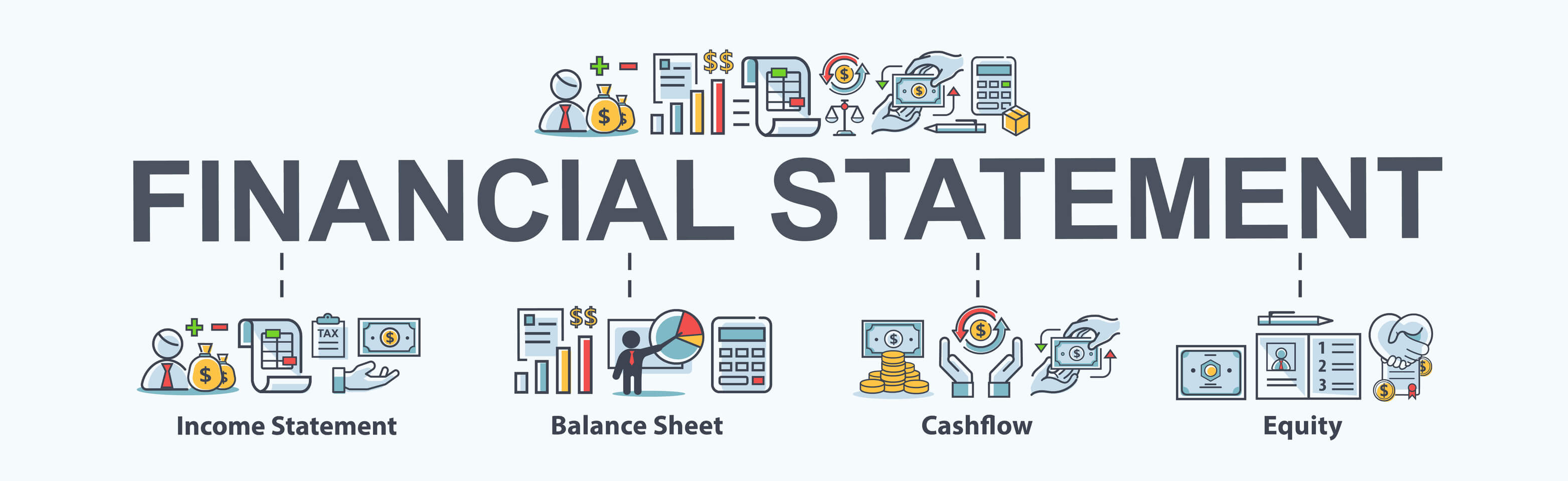
There are four main statements that you will need. These four statements are the income statement, the balance sheet, the owner’s equity statement, and the cash flow statement. Every business owner must understand all four of these statements and the information they provide.
The Income Statement
The income statement helps investors and lenders the idea of your business’s performance over a specific timeframe. The income statement is also known as a profit and loss statement (P & L) or revenue and expense statement. It shows investors and lenders your business’s nonoperating and operating expenses and revenue, no matter what it is called.
A person will share the business’s income statement to help potential investors and lenders understand how your business performs and whether the investment would be a good one.
The Balance Sheet
The balance sheet is also known as a statement of net worth or a statement of financial position. The balance sheet is based upon the equation assets = equity + liability. This statement will show investors and lenders your business assets, liabilities, and equity. It also provides them with the overall position of your business over a specific timeframe. Generally, the balance sheet is used to help your accountant calculate financial ratios.
The balance sheet is perhaps the most commonly shared financial statement because it gives a great overview of its financial position. It also quickly gives investors and lenders an idea of whether financing your business is a safe and minimal risk.
The Cash Flow Statement
The cash flow statement is also known as a statement of cash flow or a statement of financial position changes. The cash flow statement is used by investors or lenders, and the business owner and accountants to see whether the business generates enough cash to meet obligations and operating expenses. In other words, it gives everyone an understanding as to how the business is managing its cash flow.
The cash flow statement is crucial for understanding the business’s ability to pay bills, accounts payable, and meet payroll and inventory demands. This statement should not be confused with the owner’s equity statement. This is the money used from profits to finance the business’s daily operations and is not an investment.
The Statement of Owner’s Equity
The statement of owner’s equity is also known as the statement of changes in equity or a statement of shareholder’s equity. This statement specifically shows profits and earnings that are being retained by the business and not distributed to shareholders. These earnings are generally used to reinvest in the company, pay off debts, or finance business growth.
This statement is generally used to give an idea of the financial stability and health of a business. It shows if a business can meet financial and operating needs. All done without requiring new contributions of capital from the owners or shareholders.
Conclusion
These very important financial statements will be used in multiple ways. They will be used when seeking investors or trying to obtain business loans. They are also used after a business is established to give shareholders, possible investors, and lenders an assessment of the business’s financial aspects. It is essential that these four financial statements be accurate and up kept. These four financial statements can be the difference between your company receiving funds and financing and going out of business.
About Complete Controller® – America’s Bookkeeping Experts Complete Controller is the Nation’s Leader in virtual bookkeeping, providing service to businesses and households alike. Utilizing Complete Controller’s technology, clients gain access to a cloud-hosted desktop where their entire team and tax accountant may access the QuickBooks™️ file, critical financial documents, and back-office tools in an efficient and secure environment. Complete Controller’s team of certified US-based accounting professionals provide bookkeeping, record storage, performance reporting, and controller services including training, cash-flow management, budgeting and forecasting, process and controls advisement, and bill-pay. With flat-rate service plans, Complete Controller is the most cost-effective expert accounting solution for business, family-office, trusts, and households of any size or complexity.