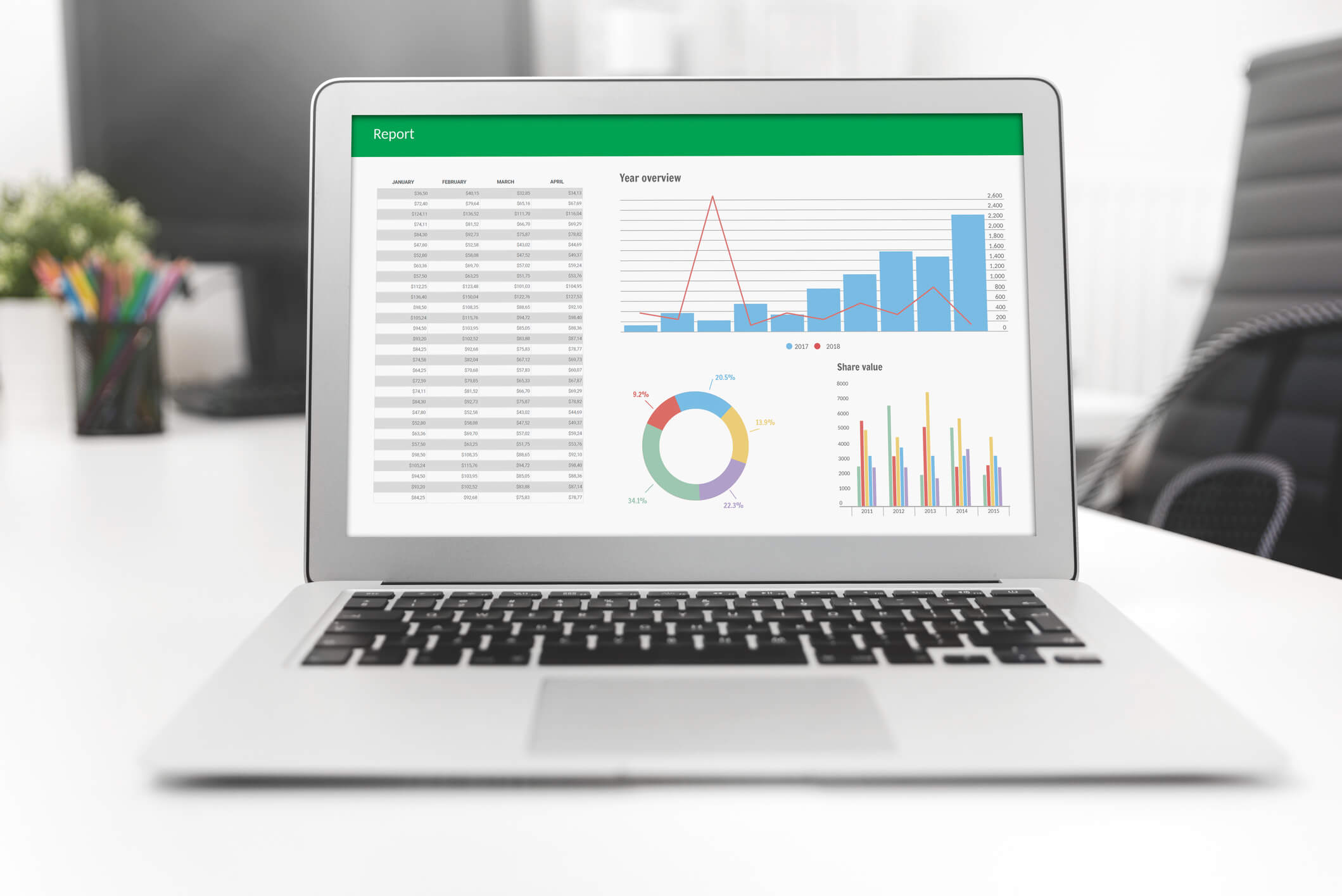
In the span of just a few decades, information technology (IT) has radically transformed the global marketplace, ushering in an era of unprecedented efficiency, innovation, and accessibility. From the way products are designed and produced to how they are marketed and sold, IT has reshaped every facet of the business landscape. This transformation is not just about the digitization of processes but a complete overhaul of business models, consumer behavior, and market dynamics.
Unveiling Efficiency and Innovation
One of the most significant impacts of IT on the market has been the dramatic increase in operational efficiency. Automated processes, powered by sophisticated software and algorithms, have replaced manual tasks, reducing human error and increasing speed. For instance, Amazon’s use of robots in their warehouses has reportedly cut operating expenses by approximately 20%, according to a report by MWPVL International. This automation streamlines operations and allows businesses to scale rapidly, meeting the demands of a global customer base without a proportional increase in costs.
Moreover, IT has been a catalyst for innovation, fostering an environment where new products and services can be developed and deployed at an unprecedented pace. The rise of cloud computing exemplifies this, enabling startups to access high-powered computing resources without the need for significant capital investment. Consequently, this has democratized the ability to innovate, leading to a surge in tech startups and a more dynamic market.
Revolutionizing Sales and Marketing
Perhaps nowhere is the impact of IT more visible than in sales and marketing. The advent of e-commerce platforms has fundamentally altered how businesses sell products and how consumers purchase them. In 2020, e-commerce sales accounted for 18% of all retail sales worldwide, a figure that is expected to reach 22% by 2023, according to Statista. This shift to online shopping has forced traditional retailers to adapt, creating a more competitive and diverse marketplace.
Social media and digital marketing have also transformed how companies engage with their customers. With over 4.2 billion social media users worldwide, platforms like Facebook, Instagram, and Twitter have become indispensable marketing tools. These platforms offer unparalleled targeting capabilities, allowing businesses to reach specific demographics precisely. As a result, marketing has become more efficient and effective, with digital ad spending surpassing traditional ad spending for the first time in 2019, according to eMarketer.
Enhancing Customer Experience and Satisfaction
Information technology has also revolutionized the customer experience. Today, consumers expect personalized interactions, seamless transactions, and prompt customer service—expectations that are increasingly being met through IT solutions. For example, chatbots and AI-driven customer service platforms can provide 24/7 support, answering queries and resolving issues in real time. This improves customer satisfaction and builds loyalty, which is critical in today’s competitive market.
Furthermore, big data analytics has given businesses unprecedented insights into customer behavior, preferences, and trends. By analyzing large datasets, companies can tailor their products, services, and marketing strategies to meet their target audience’s needs better. This level of personalization was unimaginable in the pre-digital era and has become a keycompetitive advantage for businesses leveraging IT effectively.
Bridging the Digital Divide
IT has also played a crucial role in making the marketplace more inclusive. By lowering barriers to entry, technology has enabled small businesses and entrepreneursworldwide to compete on a global stage. Online marketplaces like Etsy and Alibaba have provided platforms for artisans, manufacturers, and retailers to reach international customers without the need for a physical presence or substantial marketing budgets.
Moreover, e-learning platforms and online resources have democratized access to knowledge and skills training, empowering individuals to participate in the digital economy. This has spurred innovation and contributed to economic growth and job creation, particularly in developing countries.
Looking Ahead: The Future of IT in the Market
As we look to the future, it is clear that information technology’s influence on the market will only continue to grow. Emerging technologies like blockchain, the Internet of Things (IoT), and artificial intelligence (AI) promise to further disrupt traditional business models, creating new opportunities and challenges. For instance, blockchain has the potential to revolutionize supply chain management, offering transparency and security that could significantly reduce fraud and inefficiencies.
In conclusion, information technology’s impact on the market has been profound and multifaceted.By increasing efficiency, driving innovation, transforming sales and marketing, enhancing customer experience, and bridging the digital divide, IT has improved the market. As businesses and consumers continue to navigate this digital landscape, the potential for further transformation remains boundless, promising a future where the marketplace is more dynamic, inclusive, and innovative than ever before.
About Complete Controller® – America’s Bookkeeping Experts Complete Controller is the Nation’s Leader in virtual bookkeeping, providing service to businesses and households alike. Utilizing Complete Controller’s technology, clients gain access to a cloud platform where their QuickBooks™️ file, critical financial documents, and back-office tools are hosted in an efficient SSO environment. Complete Controller’s team of certified US-based accounting professionals provide bookkeeping, record storage, performance reporting, and controller services including training, cash-flow management, budgeting and forecasting, process and controls advisement, and bill-pay. With flat-rate service plans, Complete Controller is the most cost-effective expert accounting solution for business, family-office, trusts, and households of any size or complexity.
Freelancing is a vast and open field, which means that the term freelancing is not bound to a specific profession or active type. All types of professionals, such as engineers, marketing professionals, chefs, writers, logo designers, graphic designers, copywriters, voiceover actors, and many more, can be freelancers and work part-time at different companies.
More than fifty-seven million Americans freelanced in 2019, and now, more than 50% of Gen Z are deciding to work as freelancers. In 2020, after the rise in unemployment due to the pandemic, many people switched to the freelancing field.
In this age, even businesses are getting comfortable with the trend of hiring freelancers. It is an advantage for companies to hire freelancers as they don’t need to provide them with the health and other benefits they provide to their full-time employees. The most significant advantage for people to freelance is that there is no tax deduction on freelancers’ pay, and they get the total compensation themselves.
Other benefits include being independent over their working hours, choosing their clients, and controlling how much they want to work and how much workload they can bear. Freelancers also outsource their tasks from different regions, which means that even non-Americans can work for American companies, and their way of communication is usually the Internet.
The fifty-nine million Americans who freelance generate $1.2 trillion in annual earnings, making more than $20 thousand per year on average for each freelancer.
Due to no tax deductions, some freelancers believe that their freelance accounting is not complicated. They pay little to no attention to it, which is wrong as freelance accounting involves many different little things. Freelancers or self-employed people need to create a proper accounting system for their business and keep track of the income and expenditure they are receiving and paying. The basic accounting all freelancers and self-employed should know and follow are:
Keep your personal and professional accounts separate. It is advisable to keep these two accounts separate strictly. You can track your income and expenses, which are not confidential, and calculate the self-employment tax to ensure that you have that money at the time of the scheduled tax payment. Make sure that you open a separate business account when you start freelancing.
Stay organized. Save all the receipts and invoices to avoid being overcharged in taxes. You can also introduce a digital system in your business, allowing you to keep digital copies of receipts instead of stacking a pile of paper receipts.
Pay attention to the necessary financial documents.
Financial records are slightly different for freelancers; they include Form W-9, Schedule C and SE (Form 1040), Form 1040-ES, and 1099 Forms.
Form W-9 is a form that freelancers provide to the clients they are currently working with, including your Social Security number or Taxpayer Identification Number, to inform the IRS of their payments to you.
Schedule C is a form for self-employed people that includes the profits and losses your business makes for your tax paying. To fill out this form, freelancers need to calculate the cost of goods, gross profits, and expenses—Schedule SE in the form of self-employment tax.
Freelancers are only required to fill out Form 1040-ES to generate over a thousand dollars of tax. These types of taxpayers are supposed to pay taxes four times a year instead of once.
There are two types of 1099 Forms, 1099-MISC and 1099-K. Your clients use these forms to report the total amount you collect during the tax year. Clients send freelancers or self-employed the 1099-MISC form when they deliver $600 or more in a single year. They file this form with the IRS and then send it to you. The 1099-K form is for freelancers or self-employed who accept credit card payments. But freelancers only receive this form if they have taken more than twenty-thousand dollars and have made over two hundred transactions.
About Complete Controller® – America’s Bookkeeping Experts Complete Controller is the Nation’s Leader in virtual bookkeeping, providing service to businesses and households alike. Utilizing Complete Controller’s technology, clients gain access to a cloud platform where their QuickBooks™️ file, critical financial documents, and back-office tools are hosted in an efficient SSO environment. Complete Controller’s team of certified US-based accounting professionals provide bookkeeping, record storage, performance reporting, and controller services including training, cash-flow management, budgeting and forecasting, process and controls advisement, and bill-pay. With flat-rate service plans, Complete Controller is the most cost-effective expert accounting solution for business, family-office, trusts, and households of any size or complexity.
Accounting is the backbone of your investments, transactions, business, and trades. Two types of accounting exist in the world of: digits and money. One is accrual, and the other is the cash accounting method. Both are just a bit different from one another. You might be wondering what exactly is meant by both terms. Let’s clarify it.
Accrual Accounting
The accrual method of accounting is beneficial as it provides a complete picture of the company’s incoming and outgoing cash. Regardless, investors use these methods to solidify the business’s existence much longer than cash accounting. A few pros and cons of accrual accounting that can help you along your trading journey are listed below:
Pros of accrual accounting
We have listed some advantages that might help you to choose between accrual and cash accounting methods for your business:
It makes business planning simple
We are all equally knowledgeable about the wisdom that business is not an easy task to begin and handle. Accrual bookkeeping methods can help you get through more efficiently. You can maintain secure data about revenues, profits, and expenses in a brief period. Storing your financial data according to the accrual method will help your business be organized.
Allows you to save money more and more
Once you start pinning your credit score and financial statements according to accrual accounting, you will see a visible decrease in the over-spending habits you once owned. It will amazingly increase your savings, decreasing your spending.
Investors’ prior accrual accounting
Technically speaking, business accounts under the umbrella of accrual accounting are unsurprisingly more organized and strengthened than cash accounting methods.
Cons of accrual accounting
Every technique, way, and thing has some drawbacks as well. The disadvantages of the accrual method of accounting are aligned below:
Demands monthly audits
As the accrual method is convenient for firms operating on a large scale, its precise auditing cycle requires a month to complete on a minimum scale. However, the transaction detailing reports are filed frequently to ensure that no credit details skip the records.
Reporting and racking require an entire team
Accrual accounting can be challenging for small businesses as recording and tracking it requires an entire crew. Small business owners might not be able to afford it, so cash accounting would be much more suitable for them.
Pay taxes on unreceived cash
It can be the most sedate drawback in some cases. You are required to clear your tax dues on the payment that has not been received or is still pending. Make sure you take measures to urge the customer to release your payment on time or even before time.
Cash Accounting
The dealings and receiving confined with the in-hand cash are cash accounting. Cash is the pawn that can be a checkmate for you and your business. There are no second thoughts about the fact that, along with plenty of benefits, cash accounting also has a bit of drawbacks that can startle your business foundation.
Pros of cash accounting
Cash accounting methods are used mainly by businesses that operate on a relatively small scale. Some of the aces of cash accounting are listed below:
Shows the on-hand cash of your business
Cash is the head of business, and the cash flow is crucial to maintaining it. One of the most measurable benefits of cash accounting is that it helps you interpret how much cash you have saved and spent in a specific time.
It prevents you from making predictive business decisions
Cash accounting methods can save you from making decisions that can be risky for your mature and established business. The plan of action you align for your trade is more practical, with minimum chances of potential financial loss.
Easy to record
The financial data, transaction details, and credit scores are simple to understand and record with the cash accounting method; the method uses expenses paid out and revenues earned. Also, you do not need to hire professional financial experts to align the record of whatever you debit or credit.
Cons of cash accounting
Cash accounting also has some downsides that can be a bit challenging for the business you run.
Debts slip out of mind
In some cases, you might miss out on one or maybe two customers who have not cleared their payments. Remember to write down each detail to avoid financial losses.
Over-spending becomes more frequent
When businesses fail to track liabilities closely, you assume that you have much more money to spend than you have. Such unconsciousness can cause significant damage to you and your business.
About Complete Controller® – America’s Bookkeeping Experts Complete Controller is the Nation’s Leader in virtual bookkeeping, providing service to businesses and households alike. Utilizing Complete Controller’s technology, clients gain access to a cloud platform where their QuickBooks™️ file, critical financial documents, and back-office tools are hosted in an efficient SSO environment. Complete Controller’s team of certified US-based accounting professionals provide bookkeeping, record storage, performance reporting, and controller services including training, cash-flow management, budgeting and forecasting, process and controls advisement, and bill-pay. With flat-rate service plans, Complete Controller is the most cost-effective expert accounting solution for business, family-office, trusts, and households of any size or complexity.
After listening to many entrepreneurs present their business projects, I have seen specific errors committed with an exaggerated frequency. Unfortunately, good ideas do not survive bad presentations. As Aristotle said 2,300 years ago, “Knowing how to express an idea is as important as the idea itself.” No matter how good your project is, it will go unnoticed if you do not know how to sell it.
Next, I share the errors that I have identified with a more significant potential to blow up your presentation. Avoiding them does not imply the success of your production, much less. On the other hand, incurring any of them will lead your presentation to the most resounding failure.
You Have Not Yet Heard Who Your Audience Is
Throughout your business venture, you will speak to at least three different audiences: potential clients, partners, or investors. Although you always have the same project, you do not always emphasize the same aspects.
You will usually get the opportunity to speak to a single investor or a small group briefly. You must investigate them thoroughly to know their attitudes on social networks or collaboration platforms, personal investment preferences, industry knowledge, and investment profiles. If you talk to the wrong investor, you will both waste your time.
You Do Not Listen to the Investor
Investors will look for and find flaws in your project. Even if it is viable, your project may not be viable, the business model may still be immature, your growth estimates may be unfounded, or your business may lack scalability. They will help you discover holes in your business and improve it.
Pay special attention to investors’ questions. Many are logical clues or concerns that allow the presentation to pivot toward your needs. Do not act as if you are breaking your speech or trying to break free quickly. Please take advantage of their questions to build on them. Talk, do not just look to finish your pitch.
You are Not Clear About Your Goal
Do not confuse the investor with a user. You do not have to explain the inner workings of your project to exhaustion. Your goal is not to make a client but to get investment. And you will not get it in the first encounter.
In the first presentation, your goal is not to get funding to move forward with your project but to arouse enough interest in the investor to arrange a second appointment. It is not about telling everything but about awakening the desire for more. A presentation to investors is an act of seduction.
You Talk More About Your Product or Service than About the Business Model
You’re so passionate about your idea that you talk more about it than how you will make money. Remember that the investor looks to multiply his investment and a good exit, not how to use your technology.
Please speak to the investor in his language: money. Explain how your $100,000 will grow by X amount throughout four years. Most investor questions will aim to clarify your business model. The simpler the explanation of your business model and the better meditated you take it, the more attractive it will be to the investor.
Do Not Tell the Investor What he Wants to Hear
Professional investors want you to tell them clearly and simply at least ten things:
What needs do you solve (problem)?
Who suffers and would be willing to pay to satisfy it (market)?
What is your solution, and how are you doing it already (project in progress)?
Who is already serving that market (competition)?
Why you are the right one to solve that problem and better than your competition (team).
How do you plan to earn money, and what will your costs be (business model)?
How will you get them to know about your existence and see you as the best service provider for that group (marketing and advertising)?
What have you done so far? What is your current situation, and what are the prospects for the near future (roadmap)?
What do you need to move forward (investment)?
How will the investor recover his money multiplied (exit)?
The biggest mistake is going to the presentation without a transparent business model.
You’re Not Going to the Point
Typically, you will have very little time to talk to investors, at most 15 minutes. Eliminate unnecessary details and focus on what the investor wants to hear. Do not talk about what interests you but what interests your audience.
Enter the ten points above in your presentation and count them briefly and concisely. Do not overwhelm the audience with neat and unnecessary details. Remember that your goal is to get the second appointment—an account only helps understand your project and awakens interest.
You Think Your Idea is the Most Important
Ideas are worth nothing. You are the worthy one. Investors often invest in people more than in the specifics of a project. The investor trusts a team capable of carrying out a business idea, not the concept itself. He wants to verify your capacity to develop the idea and execute it.
To inspire confidence in your abilities, do not limit yourself to showing off your chevrons (bachelor’s degrees, master’s degrees, doctorates) and trophies (Founder and CEO in startup X, advisor in startup Y). Make clear what your bet is and what you have already done. Come with a project in progress; do not go with a PowerPoint.
You Lie More than You Speak
The investors seek reasons not to invest during your presentation. Please do not give them any. Do not even think of saying things like: “We have no competition,” “We are going to buy Google,” “Nobody has done anything like this before,” or “We are the best team,” and do not mention the Chinese!
It is essential to reflect passion and believe in your project, but not at any price. Do not make fancy growth forecasts or projections that nobody believes. They will detract credibility from you and your entire project. The monthly data to date, such as users, traffic, sales, etc., are much more credible than your forecasts and are the best way to show that your product is in demand. It transmits intelligent optimism.
Your Slides are a Disaster
Some PowerPoints look like Excel spreadsheets on the screen: transparent slides full of text, tiny tables, indecipherable graphics, lack of structure and organization, etc. Others look like multimedia encyclopedias: they pretend to tell everything, force you to read the transparent slides while looking at the screen instead of the faces of your audience, abuse PowerPoint with colorful but tiresome effects, and perform unnecessary demos.
Do not overwhelm or bore the investor with such PowerPoints. They may not interrupt you out of politeness, but they will have stopped listening to you long before you finish speaking. Put less weight on your transparency and more on talking with the investor. PowerPoint is an aid for communicating the fundamental ideas of your project and, from there, starting an enriching dialogue.
You Lack Passion and Conviction in Your Project
The investor wants to see a person involved in his project. You will not invest in part-time entrepreneurs who work in a bank in the morning and undertake in the afternoons, waiting for the investment to jump into the pool.
Your proverbial language (tone of voice, volume, rhythm, phrases, pauses) and body language (gestures, look, posture, movement) communicate as much as your words. Maybe your ideas were clear, and your words conveyed confidence, while the second conversation (non-verbal) conveyed insecurity and nervousness. Both messages, transmitted through verbal and non-verbal exchanges, must be consistent.
About Complete Controller® – America’s Bookkeeping Experts Complete Controller is the Nation’s Leader in virtual bookkeeping, providing service to businesses and households alike. Utilizing Complete Controller’s technology, clients gain access to a cloud platform where their QuickBooks™️ file, critical financial documents, and back-office tools are hosted in an efficient SSO environment. Complete Controller’s team of certified US-based accounting professionals provide bookkeeping, record storage, performance reporting, and controller services including training, cash-flow management, budgeting and forecasting, process and controls advisement, and bill-pay. With flat-rate service plans, Complete Controller is the most cost-effective expert accounting solution for business, family-office, trusts, and households of any size or complexity.
Many businesses, huge companies, and corporations use Microsoft Excel and its spreadsheets. One of the most common uses of the Excel spreadsheet is in a company’s accounting system.
Without any doubt, it is a fact that Microsoft Excel has become the most crucial computer program in workplaces worldwide. Businesses use Excel in their accounting systems because they can perform complex modeling in minutes with Excel. The usage of Excel spreadsheets in accounting is widespread. You can find evidence of this at any business where there are proper and large accounting systems. Large firms use Excel to create budgets, forecasts, and plans for the company. Some accountants also take short courses or classes to learn about Excel and its advanced features to make it work with accounting and financial systems.
Excel allows users to do basic mathematics, and if you pair it with advanced functions such as VLOOKUP, INDEX-MATCH-MATCH, and pivot tables, you can do many complicated tasks and calculations. This is why many businesses and accountants believe that using Excel for a company’s accounting system is beneficial and should be used in all industries, large firms, and corporations.
Though it may seem like a good idea for large businesses to use Excel in their accounting systems, it is not always an excellent idea for small businesses to adopt the practice of using Excel from large companies. The most significant disadvantage of using Excel today is that you always need manual help to record the financial data in Excel, and it takes up a lot of time and manual work, which will increase your costs. The best source of recording and analyzing data for small businesses is suitable and tailored accounting tools for their accounting systems.
Problems small businesses might face while using Excel are:
You cannot predict cash flows using spreadsheets. One of the most significant aspects of any financial system is the cash flow statements, forecasts, and the proper skills to manage and balance it. Unfortunately, you cannot rely on Excel to predict cash flows, making the calculations complicated.
It creates considerable confusion and mistakes in your documents’ records. Unlike accounting tools and other software, Excel sheets cannot connect with other sources, such as emails and different sources that receive invoices and other data. Human error is possible, and anyone can miss one transaction in the records, which will result in a lot of messy problems.
It is not as convenient as it seems. Excel is worthy as long as you want to store your simple data somewhere. Still, when it comes to recording transactions in the general ledger and compiling financial statements like balance sheets, income statements, and cash flow statements, you will have trouble keeping up with them in the Excel sheets. Suppose you are trying to focus on a specific category in your data. In that case, you will not expand that particular category, as Excel only consists of rows and columns. It does not store any extra data within the rows or columns accessed when clicking the type.
It takes up too much of your time. Crunching numbers manually in the Excel spreadsheet takes up a lot of unnecessary time. Considering accounting software can manage these tasks much quicker, it is just a waste of time. Usually, businesses follow the double-entry transaction system, meaning your staff will have to record the same data in Excel not once but twice.
Small businesses are not advised to use Excel sheets for their accounting systems as they are far more complicated than an Excel sheet can be calculated or analyzed. Accounting tools and software are the best sources for performing all your financial and accounting activities. You can still use Excel for other uses, such as managing the data of your employees, reporting performance, HR planning, project management, and administrative and managerial duties.
About Complete Controller® – America’s Bookkeeping Experts Complete Controller is the Nation’s Leader in virtual bookkeeping, providing service to businesses and households alike. Utilizing Complete Controller’s technology, clients gain access to a cloud platform where their QuickBooks™️ file, critical financial documents, and back-office tools are hosted in an efficient SSO environment. Complete Controller’s team of certified US-based accounting professionals provide bookkeeping, record storage, performance reporting, and controller services including training, cash-flow management, budgeting and forecasting, process and controls advisement, and bill-pay. With flat-rate service plans, Complete Controller is the most cost-effective expert accounting solution for business, family-office, trusts, and households of any size or complexity.
Technology and innovation are crucial to the growth and success of any business. Operating a business takes drive, intelligence, and the use of every tool available to you. Therefore, innovation has to be part of your business from the beginning.
Innovation has been a part of the world since the beginning of time. Every modern convenience we have comes from someone innovating. When owning and operating a business, whether you or someone in a similar industry, taking on innovation will ensure that your business will thrive. Here are three innovations that will help your business become successful.
Product Innovation
Product innovation can involve the invention of a new product or advancements in an existing product. Innovation must be central to a business based on a product or multiple products.
Innovation can be driven by consumer demand, industry advances, or the fulfillment of a need. Necessity is considered the mother of invention. However, it is the mother of advancements, improvements, and new products for product innovation.
Business owners can’t shy away from updating their products when it comes to growth. However, in some cases, the original product may not need advancement or change, so you also have to understand when to keep a product as is. In those cases, innovation will need to come through new products that maintain the brand’s integrity.
Process Innovation
Process innovation is the advancement of processes used in a business’s operation. Operations could include production, administration, sales, or marketing. Changes in the equipment and technologies used in production (including applications used in product design and development) and improvements in the tools can improve productivity and increase revenue.
Also, updates to software systems used to assist in the supply chain and logistics system, changes in the tools used to market and manage your product, and approaches used for accounting and customer care are more examples of process advancement.
While innovation and changes to the process will benefit the customer, the difference is internal and will make overall business operations easier for the entire business staff.
Business Model Innovation
Business model innovation is the most difficult because it provides a company with significant improvement criteria. Sometimes, the skills or systems that have been optimized to make a business competitive and sustainable become the priorities for restructuring.
These shifts will threaten aspects of the company’s branding and clash with market values or commitments in certain circumstances. Product and process progress may be gradual, while business model innovation is disruptive, risky, and revolutionary.
Businesses such as Uber, Airbnb, and Spotify used business model innovation to break the mold of how business models were expected to work. They are excellent examples of fast-moving businesses that were able to challenge age-old markets (taxi service, hotel stays, and music) by tweaking or upending their industry’s traditional business model.
Both existing businesses and startups can modify their business models when developing an initial concept. These innovations can result in more significant revenue and overall success in well-established industries.
Historic Innovation Examples
Coca-Cola implemented innovation in its product in 1985 during an epic taste battle with Pepsi. This change to their creation was an epic failure, resulting in the release of the original formula, Coca-Cola Classic. Eventually, this lapse in judgment was wholly erased when “New Coke” was phased out, and the original Coke product was back in its rightful place.
Henry Ford’s invention of the world’s first successful assembly line is one of the most prominent and pioneering examples of process innovation. This process streamlined vehicle assembly and reduced the time required to manufacture a single vehicle from 12 hours to 90 minutes.
Differential recently created a smartphone distribution dashboard for Grupo Bimbo. The baking corporation has 65 assembly facilities and 2.5 million distribution outlets spread over 22 countries and three continents.
Because of this worldwide spread of facilities, the mobile sales dashboard provides the team with easy access to sales statistics and other keyperformance indicators (KPIs) for each region, channel, and brand, eliminating guesswork in sales decisions and minimizing meeting times.
About Complete Controller® – America’s Bookkeeping Experts Complete Controller is the Nation’s Leader in virtual bookkeeping, providing service to businesses and households alike. Utilizing Complete Controller’s technology, clients gain access to a cloud platform where their QuickBooks™️ file, critical financial documents, and back-office tools are hosted in an efficient SSO environment. Complete Controller’s team of certified US-based accounting professionals provide bookkeeping, record storage, performance reporting, and controller services including training, cash-flow management, budgeting and forecasting, process and controls advisement, and bill-pay. With flat-rate service plans, Complete Controller is the most cost-effective expert accounting solution for business, family-office, trusts, and households of any size or complexity.
Many experienced individuals have stated and witnessed that paying off debt should be of utmost priority before you go on to building reserves for a retirement fund. Generally, the amount of interest the person is earning is higher than the interest rate that the individual gains. In the end, the individual loses in accumulating wealth.
If the person wants to expand the financial plans, one must attempt to make more money through other ancillary income streams. Of course, foregoing debt is not a prudent choice for any individual as it is bound to have an adverse impact on the credit score. Saving extra will help you turn dreams into reality, where the individual lives a debt-free life.
Suppose the person finds it challenging to make debt payments or cannot oblige financial payments. In that case, the answer is pure and straightforward before the individual plans to save and pay the debts off, including your mortgage finance facility. Uncertainty: many people have more obligations than their owned assets and accumulated wealth. Even if they spend all the money to pay off their debts, they will still leave behind some debt. It can be in the shape of the principal amount or the interest amount.
Therefore, paying off debts using savings is inherent to eliminating the highest-interest debts. Here are a few recommendations to help the person decide whether to pay debts first or save money.
What is the Perfect Time to Pay Off Debt?
If the individual has a high-interest rate debt of any finance facility, paying it down first and fast is essential. Ultimately, it will lead you to serenity and let you off from any financial problems. After cutting down all the interest payments, the person will get a guaranteed “return.” It is the same as earning more flipping houses than the savings amount in a bank account. As a business owner, one needs to identify the irrepressible income stream, formulate a budget per the income, and proportionate a specific part of your income in servicing the debt. It has been proven that paying conventional loans, such as student loans or mortgages, helps reduce interest costs.
Should One Save First or Pay Later?
Several reasons support the concept of “to save first and pay later,” but the topmost reason is to re-generate your emergency fund (after retirement). For instance, financial debt has a low interest rate, and saving first makes sense instead of paying off debt. However, if the individual does not have any savings, one needs to focus on paying debt first. In case of any emergency approach, “borrowing again” may become a turning point. Through employment or business, the person can access a retirement savings plan. While compounding interest payments, small individual contributions towards the retirement plan can increase savings.
Many people have more financial goals rather than having the money to spend. Therefore, choosing whether to pay off the debts or save that amount becomes tough. Nevertheless, if the person has insufficient savings, it will put the same person in a position of being pulled more into the sand of debt. However, the actual case is that the individual requires both things simultaneously. Therefore, the best possible solution could be to maintain a balance between paying off debt and savings. In addition, having enough savings amounts provides peace of mind. Many people find it easy to deal with any strategy, no matter how complex the financial situation is. They ensure they have maintained a proper balance between savings and paying off debts.
Whether to pay off debts or save for retirement depends on one’s financial condition. Nevertheless, balancing debt and savings will help one live a peaceful and stress-free life.
About Complete Controller® – America’s Bookkeeping Experts Complete Controller is the Nation’s Leader in virtual bookkeeping, providing service to businesses and households alike. Utilizing Complete Controller’s technology, clients gain access to a cloud platform where their QuickBooks™️ file, critical financial documents, and back-office tools are hosted in an efficient SSO environment. Complete Controller’s team of certified US-based accounting professionals provide bookkeeping, record storage, performance reporting, and controller services including training, cash-flow management, budgeting and forecasting, process and controls advisement, and bill-pay. With flat-rate service plans, Complete Controller is the most cost-effective expert accounting solution for business, family-office, trusts, and households of any size or complexity.
Generating income is no walk in the park. It would be best to work smartly and efficiently while having a knack for working even in the deadliest hours. Let’s face it: Our lives are trekking at a fast pace, and there’s no wonder people are confused and skeptical. In case you didn’t know already, there exist innumerable ways to generate income. However, it would help if you went out of your way to achieve that.
While you may think billionaires today only take the wrong route to earn passively, the idea is only orthodox and has lost its mark. Honestly, with the digital realm taking the world by storm, things have changed to quite an extent. People are soaring higher in returns and generating substantial income on even pea-sized investments. So, if you think you cannot earn passively without hopping in the wrong, you are probably mistaken. The sky is the limit, and you only have to widen your sights to see the opportunities available in disguise.
Go Digital with Your Services
The digital realm is no joke. It is taking the world by surprise and may only improve. If you think going digital with your services may not provide you with any benefits, you are mistaken. The truth is that the digital world is expanding, and from marketers to financial analysts, novel techniques help in all the right ways. So, you may as well hop on the bandwagon and see which domain works the best for you. You may even start a YouTube channel if you haven’t already figured out where your destination is. Chances are the outcomes might only work for you as a YouTube channel with all your right marketing tactics; the passive income may only take you by surprise.
Invest in the Real Estate Market
Investing in real estate has its benefits. You always have innumerable options, from providing you with a means to earn monthly income through rentals to generating passive income by selling a property. You may choose one and see the outcomes of having you rejoice through and through. Also, the opportunities are endless, with real estate taking a digital route. However, you may research your markets vigilantly and thoroughly. Study the nitty-gritty while ensuring you are not leaving any details to avoid all future challenges.
Expand Your Horizons
Let’s face it: if you don’t have the right attitude, not even your most impeccable strategies may work for you. In all honesty, you must hone your perspective, change your outlook on life, and create ways for yourself even in the most threatening hours of your day. Also, you may consider changing your mindset if you have noticed negative thoughts taking over you a lot lately. You can’t expect to grow if you are not limiting your emotions to yourself. I.e., Ensure your strategies don’t fall into your emotional biases. Instead, it should open doors for new opportunities for your professional career.
Adapt to the Latest Tools
Your adaptability to the latest tools opens new horizons for you. Your motivation expands, and you get to enjoy the substantial income you earn. In case you are still confused, let’s put it this way. If you have a knack for digital marketing, you may consider taking the digital route, i.e., you may start promoting your brand utilizing all the different digital platforms. From YouTube to Facebook, you may create suitable marketing campaigns for your brand and see what works for you. Also, with your strategic wisdom and knack for creativity, you may as well hop into marketing programs. The chances are that the outcomes might only take you by surprise.
Push Past Your Fears
Sure, we all have fears within ourselves. We are all scared, tired, and exhausted. If anything, we wish to walk beyond our comfort zones. However, because we are all skeptical about plunging into new domains, our days are mostly spent fretting over everything else.
Consequently, if you wish to generate robust income, you may ensure your fears are not keeping you reluctant at all! The results you will find to be a lot better than before. And if not anything, you may even find relief to your anxieties.
Bottom Line
Our world is changing, and so are the ways to function better. Growth has been quite vivid over the years, and while people are rejoicing, the pros and cons are keeping them concerned and worried. However, if you think you are not going in the right, even with all your potential, you may take on an opportunistic approach. Chances are you will be surprised by the fantastic results.
About Complete Controller® – America’s Bookkeeping Experts Complete Controller is the Nation’s Leader in virtual bookkeeping, providing service to businesses and households alike. Utilizing Complete Controller’s technology, clients gain access to a cloud platform where their QuickBooks™️ file, critical financial documents, and back-office tools are hosted in an efficient SSO environment. Complete Controller’s team of certified US-based accounting professionals provide bookkeeping, record storage, performance reporting, and controller services including training, cash-flow management, budgeting and forecasting, process and controls advisement, and bill-pay. With flat-rate service plans, Complete Controller is the most cost-effective expert accounting solution for business, family-office, trusts, and households of any size or complexity.
Unlocking Change Management: Key Theories for Success
Change management theories provide structured frameworks like Lewin’s three-stage model, Kotter’s 8-step process, and the ADKAR model to guide organizations through transitions, minimize resistance, and achieve successful adoption of new processes or systems.
As the founder of Complete Controller, I’ve navigated countless organizational transformations over two decades—from implementing cutting-edge cloud technologies to expanding our team across multiple states. Through these experiences, I’ve learned that successful change isn’t about forcing new systems on people; it’s about understanding human psychology and applying proven frameworks that turn resistance into enthusiasm. This article reveals the essential change management theories that have saved my clients millions in failed implementations, showing you exactly how to apply Lewin’s foundational model, master Kotter’s momentum-building steps, and leverage ADKAR’s people-focused approach to achieve adoption rates that exceed 90%.
What are change management theories and how do they drive success?
Change management theories are proven frameworks like Lewin, Kotter, and ADKAR that outline steps for implementing organizational change effectively, focusing on people, processes, and alignment.
They reduce resistance by addressing individual transitions, with models like ADKAR emphasizing awareness, desire, knowledge, ability, and reinforcement.
Organizations using structured change management theories see 59% higher effectiveness in implementation compared to ad-hoc approaches.
These theories apply to any scale, from quick fixes (Lewin) to complex transformations (McKinsey 7-S).
Success hinges on leadership commitment, communication, and monitoring, turning theory into measurable outcomes like faster adoption and sustained results.
Lewin’s Change Management Model: The Foundation of Modern Theories
Kurt Lewin’s three-phase model simplifies change management theories into Unfreeze, Change, and Refreeze stages, making it ideal for straightforward transitions in small to medium businesses.
This foundational theory remains relevant for its emphasis on preparation and stabilization. During my early days building Complete Controller, we used Lewin’s model to transition from desktop software to cloud-based systems—a shift that initially terrified our bookkeepers who feared technology would replace them.
Unfreeze: Preparing for disruption
The Unfreeze phase challenges the status quo by communicating why change is necessary and addressing fears directly. We held town halls where team members voiced concerns about job security and technical skills. By showing them how cloud technology would actually make their work more valuable—freeing them from data entry to focus on strategic client advisory—we melted resistance into curiosity.
Key Unfreeze activities include:
Presenting compelling data about market shifts or competitive threats
Creating safe spaces for employees to express concerns
Building psychological readiness through transparent communication
Demonstrating the risks of maintaining current practices
Change: Implementing the shift
The Change phase executes the actual transition with clear guidance and continuous support. We implemented our cloud migration in phases, starting with volunteer early adopters who became internal champions. Their success stories helped skeptics see possibilities rather than problems.
Refreeze: Locking in gains
Refreezing solidifies new behaviors through updated policies, reward systems, and cultural reinforcement. We revised our performance metrics to reward cloud proficiency and client satisfaction scores, making the new way of working the only way forward.
Kotter’s 8-Step Change Model: Building Momentum for Large-Scale Change
John Kotter’s framework expands change management theories into eight actionable steps designed for transformations lasting over a year, focusing on urgency, vision, and sustained momentum.
At Complete Controller, we applied Kotter’s model during our expansion from regional to national operations—a complex transformation requiring new systems, processes, and mindsets across every department.
Create urgency and form a coalition
Starting with urgency means highlighting real risks of inaction. We analyzed how regional competitors were losing clients to national firms and presented this data company-wide. Then we assembled a guiding coalition including department heads, top performers, and influential team members who could champion change at every level.
Building an effective coalition requires:
Representatives from all key departments and levels
Mix of formal authority and informal influence
Shared commitment to the transformation vision
Regular meetings to coordinate efforts and maintain alignment
Develop vision and communicate relentlessly
Our vision painted a clear picture: “Complete Controller will be the trusted financial partner for businesses nationwide, delivering consistent excellence through standardized processes and local expertise.” We communicated this vision through weekly emails, team meetings, visual dashboards, and success stories—repeating it until everyone could articulate it naturally.
The Prosci ADKAR model targets personal transitions within change management theories, breaking success into Awareness, Desire, Knowledge, Ability, and Reinforcement phases.
This people-centered approach transformed how we handle client onboarding at Complete Controller. Rather than forcing a one-size-fits-all process, we recognized that each team member moves through change at their own pace.
ADKAR addresses five critical elements:
Awareness: Understanding why change is happening
Desire: Personal motivation to support the change
Knowledge: Information needed to change successfully
Ability: Skills to implement required behaviors
Reinforcement: Mechanisms to sustain the change
Scaling ADKAR for teams
We created individualized change plans using ADKAR assessments. Some team members struggled with awareness—they didn’t see why our old onboarding process needed updating. Others had awareness but lacked desire because they’d perfected the current system. By addressing specific gaps rather than applying blanket training, we achieved 95% adoption within three months.
Successful change starts with visibility. Let Complete Controller help you build it.
McKinsey 7-S and Other Alignment-Driven Change Management Theories
The McKinsey 7-S model aligns Strategy, Structure, Systems, Shared Values, Skills, Style, and Staff for complex changes requiring holistic organizational transformation.
Bridges’ Transition Model: Focuses on psychological transitions
Kübler-Ross Change Curve: Maps emotional stages of change
Nudge Theory: Uses subtle behavioral influences
Kübler-Ross change curve in practice
Understanding emotional phases helps leaders provide appropriate support. When we restructured our service delivery model, some team members experienced denial (“This won’t really happen”), anger (“Why fix what isn’t broken?”), and bargaining (“Can we keep some old processes?”). Acknowledging these emotions as normal—rather than resistance to overcome—helped people move toward acceptance faster.
Real-World Case Study: Procter & Gamble’s ADKAR Success
Procter & Gamble applied the ADKAR model during a global ERP rollout, focusing on employee awareness campaigns and reinforcement programs. Their systematic approach to individual change resulted in 95% adoption rates and $1 billion in operational savings over five years.
P&G’s success stemmed from treating change management as equally important as technical implementation. They invested heavily in communication, training, and reinforcement activities—recognizing that even the best systems fail without user adoption.
Why Most Change Initiatives Fail—and How Change Management Theories Fix It
Research shows 70% of changes fail due to poor communication and resistance, yet change management theories dramatically improve success rates through stakeholder engagement and systematic risk assessment.
Common failure points include:
Leadership declaring change without building buy-in
Focusing on processes while ignoring people
Underestimating time required for behavioral change
Declaring victory too early before changes solidify
Addressing resistance with nudge theory and bounded rationality
Smart organizations use subtle nudges rather than mandates. We increased adoption of our new project management system by making it the default option rather than requiring active choice. Understanding cognitive limits, we introduced features gradually rather than overwhelming users with full functionality immediately.
Your 90-Day Roadmap: Applying Change Management Theories in Small Businesses
Small businesses can adapt enterprise-level change management theories through this practical timeline tailored for resource-constrained organizations.
Weeks 1-4 (Assess/Unfreeze):
Conduct stakeholder analysis and readiness assessment
Build your change coalition from willing volunteers
Develop clear, compelling change vision
Begin awareness communications
Weeks 5-8 (Implement/Train):
Launch pilot programs with early adopters
Provide hands-on training and coaching
Gather feedback and adjust approach
Celebrate early wins publicly
Weeks 9-12 (Reinforce/Monitor):
Expand implementation to all teams
Monitor adoption metrics weekly
Address resistance with targeted support
Update policies and systems to support new ways
Conclusion
Mastering change management theories like Lewin, Kotter, and ADKAR transforms chaotic transitions into systematic successes. In my experience at Complete Controller, combining these frameworks with authentic leadership communication has consistently delivered adoption rates exceeding 90% while actually strengthening team morale. The key is selecting the right framework for your specific change—Lewin for simple process updates, Kotter for strategic transformations, ADKAR for people-centered changes. Start by assessing your current change readiness, then build your approach using these proven theories as your guide. Your team is capable of amazing transformation when you provide the right framework and support. For expert guidance on implementing change management in your financial operations, visit Complete Controller where our team helps businesses navigate transformations with confidence and clarity.
Frequently Asked Questions About Change Management Theories
What are the main change management theories?
The primary theories include Lewin’s 3-stage model (Unfreeze-Change-Refreeze), Kotter’s 8-step process, the ADKAR model (Awareness-Desire-Knowledge-Ability-Reinforcement), McKinsey 7-S framework, and the Kübler-Ross Change Curve, each addressing different aspects of organizational transformation.
How does Lewin’s change management model work?
Lewin’s model uses three stages: Unfreeze (preparing people for change by creating urgency), Change (implementing new processes or systems), and Refreeze (stabilizing and reinforcing new behaviors until they become standard practice).
What is the ADKAR model in change management?
ADKAR stands for Awareness, Desire, Knowledge, Ability, and Reinforcement—five sequential building blocks focusing on individual change as the foundation for organizational success, helping identify where people get stuck in the change process.
Why do change management theories emphasize communication?
Clear, ongoing communication builds trust, reduces resistance, and aligns teams around shared goals, with research showing that projects with excellent communication are 3.5 times more likely to succeed than those with poor communication practices.
How do you choose the right change management theory?
Match the theory to your change complexity and scope: use Lewin for quick operational fixes, Kotter or McKinsey 7-S for large-scale strategic transformations, and ADKAR when individual adoption is the primary challenge.
About Complete Controller® – America’s Bookkeeping Experts Complete Controller is the Nation’s Leader in virtual bookkeeping, providing service to businesses and households alike. Utilizing Complete Controller’s technology, clients gain access to a cloud platform where their QuickBooks™️ file, critical financial documents, and back-office tools are hosted in an efficient SSO environment. Complete Controller’s team of certified US-based accounting professionals provide bookkeeping, record storage, performance reporting, and controller services including training, cash-flow management, budgeting and forecasting, process and controls advisement, and bill-pay. With flat-rate service plans, Complete Controller is the most cost-effective expert accounting solution for business, family-office, trusts, and households of any size or complexity.
Jennifer BrazerFounder/CEO
Jennifer is the author of From Cubicle to Cloud and Founder/CEO of Complete Controller, a pioneering financial services firm that helps entrepreneurs break free of traditional constraints and scale their businesses to new heights.
Brittany McMillen is a seasoned Marketing Manager with a sharp eye for strategy and storytelling. With a background in digital marketing, brand development, and customer engagement, she brings a results-driven mindset to every project. Brittany specializes in crafting compelling content and optimizing user experiences that convert. When she’s not reviewing content, she’s exploring the latest marketing trends or championing small business success.
Data is becoming easily accessible and is easily distributed, making it harder to protect your intellectual property (IP) or product notions from theft and replication. Many startups do not prioritize the protection of intellectual property, and if it is compromised, it would not be easy to compensate for it. Whether you’re a multinational company or a startup, safeguarding your intellectual property should be one of your top priorities for your business.
What is Intellectual Property?
Intellectual property (IP) is all around you. You can’t see or touch it, but you likely own it if you own a business. Everyone talking about intellectual property, but what precisely does the term comprehend? Fundamentally, IP is any product or work that results from innovative thought. It’s a special kind of protection a business needs depending on what they want to protect. Examples are designs, artwork, manuscripts, website content, articles, blog posts, inventions, product names, business names, courses or online programs, or other original and personal info that aids your business.
If you come up with a fantastic idea, product, or design, you must ensure that no one else has access to it or the right to use it without your consent. The good news is that several federal and state laws secure IP.
How to Protect My Intellectual Property?
Follow some vital steps to guard your production’s valuable content, ideas, and products. These steps will lower your chances of dealing with intellectual property theft and give you protection even if someone steals your IP.
It is vital to secure your company’s intellectual property (IP). Those who have not tried to defend their intellectual property because they feel complicated and expensive lose intellectual property rights by ignoring to guard their designs and inventions. There are several different ways to secure it, including patent, trademark, copyright, industrial design, etc.
Keep Your Business Ideas a Secret
Until you have sufficiently protected your intellectual property, avoid discussing it with others unless they have signed a non-disclosure agreement. You must be careful with whom you trust. Never promote your idea in public, especially when working with partners. Sign a personalized non-disclosure contract and speak with a lawyer.
It is essential to know who you trust. You cannot trust everyone around you. Business ideas are a sensitive topic that you can’t share with everyone. People can either misuse that information or use it for themselves and their businesses.
Apply for a Trademark
As soon as you finalize your business name and logo for your project, register those trademarks immediately. Trademarks are mainly used to distinguish a business’s products and services from those of its competitors. They include a slogan, logo, jingle, sound, and shape.
Companies occasionally believe that patent protection is the only way to guard and protect themselves. Technology startups commonly ignore the worth of non-patent intellectual property. Though patents can be extremely valuable, it does not ensure that a firm’s product is the right product and will sell. Trade secrets, copyrights, cybersecurity policies, and trademarks can all be forms of IP that you can protect.
Invest
Remember, until and unless you have officially protected your intellectual property, anyone can take your idea and create it for themselves. Still, your chances of beating content and idea raids are so much higher if your intellectual property is secured.
Furthermore, you must secure your intellectual property in case of identity theft. Intellectual property is a sensitive topic, and you must share your business only with your close friends and people you can trust.
Summary
In conclusion, you probably have much more IP than you know. Protecting your intellectual property privilege does include finding a competent advocate to help you discover and register it, but making that investment now will pay off handsomely when building your Intellectual Property portfolio. It will help protect what is lawfully yours if any matters arise in the future. Thus, it is crucial to protect your intellectual property as it can be a source of many disputes, even at the governmental level.
About Complete Controller® – America’s Bookkeeping Experts Complete Controller is the Nation’s Leader in virtual bookkeeping, providing service to businesses and households alike. Utilizing Complete Controller’s technology, clients gain access to a cloud platform where their QuickBooks™️ file, critical financial documents, and back-office tools are hosted in an efficient SSO environment. Complete Controller’s team of certified US-based accounting professionals provide bookkeeping, record storage, performance reporting, and controller services including training, cash-flow management, budgeting and forecasting, process and controls advisement, and bill-pay. With flat-rate service plans, Complete Controller is the most cost-effective expert accounting solution for business, family-office, trusts, and households of any size or complexity.







 About Complete Controller® – America’s Bookkeeping Experts Complete Controller is the Nation’s Leader in virtual bookkeeping, providing service to businesses and households alike. Utilizing Complete Controller’s technology, clients gain access to a cloud platform where their QuickBooks™️ file, critical financial documents, and back-office tools are hosted in an efficient SSO environment. Complete Controller’s team of certified US-based accounting professionals provide bookkeeping, record storage, performance reporting, and controller services including training, cash-flow management, budgeting and forecasting, process and controls advisement, and bill-pay. With flat-rate service plans, Complete Controller is the most cost-effective expert accounting solution for business, family-office, trusts, and households of any size or complexity.