


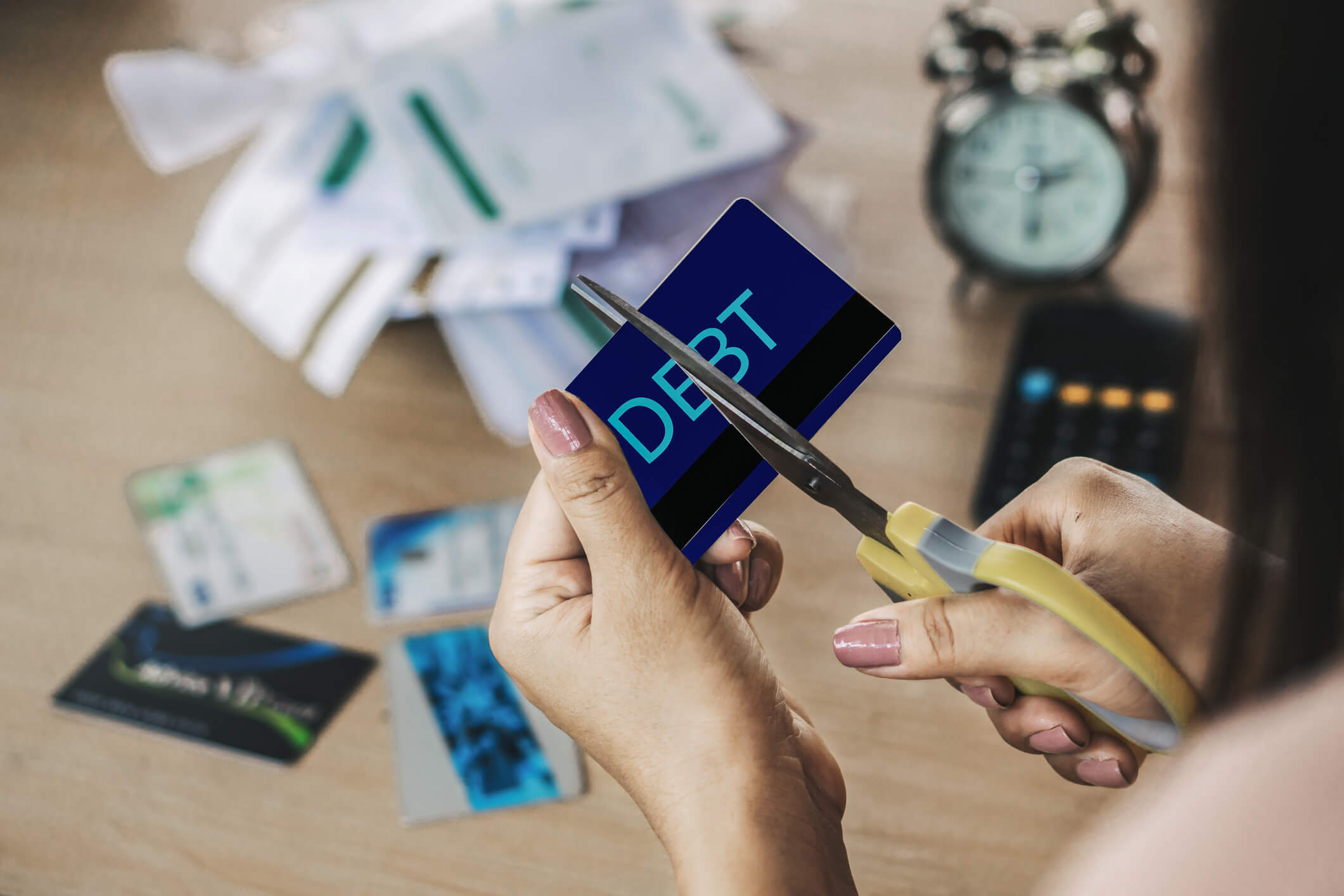
9 Ways to Avoid Credit Card Debt
(Practical Tips You Can Start Today)
Avoid credit card debt by building a realistic spending plan, paying your full balance every billing cycle, and keeping a cash cushion ready for surprises. The quickest way to stay out of trouble is simple: treat your credit card as a payment tool—never as extra income—and stop new charges the moment a balance feels hard to clear. Pair that discipline with a written budget, a payoff strategy if balances already exist, and a small emergency fund, and you have the foundation for lasting financial freedom.
Here is something that keeps me up at night: as of May 2024, the average APR on interest-charged credit cards hit 22.63%, up from 16.60% just five years earlier (Federal Reserve Bank of St. Louis). That means today’s balances snowball faster than they did a few years ago. Over my 20+ years leading Complete Controller, I have worked with thousands of business owners and families across nearly every industry—and I can tell you the pattern is remarkably consistent. In this article, I will walk you through the exact habits, budgeting methods, and payoff strategies that separate the people who master credit from the ones who get mastered by it. You will leave with concrete steps you can use this week.
How can you avoid credit card debt?
- Avoid credit card debt by spending only what you can pay off in full each cycle, budgeting deliberately, and keeping an emergency fund so surprises never push you back onto plastic.
- Build a written budget that separates needs, wants, savings, and debt payments so you always know what can safely go on a card.
- Use a debt payoff strategy—avalanche or snowball—if you already carry balances, and freeze new charges while you work the plan.
- Protect yourself with an emergency fund covering a few weeks to several months of expenses.
- Monitor your credit utilization and payment behavior, because those habits drive both debt risk and credit score improvement.

Why People End Up in Credit Card Debt
The most common path into debt is not one big purchase—it is repeated overspending, leaning on minimum payments, and using cards to plug everyday shortfalls. Plastic makes spending feel smaller than it is, which is why nearly every trusted source emphasizes tracking, budgeting, and paying balances in full (Equifax).
The Federal Reserve found that in 2023, 27% of U.S. adults used a credit card for basic living expenses they could not afford—and that number climbed to 38% for households earning under $50,000. That is a flashing warning sign, not a lifestyle choice.
Minimum payment traps
Minimum payments keep an account current, but they barely dent the principal. With APRs above 22%, interest can linger for years. My rule: if you cannot pay more than the minimum, stop swiping and revise the budget immediately.
How to avoid credit card debt before it starts
Set a monthly card limit equal to the amount already budgeted for predictable expenses. That keeps card use aligned with actual cash flow instead of treating available credit as spending power.
Create a Budget to Eliminate Credit Card Debt Risk
A written budget is the foundation of every serious debt-prevention plan. It creates a ceiling for card use and exposes overspending early. If you want practical templates and support, our small business bookkeeping team sees firsthand how a simple budget transforms both households and companies.
Budgeting methods that actually stick
You have options—pick one you will actually maintain:
- 50/30/20 method — 50% needs, 30% wants, 20% savings and debt payoff.
- Zero-based budgeting — every dollar gets a job before the month begins.
- Envelope-style categories — hard limits per category, no exceptions.
Financial literacy and credit utilization
People who understand APR, billing cycles, and due dates make fewer costly mistakes. Keeping your credit utilization well below your limit protects both your wallet and your credit score (Experian). A good target is staying under 30% of your available credit—lower if you are rebuilding discipline.
Use Payoff Strategies If You Already Have Balances
If balances already exist, the goal shifts from prevention to containment. The two most effective debt payoff strategies are:
- Debt avalanche method — target the highest interest rate first (saves the most money).
- Debt snowball method — target the smallest balance first (builds momentum fastest).
Choosing the best strategies to pay off credit card debt faster
Pick the method you will not quit. The avalanche saves more on interest; the snowball delivers visible wins that keep motivation alive (Investopedia). Either way, keep paying minimums on all cards, funnel extra cash toward one target, and freeze new charges until balances fall.
Credit card payoff calculator
Run your numbers through a payoff calculator before committing. Seeing how much interest you save by adding even $50 above the minimum is often the motivation people need to stay the course.
Build an Emergency Fund Strategy to Prevent Using Credit Cards
Emergency funds show up in nearly every credible source because they solve the number-one reason people fall back into debt: unexpected bills. Even a small starter fund reduces the temptation to charge car repairs, medical bills, or a broken water heater.
Start small—$500 to $1,000—then build toward three to six months of expenses. The Consumer Financial Protection Bureau’s savings tool is a great free resource for setting realistic goals.
Ways to stop accumulating credit card interest
The simplest fix is to stop carrying balances month to month. If a balance already exists, do not add new purchases to that card—every new charge accelerates interest on the entire balance.
Personal finance coaching
A coach or bookkeeper can spot spending patterns you miss on your own. For business owners especially, professional support becomes essential when personal and business cash flow start blending together—something I see far too often at Complete Controller.
Better Money Habits Start with Better Visibility. Know where your money is going before debt gets the final say. See how Complete Controller can help.
Watch the Habits That Keep You Debt-Free
Avoiding debt is not a one-time payment cycle; it is a repeatable habit set. Monitor accounts weekly, review statements line by line, and reconcile like a business would.
Debt management plan option
If debt already feels overwhelming, a nonprofit debt management plan (DMP) may be your smartest move. The National Foundation for Credit Counseling reports that a DMP consolidates multiple unsecured debts into one monthly payment, and certified counselors can often negotiate lower interest rates and waived fees—making payoff realistic when minimum payments will not cut it.
Interest rate reduction and DTI ratio
Call your creditors and ask for a lower rate—especially if you have a strong payment history. Also, keep an eye on your debt-to-income (DTI) ratio; when too much of your income services debt, savings and stability suffer.
Treat Personal Finances Like a Business
The strongest advice I give clients is this: manage your household money the way a well-run business manages its books. Review inflows, outflows, and recurring commitments monthly. Assign every dollar a category and a limit. If a category is full, the card stays in your wallet until next month.
This mindset is exactly what our team teaches through our cloud-based accounting services—because the same discipline that keeps books clean keeps households out of credit card debt.
Final Thoughts
Avoiding credit card debt comes down to three moves: build a realistic budget, use cards with intention, and keep a cash reserve for the unexpected. If you already carry balances, pick a payoff strategy, freeze new charges, and ask for help before the problem grows.
Here is what I have learned in two decades of leading Complete Controller: the people who win with credit are not the ones who earn the most—they are the ones who track spending, respect limits, and make a plan before stress takes the wheel. If you are ready to build better money systems for your household or business, my team and I are here to help. Visit Complete Controller to connect with our experts today.

Frequently Asked Questions About Avoid Credit Card Debt
What is the best way to avoid credit card debt?
Budget carefully, pay balances in full every cycle, and maintain an emergency fund so surprises never push you back onto plastic.
Is the debt snowball method better than the debt avalanche method?
Snowball wins on motivation with quick early payoffs; avalanche saves more money by targeting the highest interest rate first. Pick the one you will actually finish.
How much of my credit limit should I use?
Aim to keep utilization under 30% of your available credit—lower is better for both debt risk and credit score improvement.
Should I use credit cards for emergency expenses?
Only if you have no cash reserve and can pay the balance off quickly. A dedicated emergency fund is the safer, cheaper option every time.
What should I do if I am already in credit card debt?
Stop new charges, revise your budget, pay more than the minimum, and contact creditors or a nonprofit counseling program to explore rate reductions or a debt management plan.
Sources
- Board of Governors of the Federal Reserve System. (May 2024). Economic Well-Being of U.S. Households in 2023. https://www.federalreserve.gov/publications/2024-economic-well-being-of-us-households-in-2023-expenses.htm
- Consumer Financial Protection Bureau. Saving for Emergencies. https://www.consumerfinance.gov/consumer-tools/saving-for-emergencies/
- Consumer Financial Protection Bureau. (2026). How to Get Out of Debt. https://consumer.ftc.gov/articles/how-get-out-debt
- Equifax. (2026). Why Do People Have Credit Card Debt & How to Avoid It. https://www.equifax.com/personal/education/credit-cards/articles/-/learn/why-do-people-have-credit-card-debt/
- Experian. (2026). How to Avoid Debt. https://www.experian.com/blogs/ask-experian/tips-to-avoid-debt/
- Experian. What Is Credit Utilization? https://www.experian.com/blogs/ask-experian/what-is-credit-utilization/
- Federal Reserve Bank of St. Louis. (May 2024). Commercial Bank Interest Rate on Credit Card Plans, All Accounts (TERMCBCCALLNS). FRED. https://fred.stlouisfed.org/series/TERMCBCCALLNS
- Federal Trade Commission. (2026). How To Get Out of Debt. https://consumer.ftc.gov/articles/how-get-out-debt
- Investopedia. Debt Snowball vs. Debt Avalanche Method. https://www.investopedia.com/debt-snowball-vs-debt-avalanche-method-5113216
- MoneyLion. (2026). 10 Proven Budgeting Tricks to Stop Credit Card Debt. https://www.moneylion.com/learn/budgeting-tips-to-stop-credit-card-debt/
- National Foundation for Credit Counseling. (Accessed August 2026). Debt Management Plan (DMP). https://www.nfcc.org/resources/debt-management-plans/
- Quicken. (2026). Finances 101: 5 Ways to Avoid Credit Card Debt. https://www.quicken.com/blog/finances-101-5-ways-avoid-credit-card-debt/
 About Complete Controller® – America’s Bookkeeping Experts Complete Controller is the Nation’s Leader in virtual bookkeeping, providing service to businesses and households alike. Utilizing Complete Controller’s technology, clients gain access to a cloud platform where their QuickBooks™️ file, critical financial documents, and back-office tools are hosted in an efficient SSO environment. Complete Controller’s team of certified US-based accounting professionals provide bookkeeping, record storage, performance reporting, and controller services including training, cash-flow management, budgeting and forecasting, process and controls advisement, and bill-pay. With flat-rate service plans, Complete Controller is the most cost-effective expert accounting solution for business, family-office, trusts, and households of any size or complexity.



 Brittany McMillen
Brittany McMillen
Brittany McMillen