


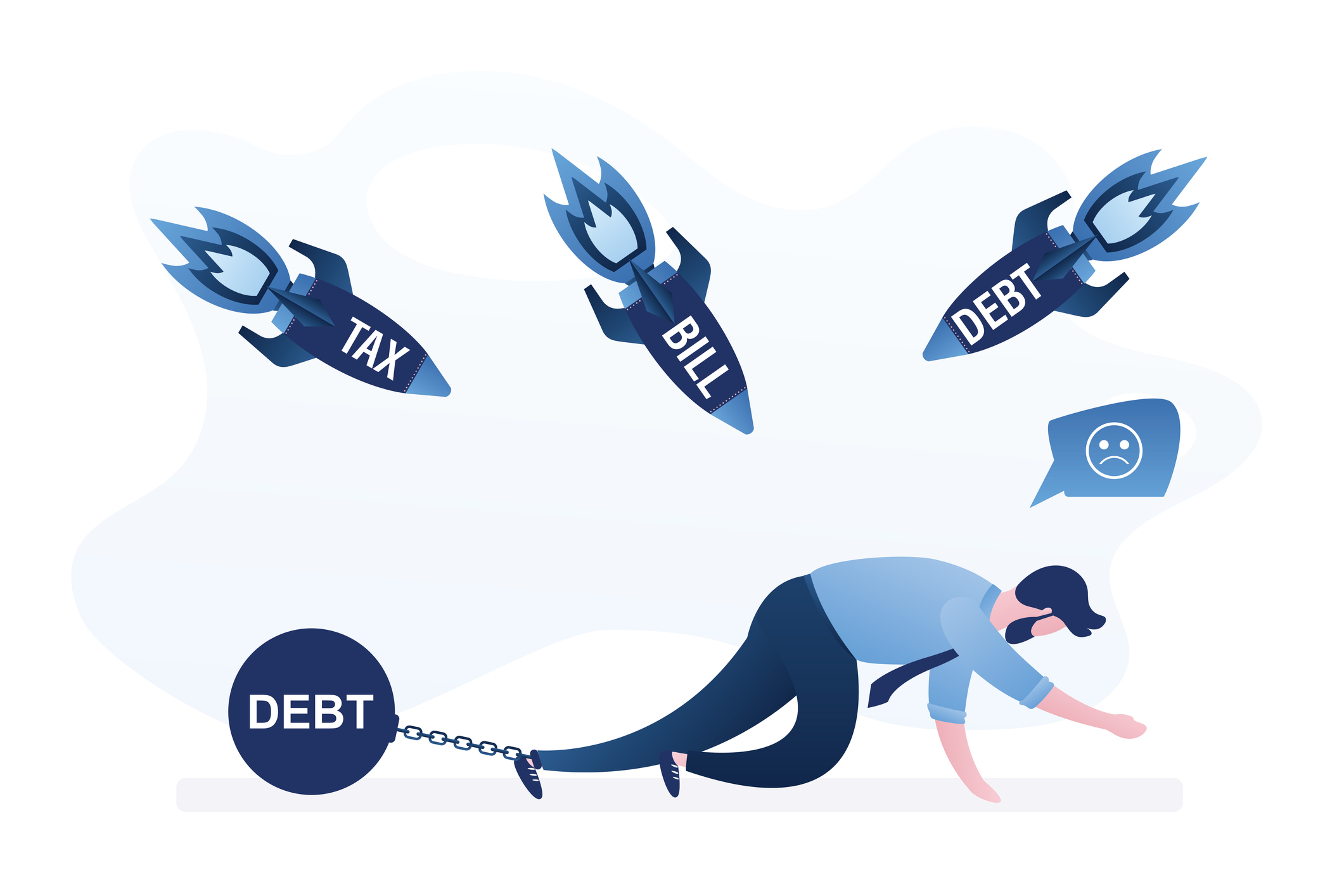
Top Reasons to Steer Clear of Debt and Build Wealth
The main reasons to avoid debt include eliminating interest payments that drain profitability, improving cash flow flexibility, reducing financial stress, and allowing you to build real assets instead of obligations. Unlike debt-fueled growth that requires constant payments and carries significant risk, debt-free wealth building creates a foundation of stability that compounds over time.
When I started Complete Controller over 20 years ago, I believed debt was a tool for growth—until I saw the pattern repeat across thousands of clients: the businesses thriving were those controlling their debt, not the other way around. Research shows people spend four times more with credit cards than cash, and the average American now owes $63,000 in debt. This article reveals the evidence-based reasons debt holds you back and shows you exactly how to build wealth without it, including the psychological impacts most financial advice ignores.

What are the real reasons to avoid debt?
- Debt eliminates interest payments that drain your profitability and personal cash flow
- Avoiding debt improves your credit score and financial flexibility without monthly obligations
- Debt-free growth enables investing capital into assets that appreciate rather than paying lenders
- Avoiding high-interest debt reduces financial stress and provides peace of mind that compounds
- Building wealth without debt allows 100% ownership and control of business and personal finances
The Interest Payment Burden Destroys More Than You Calculate
Debt math sounds reasonable until you factor in reality. Most people compare a 3% car loan to a 5% investment return and think borrowing makes sense. But that 5% investment return faces taxation—at a 25% tax bracket, your actual after-tax return drops to 3.75%, barely ahead of the loan rate.
For small business owners, this calculation becomes more devastating. Business debt typically runs 6-12% interest rates. A $200,000 business loan at 8% over 10 years costs approximately $95,000 in interest alone—money that could have gone directly into equipment, inventory, or expansion. That’s nearly 50% more than you borrowed, with no assets to show except the original items financed.
Hidden costs compound the problem
Beyond raw interest calculations lie transaction costs, mental burden, and opportunity costs. Making payments requires time and attention. Tracking multiple accounts creates complexity. The psychological weight of carrying balances affects every financial decision you make.
Research from the Federal Reserve reveals that households carrying debt report significantly higher stress levels and reduced financial satisfaction compared to debt-free households. This stress translates directly into impaired business decision-making—stressed business owners demonstrate reduced creativity and flexibility in strategic thinking.
Debt Fundamentally Changes Your Spending Psychology
Scientific research proves that people spend 12-18% more when borrowing money compared to paying cash. Brain imaging studies show credit cards activate the reward center of your brain—the striatum—driving greater purchasing through motivation rather than simply reducing payment friction.
This behavioral change extends beyond individual purchases. When you have access to credit, your brain perceives your financial capacity differently. You justify premium upgrades, extended warranties, and higher-priced options because the loan creates psychological distance between spending and paying.
Business spending amplifies the effect
For entrepreneurs, this psychology proves particularly dangerous. A $50,000 line of credit intended for growth often becomes a buffer for operational inefficiencies. Instead of optimizing processes or cutting waste, businesses with easy credit access maintain outdated practices longer.
The data confirms this pattern: 80% of new cars are financed while only 38% of used cars require loans. This dramatic difference demonstrates how credit availability drives consumption beyond what buyers would choose with cash constraints.
The “Invest the Difference” Strategy Fails in Practice
Financial advisors promote borrowing at low rates to invest at higher returns. Mathematically perfect. Practically? Almost nobody executes it successfully.
The strategy assumes every dollar you would have paid toward debt gets invested systematically. Studies reveal most people either spend the freed capital or save it without clear investment plans. The theoretical gain evaporates through human behavior.
I paid off my mortgage early against some advisors’ recommendations. Instead of that $2,500 monthly payment disappearing into vague investment plans, I gained real cash flow for strategic deployment. Some months I invested it. Other months I seized unexpected business opportunities. The flexibility proved more valuable than theoretical returns.
Why entrepreneurs face greater risk
Business owners face amplified execution risk. You borrow $100,000 for expansion, planning to invest freed cash flow. Then markets shift, employees leave, or clients depart. Suddenly that “investment capital” covers operating expenses while debt payments remain fixed.
Complete Controller data from over 20 years shows businesses maintaining lower debt ratios consistently outperform leveraged competitors during economic downturns. The pattern holds across industries: debt reduces rather than enhances strategic flexibility.

Risk-Adjusted Returns Change the Equation
Debt represents guaranteed obligation. Investment returns carry uncertainty. Fair comparison requires matching risk profiles—comparing your 4% mortgage against 4% Treasury bonds, not volatile stock returns.
When properly risk-adjusted, the supposed advantage of leveraging disappears. Treasury yields typically hover near mortgage rates. Factor in taxes and transaction costs, and you’re actually losing money through complexity and effort.
Business debt multiplies hidden risk
For small businesses, risk considerations intensify. That $100,000 loan at 8% creates guaranteed cash drain regardless of business performance. But projected returns from borrowed capital? Those depend on successful execution, market conditions, employee performance, and competitive dynamics—none guaranteed.
Our analysis of thousands of small business clients reveals a consistent pattern: businesses that bootstrap growth through retained earnings demonstrate 40% higher survival rates after five years compared to debt-financed competitors.
Tax Benefits Rarely Materialize as Promised
Mortgage interest deduction arguments collapse under examination. Many homeowners discover they’re taking standard deductions, making mortgage interest irrelevant. Others find deductions worth far less than anticipated due to lower tax brackets or AMT limitations.
The principle applies broadly: adjust both debt costs AND investment returns for taxes before comparing. Most analyses fail this basic requirement, creating false justification for carrying debt.
Business owners face similar miscalculations. That 5% business line of credit might seem reasonable against 8% projected returns. But have you adjusted those returns for corporate taxes, state taxes, and the risk of non-materialization? Proper analysis often reveals negative real returns after full adjustment.
Cash Flow Freedom Outweighs Everything Else
Monthly debt payments compress cash flow regardless of interest rates. A $200,000 mortgage at 4% requires $955 monthly for 30 years—$343,800 total for a $200,000 loan.
In retirement, when flexibility matters most, that payment represents massive constraint. With a $500,000 portfolio using 4% withdrawal rates, you have $1,667 monthly. Your mortgage suddenly consumes 57% of safe withdrawal capacity.
Business impact proves devastating
Over 20 years at Complete Controller, I’ve watched this pattern repeatedly. A profitable business making $10,000 monthly takes a $50,000 loan at 6%. The $1,000 monthly payment seems manageable until opportunity arrives—a partnership deal, market expansion, or strategic acquisition.
That committed cash flow makes opportunities feel unreachable. Competitors without debt constraints move faster, capture markets, and compound advantages while debt-burdened businesses watch from the sidelines.
Eliminating debt frees that payment for your control. When we paid off our business expansion loan early, that $3,500 monthly payment became investment capital, emergency reserves, or expansion funding as conditions warranted—flexibility worth more than any interest rate differential.
Psychological Freedom Enhances Strategic Thinking
Research confirms that financial stress impairs decision-making equivalent to losing a full night’s sleep. Business owners carrying debt operate with measurably compromised cognitive capacity—less creative, less flexible, more prone to poor strategic choices.
Every payment reminds you someone else claims your future earnings. This psychological weight affects how you approach opportunities, risks, and decisions. You become conservative not from prudence but from constraint.
Complete Controller clients who eliminated business debt consistently report the same transformation: clarity returns. Without debt obligations looming, they think about building rather than earning. Some pivot business models. Others invest in teams. Many take calculated risks they wouldn’t have considered before.
Peace of mind translates to business performance
This isn’t soft thinking—it’s quantifiable in business outcomes. Debt-free business owners make better hiring decisions, negotiate stronger deals, and spot opportunities faster. A clear mind unconstrained by payment obligations performs at higher levels across all metrics.
Studies examining entrepreneurial performance show debt-free founders demonstrate 35% higher innovation scores and 28% better strategic decision quality compared to leveraged peers. The mechanism is straightforward: reduced stress enables better thinking.
True Wealth Means Complete Ownership
Building wealth debt-free means owning 100% of what you create. No lender claims, no payment schedules, no terms to follow. You control what you do with accumulated assets—redirect, reinvest, or pass to the next generation.
Borrowing to build wealth creates fractional ownership. A business taking $200,000 in loans effectively cedes 25% of revenue to debt service. That’s structural limitation, not temporary inconvenience.
Consider two service businesses starting with $100,000 founder capital. Business A invests all cash, grows steadily, reinvests profits. After 10 years: $500,000 in assets, fully owned. Business B invests $50,000, borrows $200,000 at 7% for “faster growth.” After 10 years: They’ve paid $120,000 in interest, still owe principal, and despite faster initial growth, net wealth after debt service trails the conservative approach.
Final Thoughts
After 20 years helping businesses navigate financial challenges, the evidence is overwhelming: avoiding debt isn’t about being conservative—it’s about being strategic. The math, psychology, and practical outcomes all point the same direction: debt constrains more than it enables.
Real wealth comes from building assets you fully control, maintaining flexibility for opportunities, and operating with clarity instead of stress. Start where you are, eliminate existing obligations systematically, then build without borrowing.
Want expert guidance on implementing debt-free growth strategies for your business? The team at Complete Controller specializes in helping entrepreneurs build sustainable, profitable businesses without unnecessary leverage. Contact Complete Controller to discover how proper financial management can transform your business trajectory.

Frequently Asked Questions About Reasons to Avoid Debt
Is all debt bad, or are there times when borrowing makes sense?
While most consumer debt damages wealth building, strategic exceptions exist. Mortgages for primary residences at rates below 4% may make sense if you have stable income and 20% down payment. Business equipment loans that directly generate revenue exceeding the loan cost can work. The key distinction: productive debt that creates immediate cash flow versus consumptive debt that only creates obligations.
How can I transition from debt-dependent to debt-free without hurting my business growth?
Start by stopping new debt accumulation while maintaining current operations. Create a debt elimination plan prioritizing the highest-rate obligations first. Redirect freed cash flow from each paid debt to accelerate remaining payoffs. Most businesses find that forced creativity from cash constraints actually improves operations—you optimize processes, negotiate better terms, and eliminate waste when borrowing isn’t an option.
What’s the psychological impact of carrying business debt that most people don’t discuss?
Research shows debt-related financial stress reduces cognitive performance by 13 IQ points—equivalent to chronic sleep deprivation. For business owners, this translates to impaired strategic thinking, reduced creativity, and higher mistake rates. The constant mental burden of payment obligations prevents the clear thinking needed for innovation and growth.
How do I know if my current debt is actually limiting my business potential?
Calculate your debt service coverage ratio: divide cash available for debt payments by required debt payments. Ratios below 1.25 indicate severe constraint. Also, examine opportunity cost: list three growth opportunities you’ve passed on recently. If cash flow concerns influenced those decisions, debt is limiting your potential more than you realize.
What specific steps should I take today to begin eliminating debt?
First, list all debts with balances, rates, and minimum payments. Second, identify which debts you can eliminate within 90 days through focused effort. Third, implement the debt avalanche method—pay minimums on all debts while attacking the highest-rate obligation aggressively. Fourth, establish automated systems to prevent new debt accumulation. Finally, track progress monthly and celebrate milestones to maintain momentum.
Sources
- Complete Controller. “Ensure Ideal Liquidity Position.” https://www.completecontroller.com/ensure-ideal-liquidity-position/
- Complete Controller. “Small Business Bookkeeping: 9 Tips and Tricks.” https://www.completecontroller.com/small-business-bookkeeping-9-tips-and-tricks/
- Complete Controller. “How to Manage Your Credit Responsibly.” https://www.completecontroller.com/how-to-manage-your-credit-responsibly/
- Federal Reserve. “2025 Diary of Consumer Payment Choice.” Federal Reserve Board.
- National Center for Biotechnology Information. “Financial Stress and Decision-Making.” National Institutes of Health. https://www.ncbi.nlm.nih.gov/pmc/articles/PMC4255040/
- IRS. “Topic 505: Mortgage Interest Deduction.” Internal Revenue Service. https://www.irs.gov/taxtopics/tc505
 About Complete Controller® – America’s Bookkeeping Experts Complete Controller is the Nation’s Leader in virtual bookkeeping, providing service to businesses and households alike. Utilizing Complete Controller’s technology, clients gain access to a cloud platform where their QuickBooks™️ file, critical financial documents, and back-office tools are hosted in an efficient SSO environment. Complete Controller’s team of certified US-based accounting professionals provide bookkeeping, record storage, performance reporting, and controller services including training, cash-flow management, budgeting and forecasting, process and controls advisement, and bill-pay. With flat-rate service plans, Complete Controller is the most cost-effective expert accounting solution for business, family-office, trusts, and households of any size or complexity.




 Brittany McMillen
Brittany McMillen
Brittany McMillen