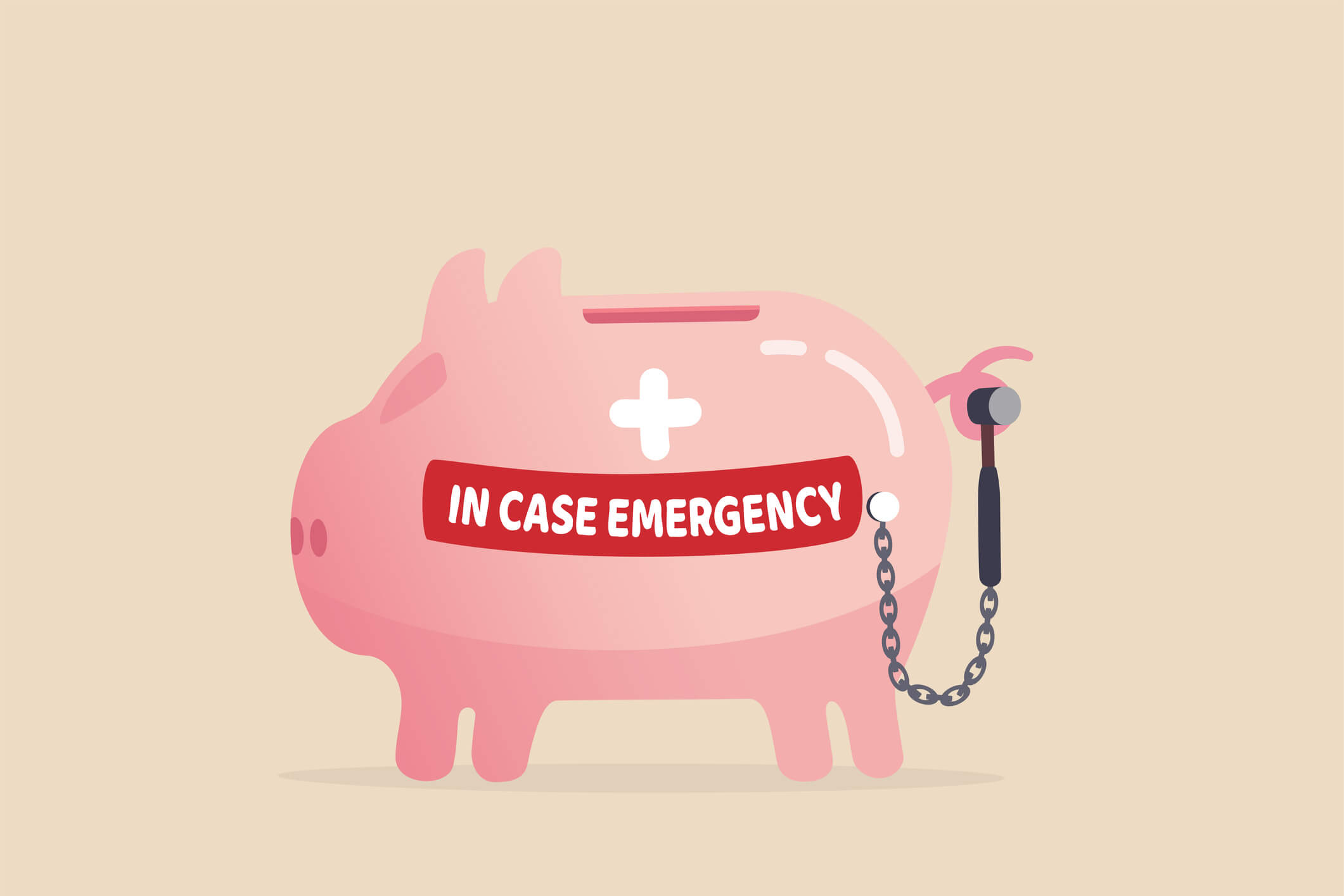
Create Your Emergency Fund:
Essential Steps for Financial Security
To create an emergency fund, start by calculating 3-6 months of essential living expenses, open a dedicated high-yield savings account, and automate small, consistent transfers from your checking account—aiming for at least $20-50 weekly to build momentum without strain. This is critical because recent data shows just 47% of Americans could cover a $1,000 emergency without borrowing, leaving millions vulnerable to financial disaster from unexpected expenses.
As the founder of Complete Controller, a cloud-based bookkeeping firm that’s helped thousands of small businesses and individuals regain financial control, I’ve witnessed firsthand how a modest emergency fund saved clients from high-interest debt and business closures during economic downturns like 2008 and the pandemic. This article reveals the exact strategies our clients used to build their safety nets, from automated micro-savings that grow to $2,600 annually to account selection tips that earn 400 times more interest than traditional banks offer—practical wisdom gained from 20 years of guiding businesses through financial challenges across every sector imaginable.

How do you create an emergency fund for financial security?
- Create an emergency fund by saving 3-6 months of essential expenses (rent, utilities, groceries) in a liquid, FDIC-insured account to cover surprises like job loss or repairs
- Calculate your monthly spending on necessities first, then set micro-goals like $500 initially before expanding
- Automate transfers of $20-50 weekly to build effortlessly—this creates $1,040-$2,600 annually without feeling the pinch
- Choose high-yield savings accounts offering 4%+ APY versus traditional banks’ 0.01%—a difference of $100+ yearly on a $5,000 balance
- Tailor fund size to your situation: singles need $500-$2,000 minimum, families require 6-12 months’ expenses
Why Create an Emergency Fund? The Real Risks It Prevents
An emergency fund acts as a financial buffer against life’s unpredictables, from medical bills to car breakdowns, preventing debt spirals that affect millions. Research shows that even $2,000 in emergency savings increases financial well-being by 21%, making people significantly less stressed and more productive at work.
The psychological benefits extend beyond numbers—workers without emergency savings are four times more likely to be distracted at work due to financial stress. Meanwhile, 51% of those without savings report increased financial stress year-over-year, compared to only 15% of those with a $2,000 cushion. This proves emergency funds deliver both practical protection and peace of mind.
Common scenarios covered by your emergency fund
- Job loss or income gaps represent the most devastating financial emergency, requiring 3-6 months of basics to give you breathing room without raiding retirement accounts. During employment transitions, your fund covers rent, utilities, food, and insurance premiums while you secure new income.
- Medical emergencies strike without warning, demanding immediate payment for deductibles, copays, or uncovered treatments. Since health issues often force time off work, your emergency fund pulls double duty—covering medical costs while replacing lost wages.
- Home or car repairs typically cost $1,000 or more and arrive at the worst possible moments. Without an emergency fund, these essential fixes force people into high-interest loans or credit card debt averaging 20-30% APR.
Step 1: Calculate How Much Emergency Fund You Actually Need
Top financial experts emphasize 3-6 months of expenses, but personalization matters—factor in job stability, family size, and location for a realistic target that fits your unique circumstances.
Start by listing only essential monthly expenses: housing, utilities, groceries, insurance, minimum debt payments, and transportation. Skip discretionary spending like entertainment or dining out—emergencies call for survival mode. Most people discover their bare-bones budget runs 60-70% of normal spending.
Tailoring your emergency fund size by life stage
- Singles and young professionals: Target $500-$2,000 as your starter goal, focusing on common emergencies like car repairs or medical copays
- Families or variable-income earners: Build toward 6-12 months of expenses, potentially $15,000-$20,000 depending on household size
- High-cost areas or freelancers: Add 20-50% buffer for market instability and irregular income patterns
- Near retirement: Consider 12 months of expenses to avoid tapping retirement accounts during market downturns
Step 2: Cut Expenses and Free Up Cash to Create an Emergency Fund Fast
Many guides skip practical budgeting details—here’s how to audit spending and trim without lifestyle sacrifice, typically uncovering $200+ monthly for your fund.
Track essentials for one month using your bank statements, then identify the easiest cuts. Subscription services often hide $50-100 in forgotten monthly charges. Dining out typically consumes $200-400 monthly for individuals—cutting this by half frees significant savings. Insurance shopping annually saves most people $500-1,000 between auto and home policies.
Budget hacks for faster emergency fund growth
- Windfalls accelerate progress dramatically—direct tax refunds, bonuses, and gift money straight to your emergency fund. The average tax refund of $3,000 could establish your entire starter fund instantly.
- Side hustles add consistent funding without touching your regular budget. Even $50 weekly from gig work, freelancing, or selling unused items contributes $2,600 annually to your fund.
- The 30-day spending freeze challenges you to buy only absolute necessities for one month. Participants typically save $300-500, jumpstarting their emergency fund while building discipline.
From my experience at Complete Controller, clients who reviewed budgets quarterly doubled their savings rates within six months. One memorable client trimmed dining expenses from $400 to $100 monthly by meal prepping Sundays—reaching their $1,000 goal in just three months.
Your emergency fund shouldn’t be a guessing game. Let’s build it with clarity. Connect with Complete Controller.

Step 3: Choose the Right Account and Automate to Build Habits
Separate accounts prevent casual spending, while automation removes willpower from the equation entirely. High-yield options earning 4-5% APY transform your money into a growing asset rather than stagnant cash.
This 4% rate towers over traditional banks’ 0.01% offerings—meaning a $5,000 fund earns roughly $200 annually in high-yield accounts versus $0.50 in standard savings. Over five years, that difference compounds to over $1,000 in free money simply from choosing the right account.
Best accounts for your emergency fund
- High-yield savings accounts: FDIC-insured, instantly liquid, currently offering 4.00-4.21% APY
- Money market accounts: Similar yields with check-writing privileges for true emergencies
- Avoid investment accounts: Stock market volatility defeats the purpose—you need guaranteed access
Automate transfers for the day after your paycheck deposits. Starting with just $25 bi-weekly builds $650 annually without feeling the impact. Gradually increase by $5-10 monthly as you adjust to living on less.
Step 4: Overcome Paycheck-to-Paycheck Challenges When You Create an Emergency Fund
Living tight requires different strategies—micro-savings and mindset shifts make the impossible achievable. You’re not imagining the difficulty: the personal savings rate plummeted from 32% in 2020 to under 5% by 2024 as inflation squeezed budgets nationwide.
If you’re young and feeling behind, take heart—Gen Z holds median emergency funds of just $400 while baby boomers average over $2,000. This gap reflects economic realities, not personal failure. Higher living costs and stagnant wages make modern saving fundamentally harder than previous generations experienced.
Strategies for tight budgets
- Start microscopically small—even $20 weekly grows to $1,040 annually. Skip one coffee shop visit weekly or pack lunch twice more than usual. These tiny changes feel manageable while building momentum.
- Employer benefits hide opportunities many workers miss. Check if your company offers emergency savings programs, financial wellness benefits, or unusual perks you could monetize. Some employers match emergency savings contributions similar to 401(k) programs.
- The spare change method works for visual learners. Empty pockets nightly into a jar, depositing monthly into your high-yield account. Combined with cash-back apps rounding up debit purchases, you’ll accumulate $300-500 yearly almost invisibly.
Step 5: Use and Maintain Your Emergency Fund Wisely Long-Term
Building your fund marks the beginning, not the end—proper maintenance and wise usage preserve this financial lifeline indefinitely.
Track every withdrawal meticulously, noting the emergency type and amount. This record reveals patterns—perhaps car repairs hit quarterly, suggesting a separate maintenance fund. After any withdrawal, immediately create a replenishment plan doubling your normal contribution until restored.
Rules for emergency fund withdrawals
- Define “emergency” strictly before temptation strikes. True emergencies threaten your ability to work, live safely, or meet basic needs. New furniture, vacation deals, or investment opportunities don’t qualify—no matter how compelling they seem.
- Create a withdrawal checklist requiring 24-hour consideration for non-urgent emergencies. Often, this cooling period reveals alternatives like payment plans, warranty coverage, or community resources you overlooked initially.
- Annual reviews keep your fund relevant as life evolves. Marriage, children, job changes, and inflation all impact your needs. Spending 30 minutes yearly recalculating ensures adequate coverage without over-saving.
Real-World Lessons: How Complete Controller Clients Built Their Funds
At Complete Controller, we’ve guided over 5,000 users through cloud-based bookkeeping to successfully create emergency funds despite challenging circumstances. One freelance client automated 5% of all incoming payments, accumulating $3,000 within six months—this fund later covered two months of expenses during an unexpected dry spell, avoiding credit card debt entirely.
Another couple used our cash flow monitoring tools to identify $275 monthly in redundant subscriptions and unused services. Redirecting these funds built their $2,000 emergency cushion in eight months. When their HVAC system failed, they paid cash instead of financing at 18% interest—saving over $500 in finance charges.
These successes stem from three principles we emphasize: consistent automation regardless of amount, choosing accounts that grow your money, and treating the fund as untouchable except for true emergencies. Combined with professional bookkeeping support, these strategies transform financial chaos into confident stability.
Final Thoughts
Creating an emergency fund through goal-setting, automation, and discipline delivers unmatched security—protecting you from high-interest debt while providing peace of mind that money truly cannot buy elsewhere. The strategies outlined here, refined through two decades of helping businesses navigate financial challenges at Complete Controller, work regardless of income level or current savings.
As someone who’s weathered multiple economic storms thanks to my own emergency fund, I promise the sacrifice feels minimal compared to the relief of knowing you’re protected. Start today with just $20 automated weekly—within one year, you’ll have over $1,000 standing between you and financial disaster.
Take the first step now by opening a high-yield savings account and scheduling that initial automatic transfer. For personalized guidance on building your emergency fund while managing cash flow effectively, connect with our team at Complete Controller where expert bookkeepers help individuals and businesses achieve lasting financial stability.

Frequently Asked Questions About Create an Emergency Fund
How much should I save in an emergency fund?
Aim for 3-6 months of essential expenses, starting with a $500-$1,000 initial goal for beginners before expanding based on your life circumstances and job stability.
Where should I keep my emergency fund?
Store your emergency fund in a high-yield savings or money market account offering 4%+ APY—these FDIC-insured accounts provide instant access while earning 400 times more interest than traditional banks.
What counts as an emergency for withdrawals?
True emergencies include job loss, medical bills, essential home repairs, or car breakdowns that prevent you from working—not vacations, gadgets, or investment opportunities.
Can I create an emergency fund if living paycheck to paycheck?
Yes—automate just $10-25 weekly transfers, cut one small expense, and direct any windfalls like tax refunds to your fund. Even tiny amounts compound into meaningful protection over time.
How long does it take to build a $1,000 emergency fund?
Saving $25 weekly builds $1,000 in about 10 months, though you can accelerate progress significantly using tax refunds, bonuses, or side hustle income.
Sources
- Axos Bank. (2026). High-Yield Savings Account Rates. https://www.bankrate.com/banking/savings/best-high-yield-interests-savings-accounts/
- Bankrate. (2026). Bankrate’s 2026 Annual Emergency Savings Report. https://www.bankrate.com/banking/savings/emergency-savings-report/
- Bankrate. (2026). Best High-Yield Savings Accounts Of March 2026 – Up to 4.21%. https://www.bankrate.com/banking/savings/best-high-yield-interests-savings-accounts/
- Complete Controller. (n.d.). 5 Money Management Tips to Help Avoid a Deficit. https://www.completecontroller.com/5-money-management-tips-to-help-avoid-a-deficit/
- Complete Controller. (n.d.). Ensure Ideal Liquidity Position. https://www.completecontroller.com/ensure-ideal-liquidity-position/
- Complete Controller. (n.d.). Importance of Reconciling Your Accounting Statements Regularly. https://www.completecontroller.com/importance-of-reconciling-your-accounting-statements-regularly/
- Consumer Financial Protection Bureau. (n.d.). Building Emergency Savings. https://www.consumerfinance.gov/about-us/blog/building-emergency-savings/
- Empower. (2025). 1 in 3 Americans have no emergency savings—while boomers’ $2,000 cushion dwarfs Gen Z’s $400, survey finds. The Currency. https://www.empower.com/the-currency/money/over-1-in-2-americans-have-no-emergency-savings-research
- Federal Deposit Insurance Corporation. (n.d.). Deposit Insurance Resources. https://www.fdic.gov/resources/deposit-insurance/
- Federal Reserve. (2020). Economic Well-Being of U.S. Households in 2020 – Dealing With Unexpected Expenses. https://www.federalreserve.gov/publications/2020-economic-well-being-of-us-households-in-2020-dealing-with-unexpected-expenses.htm
- Federal Reserve. (2024). Report on the Economic Well-Being of U.S. Households in 2024 – Savings and Investments. https://www.federalreserve.gov/publications/2025-economic-well-being-of-us-households-in-2024-savings-and-investments.htm
- Fortune. (2025). 1 in 3 Americans have no emergency savings—while boomers’ $2,000 cushion dwarfs Gen Z’s $400. https://fortune.com/2025/09/17/emergency-savings-boomer-genz-debt-unemployment-inflation/
- Jacksonville.gov. (n.d.). Build an Emergency Fund in 5 Steps.
- New York Life. (n.d.). Why you should have an Emergency Fund.
- North Shore Bank. (n.d.). Pros and Cons of Having an Emergency Fund.
- Northwest Bank. (n.d.). How To Build Your Emergency Fund and Use It Wisely.
- Peoples Bank AL. (2025). How to Build an Emergency Fund Safely and Effectively.
- Remitly. (2025). US Emergency Savings Fund Statistics – Updated for 2025. https://www.remitly.com/blog/finance/us-emergency-savings-statistics/
- Rutgers NJAES. (n.d.). Emergency Funds: A Small Step Toward Financial Security. https://njaes.rutgers.edu/sshw/message/message.php?p=Finance&m=263
- Securian Financial. (n.d.). 5 steps to build an emergency fund.
- Vanguard. (2025). The Relationship Between Emergency Savings, Financial Well-Being, and Financial Stress. Corporate Vanguard. https://corporate.vanguard.com/content/corporatesite/us/en/corp/articles/emergency-savings-may-hold-key-financial-well-being
 About Complete Controller® – America’s Bookkeeping Experts Complete Controller is the Nation’s Leader in virtual bookkeeping, providing service to businesses and households alike. Utilizing Complete Controller’s technology, clients gain access to a cloud platform where their QuickBooks™️ file, critical financial documents, and back-office tools are hosted in an efficient SSO environment. Complete Controller’s team of certified US-based accounting professionals provide bookkeeping, record storage, performance reporting, and controller services including training, cash-flow management, budgeting and forecasting, process and controls advisement, and bill-pay. With flat-rate service plans, Complete Controller is the most cost-effective expert accounting solution for business, family-office, trusts, and households of any size or complexity.




 Brittany McMillen
Brittany McMillen
Brittany McMillen